
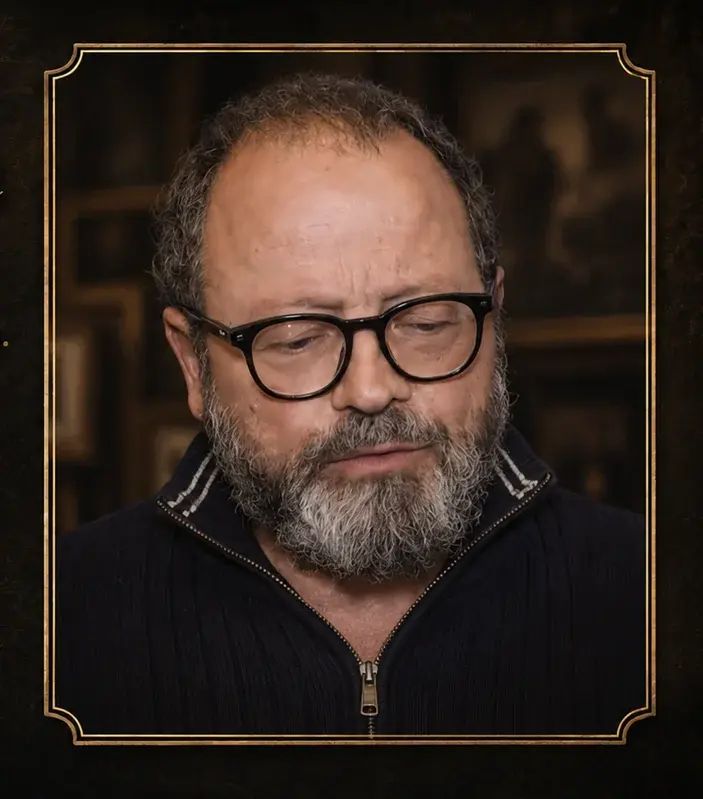
Public page dedicated to Dott. Flavio Bruno
This page is organized as a respectful public reference: biography is kept concise, published work is separated from personal materials, and every USG interpretation is clearly named as USG interpretation.
Function, territory, family, memory, and utility remain the interpretive axis of this page.
- Veterinary doctor, author, and researcher connected with the Cane Corso cultural and functional tradition.
- Presented here through published works, archive materials, and public references already treated as educational context.
- USG keeps the page as a respectful archive orientation, not as an institutional claim or official representation.
A quiet entrance to the images created by USG in respect for Dott. Bruno’s work. The tribute remains clearly separated from the biographical and bibliographic sections.
Open the visual tributeGuiding lines from Dott. Bruno’s work
This short framework keeps the reading focused and respectful: function, territory, family, memory, and clear boundaries remain visible without placing USG at the center.
The functional reading remains leading: type is understood through real use.
Cane Corso is read through environment, rural memory, family, and need.
People, stories, Cane Corso, and documents stand together as living memory.
Materials are presented carefully, without any claim of official representation.
La funzione fa il tipo
The page keeps the function-first reading visible without turning it into a slogan. Type is read through work, people, environment, character, structure, and continuity — not only through surface appearance.
How this public reference is organized
The page moves from Dott. Bruno’s profile and method to published work, archive materials, independent identity, careful research questions, and finally the optional visual tribute.
The first reading stays centered on Dott. Bruno and the function-first line: “La funzione fa il tipo”.
Books and public references are shown as bibliographic orientation, separated from personal tribute material.
Archive visuals and the independent identity of Il Contado del Molise are kept distinct and respectfully framed.
The USG reading remains clearly marked, while the visual tribute opens only as a separate optional layer.
Published works by Dott. Flavio Bruno
This section is reserved for the author’s published Cane Corso line. Book covers and references are presented as bibliographic orientation, not as USG-owned material.
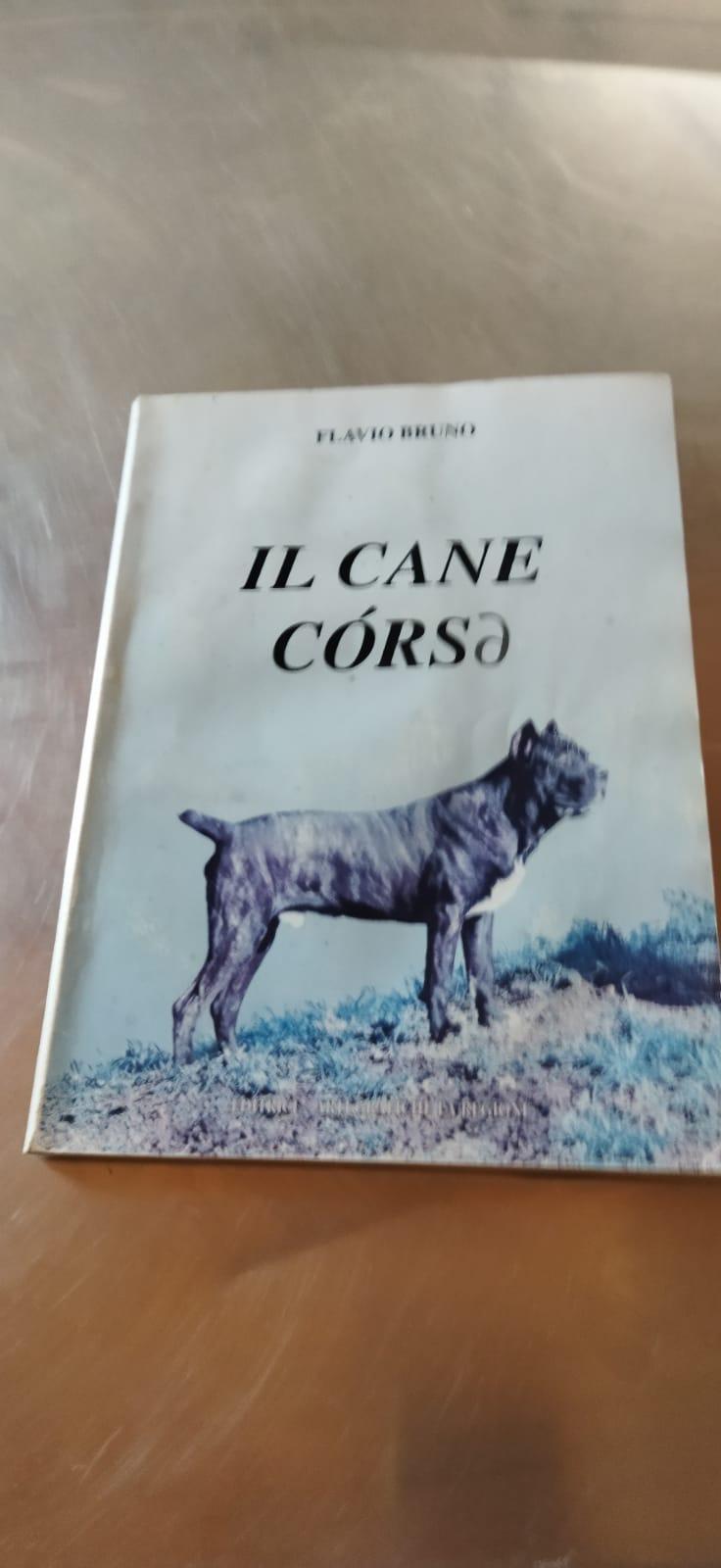
An early Italian/English work presented as study of Cane Corso through breed, history, family, and society.
Reference record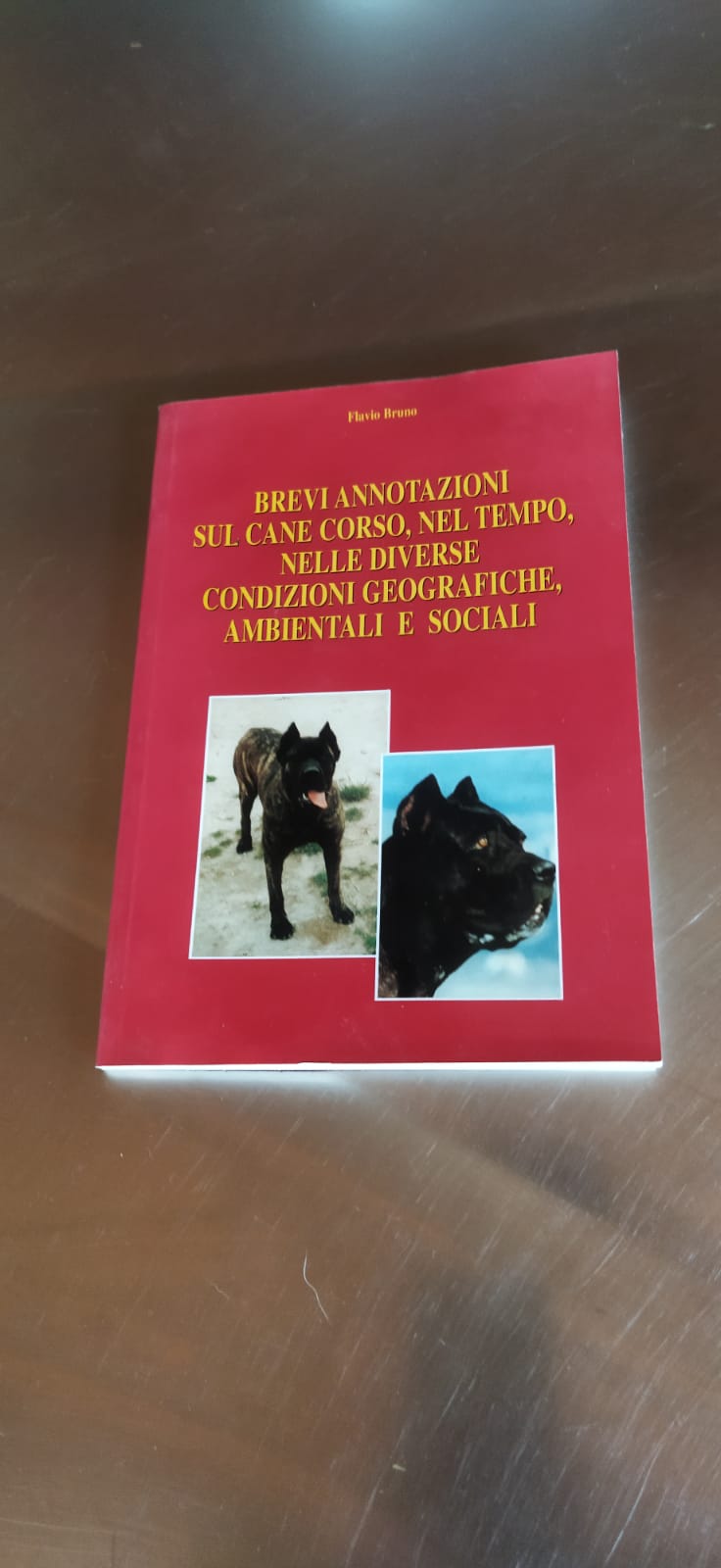
A bibliographic reference focused on time, territory, environmental conditions, and social conditions.
Reference record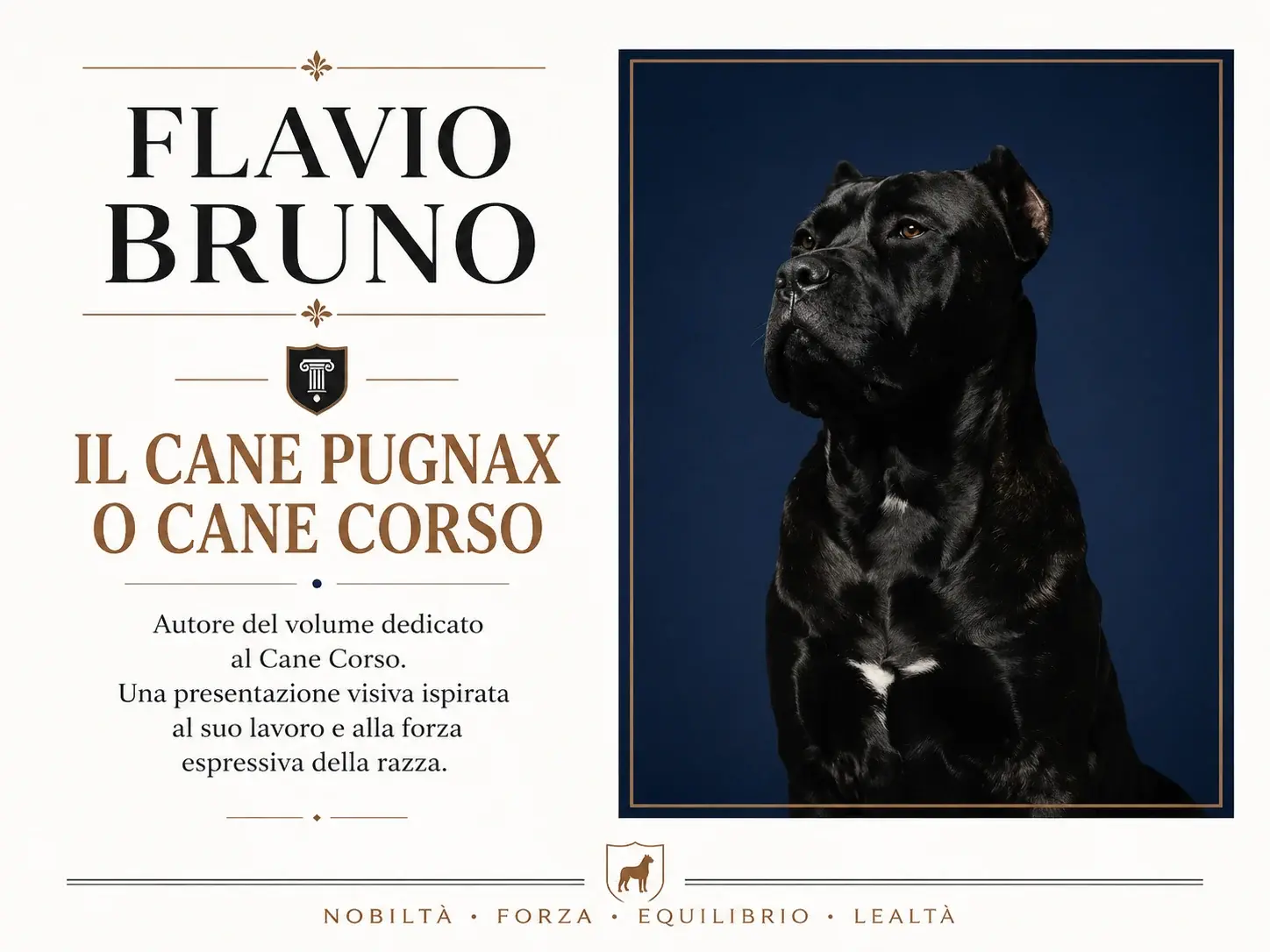
A later study volume connected with history, function, morphology, and continuity of the Cane Corso.
Reference recordPersonal and archive materials connected with Dott. Bruno
This section gathers personal or archive visuals connected with him: Cesare, gifted portrait, archive pages, historical line, and iconographic references. They are not mixed with the published works section.

A personal Cane Corso image shared as part of Dott. Bruno’s visual archive context.
Open image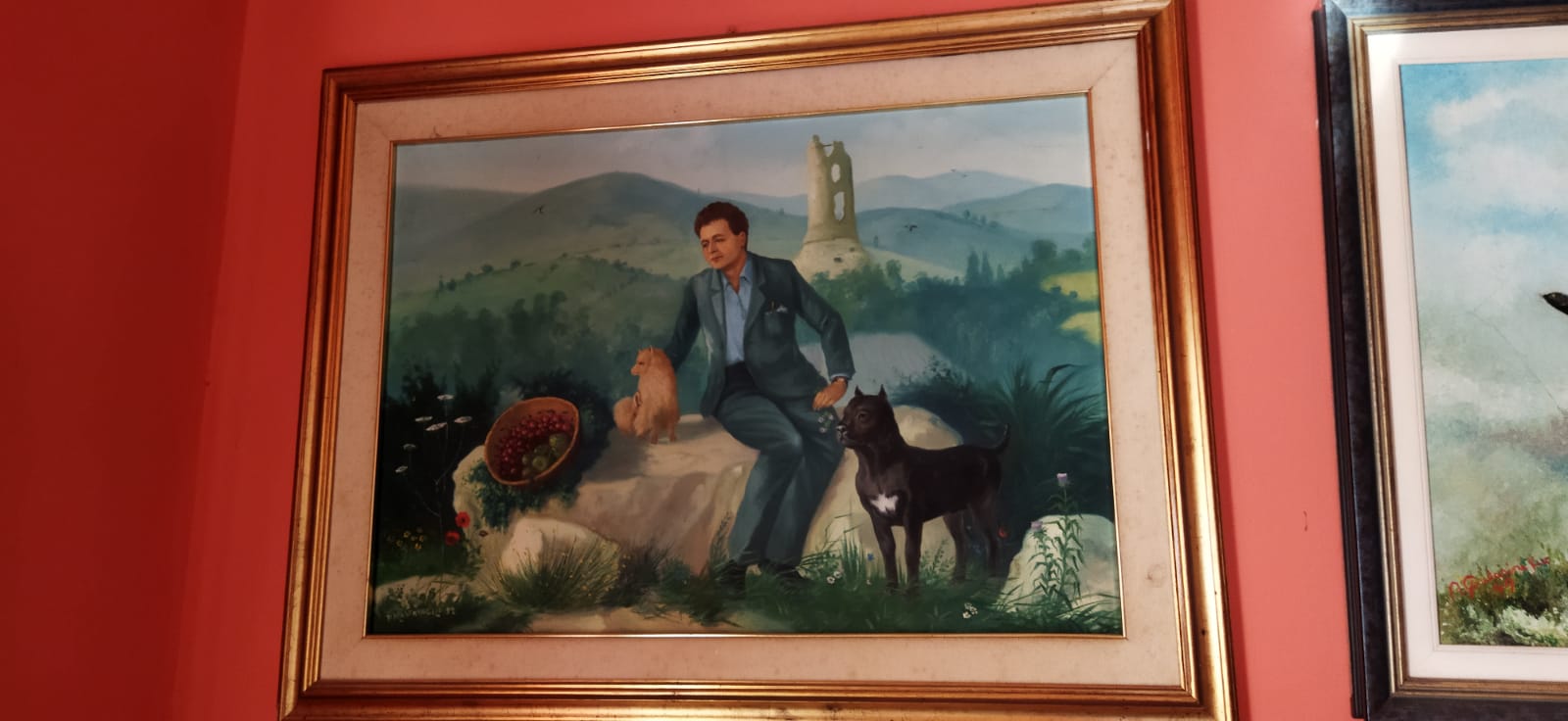
A painting gifted to Dott. Bruno and shown here as a personal-cultural reference.
Open image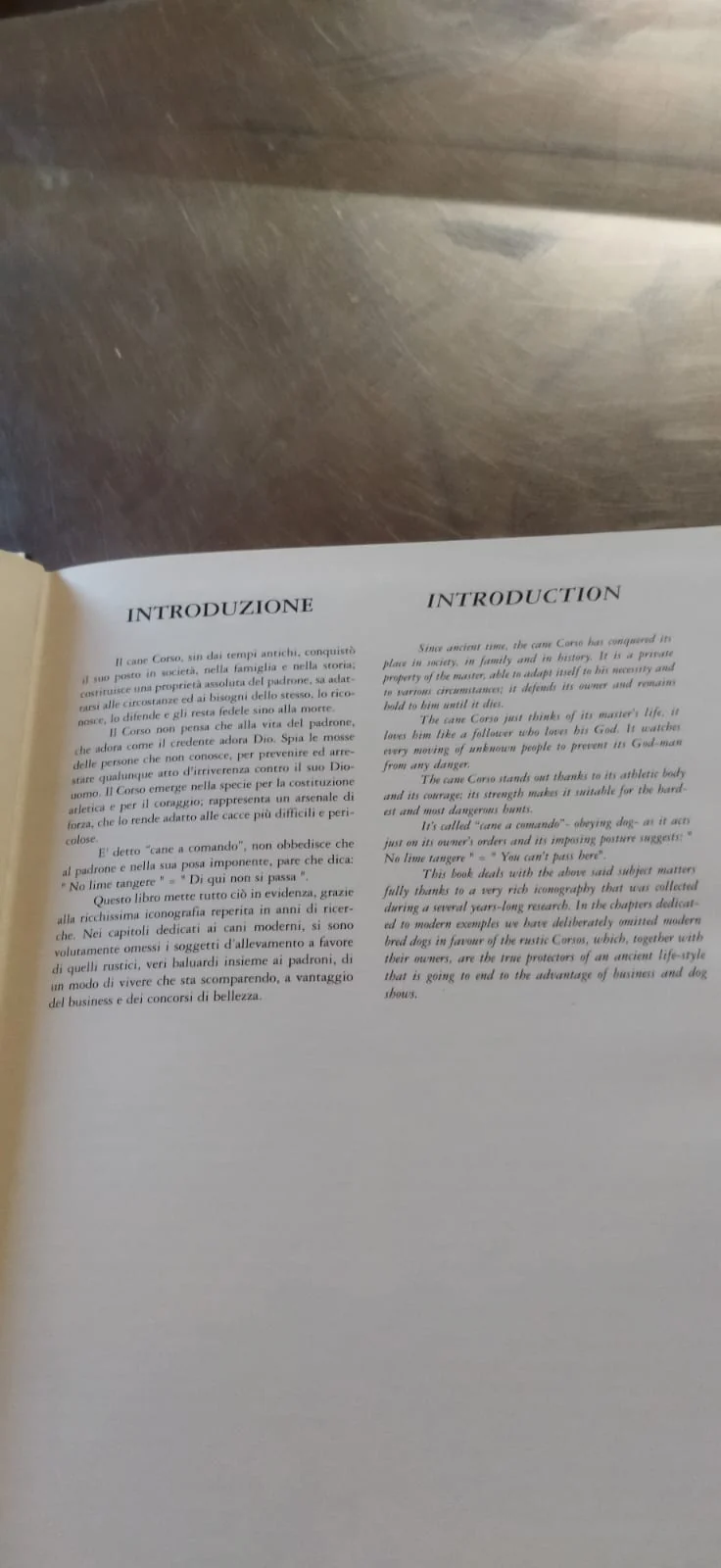
A photographed page used as educational context for the function-first reading of Cane Corso.
Open image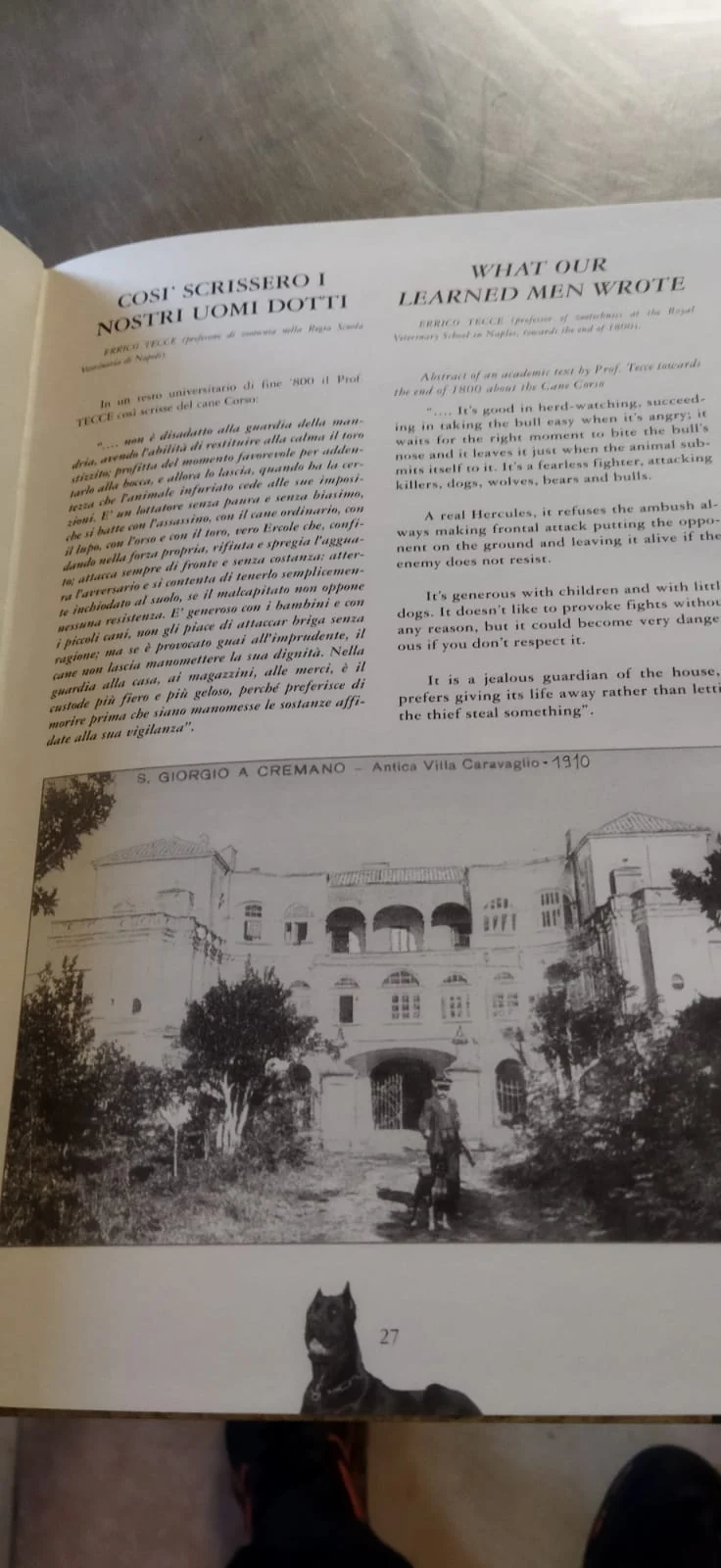
Historical descriptions are treated as memory and study material, not as platform authority.
Open image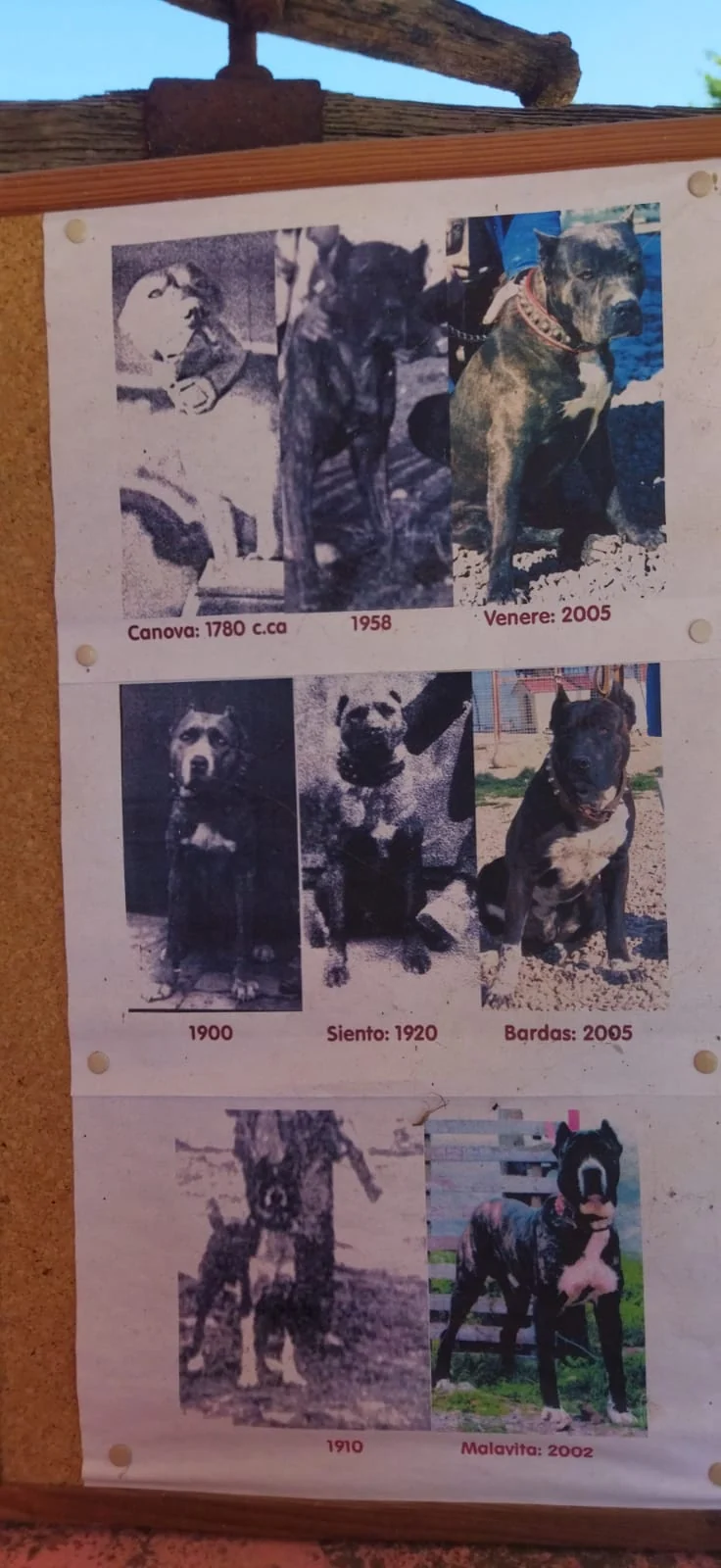
A comparison board for thinking about continuity, transformation, and memory of type.
Open image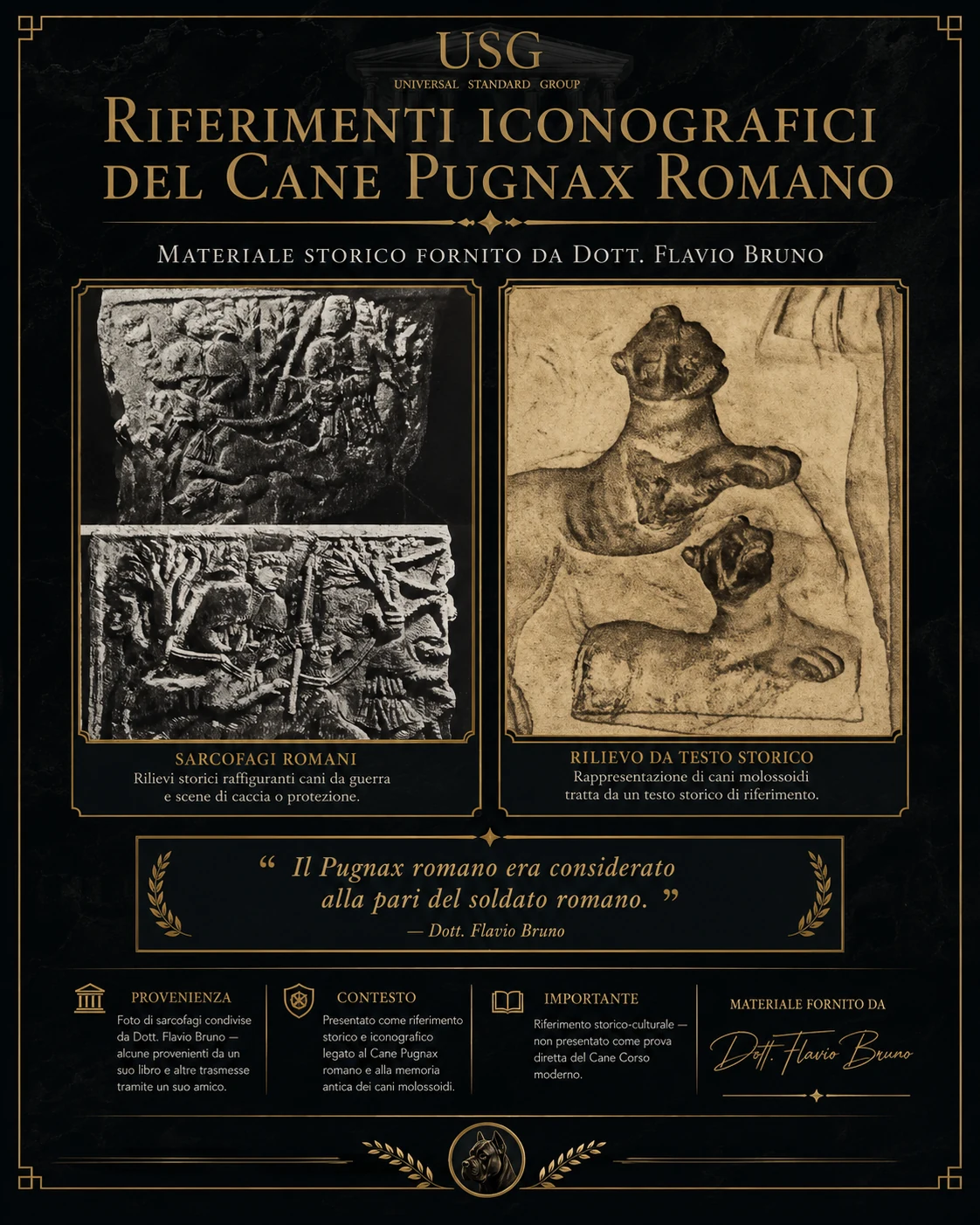
Shown as historical and iconographic reference, not as direct proof of the modern Cane Corso.
Open imageIl Contado del Molise
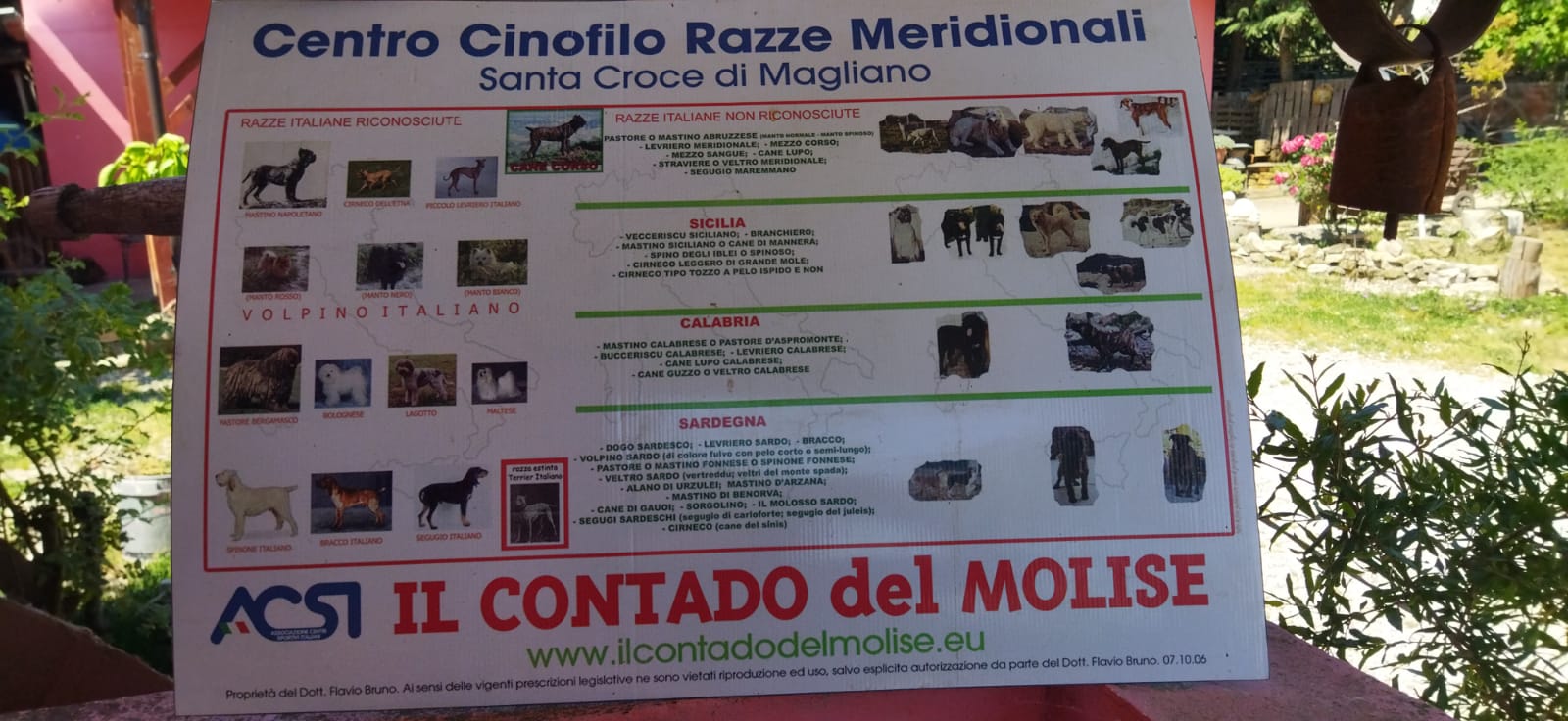
Il Contado del Molise / Centro Cinofilo Razze Meridionali is shown as a separate identity connected with Dott. Bruno’s wider work and southern Italian canine memory. USG presents it with respect and does not absorb it into USG identity.
Respect boundary: this page presents Dott. Bruno’s work and related materials with care. USG does not present itself as his official representative, Il Contado del Molise, ENCI, FCI, a club, a federation, or a pedigree authority.
USG hypotheses shared with Dott. Bruno
These are USG visual and research hypotheses shared for expert orientation. They must not be read as statements made by Dott. Bruno, as proven genealogy, or as a new standard.
A visual-cultural question about ancient routes of function and type. It is not presented as a proven direct lineage.
A study question about land, courtyard, family, work, and the preservation of useful type through need.
A cautious research path: origin, importation, re-mating, function, territory, and documented use must be checked.
Every USG map or visual idea must remain clearly separated from Dott. Bruno’s confirmed words and from proven genealogy.
These atlas plates are a USG visual research layer about possible cultural routes, territorial functions, and representative molossoid types. They were prepared as working questions around origin, movement, and functional selection — not as a proven genealogy.
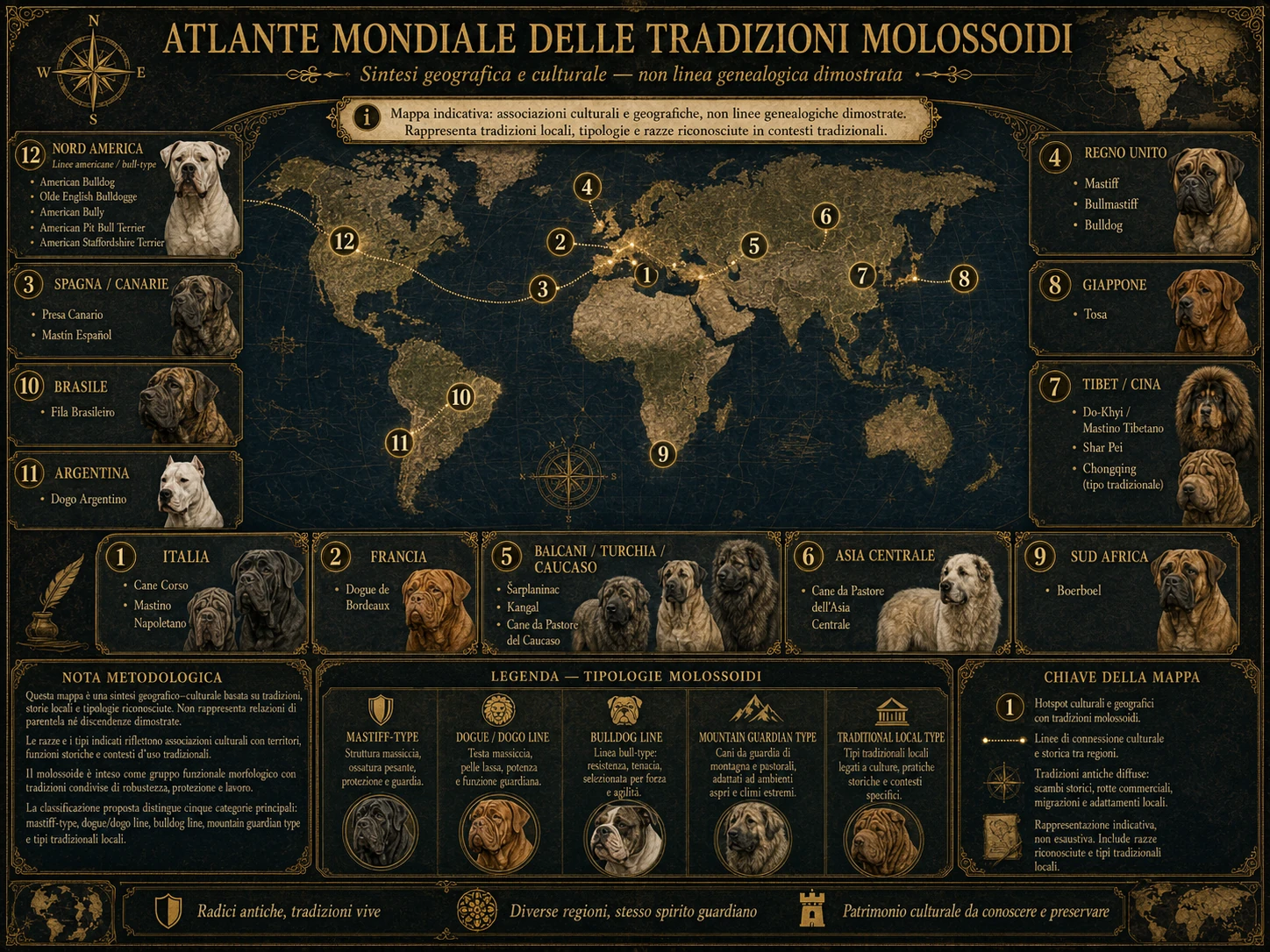
A global synthesis map showing representative regions and cultural associations, not a demonstrated genealogical tree.
Open image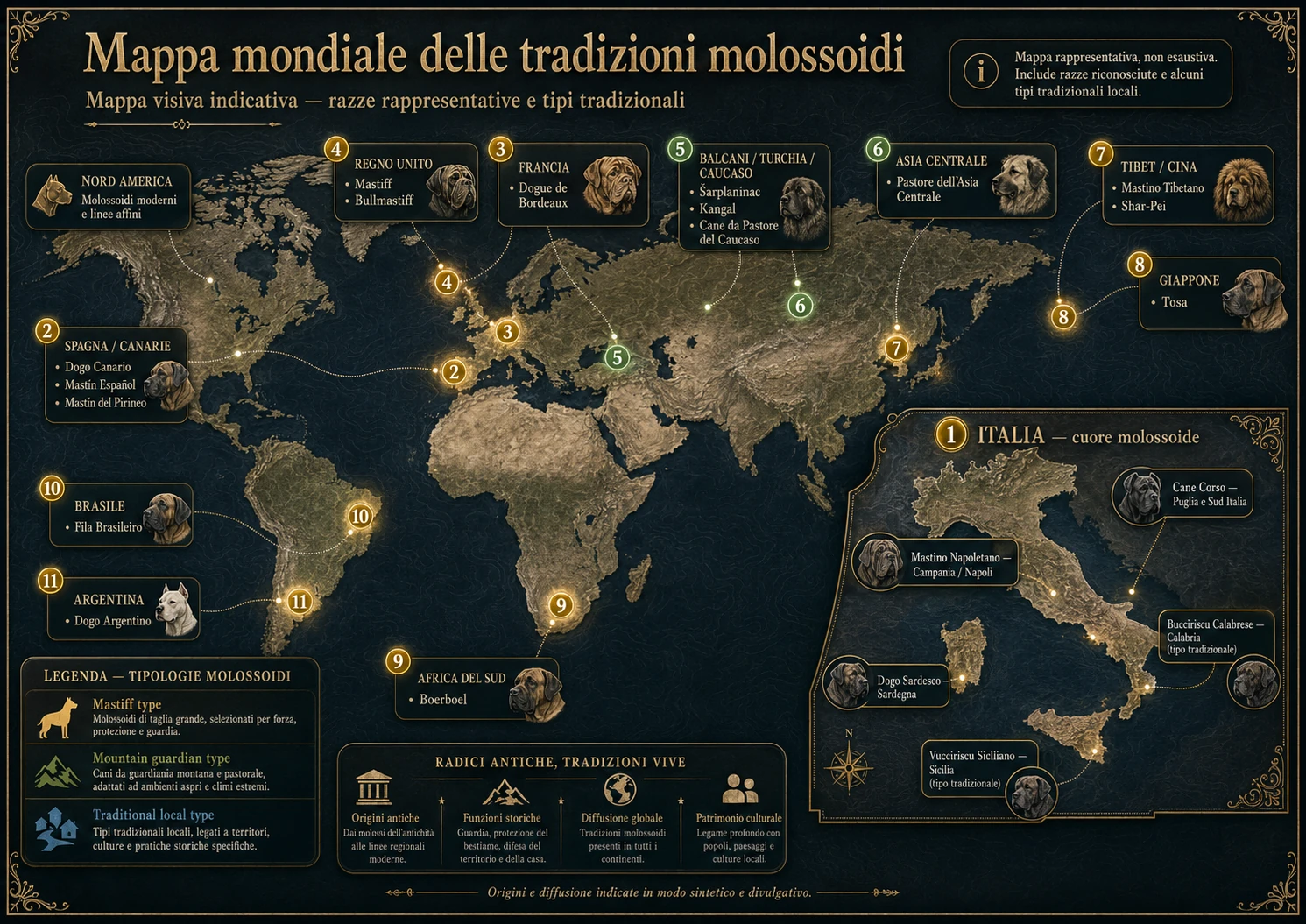
A second world overview keeping Italy and southern regional types visible as a cultural and functional reference point.
Open image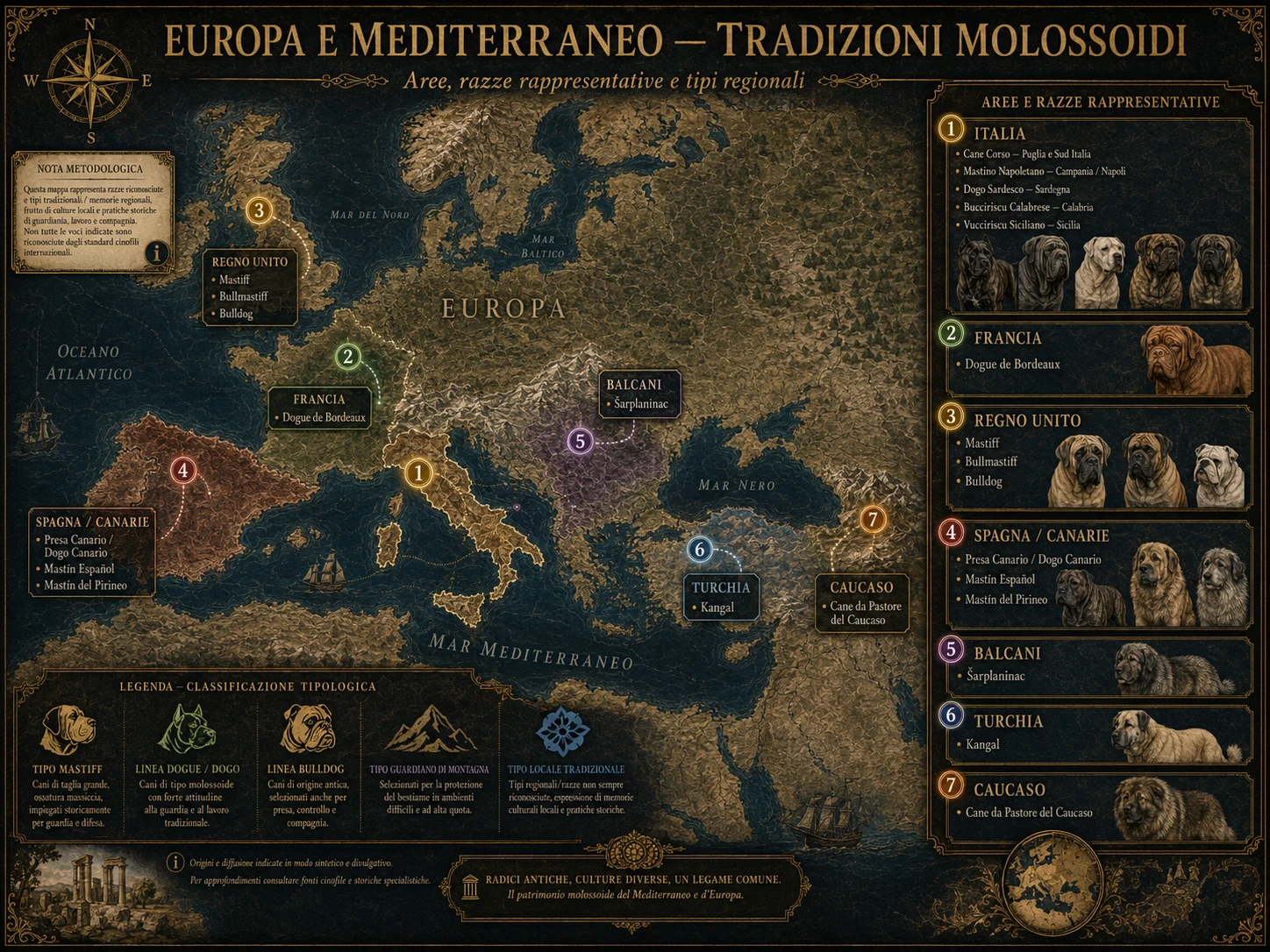
A visual hypothesis around Mediterranean, Italian, Balkan, Iberian, French, and Caucasian representative molossoid traditions.
Open image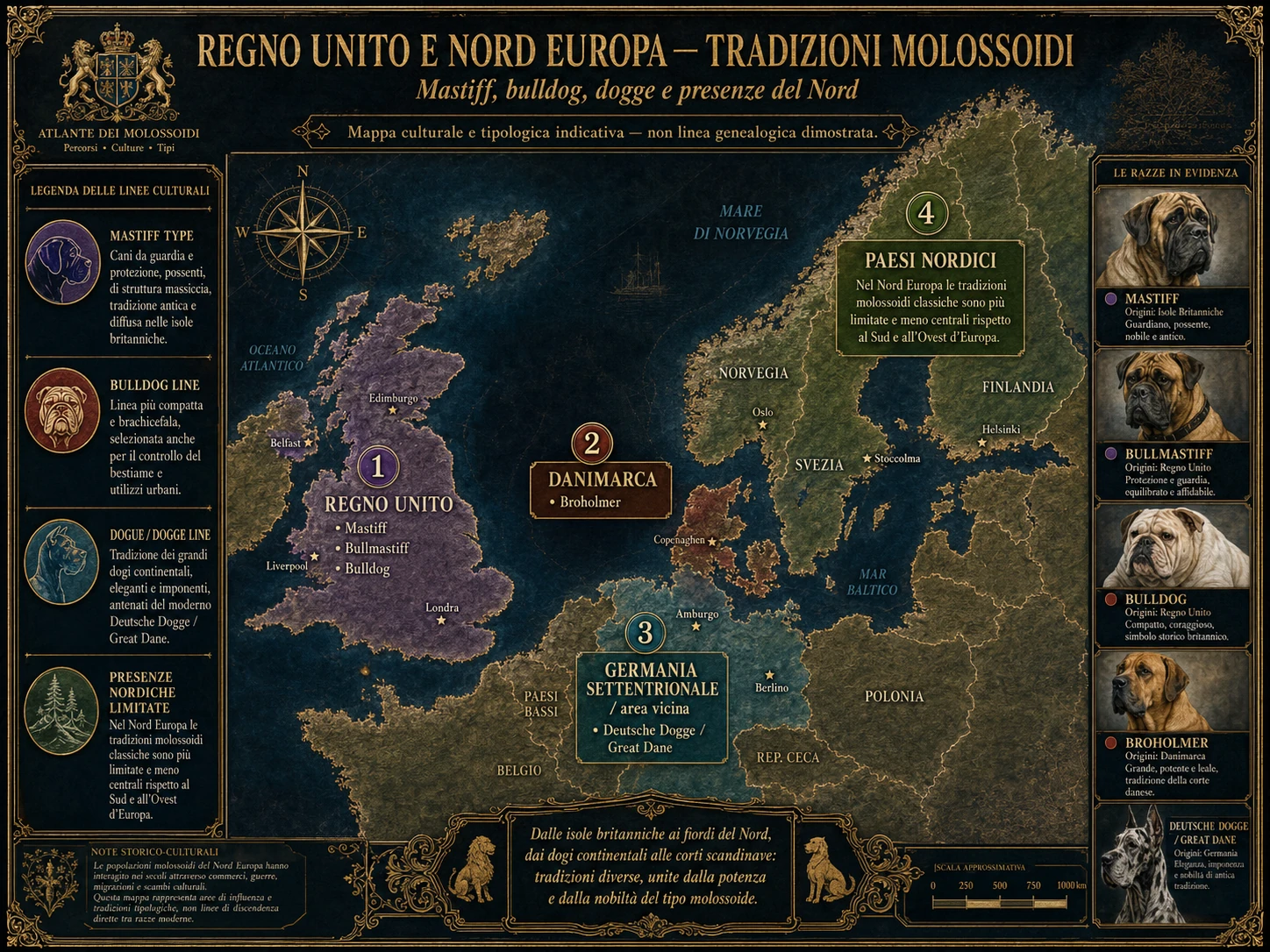
A cultural and typological reading of mastiff, bulldog, dogue, and northern presences without claiming direct descent lines.
Open image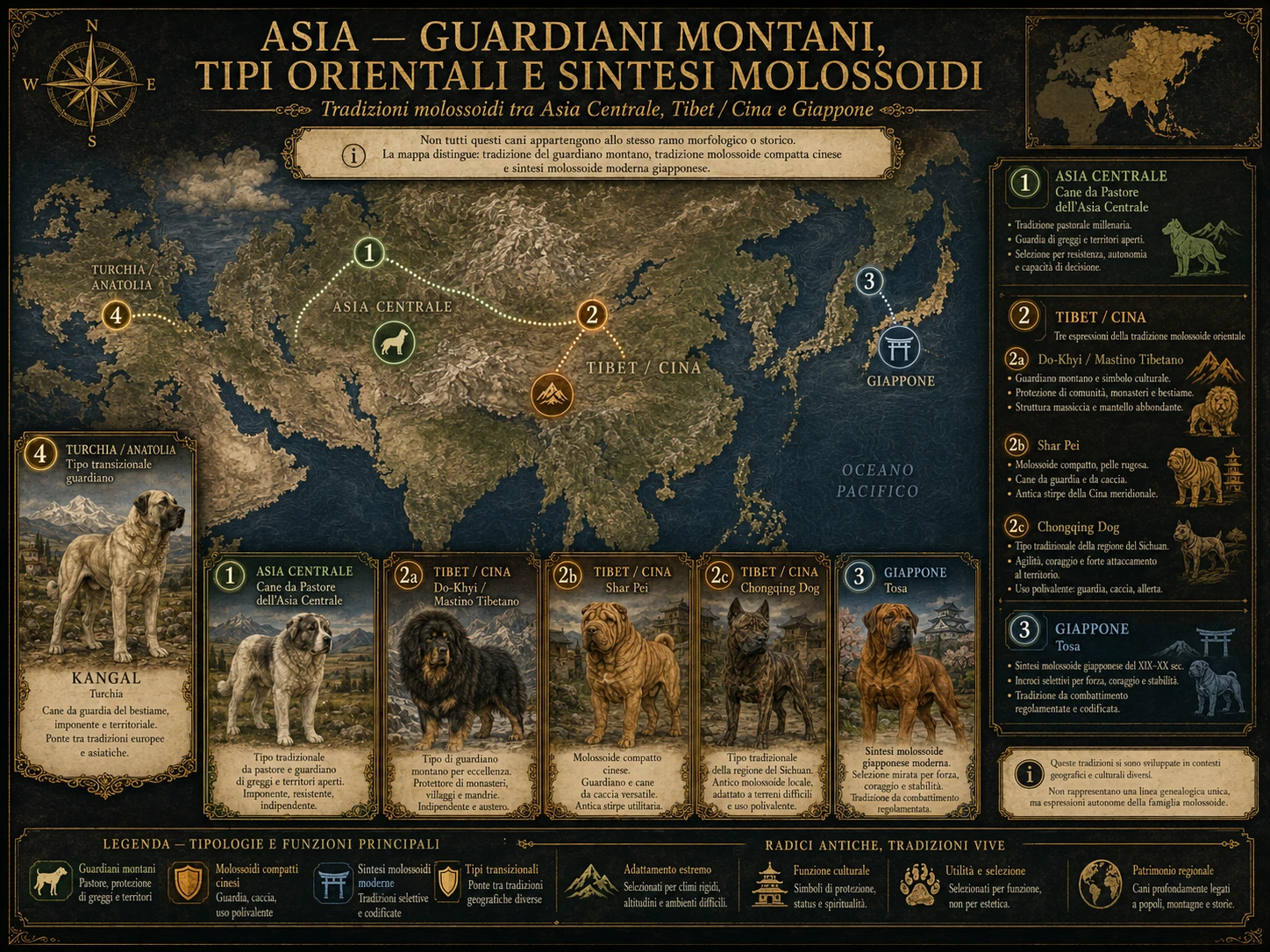
A comparative map for Central Asian, Tibetan, Chinese, Japanese, and Anatolian guardian or molossoid-like traditions.
Open image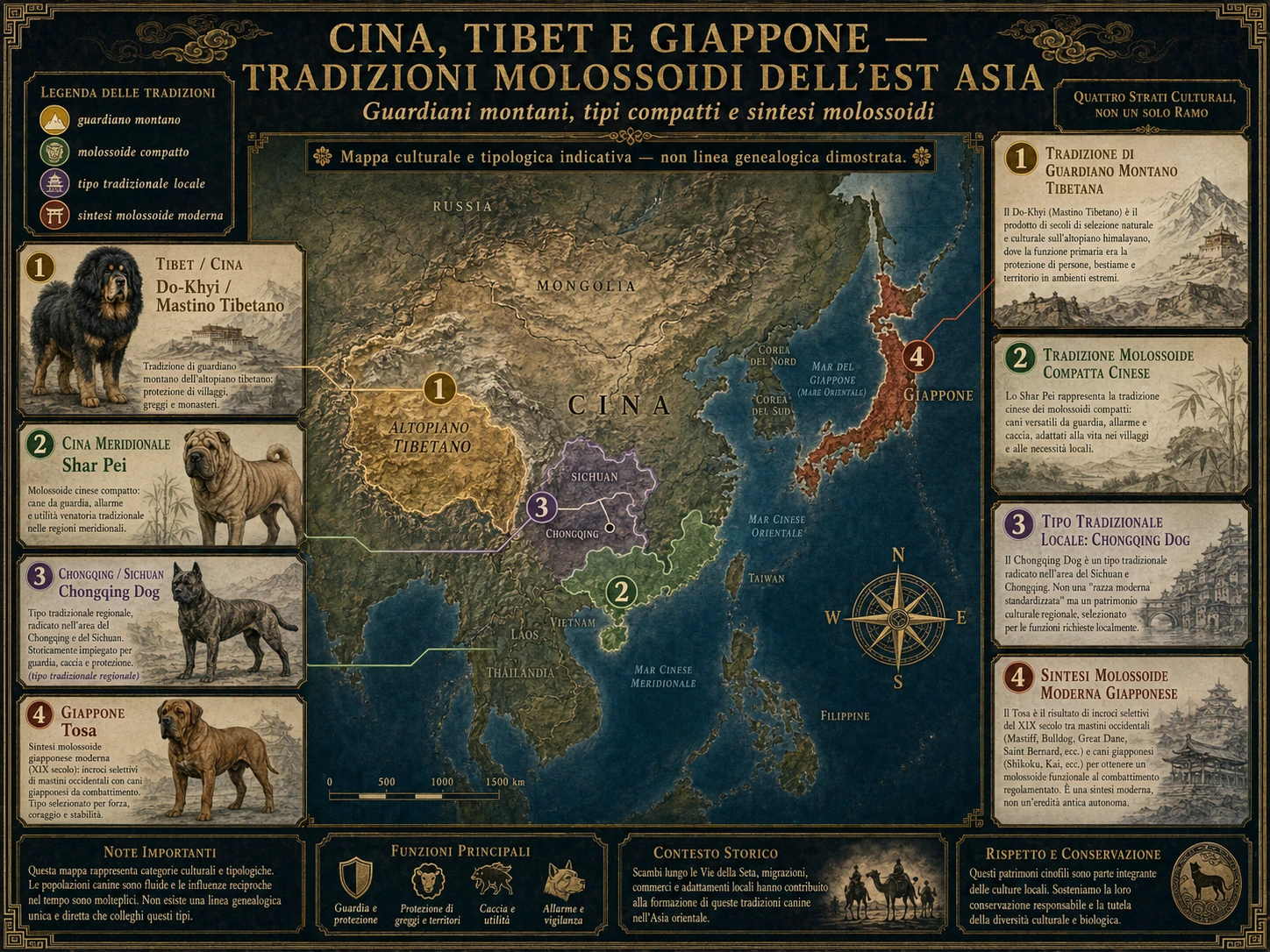
A focused plate on eastern cultural layers, clearly framed as typological comparison rather than one single origin branch.
Open image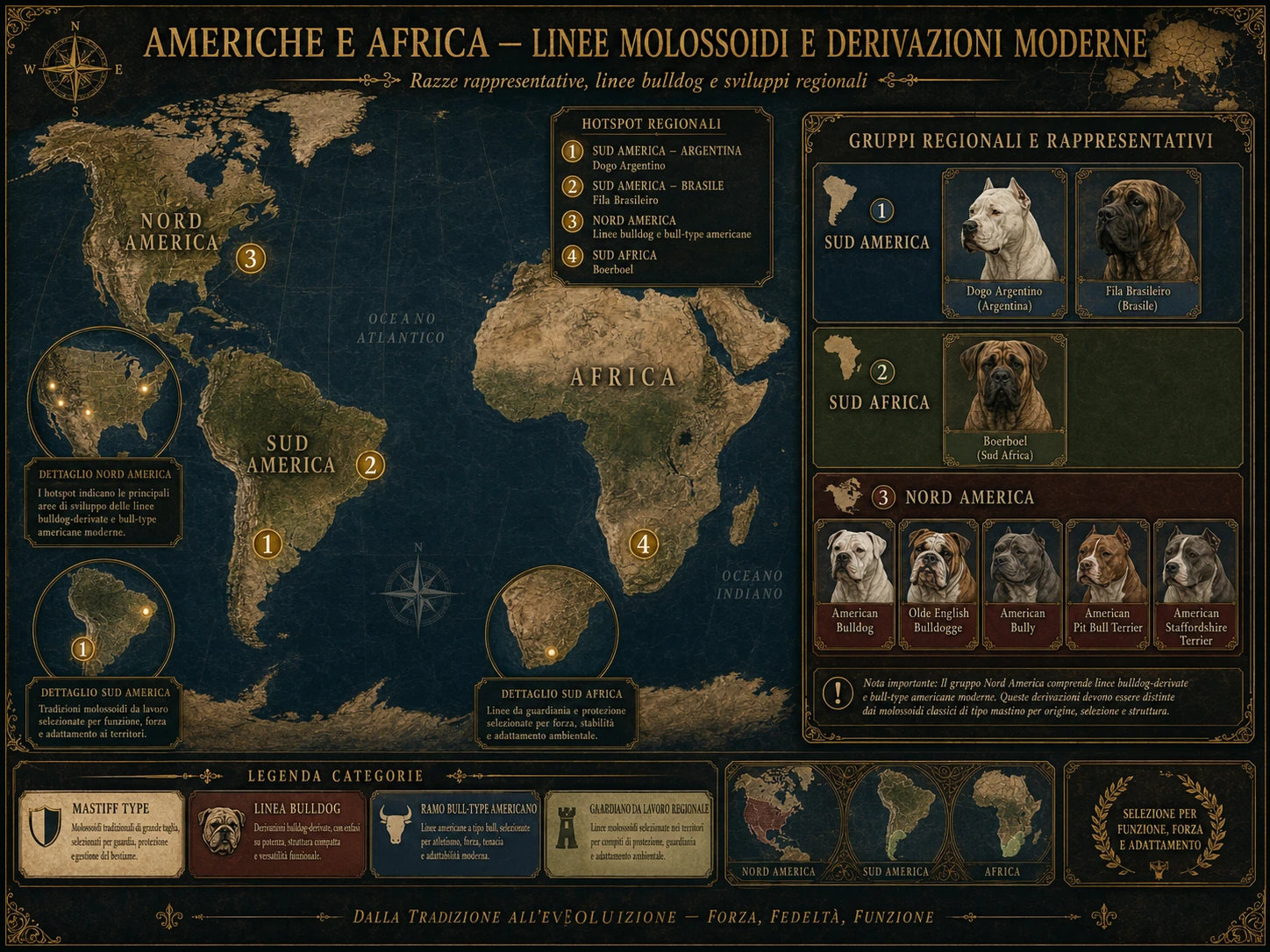
A later-development view for modern bulldog-derived, bull-type, and regional working lines shaped by selection and function.
Open imageMethodological boundary: these maps are indicative USG hypotheses and visual study materials. They are not an official position of Dott. Flavio Bruno, not a confirmed line of descent, not a breed standard, and not a substitute for specialist historical, cynological, or genetic research.
A focused USG visual reading about the possible role of Roman roads, military movement, rural estates, ports, and Balkan provincial corridors in the movement of working molossoid types. This is presented as a research question, not as proven descent.
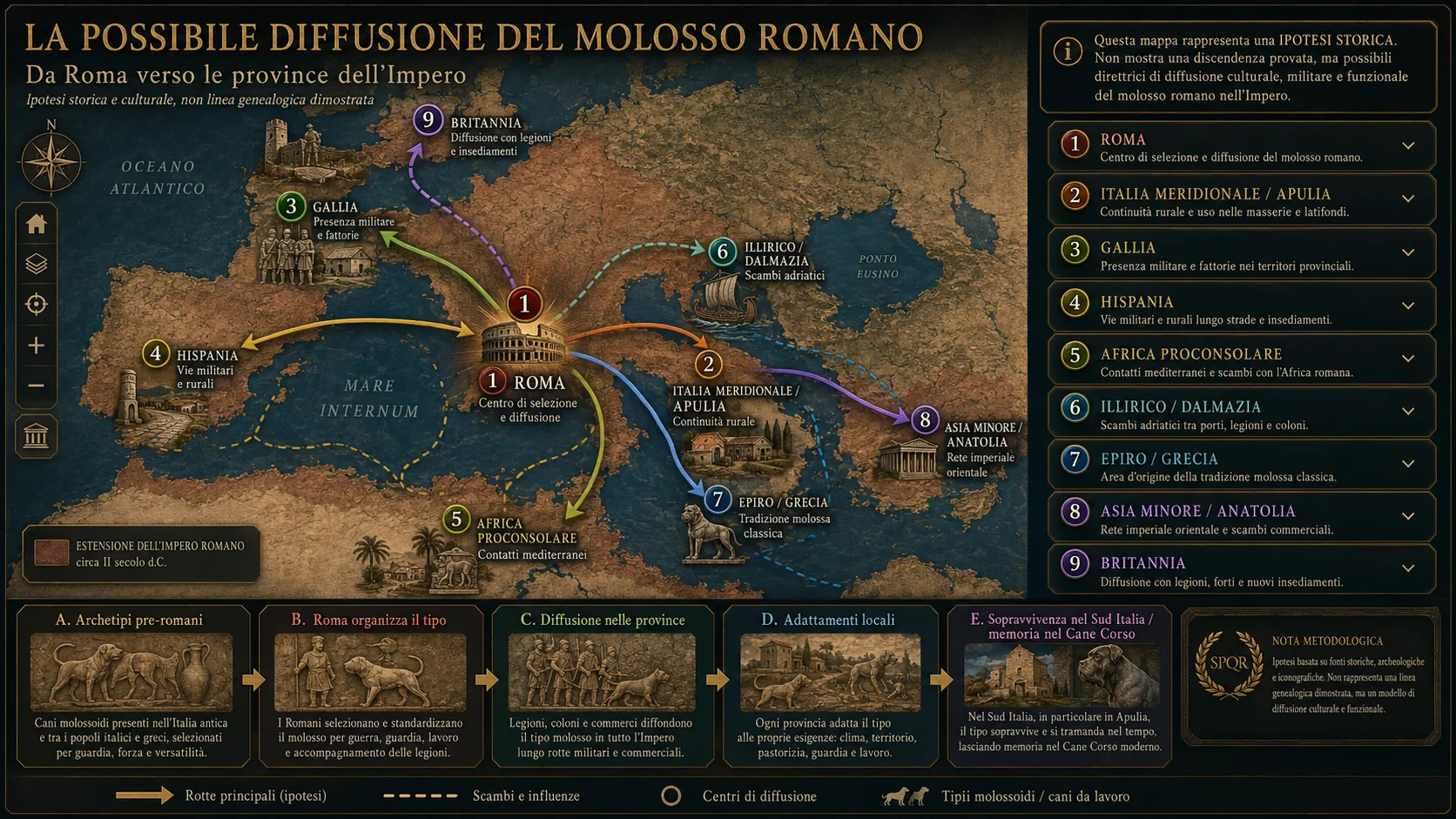
A working map about Rome as a possible organizing and diffusion center for functional molossoid types in the provinces.
Open image
A focused map for Illyricum, Dalmatia, Macedonia, Thrace, Moesia, Serdica, Philippopolis, and Black Sea access as possible corridors of function and adaptation.
Open image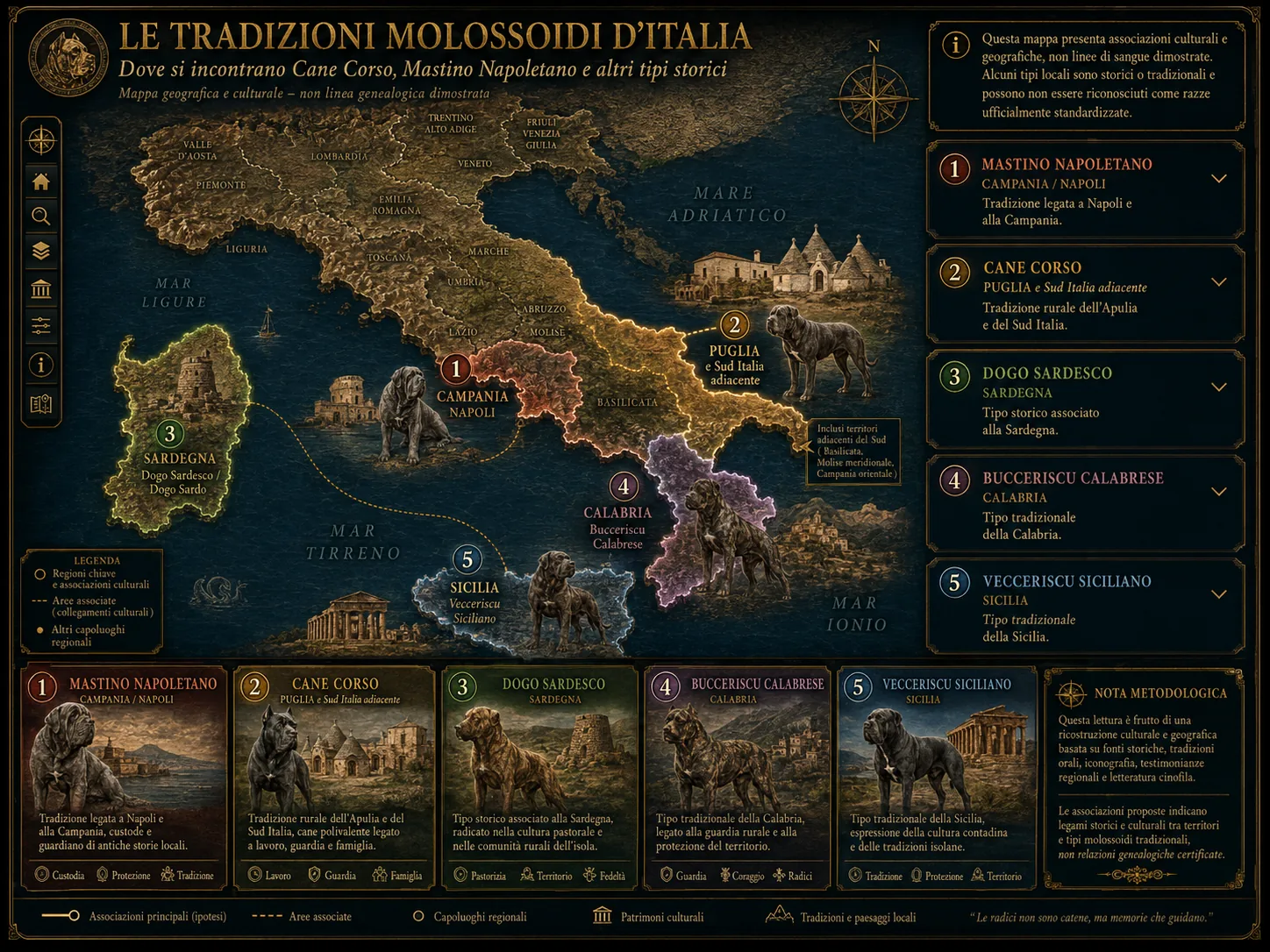
A visual plate returning the hypothesis to Italy, South Italy, Cane Corso, Mastino Napoletano, and regional southern traditions.
Open image
A simple interpretive scheme separating functional continuity from proven genealogy and keeping Cane Corso distinct from heavier monumental lines.
Open imageMethodological boundary: this Roman-Balkan layer is a USG interpretive hypothesis. It does not claim that the Roman Empire created the modern Cane Corso, does not represent an official statement by Dott. Flavio Bruno, and does not replace historical, archaeological, cynological, or genetic research.
Open the USG typological atlas
This curated visual series organizes the idea as archetype → Roman working type → Italian outcomes → European and Balkan regional lines. It is a visual study layer, not proof of direct descent.

A study poster for an ancient Epirote molossoid idea, framed as an interpretive visual hypothesis.
Open image
A Roman working-type plate about adoption, function, protection, and utility in a historical-cultural frame.
Open image
A Cane Corso study poster centered on South Italy, work, land, family, and functional continuity.
Open image
A Campania-oriented visual reading of a heavier monumental southern Italian molossoid line.
Open image
A visual hypothesis for an Iberian working molossoid tradition shaped by protection, utility, and territory.
Open image
A Gallic regional line imagined through local adaptation, protection, livestock, settlement, and cultural continuity.
Open image
A northern provincial reading of mastiff-like function, frontier settlement, resilience, and protection.
Open image
A Balkan visual synthesis for regional working types, mountain villages, protection, local use, and adaptation.
Open imageStudy note: these posters are USG interpretive visuals. They are not official breed reconstructions, not a statement by Dott. Flavio Bruno, and not a claim of documented genealogy.
USG visual tribute
The visual homage is kept lower on the page and opens separately so the first impression remains focused on Dott. Bruno and his work.
Open “USG visual tribute”

Research, memory, and passion become a visual line of respect.
Open image
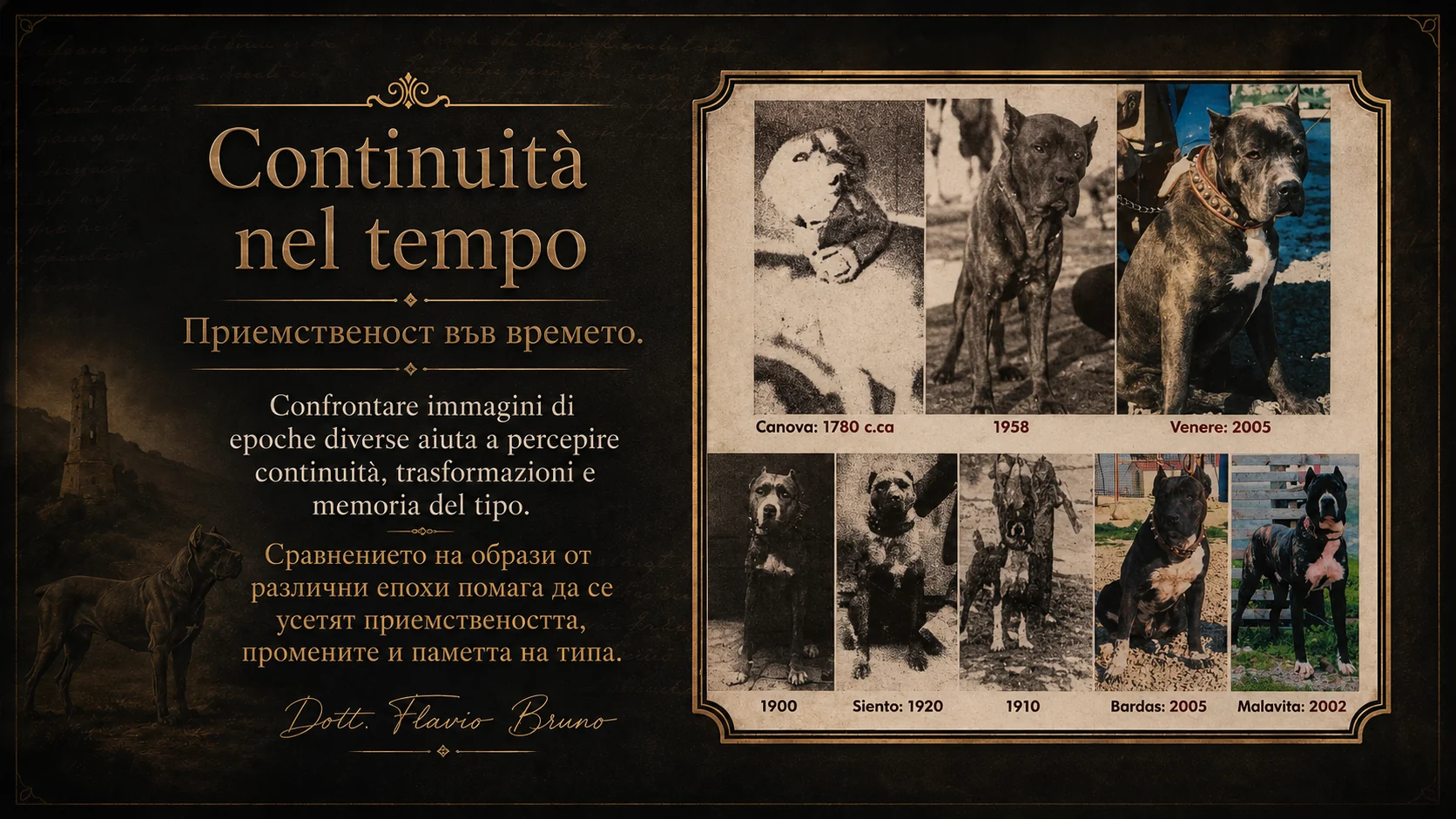
A visual reminder that type must be studied across time and context.
Open image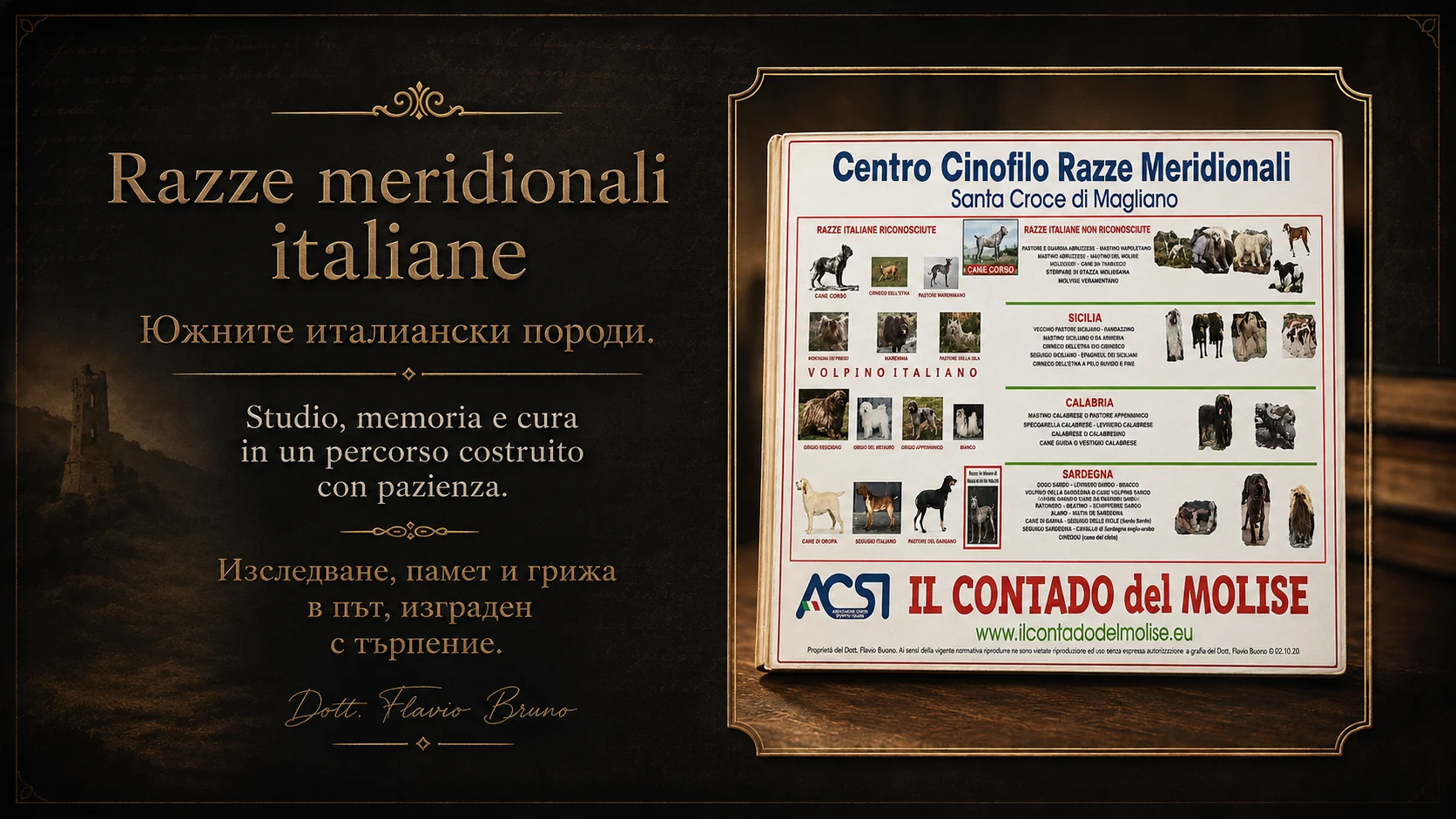
A tribute to the broader cultural field around his work.
Open image
Visual history used as invitation to study, not as final proof.
Open image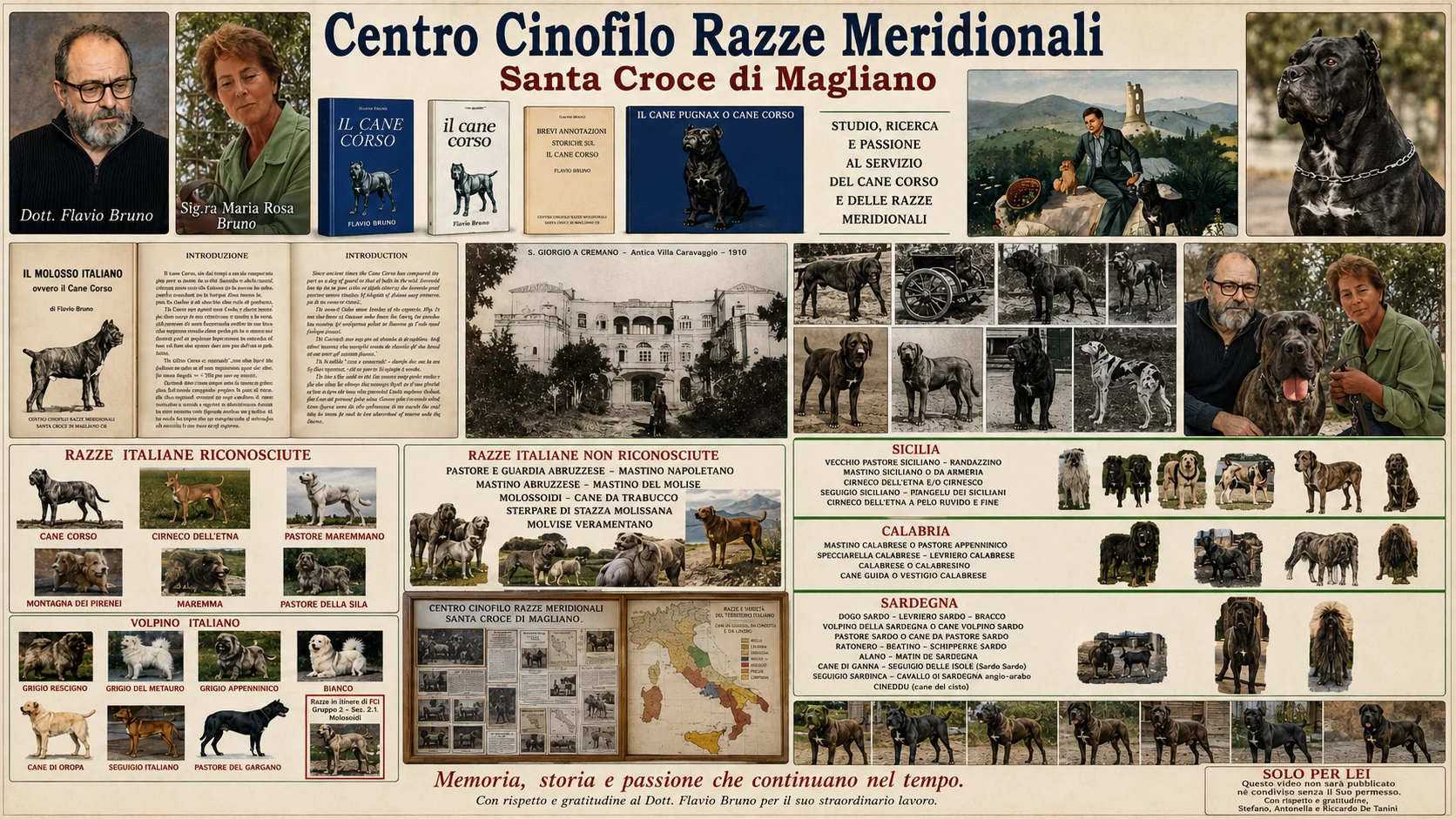
A larger archive plate for slower reading and orientation.
Open imageThese visuals are a respectful USG homage and archive orientation. They are not direct quotations, official editions, or institutional statements from Dott. Bruno unless a specific item is explicitly confirmed as such.
Public external references
External links remain clearly marked as external public references.