
USG organizes Cane Corso profiles, public orientation, knowledge, visual education, verification, community usefulness, and partner presence.
← Back to Knowledge
UNICO SUO GENERE
USG Visual Knowledge Atlas
A curated USG visual orientation system for Cane Corso. The atlas supports first understanding of structure, health awareness, development, care, and responsible USG visual review, while images and descriptions may contain inaccuracies, generalizations, or visual simplifications.
USG identity
What USG is — and what it is not
USG / UNICO SUO GENERE is an independent Cane Corso platform. It connects reviewed profiles, knowledge, visual education, verification, community orientation, and partner presence without replacing official breed authorities.
USG is not presented as a kennel, puppy marketplace, sales channel, or authority for producing Cane Corso puppies.
USG does not replace FCI, ENCI, AKC, UKC, judges, clubs, veterinary documents, pedigrees, or any official Cane Corso standard.
The Visual Atlas helps visitors understand structure, care, health awareness, and photo readiness; it is orientation, not proof, diagnosis, or certification.
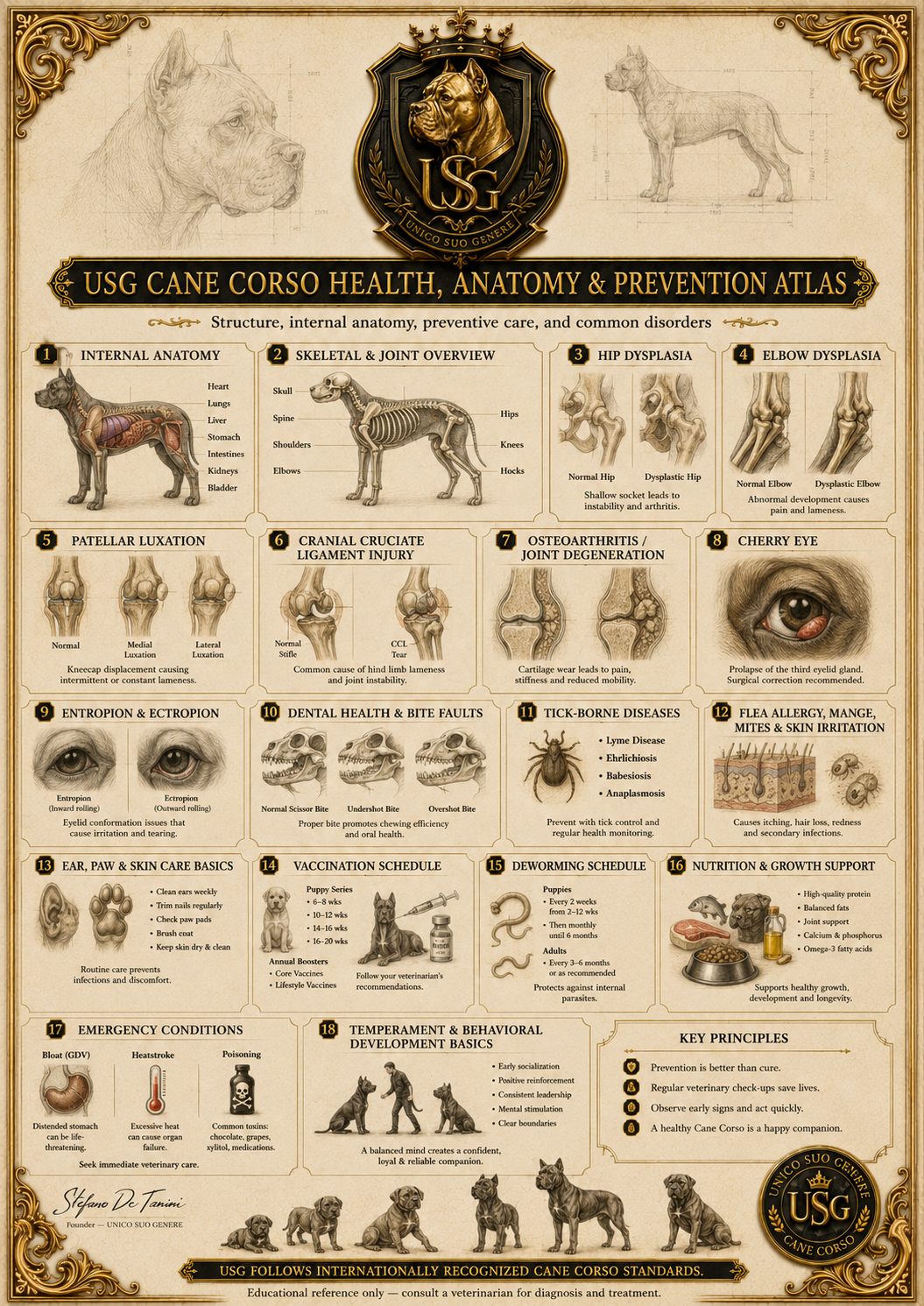
USG Health & Anatomy Atlas
USG visual orientation for the full atlas overview: structure, anatomy, prevention, health awareness, and responsible Cane Corso ownership.
This sheet brings together the main atlas themes: structure, anatomy, health awareness, prevention, and daily care. It helps visitors understand how the individual panels connect into one Cane Corso orientation system.
Overview material for orientation; details are covered in the individual cards.
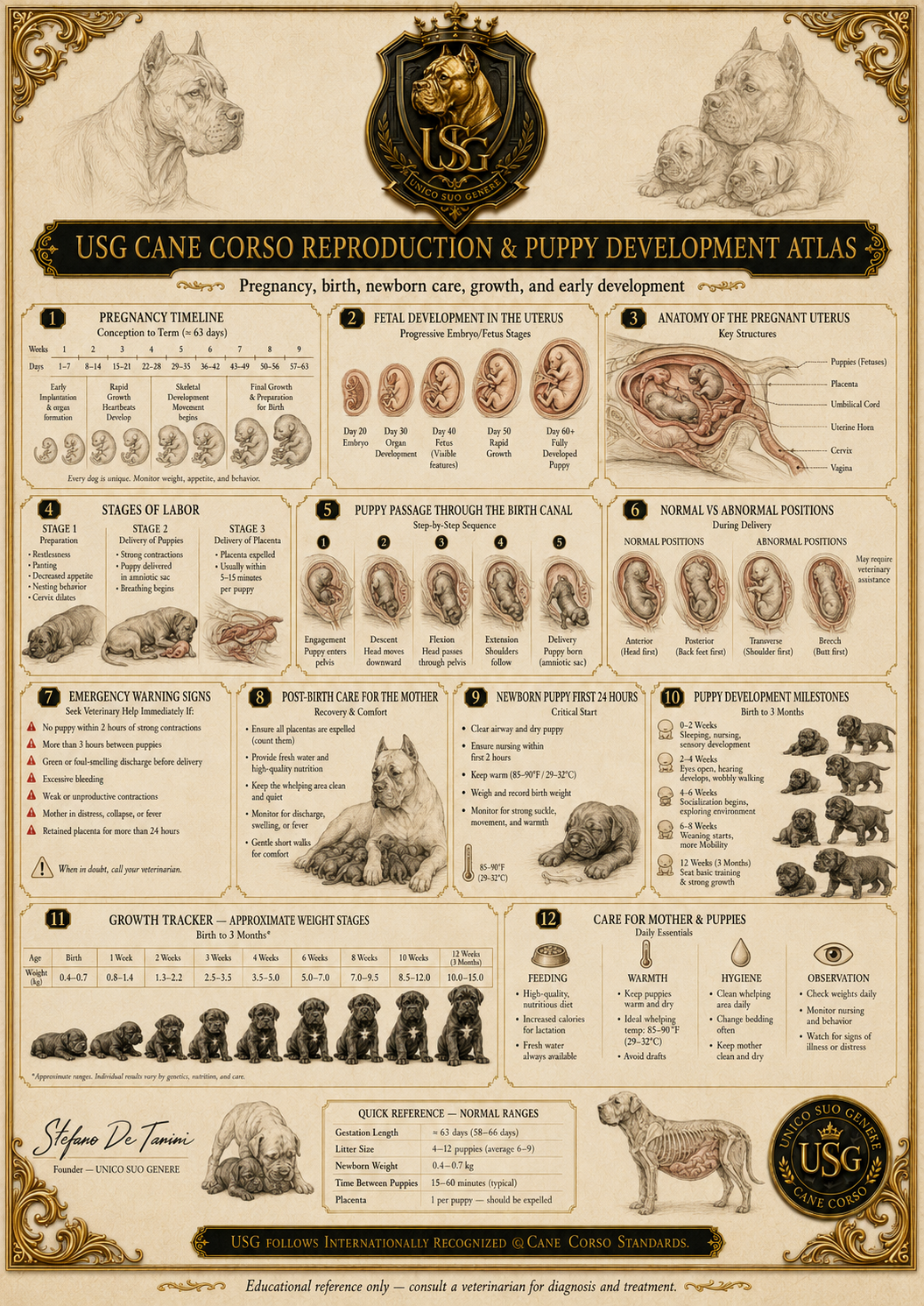
USG Reproduction & Puppy Development Atlas
USG visual orientation for pregnancy, birth, newborn care, growth, and early puppy development.
This sheet summarizes pregnancy, delivery, newborn care, and early puppy development. It guides owners toward the stages that need careful observation.
Pregnancy, delivery, and puppy care should be monitored with a veterinarian or experienced specialist.
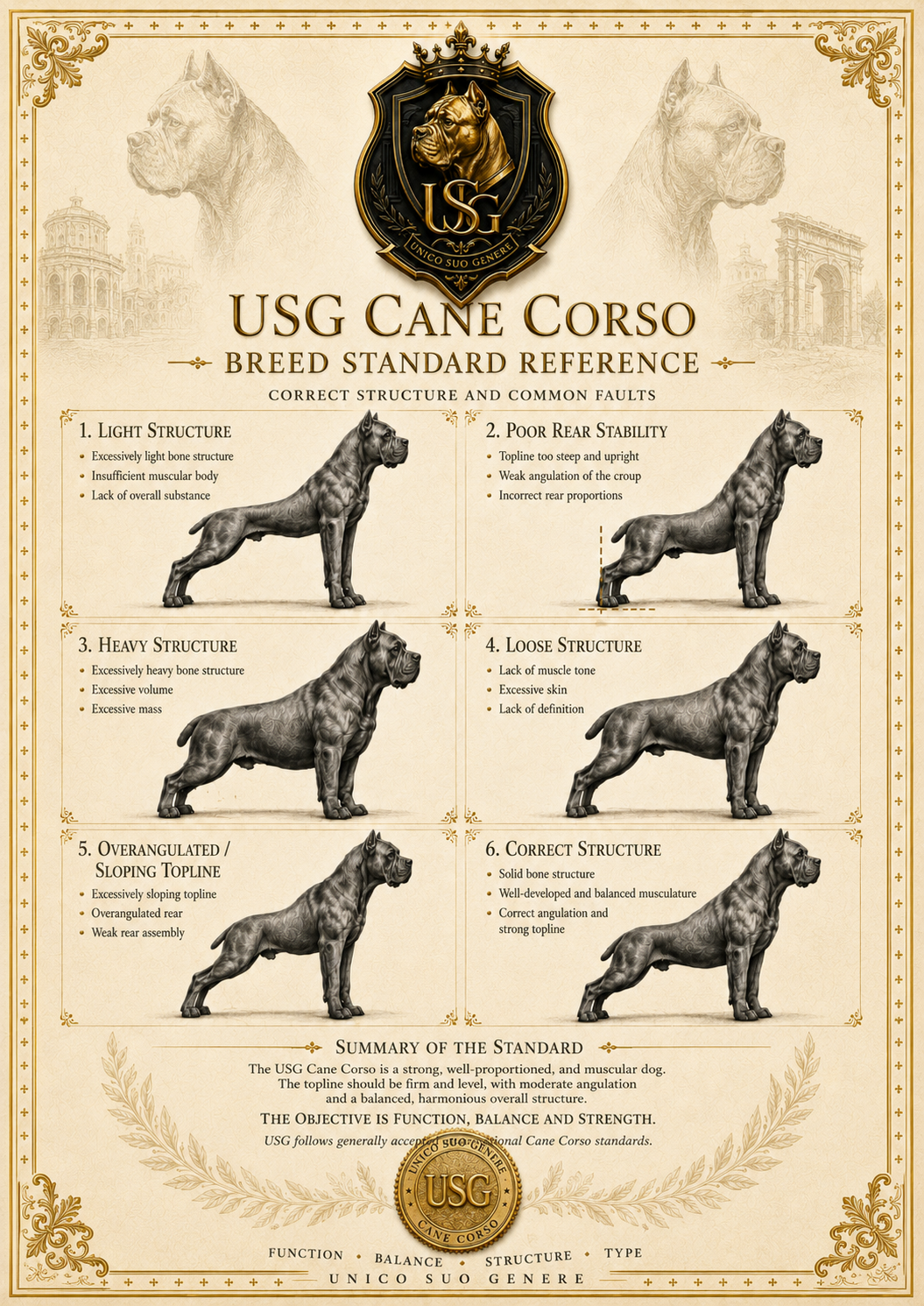
Breed Standard Reference
USG visual orientation for Cane Corso type, balance, proportions, and breed expression.
This sheet presents general orientation points for type, proportions, balance, musculature, and breed expression in the Cane Corso. Any dimensions or ranges shown should be read as initial orientation, not final evaluation.
Orientation for understanding type and structure, not a final evaluation.
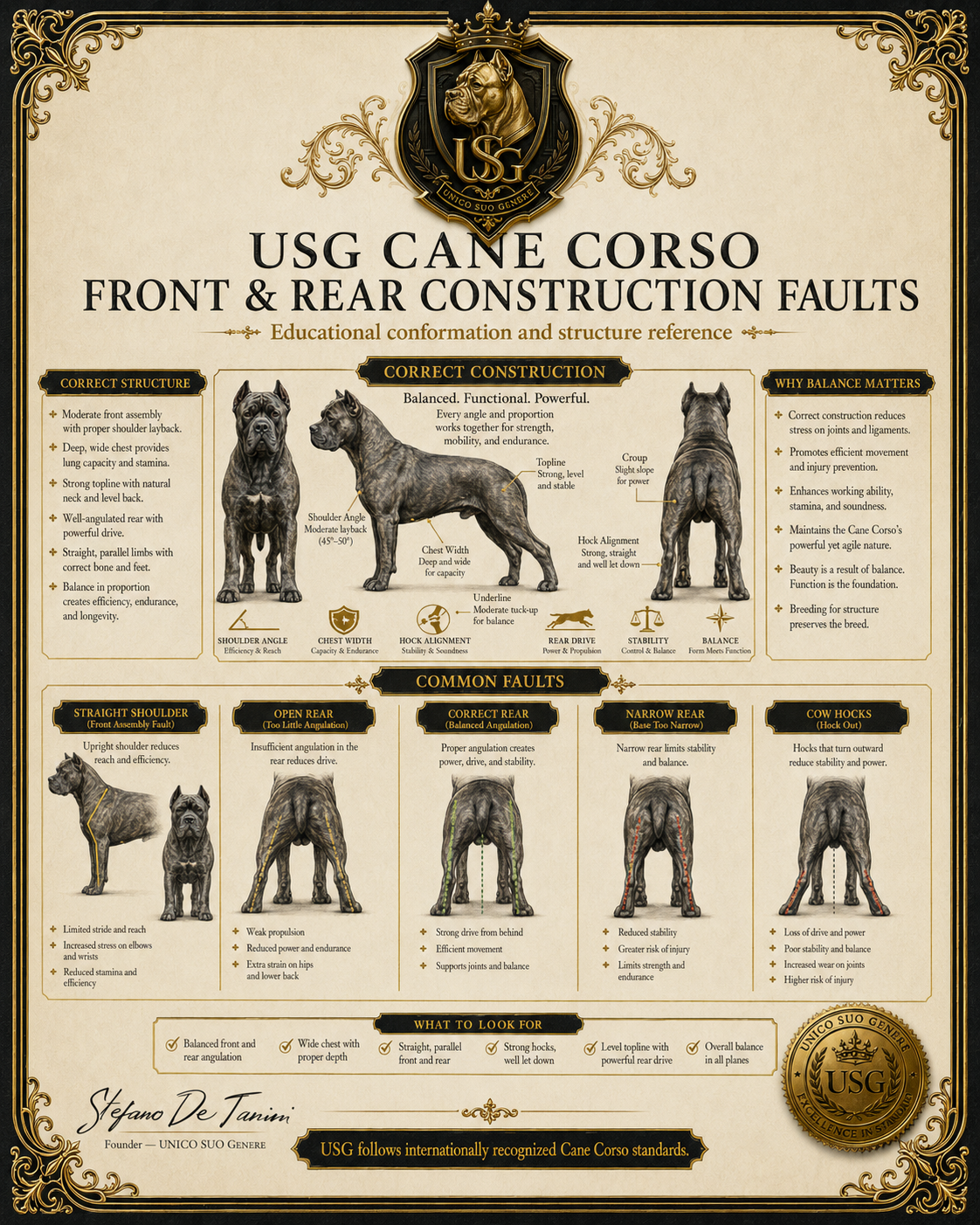
Conformation Guide
USG visual orientation for front, rear, and body construction as visual orientation for balanced structure.
It shows front, rear, and overall body construction: chest, limbs, stance, and balance. It helps explain how the parts should work together in a stable and functional structure.
Orientation for understanding type and structure, not a final evaluation.
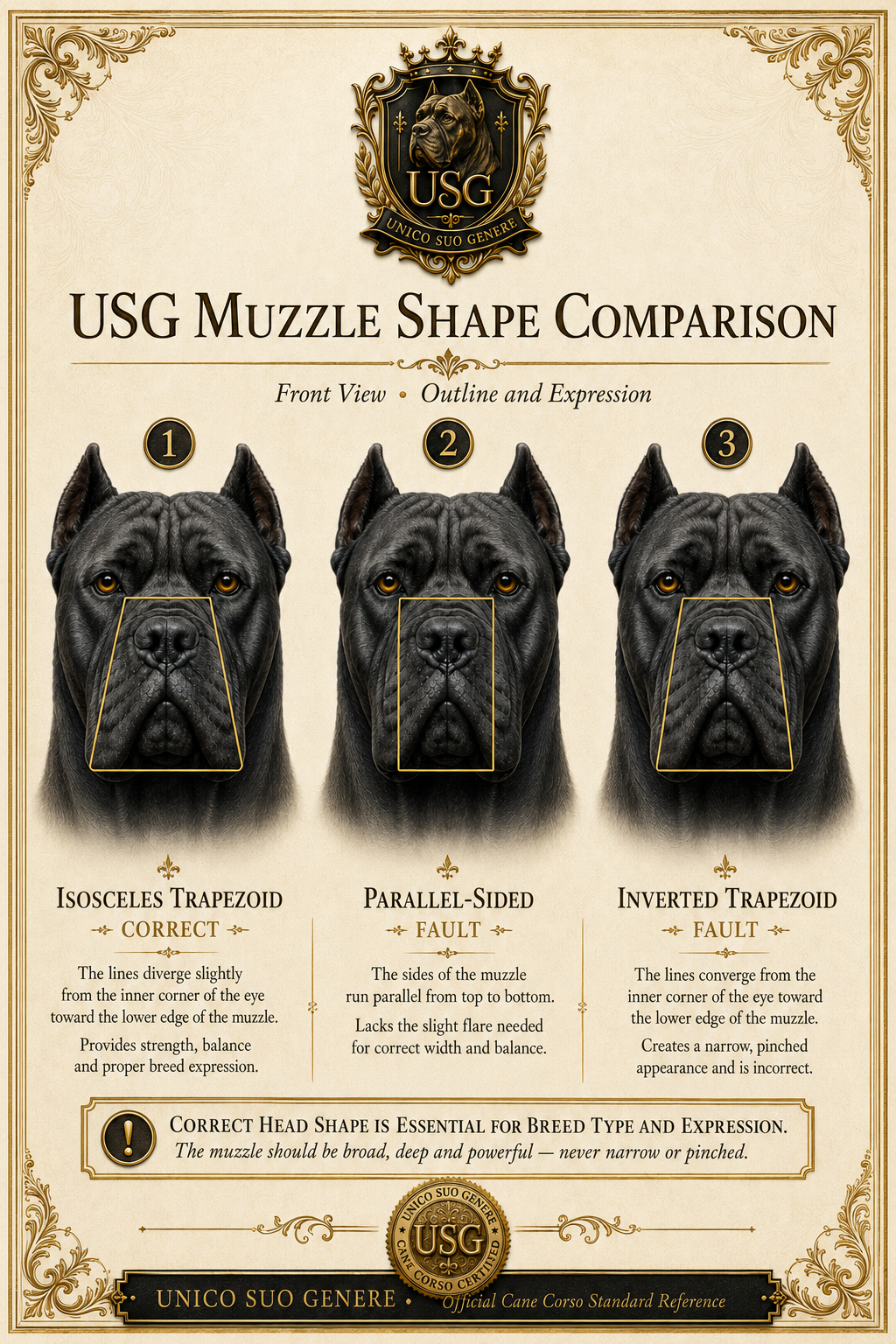
Muzzle Shape Comparison
USG visual orientation for muzzle shape, expression, and visual differences around breed type.
It compares different muzzle shapes and head expression. It helps identify extremes such as overly short, long, narrow, or unbalanced muzzles in relation to breed type.
Orientation for understanding type and structure, not a final evaluation.
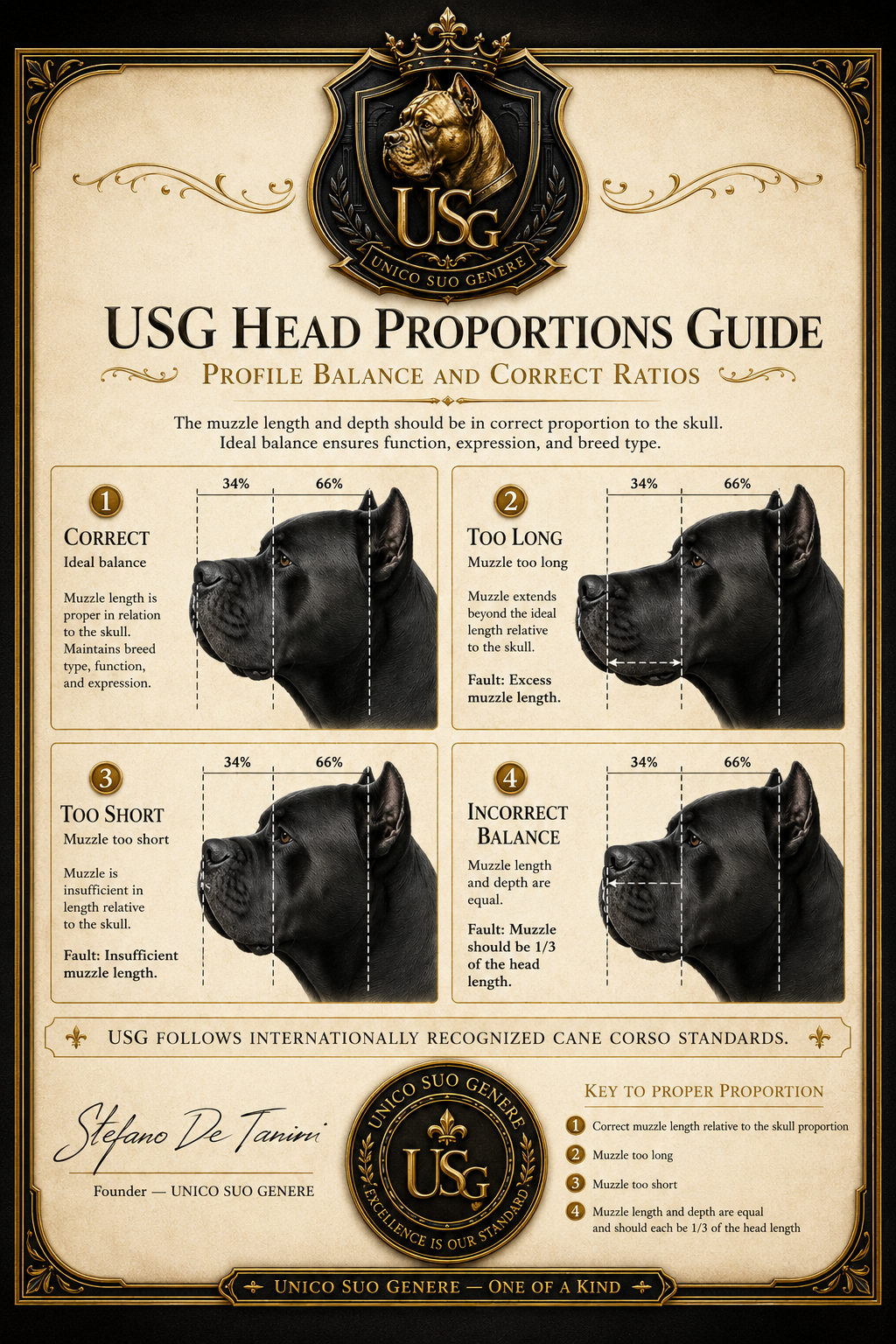
Head Proportions Guide
USG visual orientation for head type, expression, skull, muzzle, and proportional balance.
It shows orientation points for skull, stop, muzzle, proportions, and overall head expression. It is useful for understanding the balance between strength, width, length, and function.
Orientation for understanding type and structure, not a final evaluation.
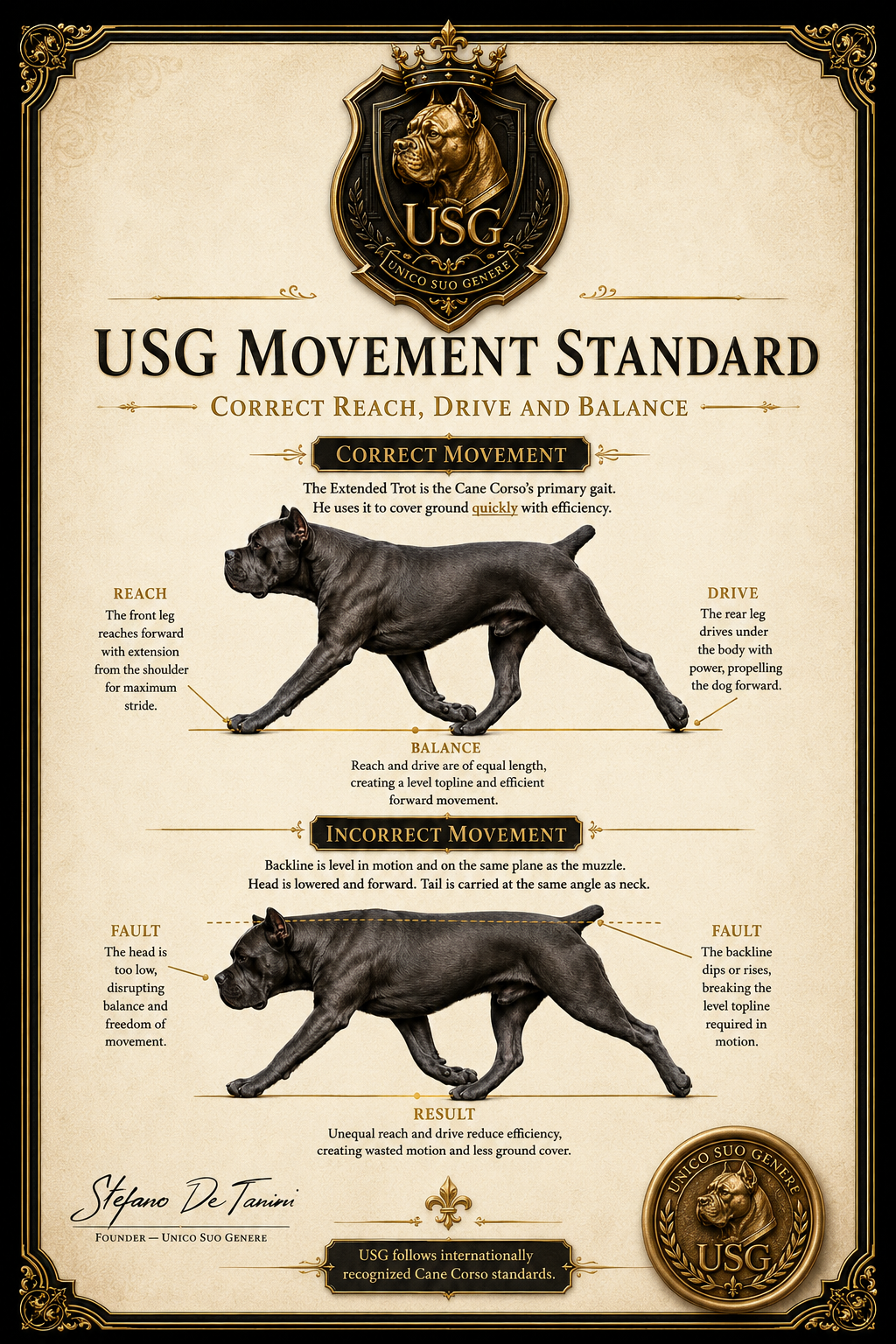
Movement Standard
USG visual orientation for gait, balance, drive, reach, and structural movement.
This sheet explains gait, reach, drive, balance, and the link between movement and construction. It helps viewers look beyond stance and understand functional movement.
Orientation for understanding type and structure, not a final evaluation.
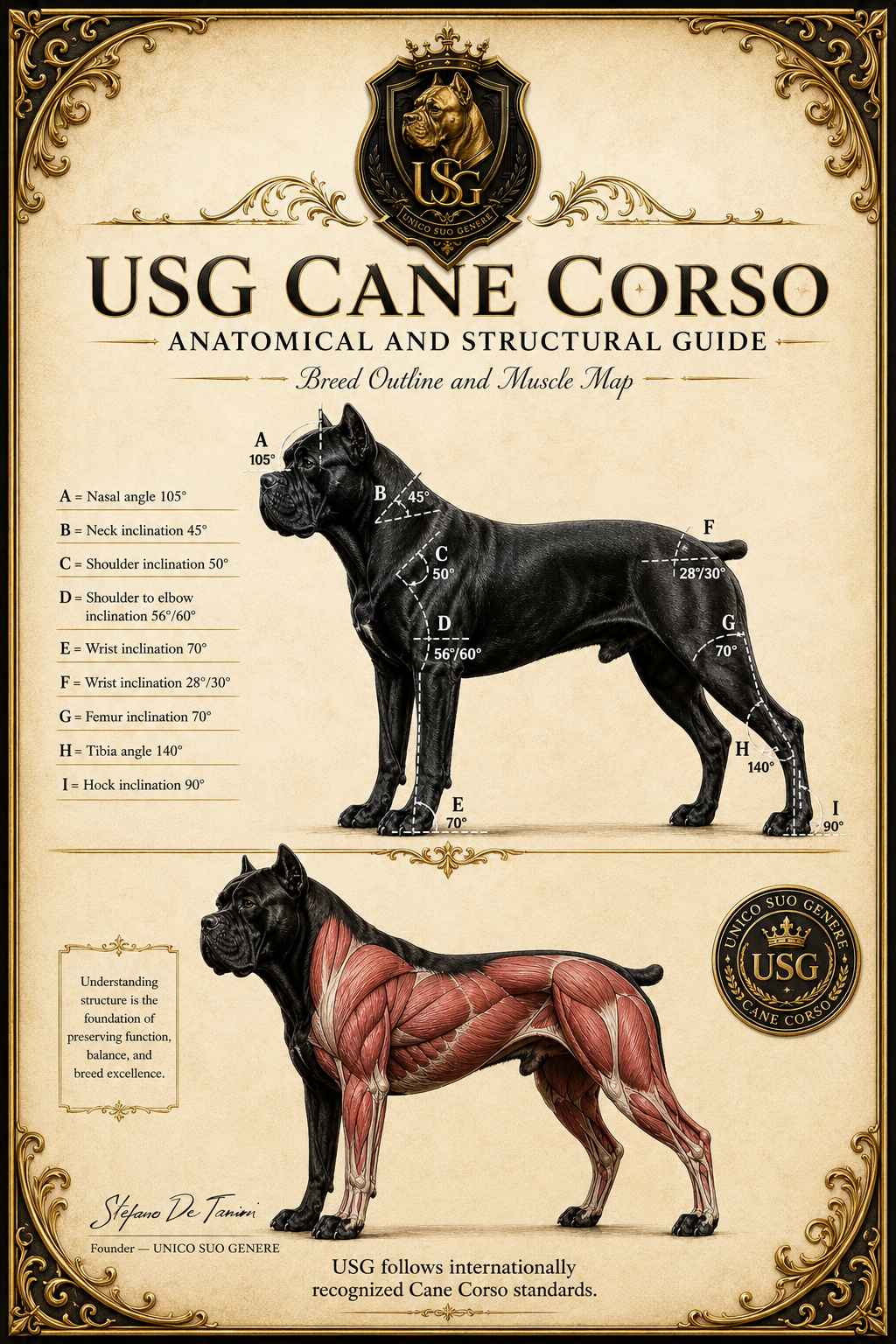
Anatomical Guide
USG visual orientation for internal and external anatomy as educational orientation.
It summarizes external and internal anatomical orientation points: organs, muscles, joints, and body regions. It helps owners name what they observe more clearly.
Anatomy orientation; pain, injury, or concern requires a qualified professional.
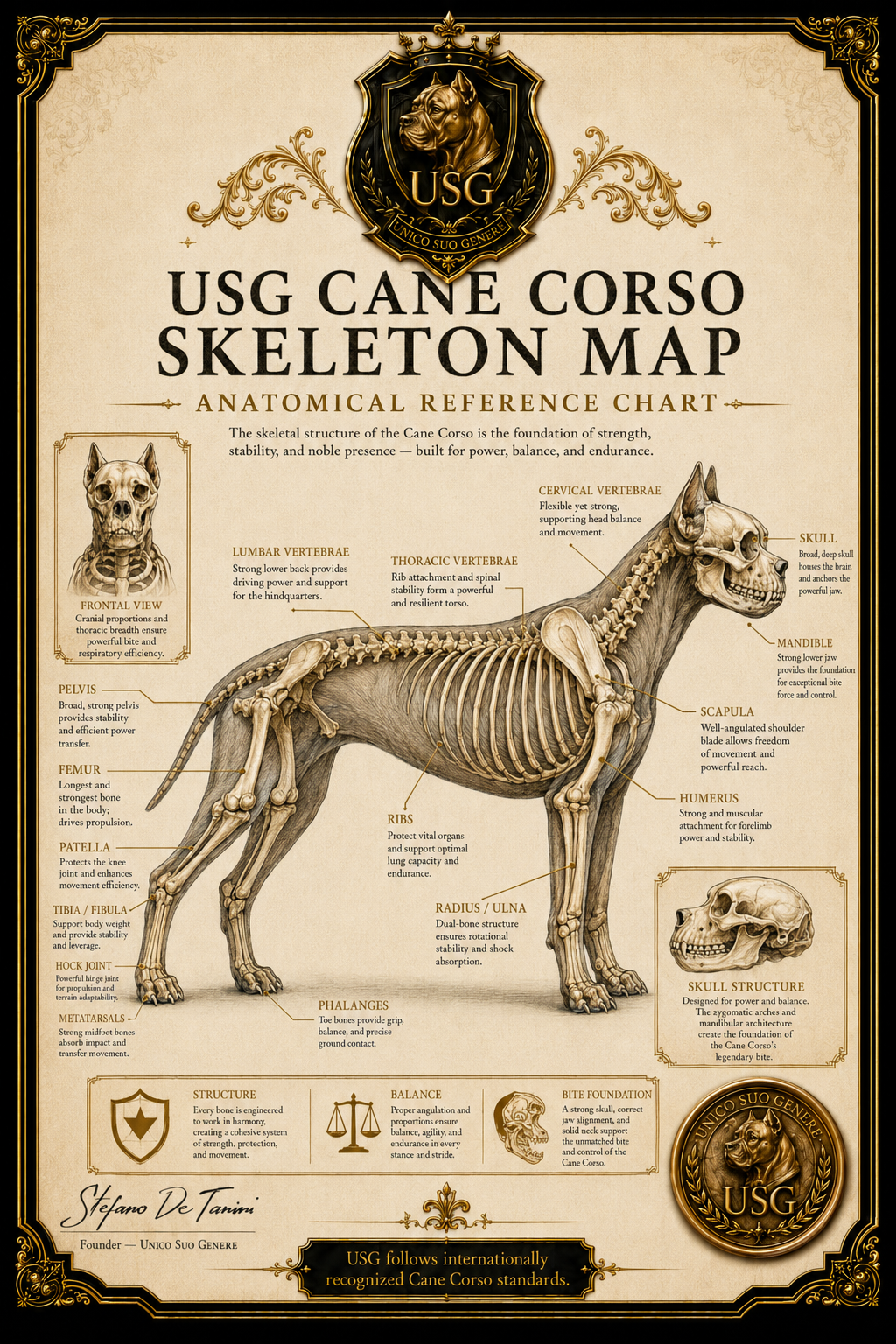
Skeleton Chart
USG visual orientation for major bones, joints, and structural landmarks.
It shows the main bones, joints, and load-bearing skeletal landmarks. It is useful when discussing movement, growth, injuries, or structural observations.
Anatomy orientation; pain, injury, or concern requires a qualified professional.
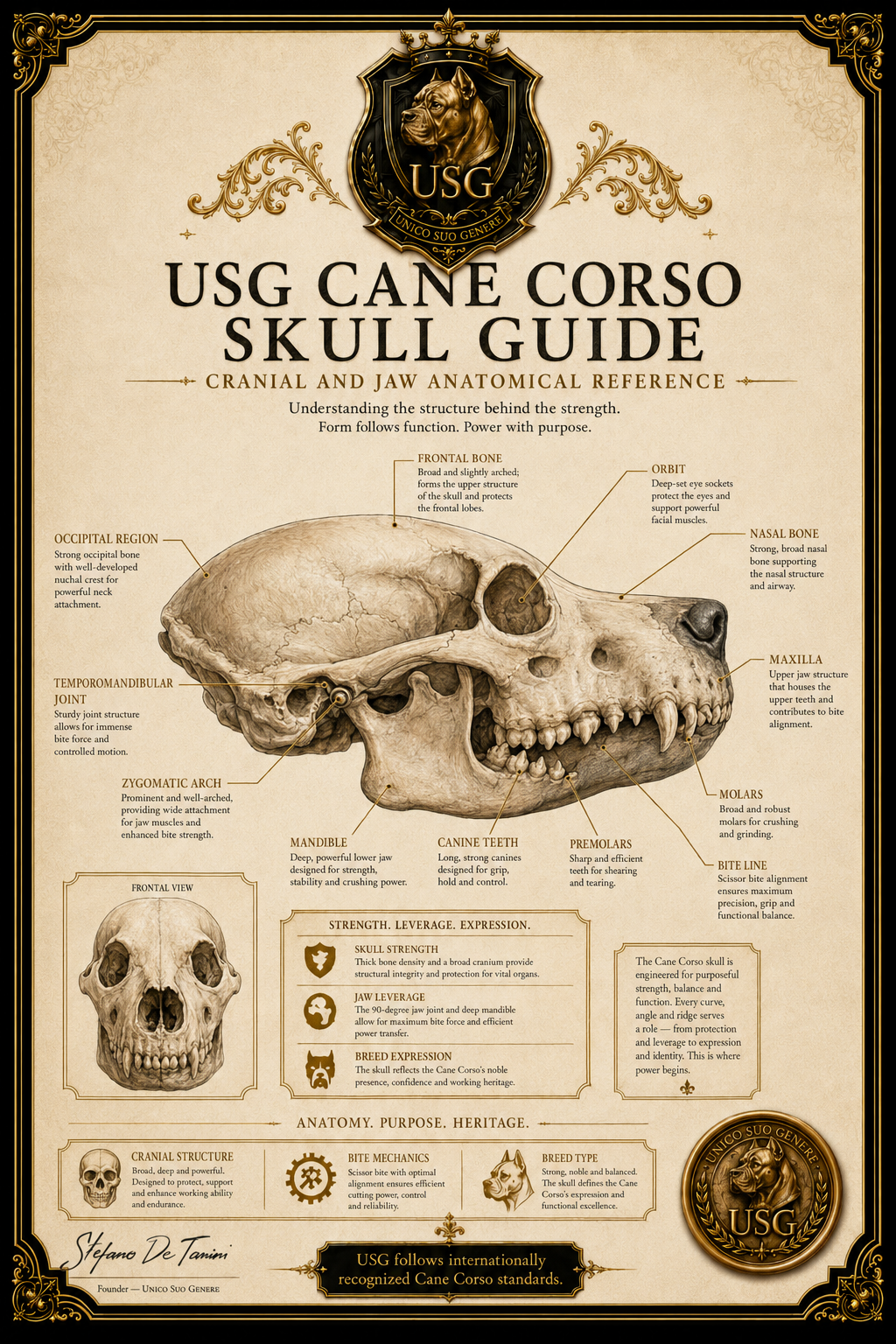
Skull Anatomy Guide
USG visual orientation for skull, jaw, muzzle, and cranial structure.
It focuses on the skull, jaw, muzzle, and main head structures. It helps explain how the bony foundation affects expression, bite, and function.
Anatomy orientation; pain, injury, or concern requires a qualified professional.
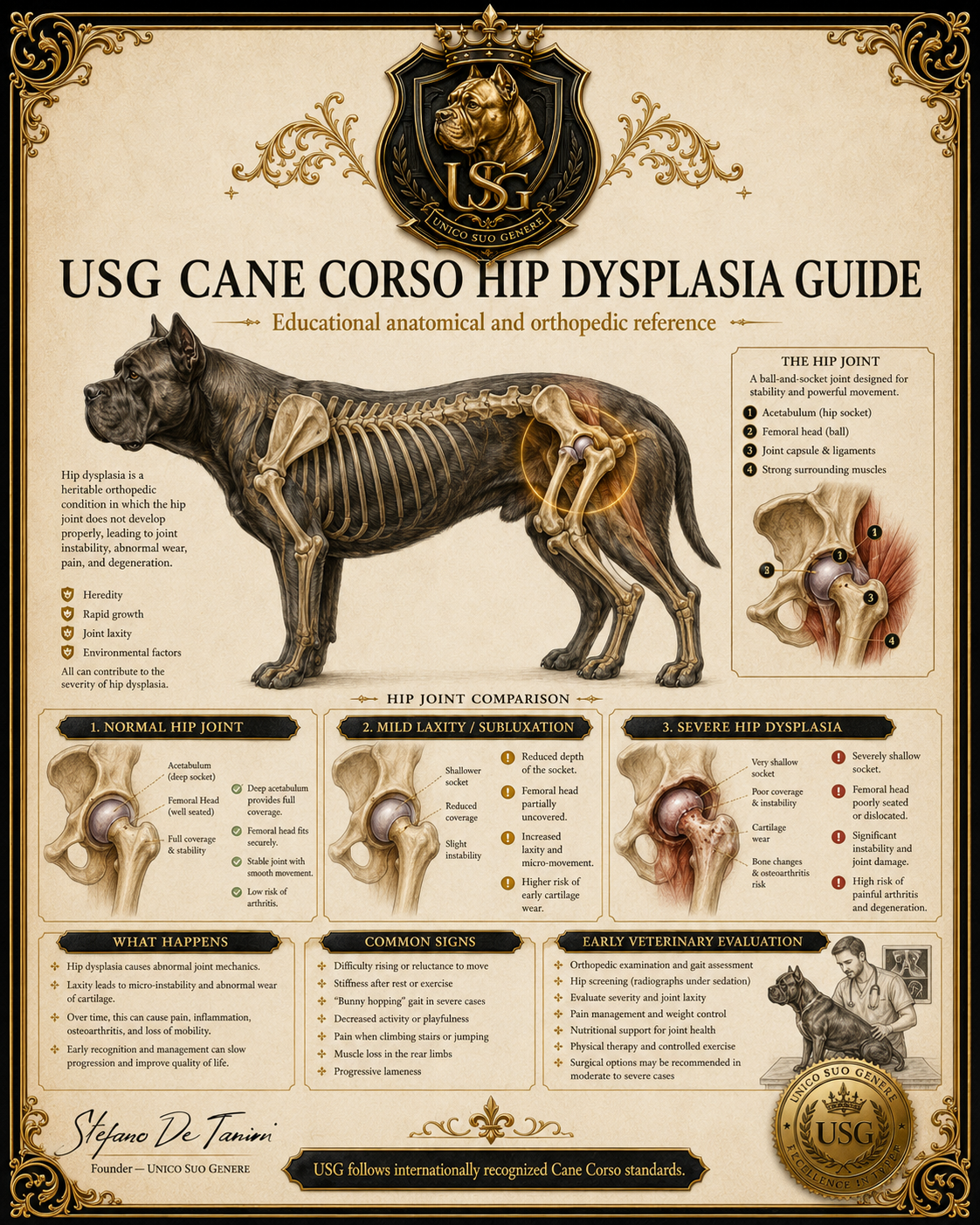
Hip Dysplasia Guide
USG visual orientation for normal and dysplastic hip development as owner awareness.
This sheet compares normal and problematic hip development. It highlights possible signs such as stiffness, lameness, difficulty rising, reluctance to jump, or gait changes.
If symptoms or concerns appear, consult a veterinarian.
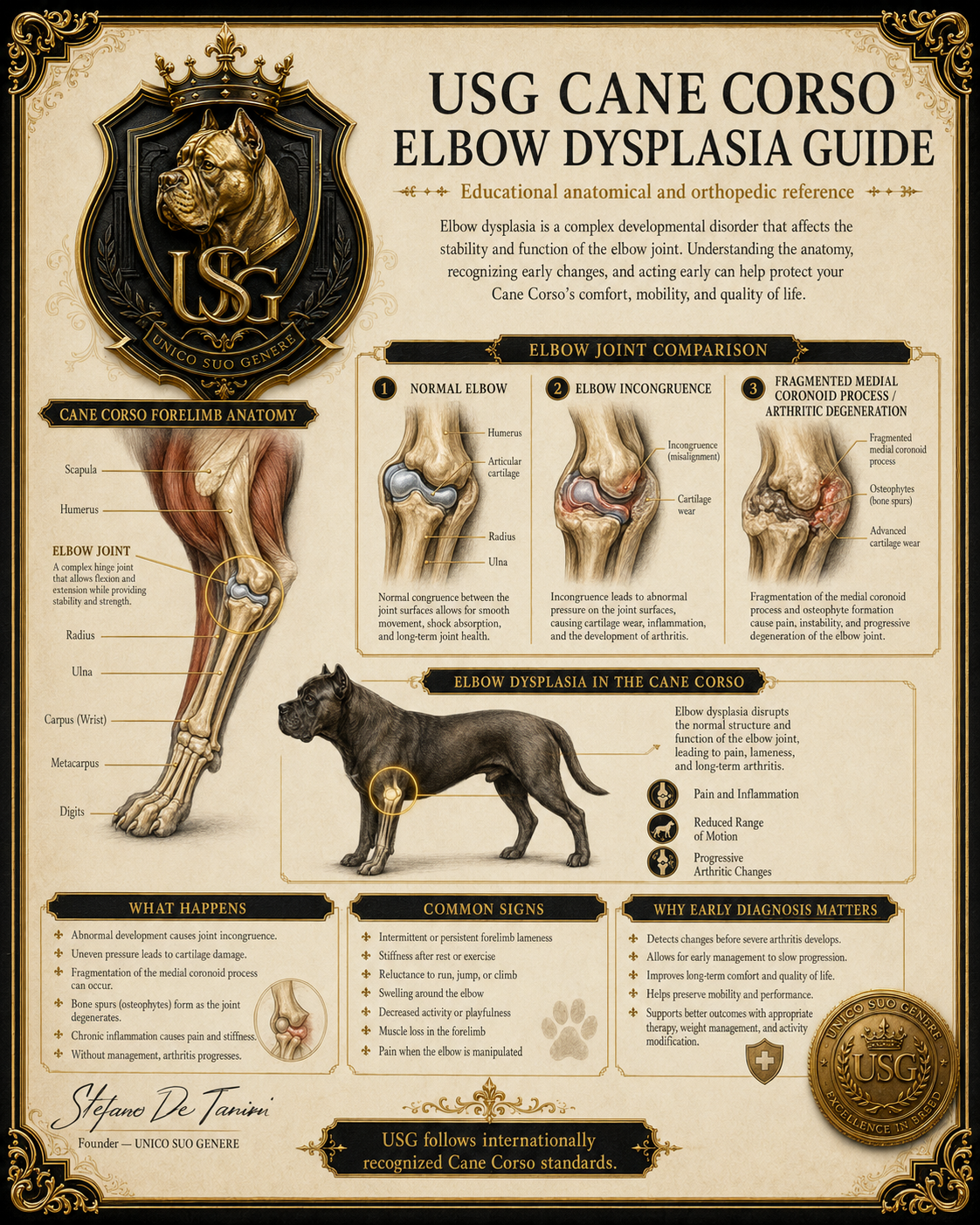
Elbow Dysplasia Guide
USG visual orientation for elbow joint development and dysplasia risk.
It shows the elbow joint and risks related to dysplasia or abnormal development. It helps owners watch for signs such as front-limb lameness, pain after exercise, or stiffness.
If symptoms or concerns appear, consult a veterinarian.
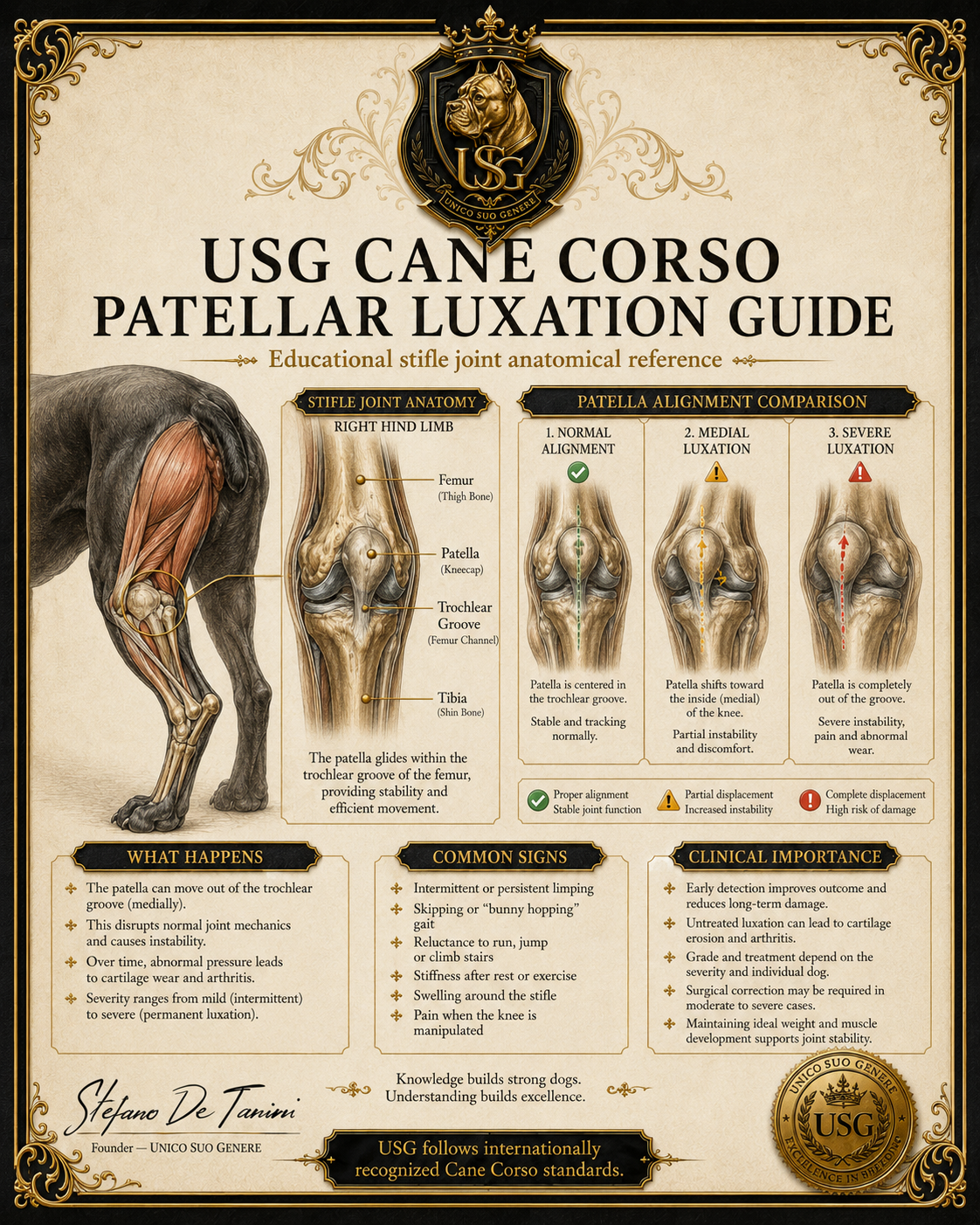
Patellar Luxation Guide
USG visual orientation for kneecap displacement, joint movement, and warning signs.
It explains kneecap displacement and how it can affect hind-limb movement. Possible signs include skipping gait, sudden lifting of a leg, or instability.
If symptoms or concerns appear, consult a veterinarian.
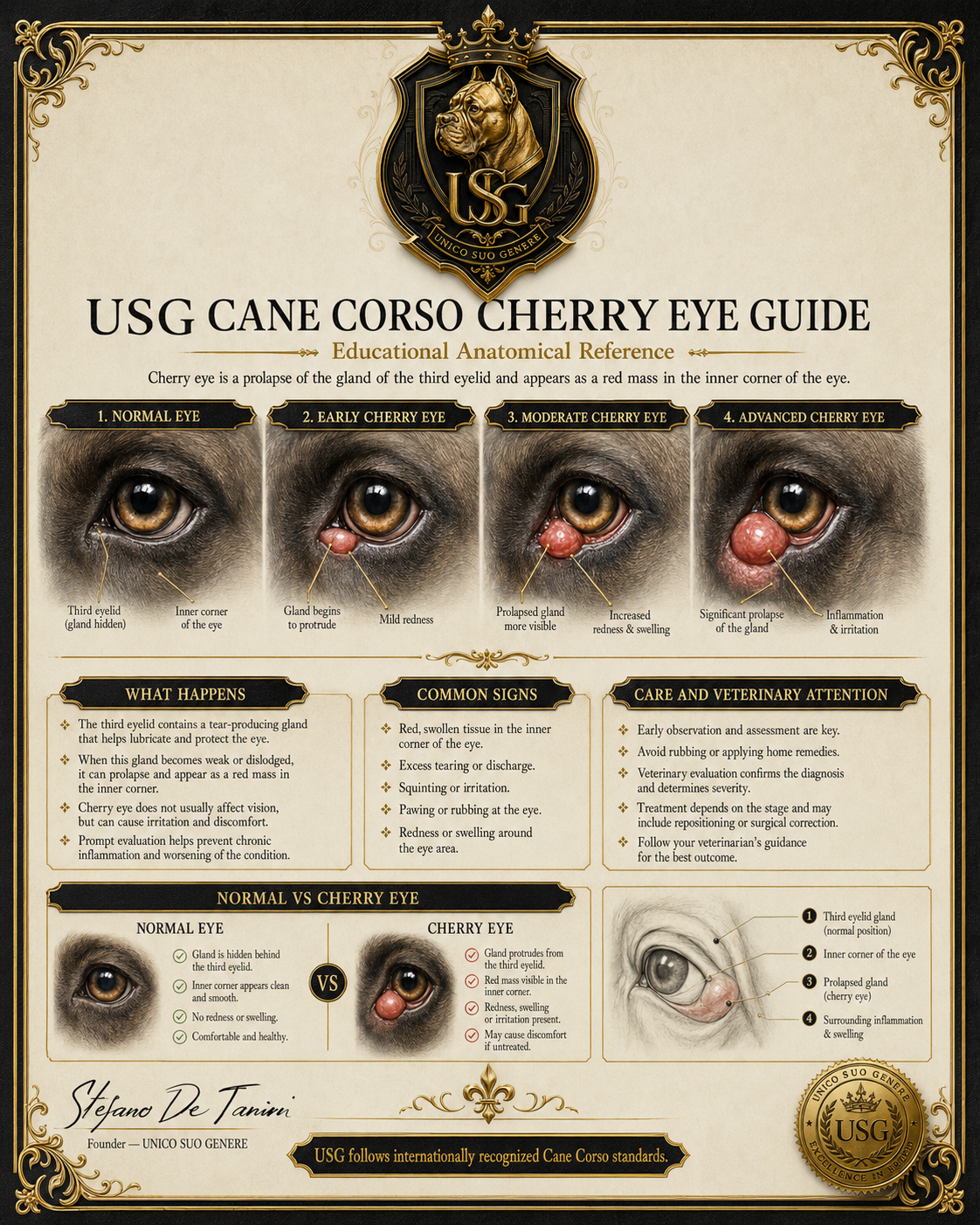
Cherry Eye Guide
USG visual orientation for third eyelid gland prolapse as owner awareness.
It shows third-eyelid gland prolapse, often visible as a red swelling in the inner corner of the eye. It guides owners to watch for irritation, tearing, and discomfort.
If symptoms or concerns appear, consult a veterinarian.
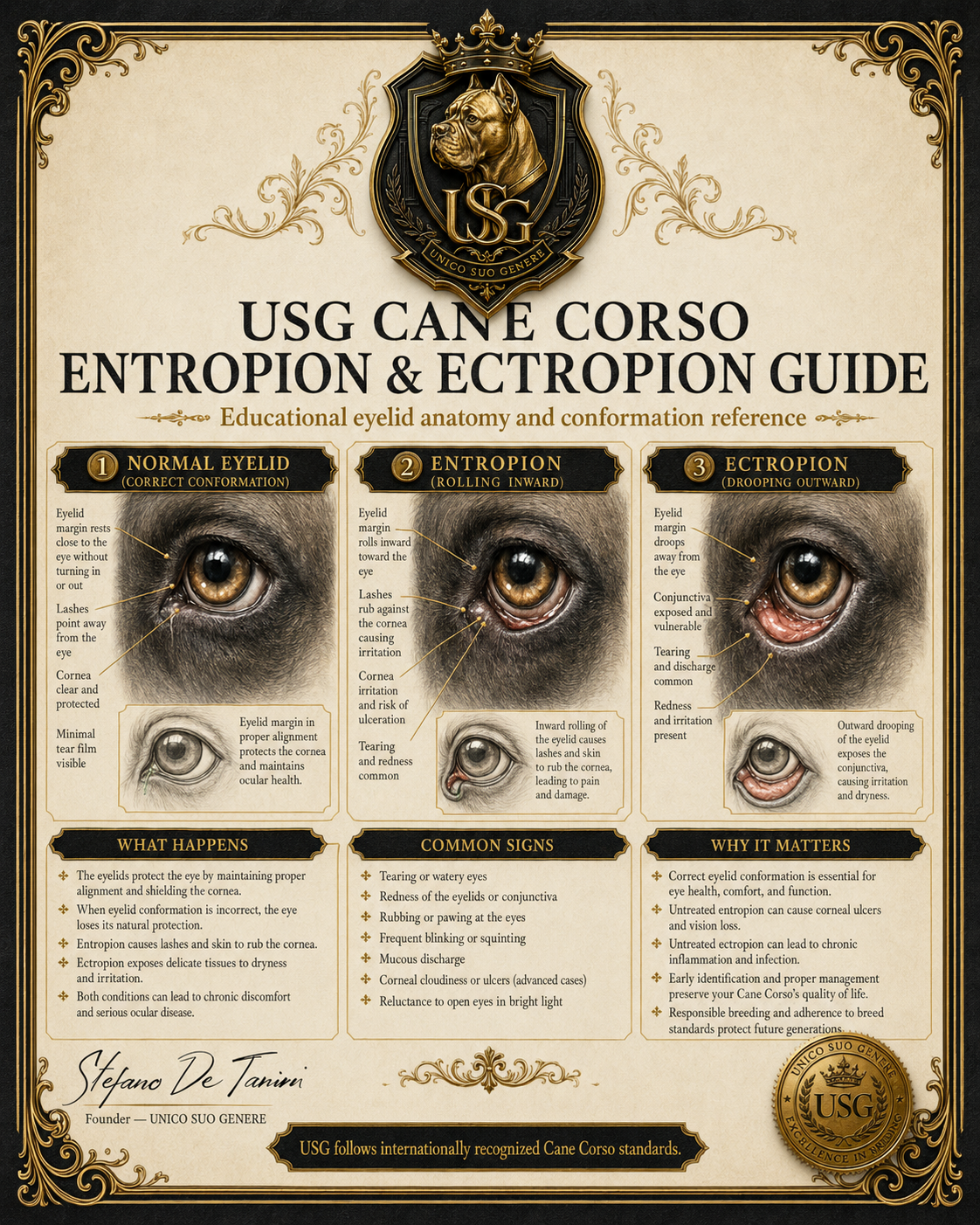
Eyelid Conditions Guide
USG visual orientation for entropion, ectropion, irritation patterns, and eye comfort awareness.
This sheet covers eyelid conditions such as entropion and ectropion, where eyelids turn inward or outward. Possible signs include redness, tearing, squinting, and irritation.
If symptoms or concerns appear, consult a veterinarian.
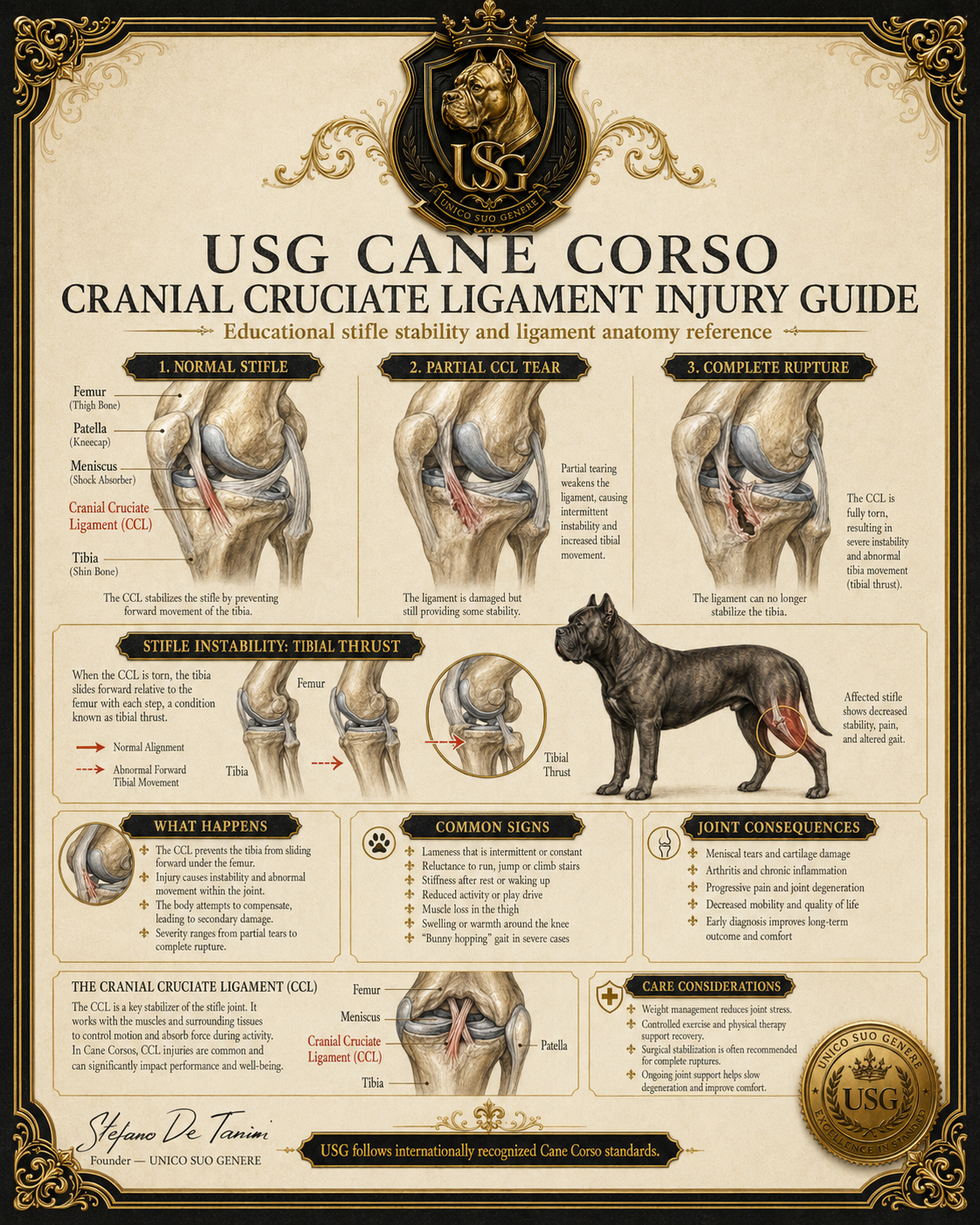
Cranial Cruciate Ligament Guide
USG visual orientation for knee instability, cruciate ligament injury, and mobility impact.
It shows the knee joint and the role of the cruciate ligament in stability. Possible warning signs include sudden lameness, reluctance to bear weight, and hind-limb instability.
If symptoms or concerns appear, consult a veterinarian.
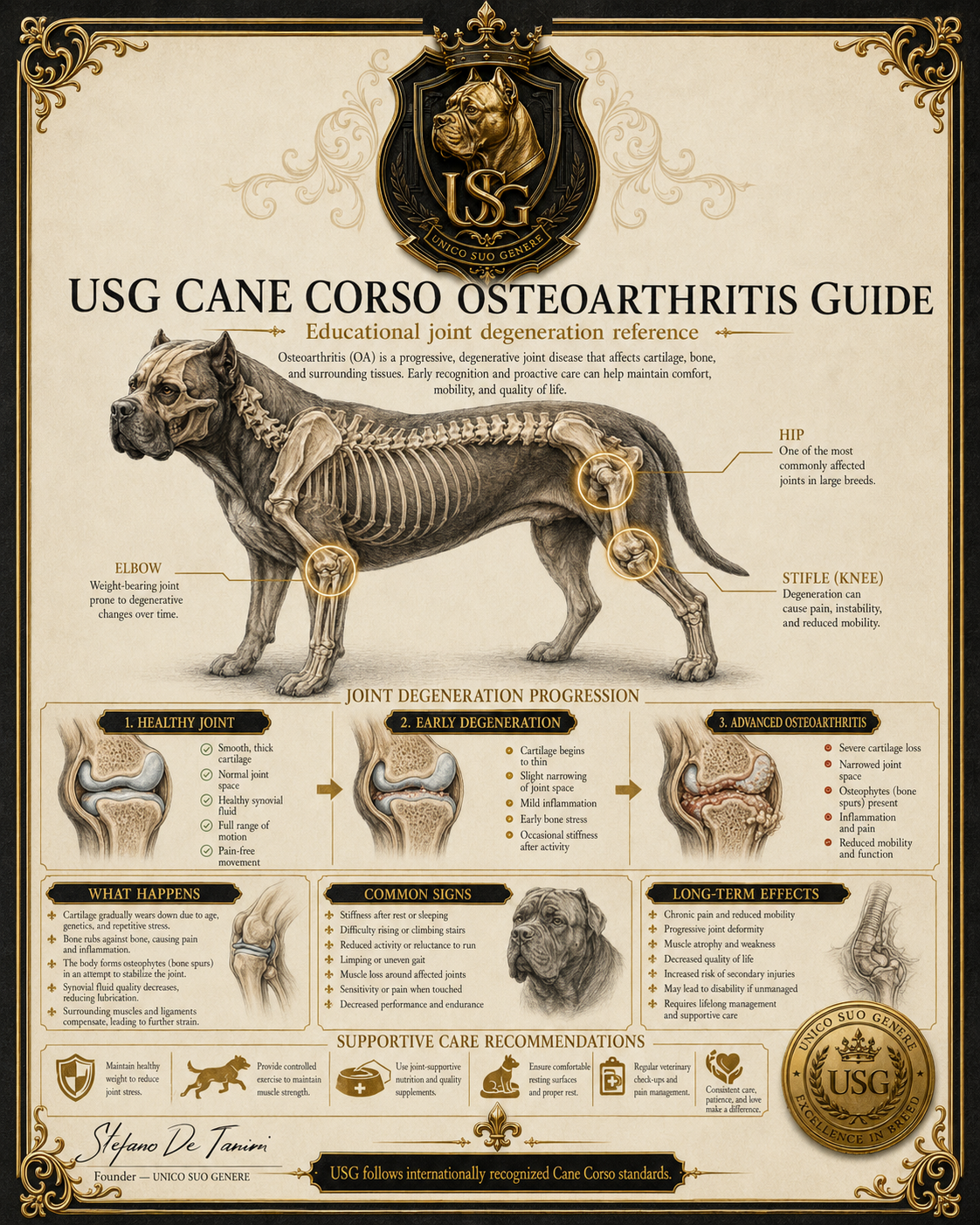
Osteoarthritis Guide
USG visual orientation for joint degeneration, cartilage wear, stiffness, and mobility awareness.
It explains joint and cartilage wear and how it may relate to pain and stiffness. It helps recognize changes such as slower rising, reduced play, and limited mobility.
If symptoms or concerns appear, consult a veterinarian.
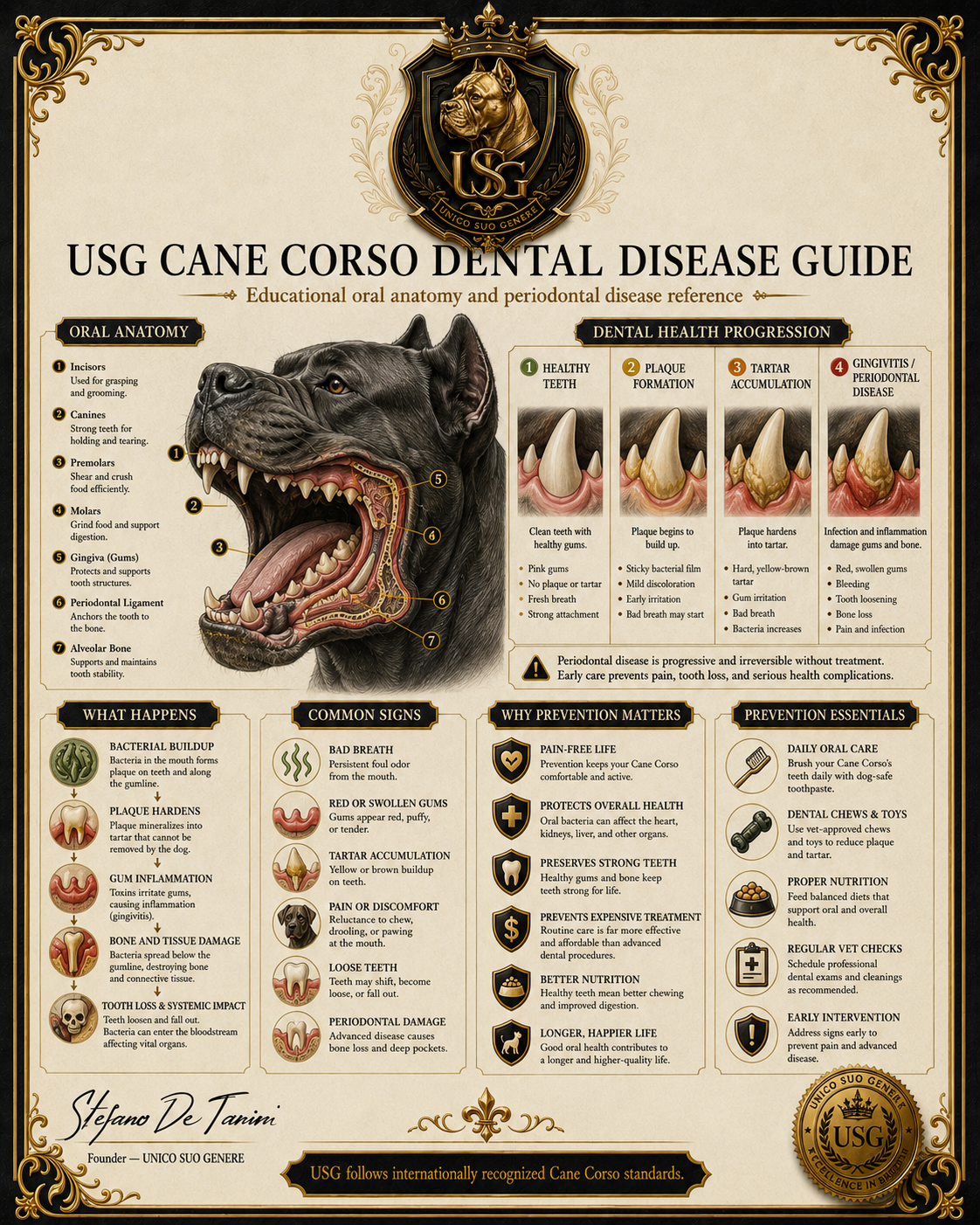
Dental Disease Guide
USG visual orientation for oral anatomy, plaque, tartar, gingivitis, and prevention awareness.
It shows oral anatomy, plaque, tartar, gum inflammation, and prevention. It points to signs such as bad breath, red gums, pain while eating, or buildup on teeth.
If symptoms or concerns appear, consult a veterinarian.
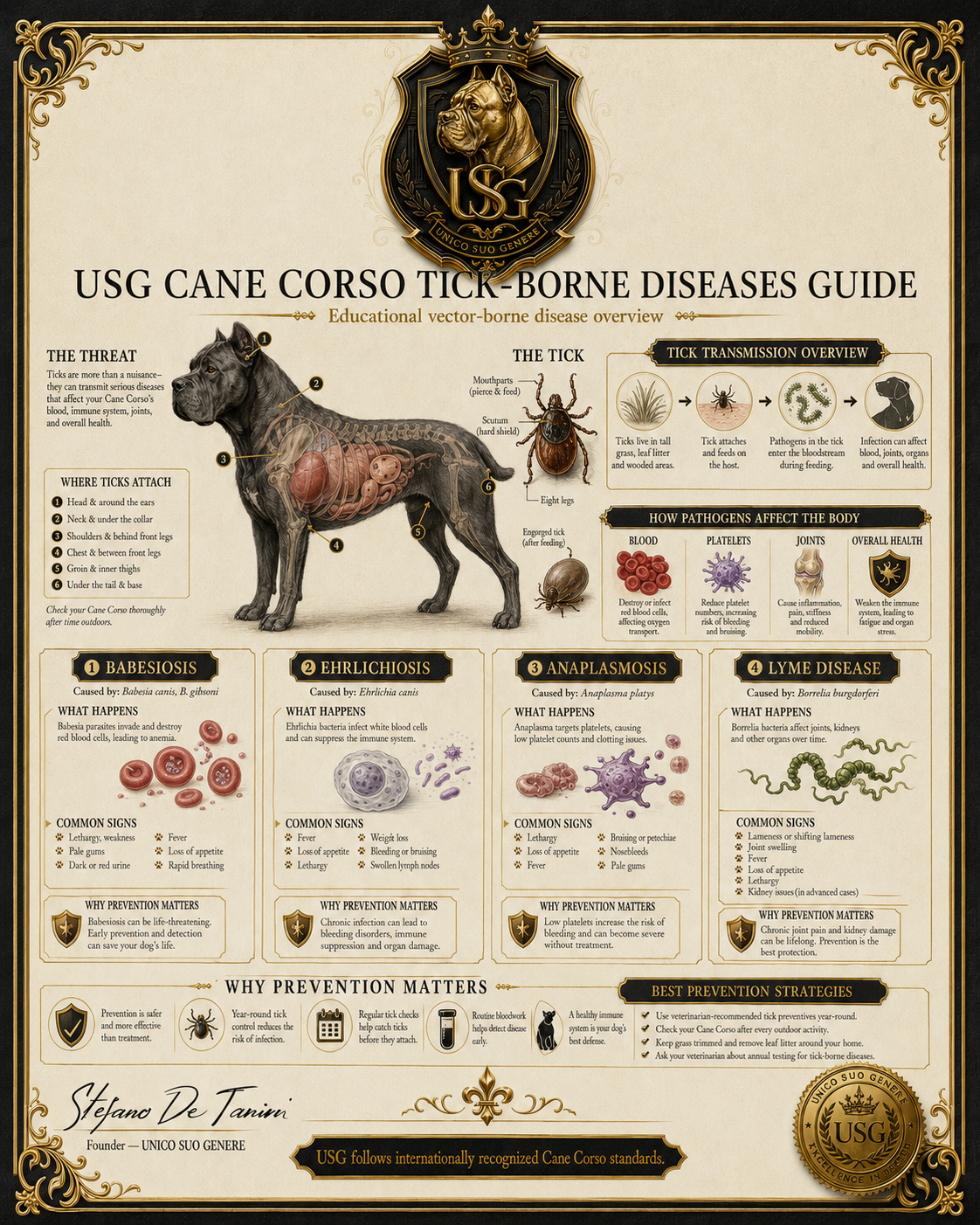
Tick-Borne Diseases Overview
USG visual orientation for ticks, blood, joints, and systemic health awareness.
It summarizes diseases that may be transmitted by ticks and why prevention matters. It guides owners to watch for lethargy, fever, anemia, pain, or sudden changes in condition.
Prevention, testing, and treatment should follow local veterinary guidance.
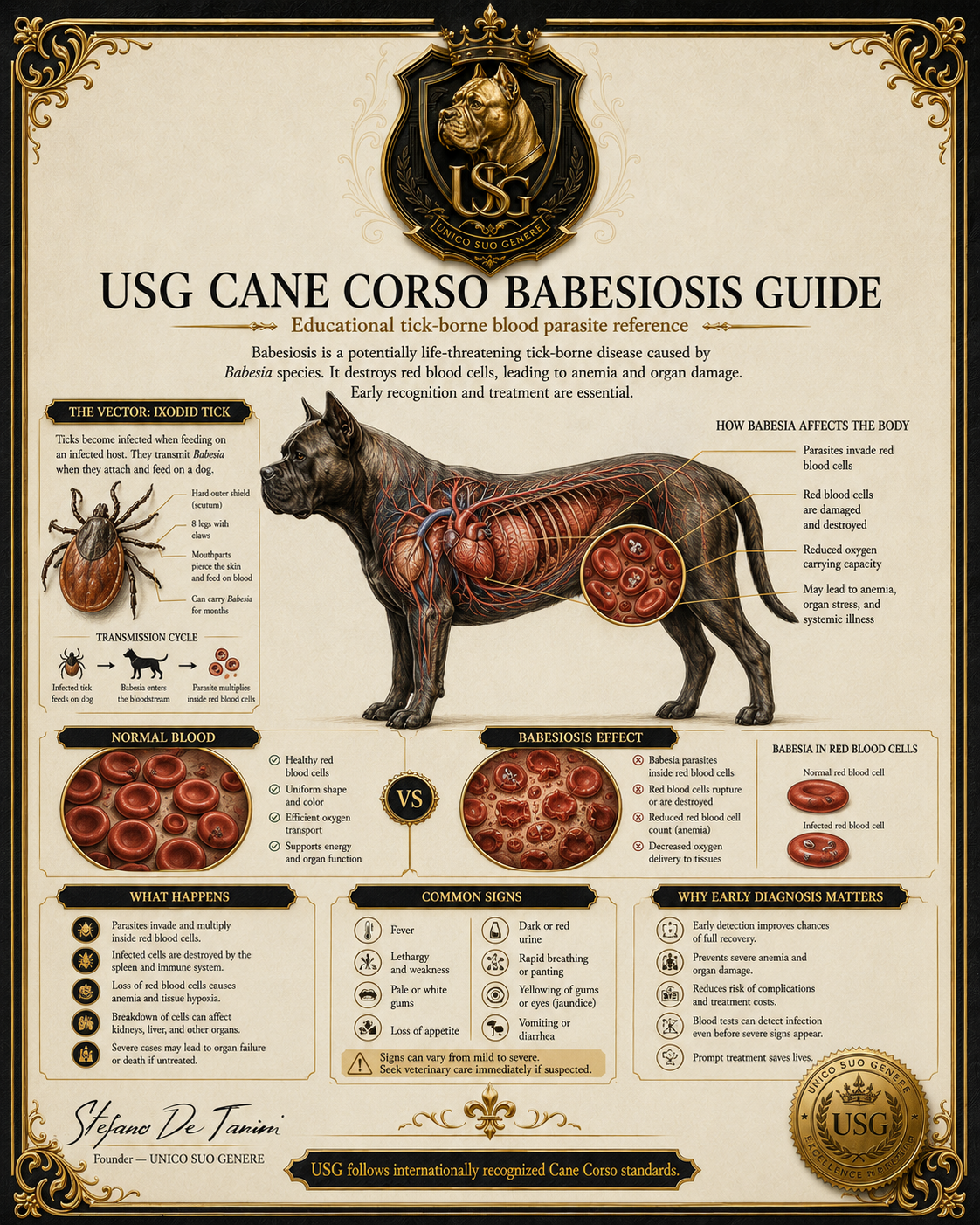
Babesiosis Guide
USG visual orientation for tick-borne blood parasite awareness and red blood cell impact.
This sheet presents babesiosis as a tick-related disease affecting blood cells. Possible signs include lethargy, fever, pale gums, dark urine, or sudden weakness.
Prevention, testing, and treatment should follow local veterinary guidance.
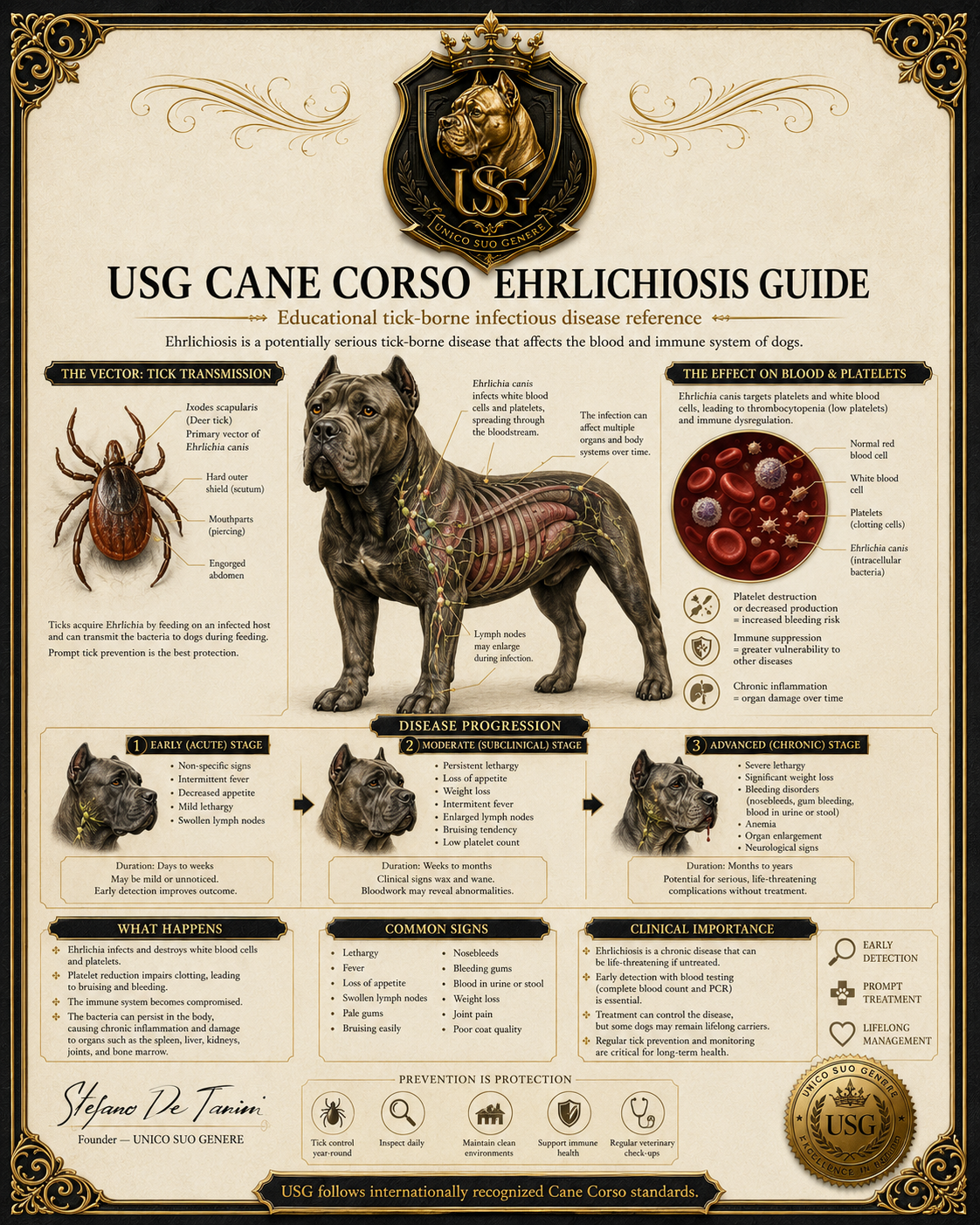
Ehrlichiosis Guide
USG visual orientation for tick-borne infection affecting blood cells, platelets, and immunity.
It shows ehrlichiosis as a tick-borne disease that can affect blood and immune response. It points to signs such as fever, lethargy, bleeding, weight loss, or swollen lymph nodes.
Prevention, testing, and treatment should follow local veterinary guidance.
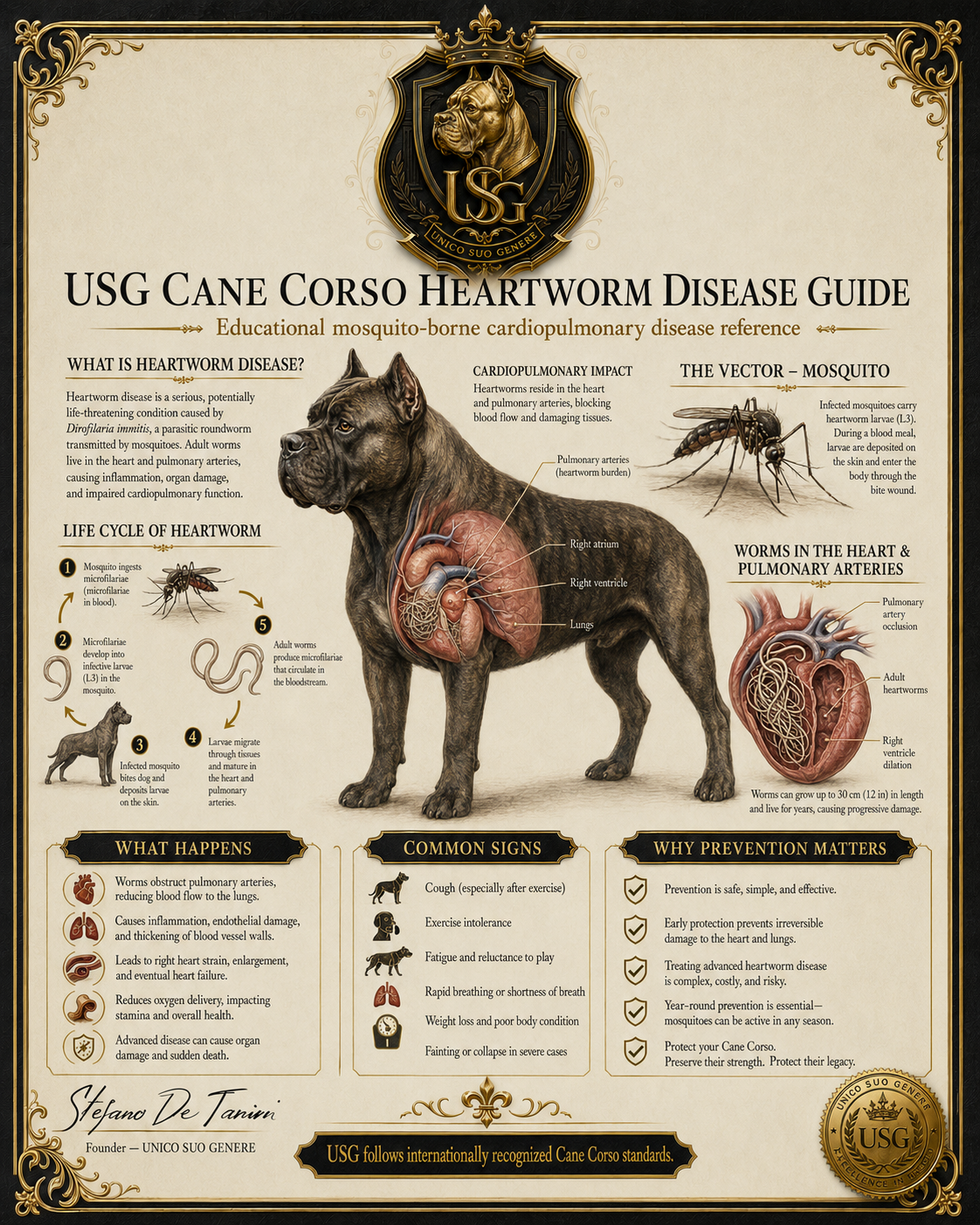
Heartworm Disease Guide
USG visual orientation for mosquito-borne cardiopulmonary disease and prevention awareness.
It explains heartworm disease and its connection to the heart, lungs, and mosquitoes as vectors. Possible signs include coughing, fatigue, breathing difficulty, and reduced stamina.
Prevention, testing, and treatment should follow local veterinary guidance.
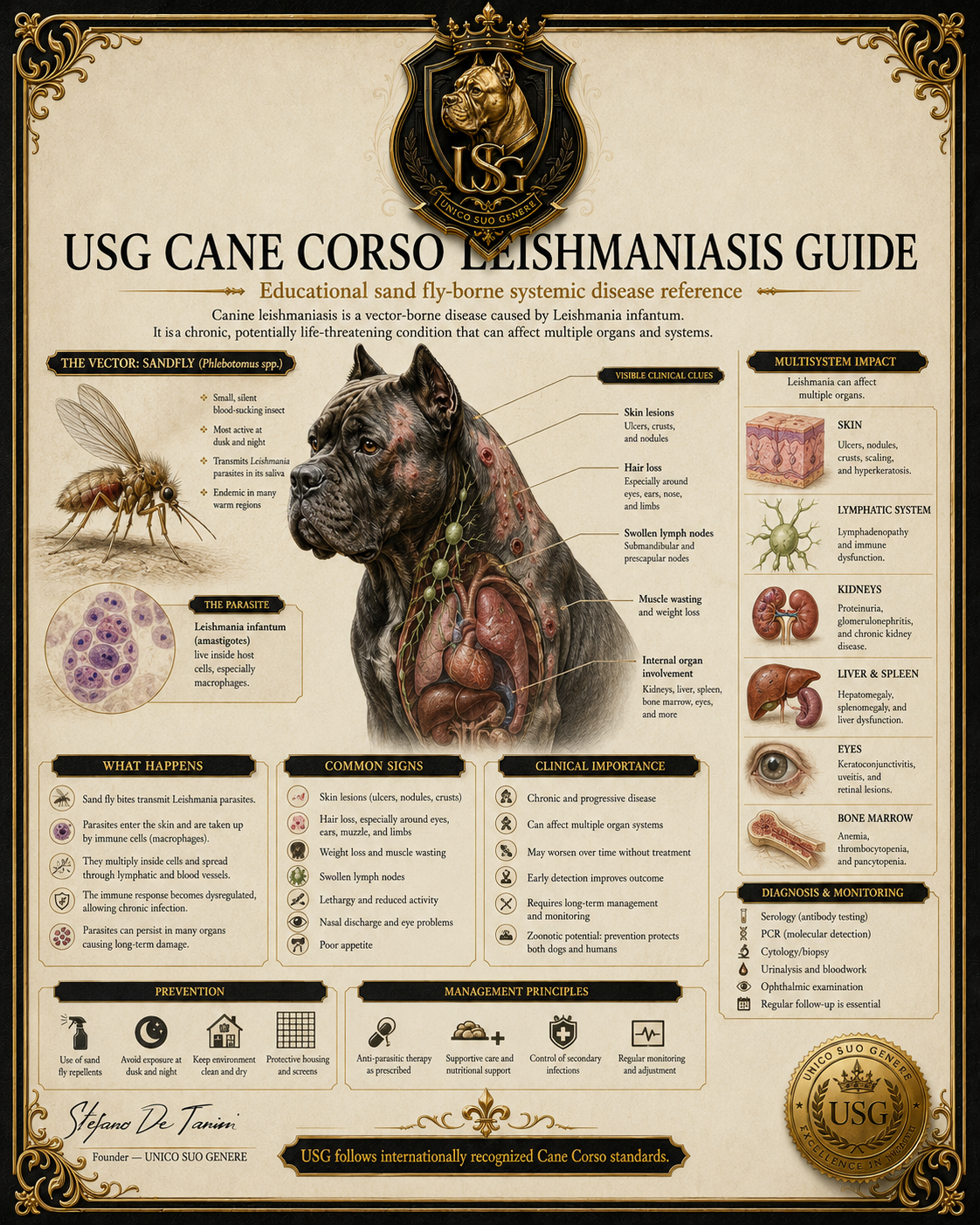
Leishmaniasis Guide
USG visual orientation for sand fly-borne systemic disease affecting skin, organs, and immune health.
This sheet presents leishmaniasis and its connection to sand flies and regional risk. It points to signs such as skin changes, weight loss, sores, nail overgrowth, or general weakness.
Prevention, testing, and treatment should follow local veterinary guidance.
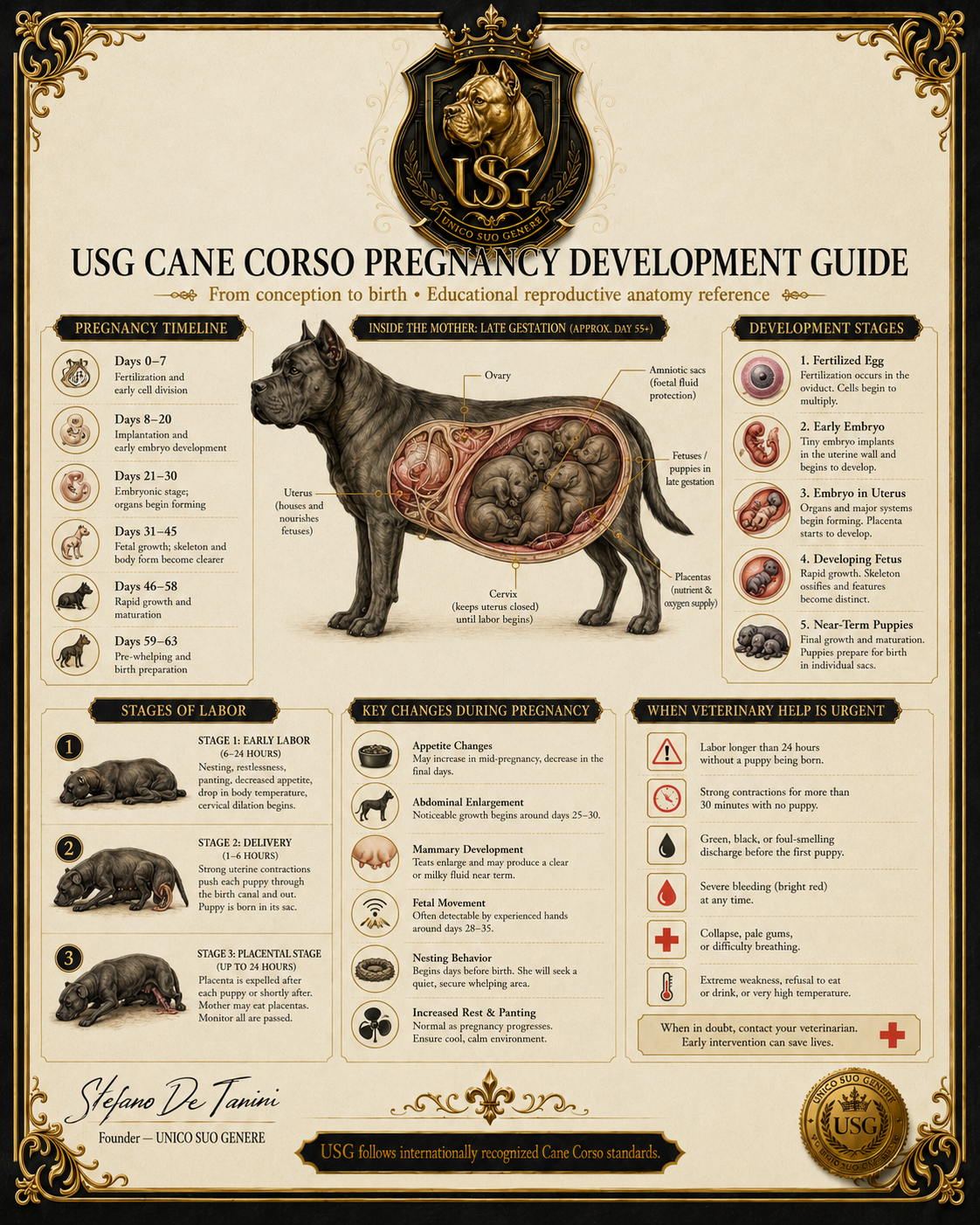
Pregnancy Development Guide
USG visual orientation for fetal development, gestation, and birth preparation.
It shows pregnancy development by stages and changes in the mother and fetuses. It helps track feeding, behavior, birth preparation, and moments when veterinary monitoring is needed.
Pregnancy, delivery, and puppy care should be monitored with a veterinarian or experienced specialist.
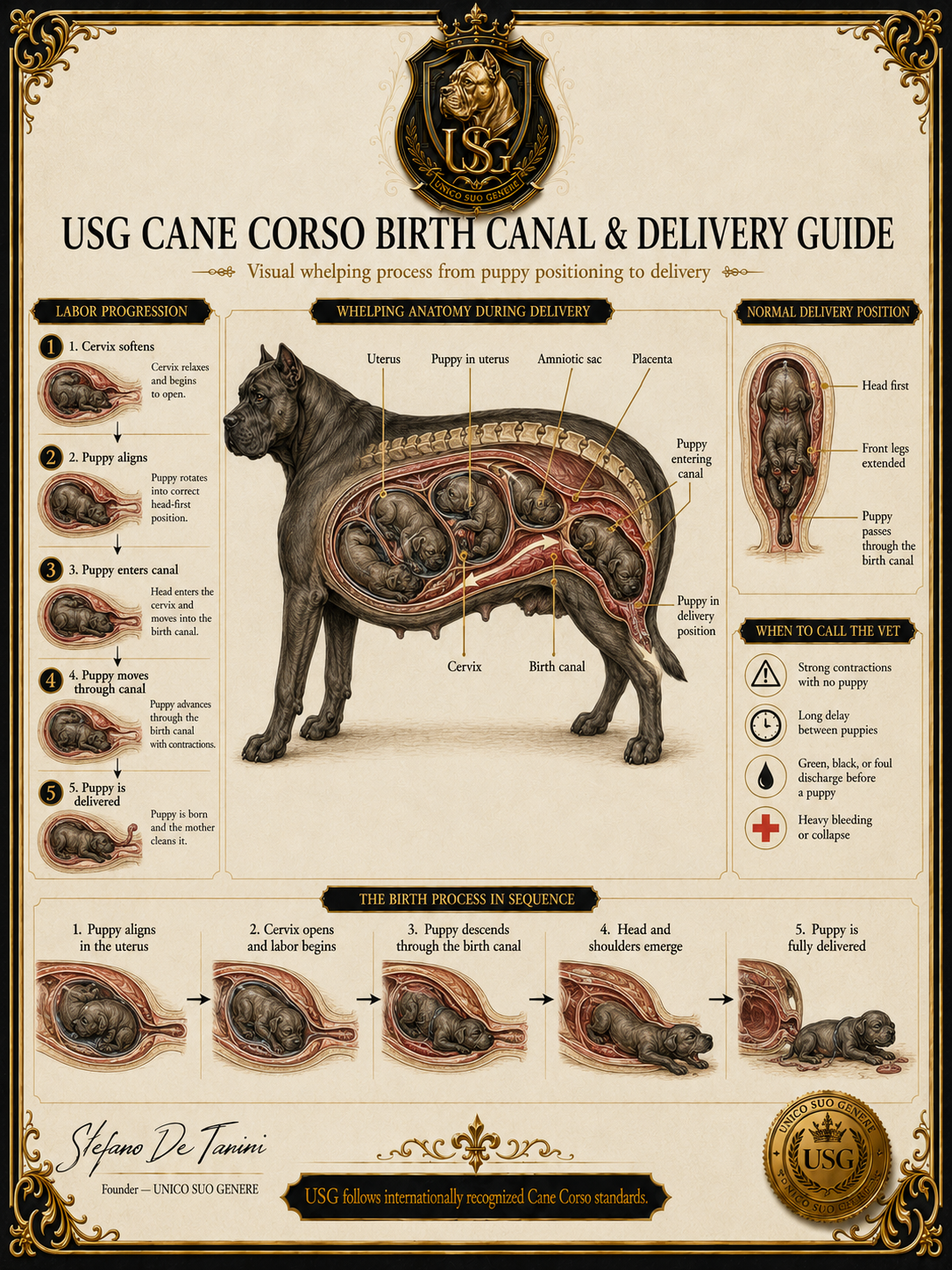
Birth Canal & Delivery Guide
USG visual orientation for the whelping sequence from puppy positioning to delivery.
It explains the delivery process, birth canal, and main stages of labor. It guides observation of contractions, progress, time between puppies, and possible complication signs.
Pregnancy, delivery, and puppy care should be monitored with a veterinarian or experienced specialist.
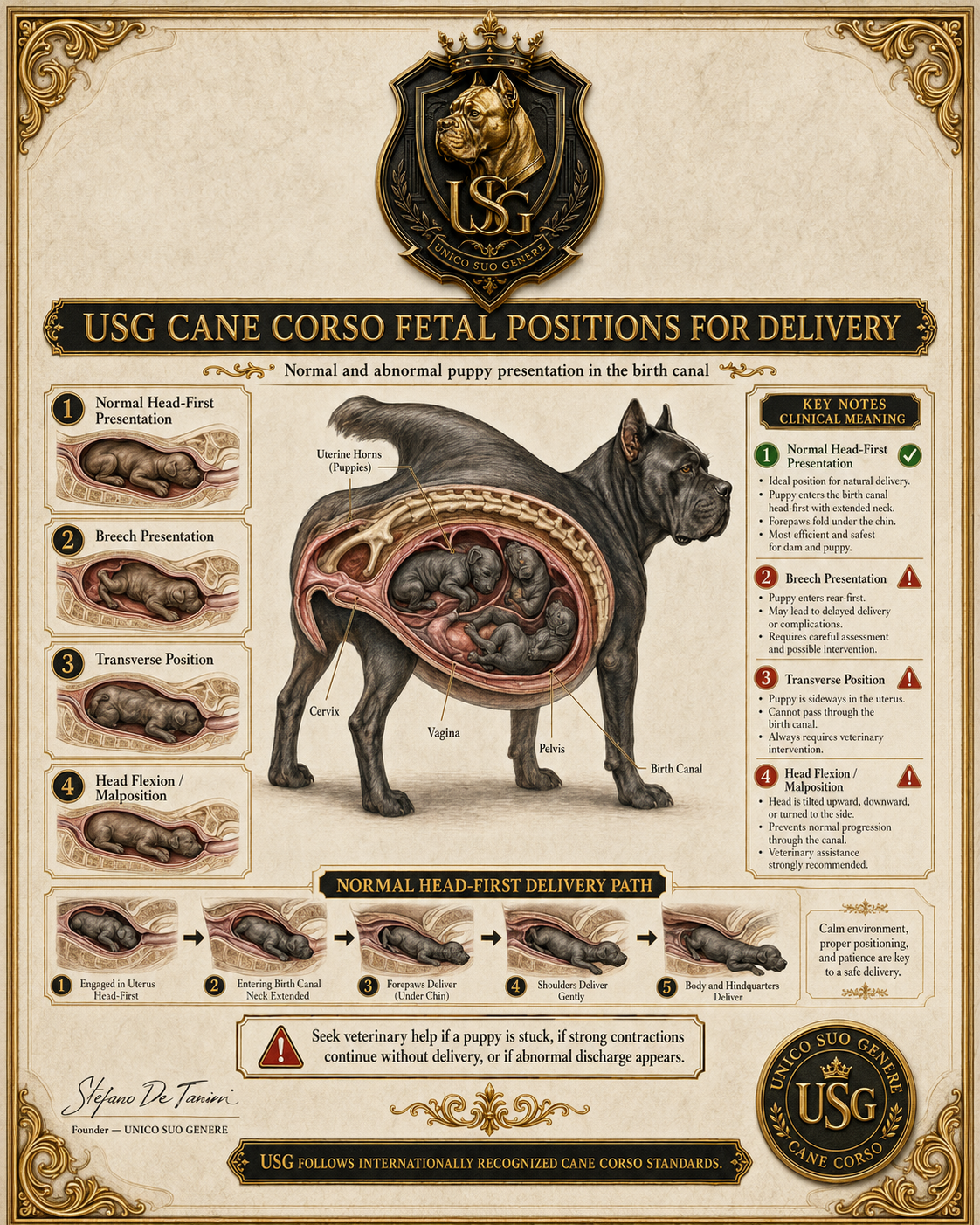
Fetal Positions Chart
USG visual orientation for normal and risky puppy presentations during delivery.
It shows different fetal positions and why position can affect delivery. It helps explain when lack of progress or unusual positioning may become risky.
Pregnancy, delivery, and puppy care should be monitored with a veterinarian or experienced specialist.
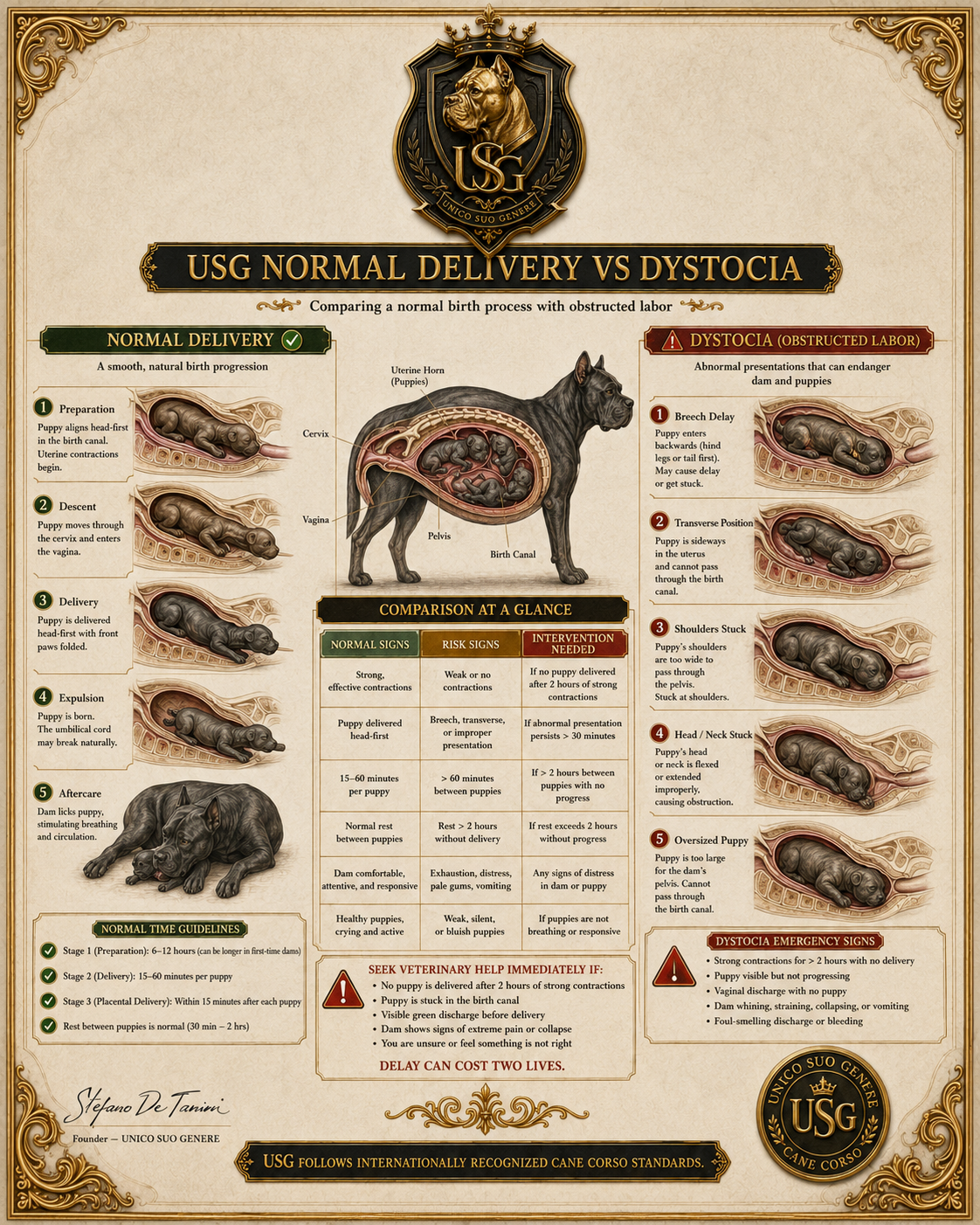
Normal Delivery vs Dystocia
USG visual orientation for normal delivery, obstructed labor, and warning signs.
It compares normal delivery with dystocia, meaning difficult or problematic labor. It highlights strong pain, long delay, exhaustion, lack of progress, or worrying behavior.
Pregnancy, delivery, and puppy care should be monitored with a veterinarian or experienced specialist.
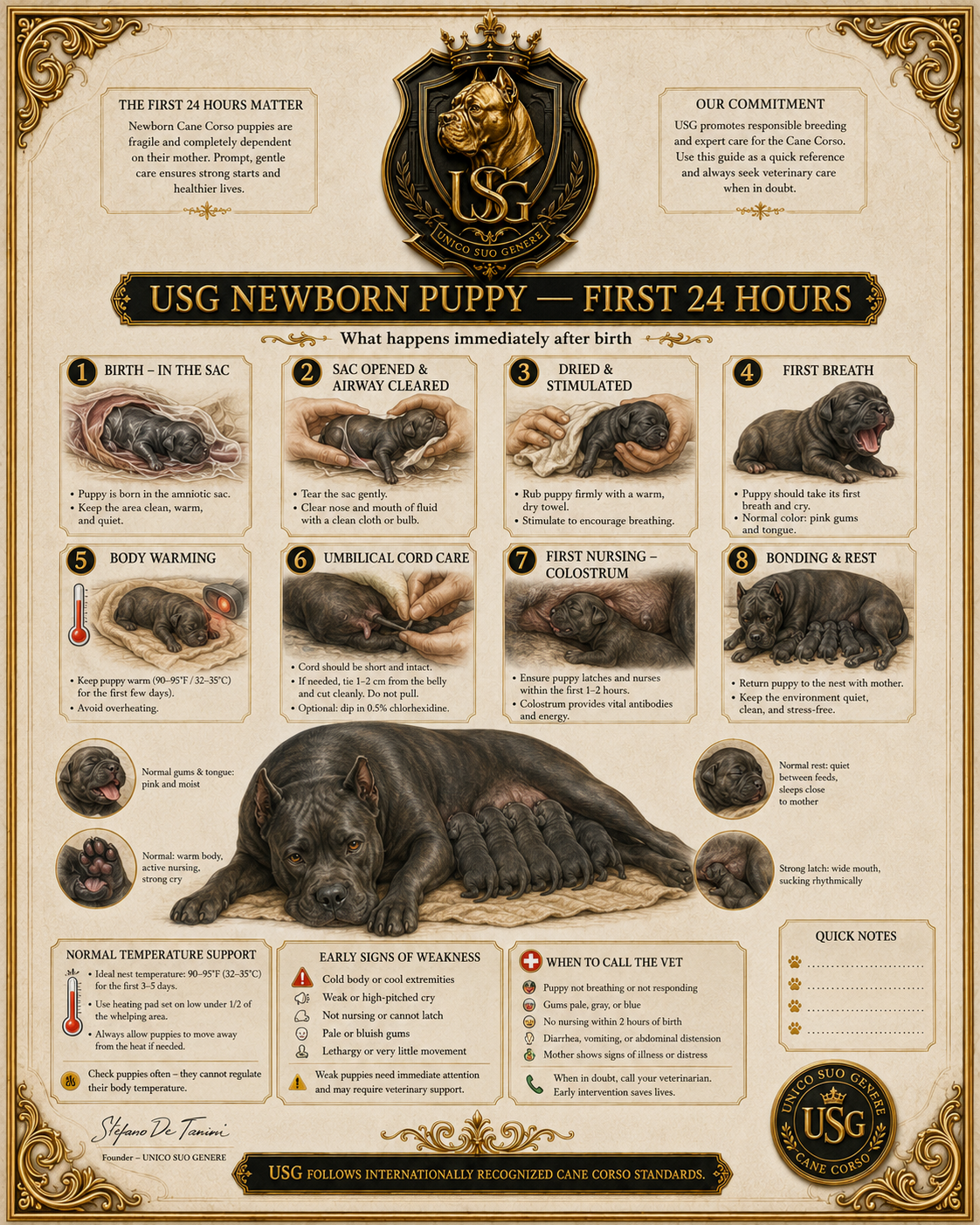
Newborn First 24 Hours
USG visual orientation for warmth, nursing, breathing, and early newborn warning signs.
It summarizes the first 24 hours for newborn puppies: warmth, breathing, nursing, weight, and monitoring. It explains why the early hours are critical for puppy vitality.
Pregnancy, delivery, and puppy care should be monitored with a veterinarian or experienced specialist.
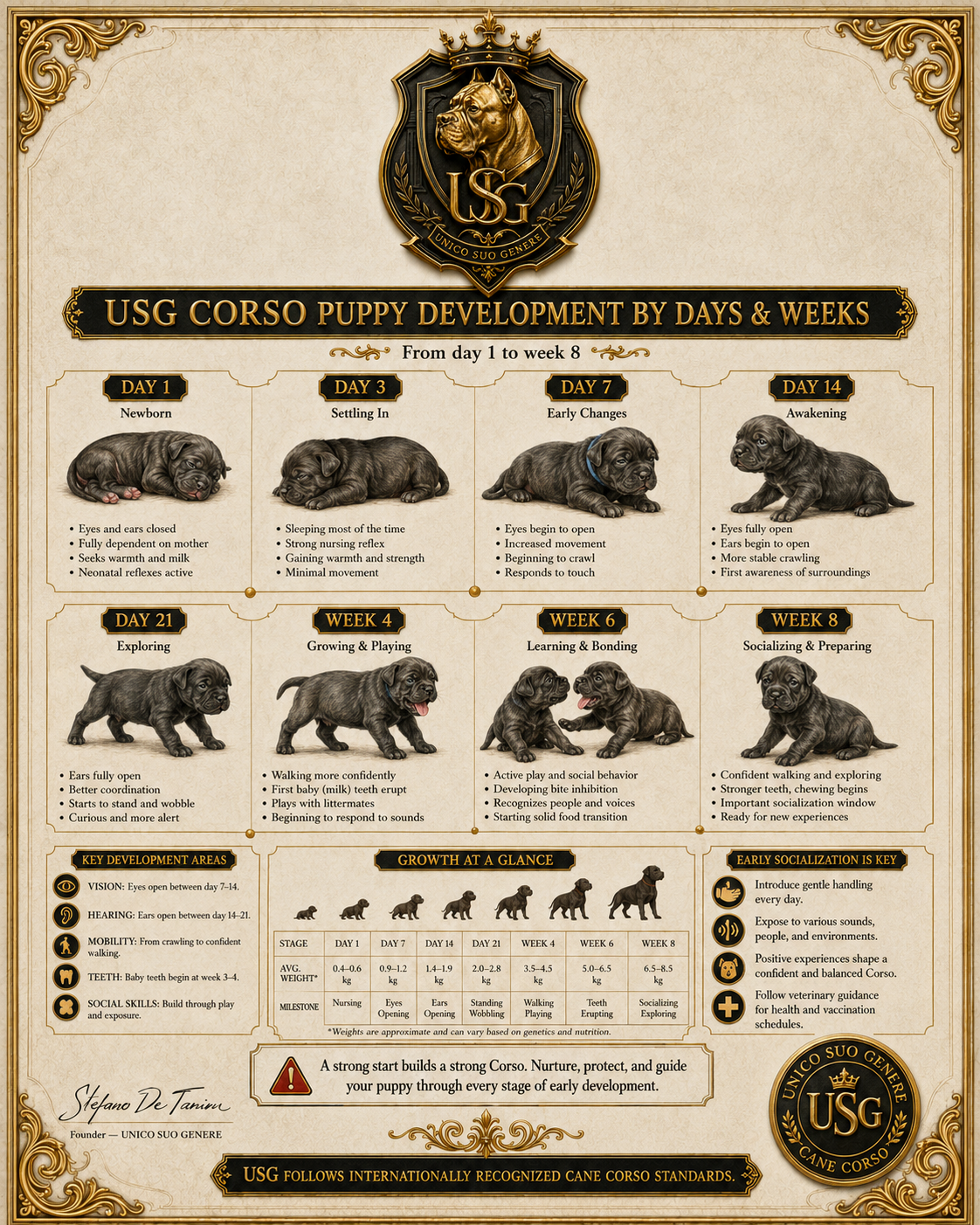
Puppy Development by Days & Weeks
USG visual orientation for early puppy milestones from newborn stage to the first weeks.
It shows puppy development by days and weeks, from newborn stage to eye opening, movement, socialization, and growth. It helps owners follow whether development is progressing logically.
Pregnancy, delivery, and puppy care should be monitored with a veterinarian or experienced specialist.
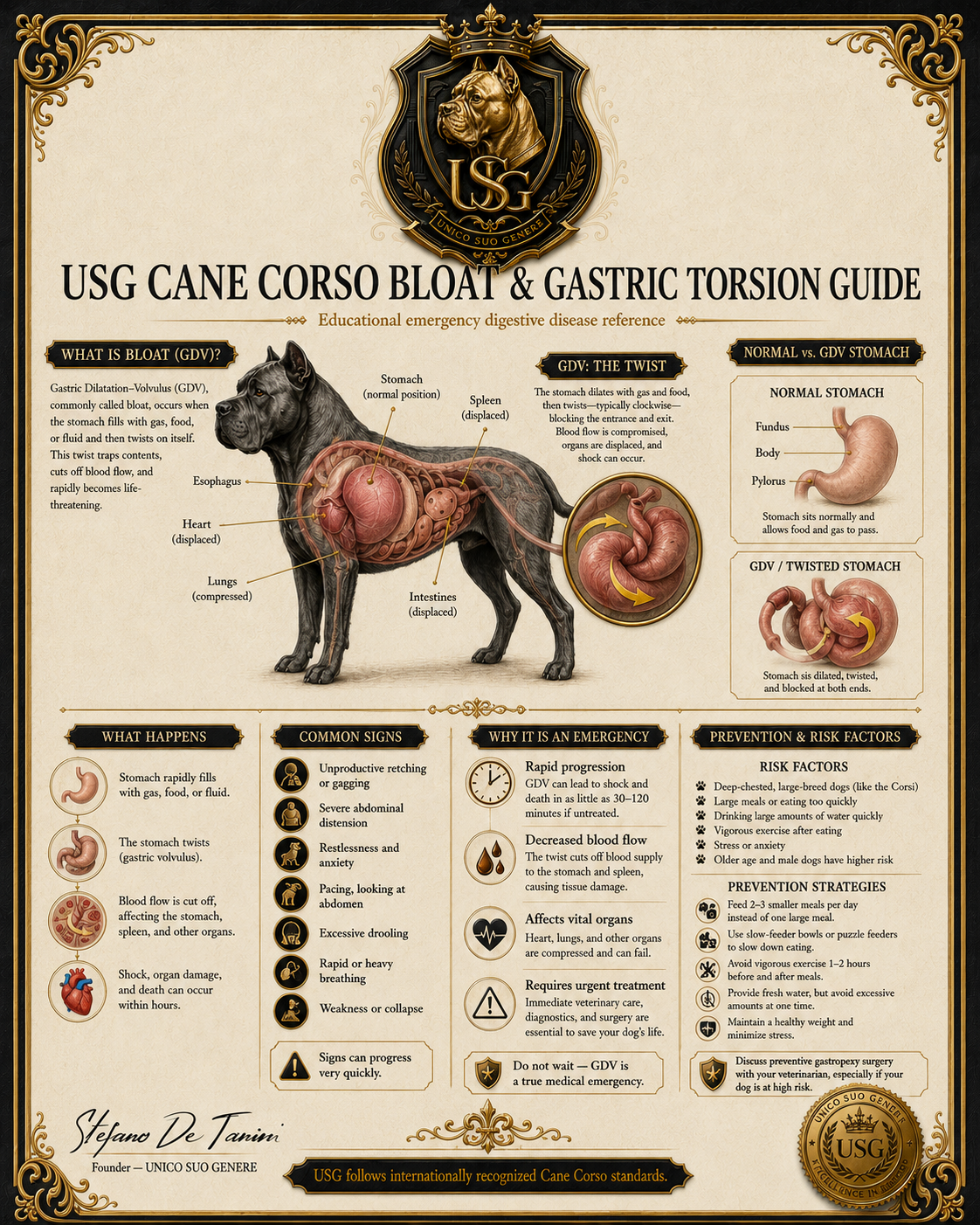
Bloat & Gastric Torsion Guide
USG visual orientation for GDV risk, bloat awareness, and emergency owner orientation.
This sheet explains bloat and the risk of gastric torsion. Warning signs may include abdominal swelling, unproductive retching, restlessness, pain, weakness, or collapse.
For emergency signs, seek veterinary help immediately.
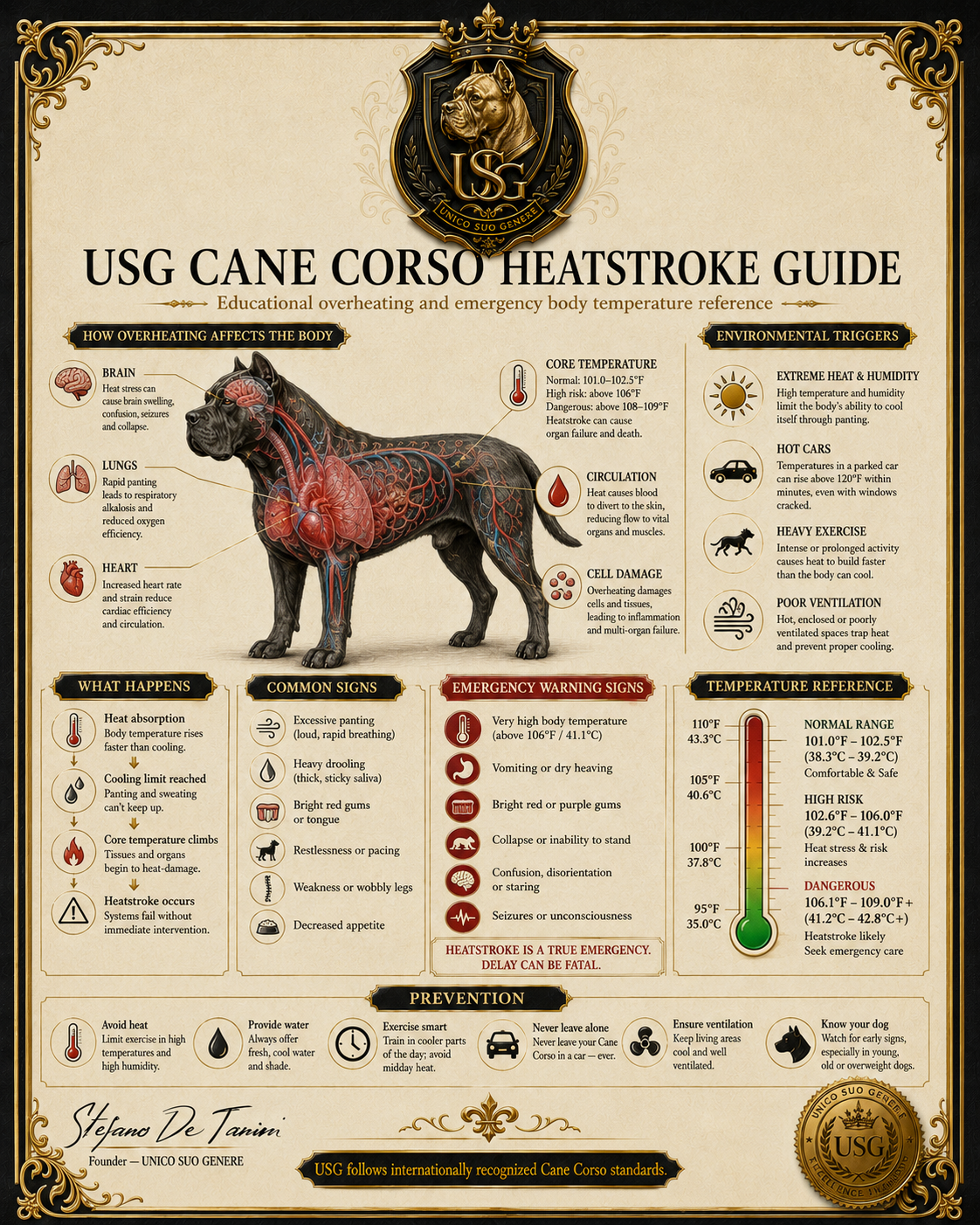
Heatstroke Prevention Guide
USG visual orientation for overheating, emergency signs, temperature risks, and prevention.
It shows overheating and heatstroke risks. Possible signs include heavy panting, weakness, red gums, vomiting, disorientation, or collapse.
For emergency signs, seek veterinary help immediately.
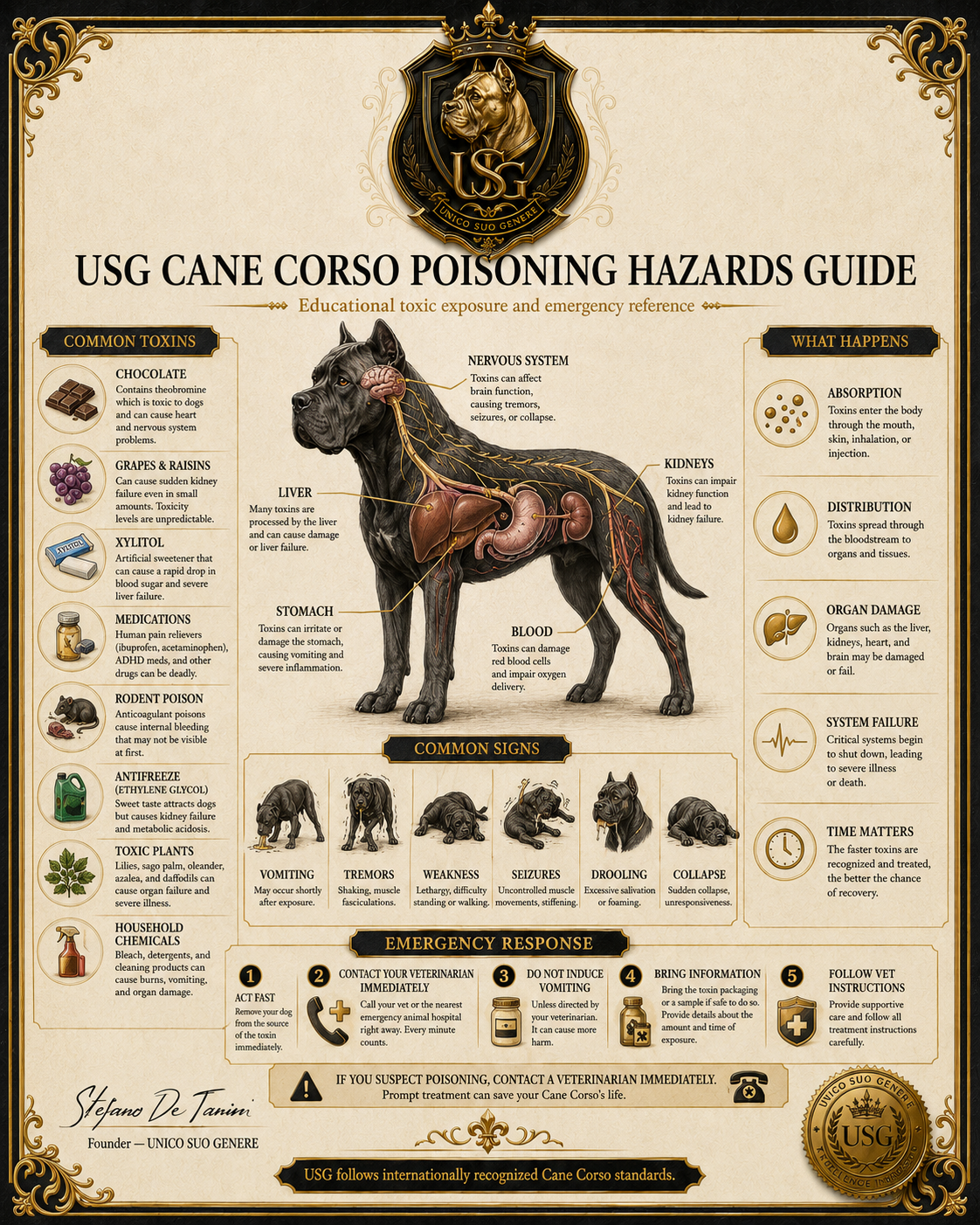
Poisoning Hazards Guide
USG visual orientation for toxic exposure and emergency awareness for common hazards.
It summarizes common poisoning hazards: foods, plants, chemicals, or medications. It points to signs such as vomiting, tremors, weakness, seizures, diarrhea, or sudden behavior change.
For emergency signs, seek veterinary help immediately.
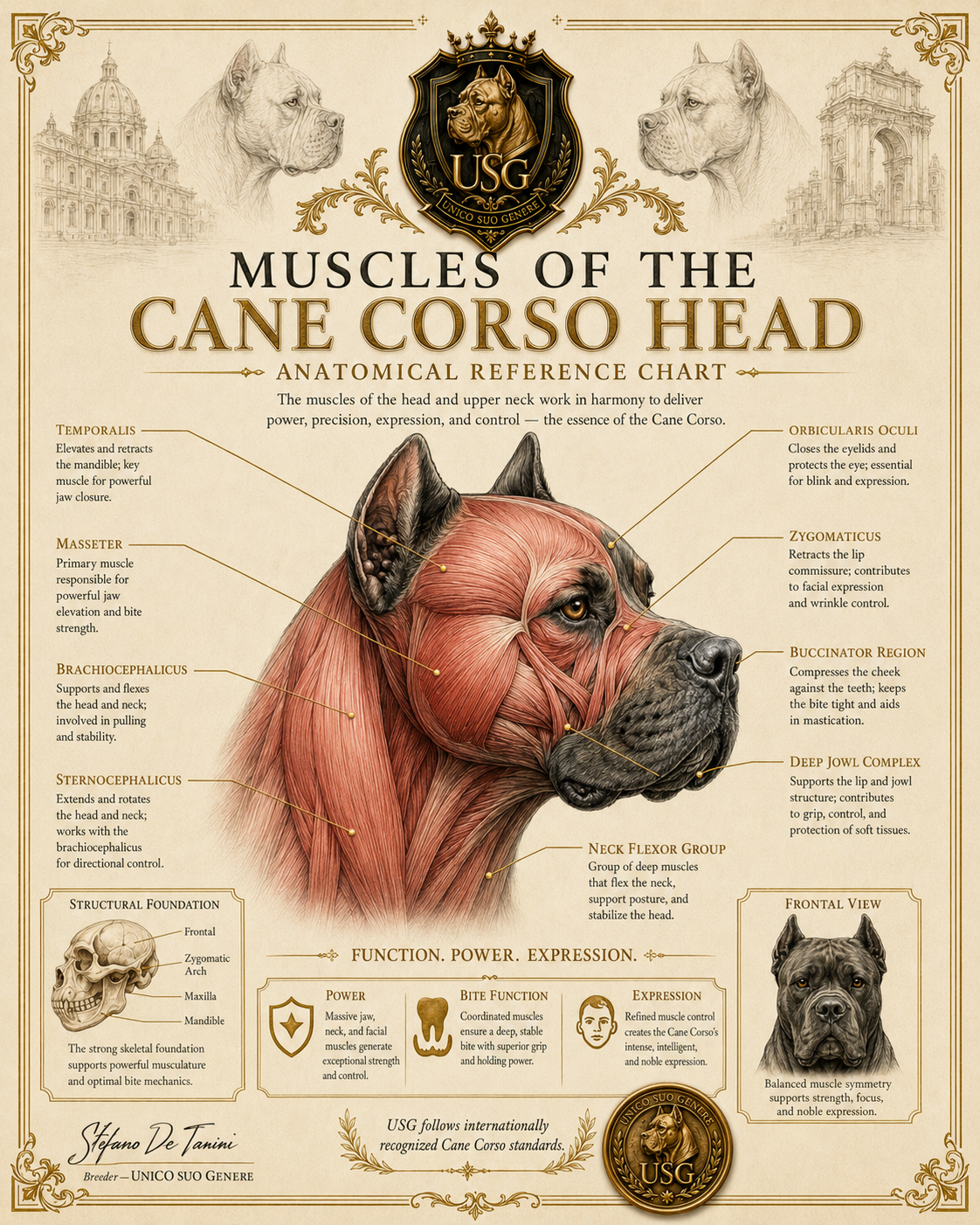
Head Muscles & Bite Anatomy
USG visual orientation for head muscles, bite function, and functional head anatomy.
It shows the muscles of the head and their connection to bite, jaw, and functional expression. It helps explain that the head is not only shape, but a working anatomical system.
Anatomy orientation; pain, injury, or concern requires a qualified professional.
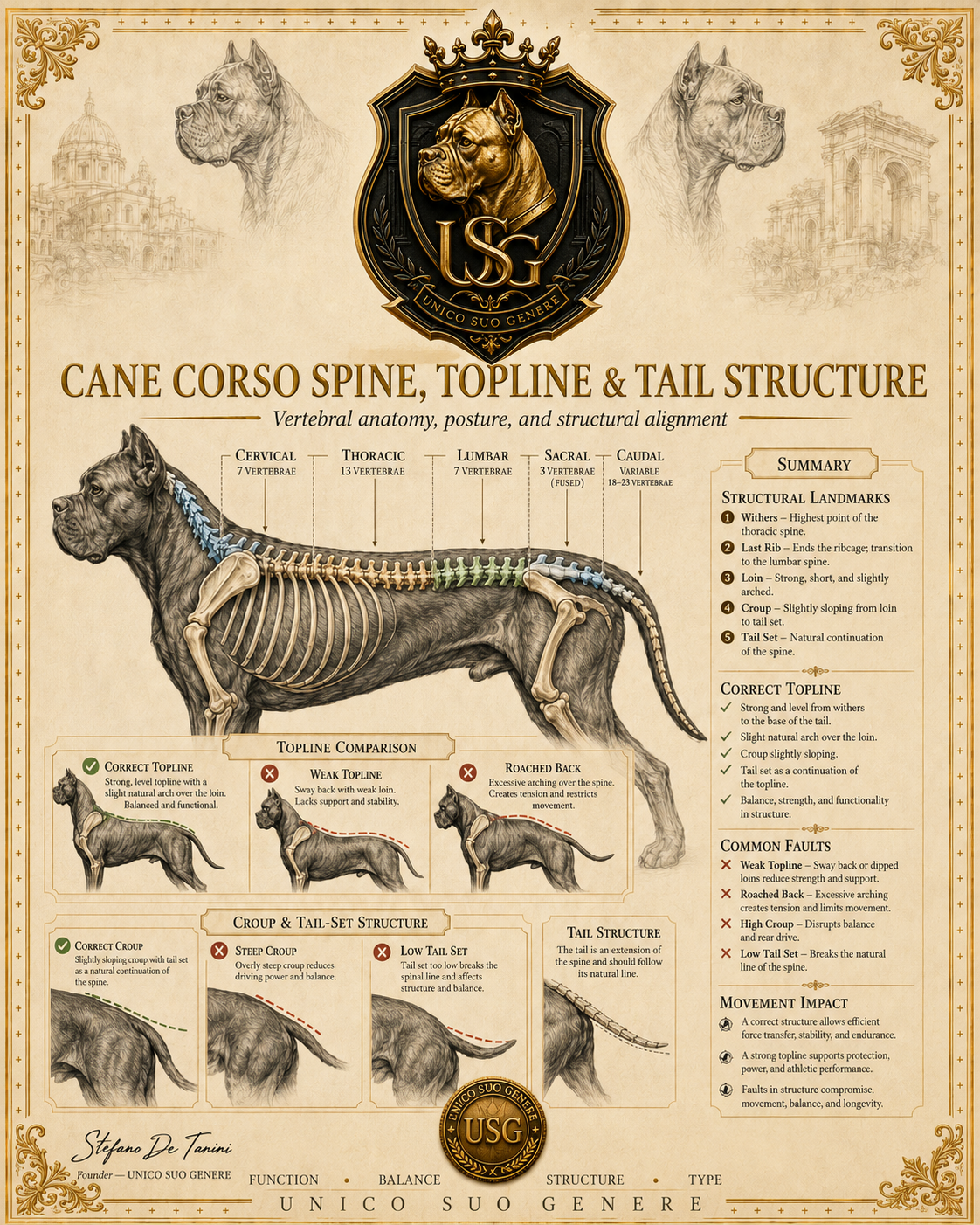
Spine, Topline & Tail Orientation
USG visual orientation for spine line, topline, tail set, and structural warning points.
This sheet covers the spine line, topline, and tail set. It helps identify structural features that affect outline, balance, and movement.
If symptoms or concerns appear, consult a veterinarian.
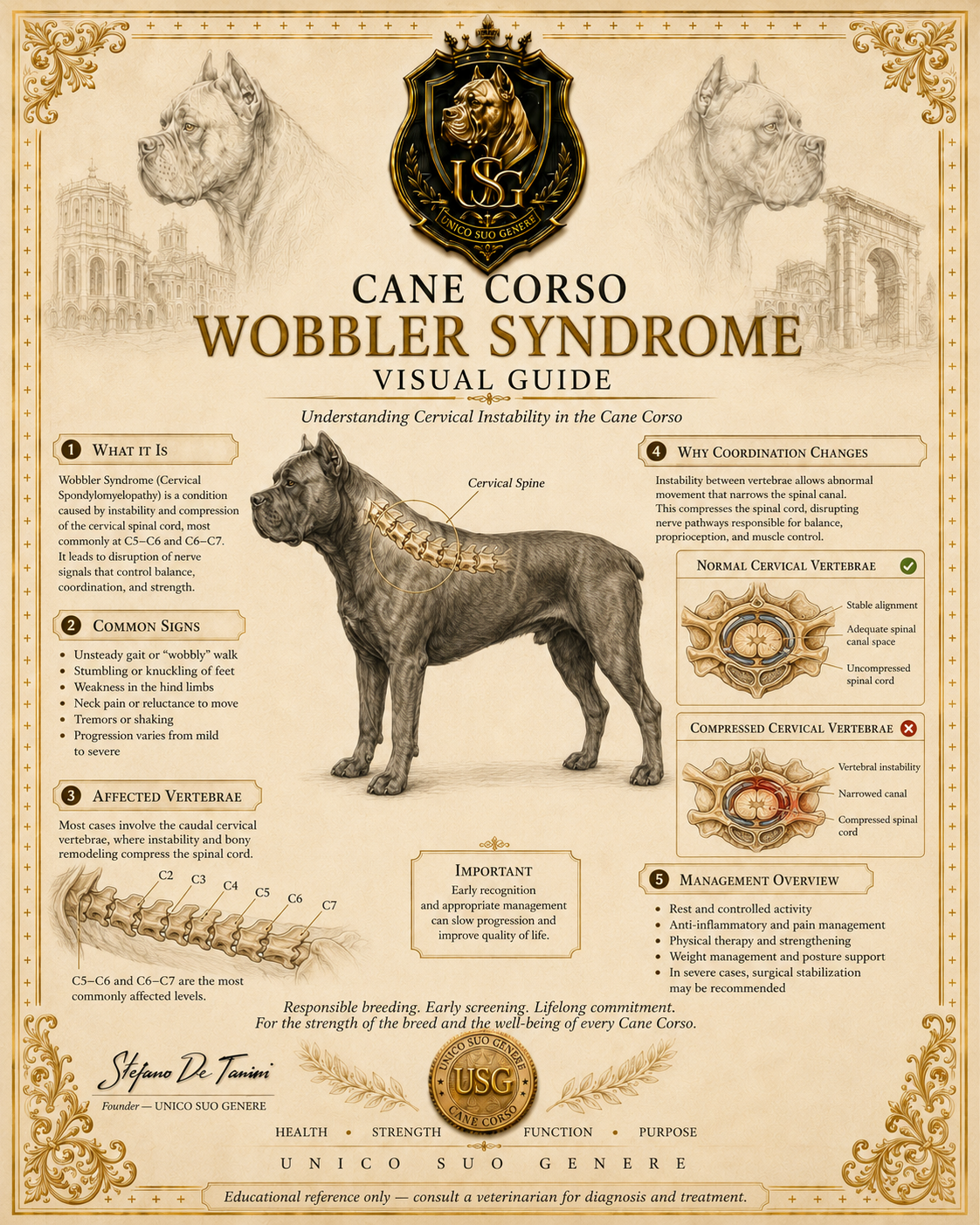
Wobbler Syndrome Awareness
USG visual orientation for cervical spine instability and neurological warning-sign awareness.
It shows the connection between the cervical spine and neurological signs. Possible signs include unsteady gait, weakness, poor coordination, neck pain, or difficulty moving.
If symptoms or concerns appear, consult a veterinarian.
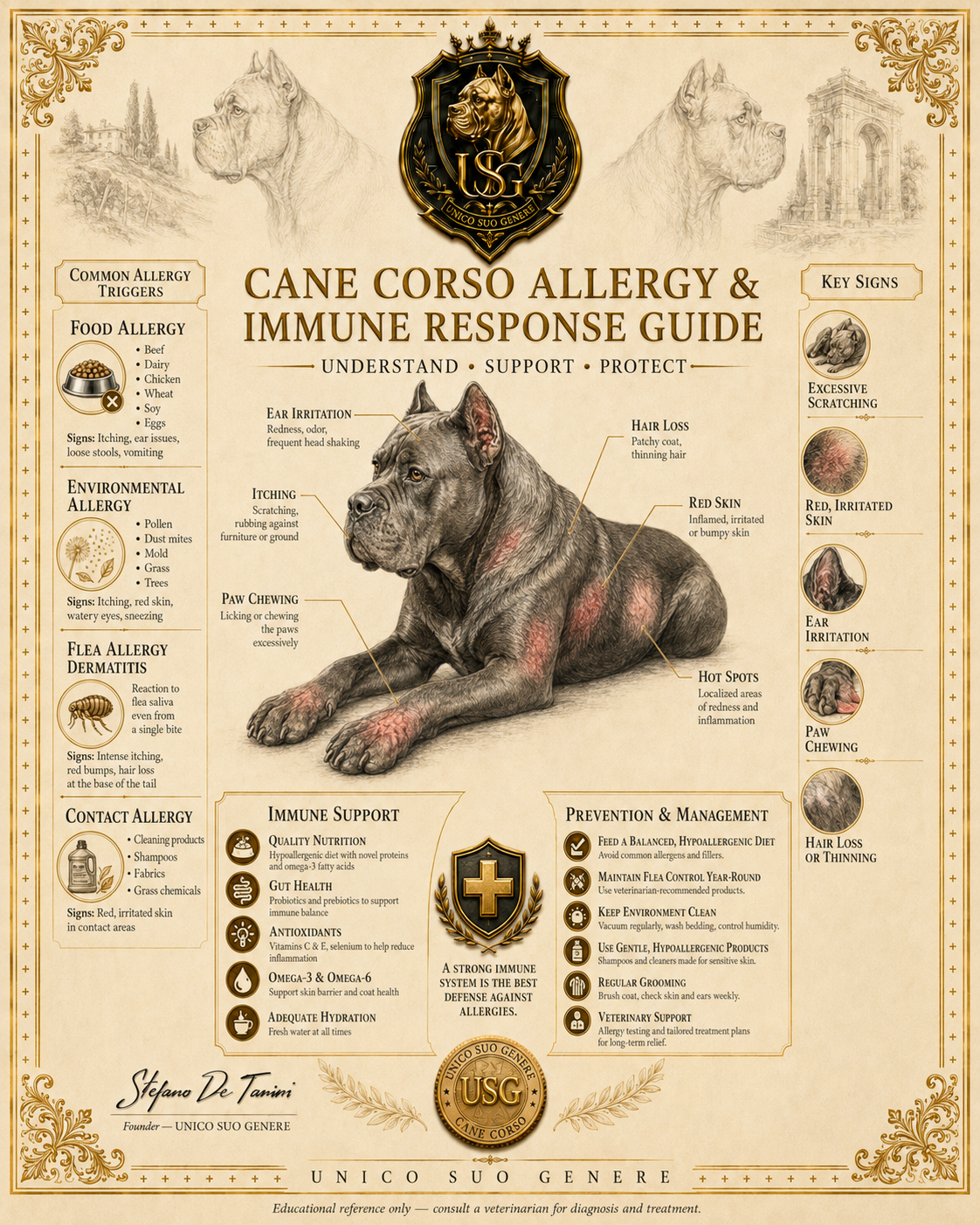
Allergy & Immune Response
USG visual orientation for allergy signs, immune response, skin reaction, and owner observation.
It explains allergic reactions and immune response that may appear in skin, ears, paws, or digestion. It points to itching, redness, rashes, licking, or recurring inflammation.
If symptoms or concerns appear, consult a veterinarian.
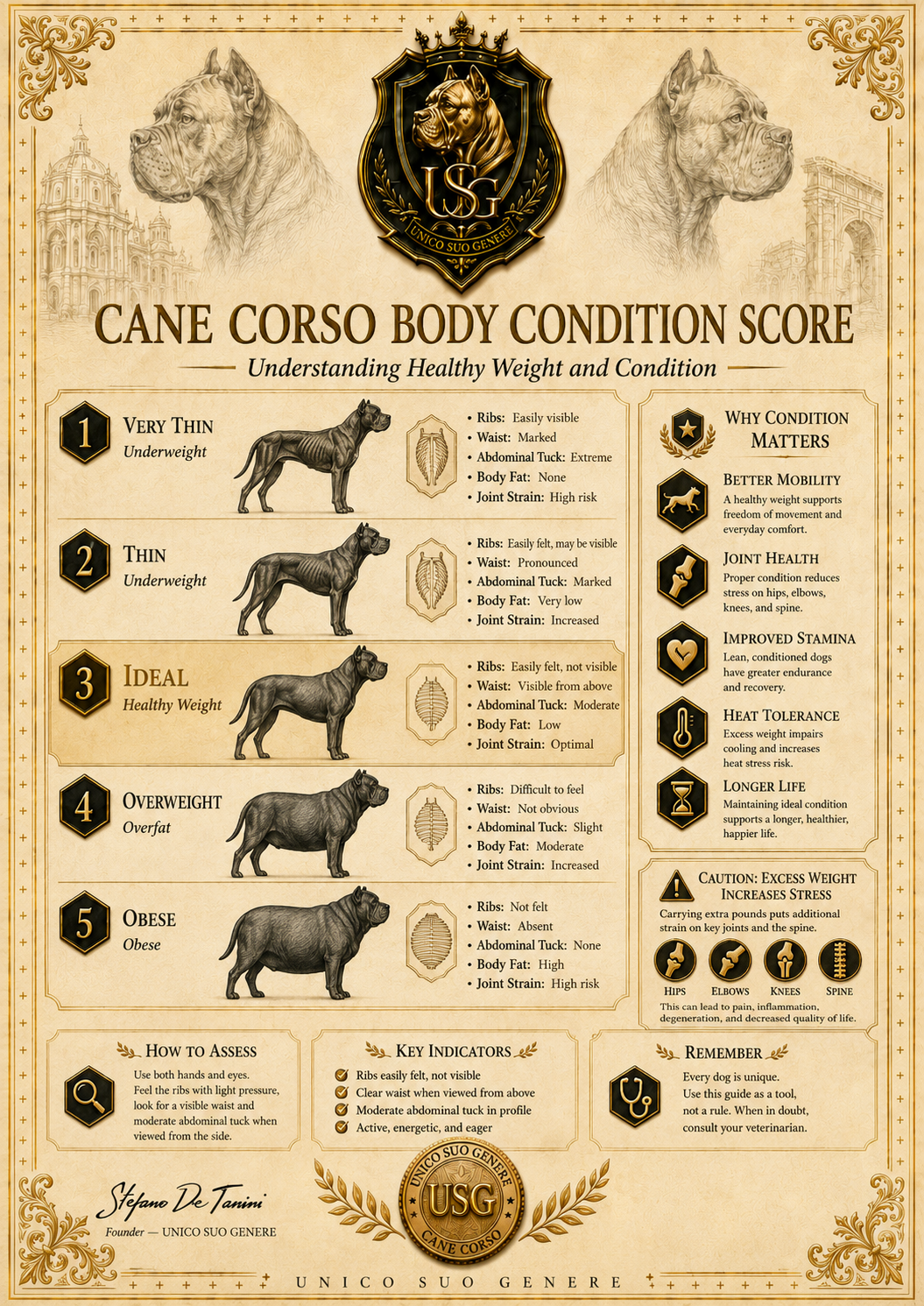
Body Condition Score
USG visual orientation for body condition, weight reading, and responsible feeding orientation.
It shows how to read body condition: ribs, waist, fat cover, and overall outline. It helps distinguish healthy condition from underweight or overweight appearance.
Practical owner orientation; adapt care to the individual Cane Corso.
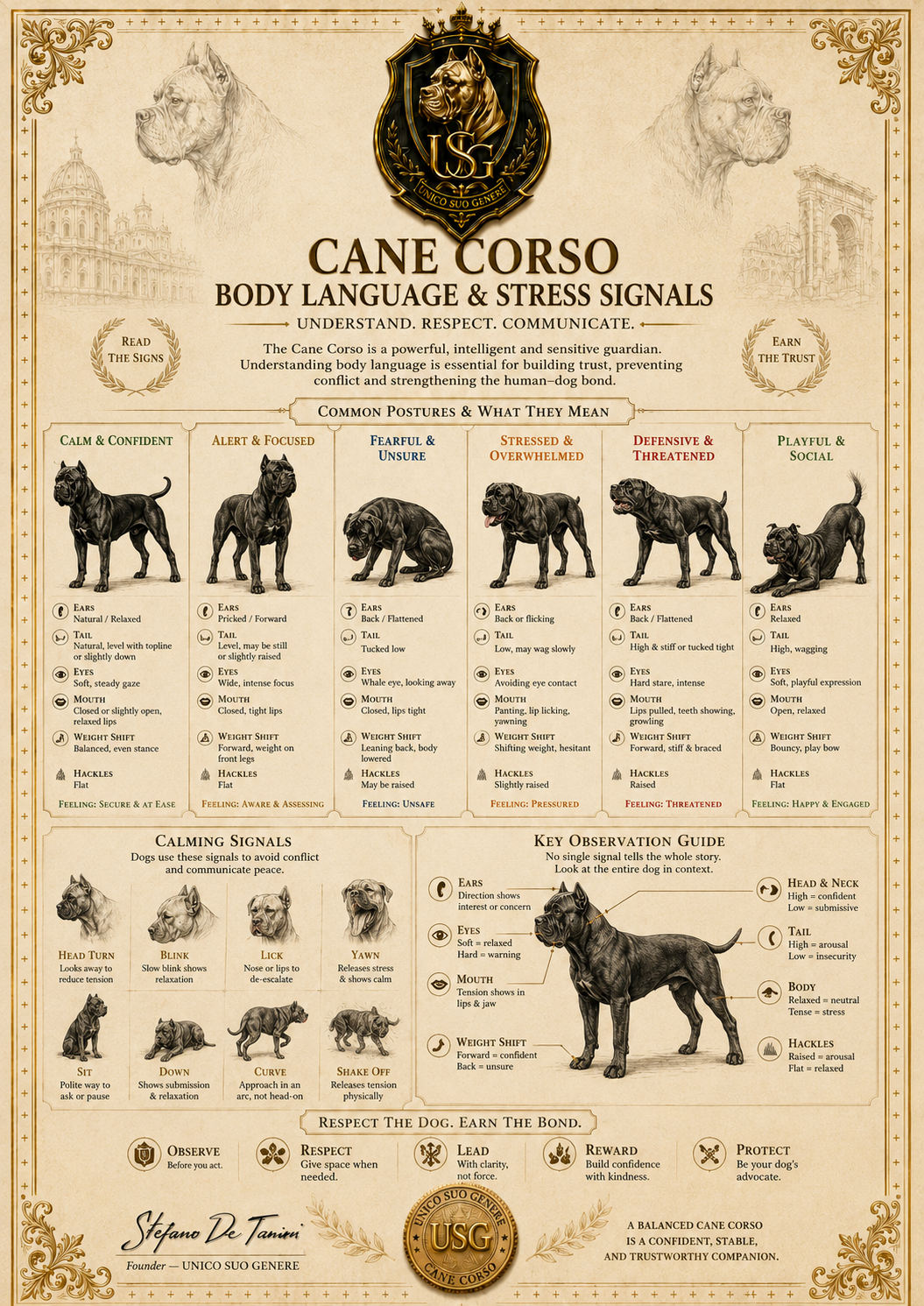
Body Language & Stress Signals
USG visual orientation for body language, stress signals, and calm owner interpretation.
This sheet shows body language and stress signals: tension, avoidance, tail, ears, gaze, and posture. It helps owners read behavior calmly and earlier.
Practical owner orientation; adapt care to the individual Cane Corso.
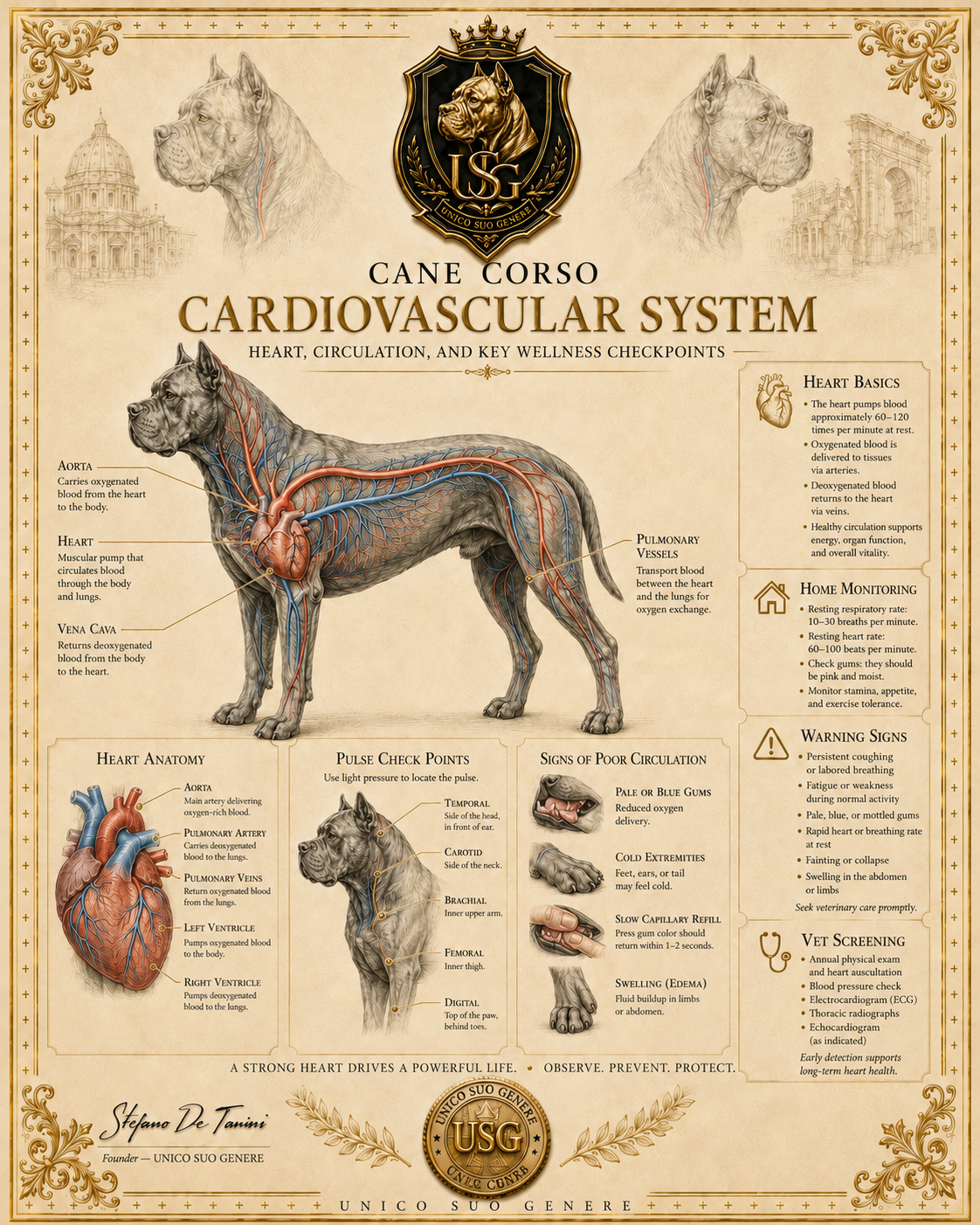
Cardiovascular System
USG visual orientation for heart, vessels, circulation, and cardiovascular owner awareness.
It shows the heart, blood vessels, and the role of circulation. It guides observation of fatigue, coughing, exercise intolerance, fainting, or breathing difficulty.
If symptoms or concerns appear, consult a veterinarian.
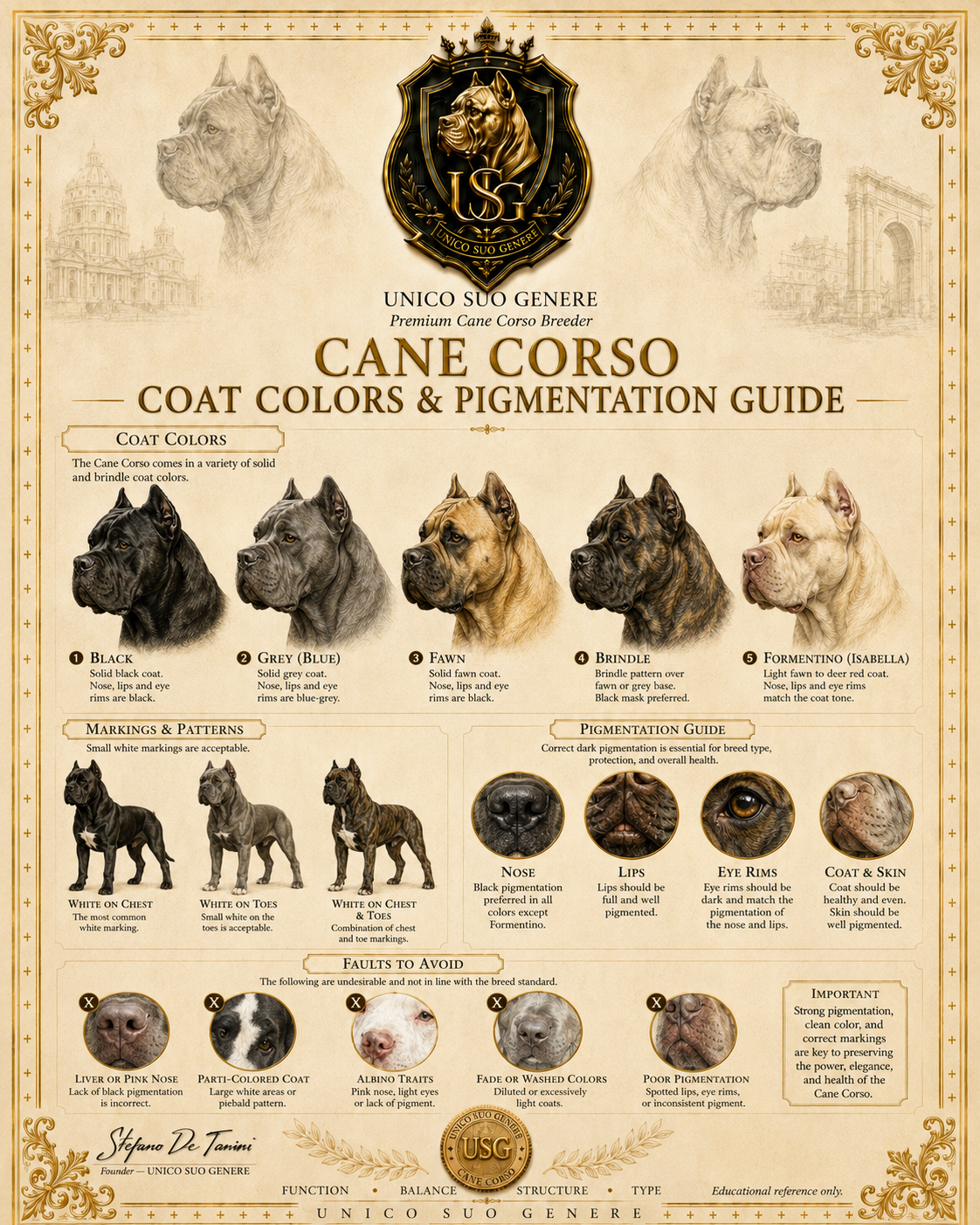
Coat Colors & Pigmentation
USG visual orientation for coat colors, pigmentation, and visual color orientation in Cane Corso.
It summarizes coat colors, pigmentation, and visual color differences. It supports orientation by appearance without treating color alone as proof of quality or origin.
Orientation for understanding type and structure, not a final evaluation.
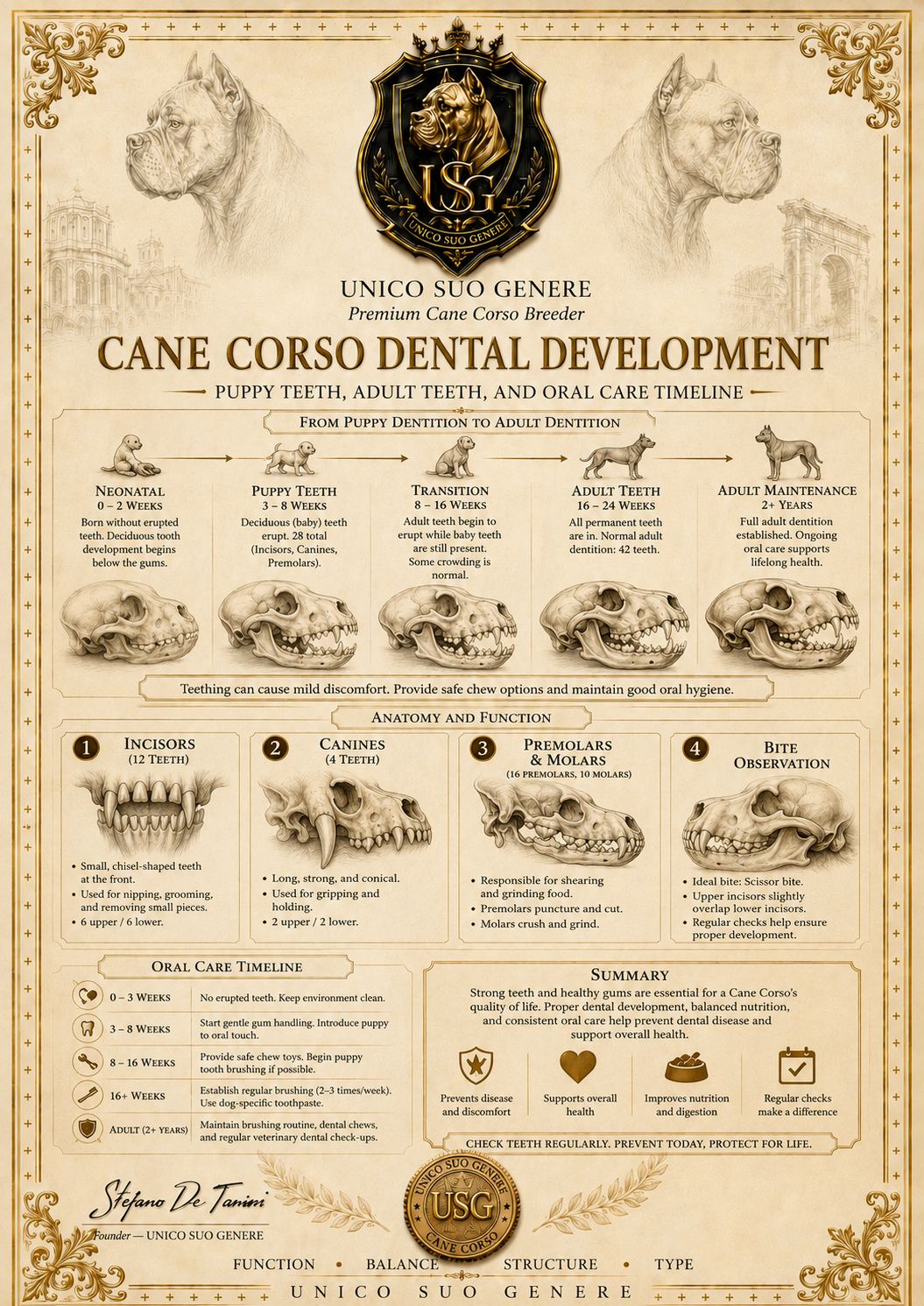
Dental Development
USG visual orientation for puppy teeth, adult dentition, bite development, and dental awareness.
It shows development of puppy and adult teeth, bite, and growth changes. It helps monitor tooth change, alignment, and signs of problems while eating or chewing.
If symptoms or concerns appear, consult a veterinarian.
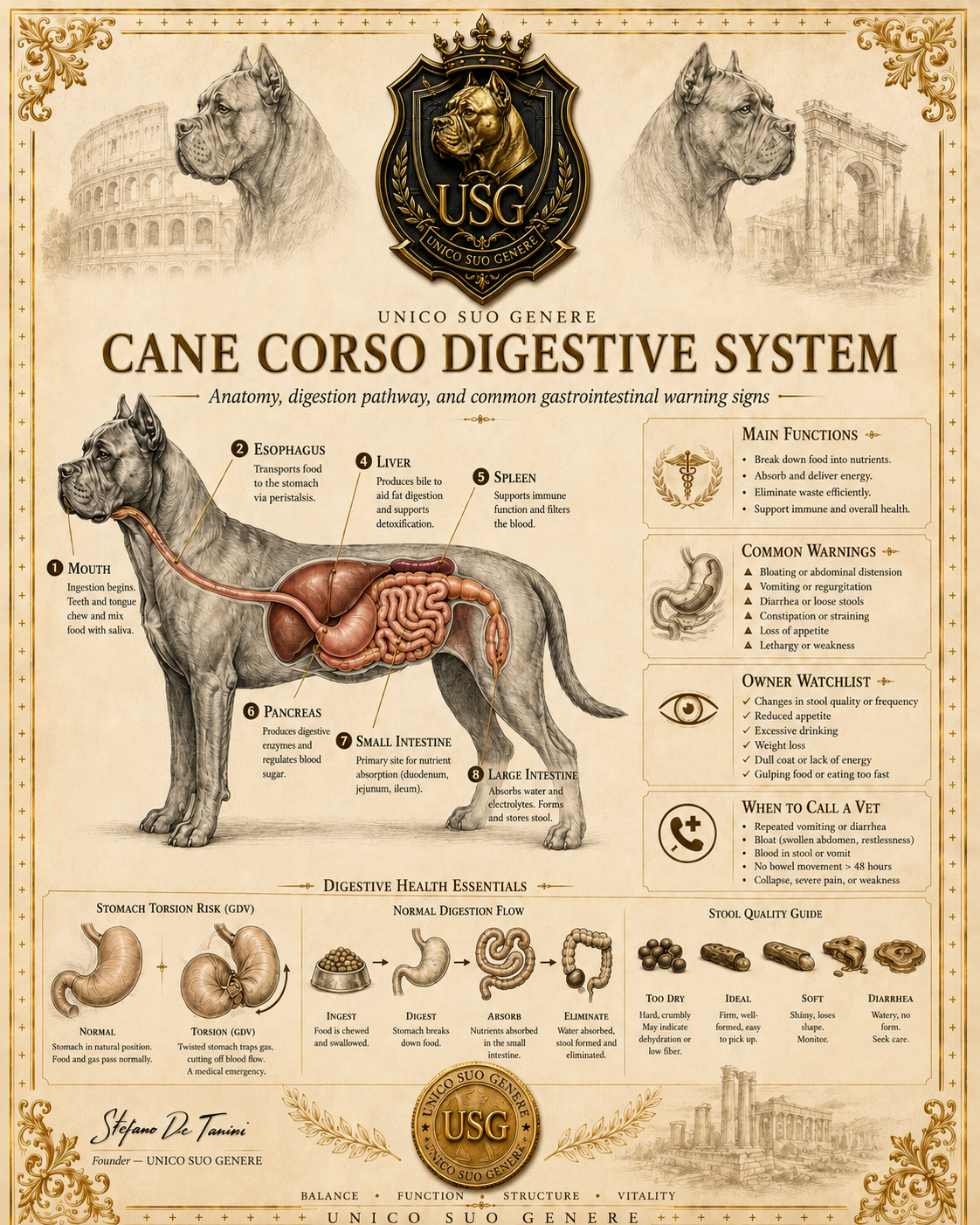
Digestive System
USG visual orientation for digestive organs, feeding awareness, and digestive warning signs.
This sheet covers digestive organs and their link to feeding, absorption, and warning signs. It guides observation of vomiting, diarrhea, bloating, pain, or appetite changes.
If symptoms or concerns appear, consult a veterinarian.
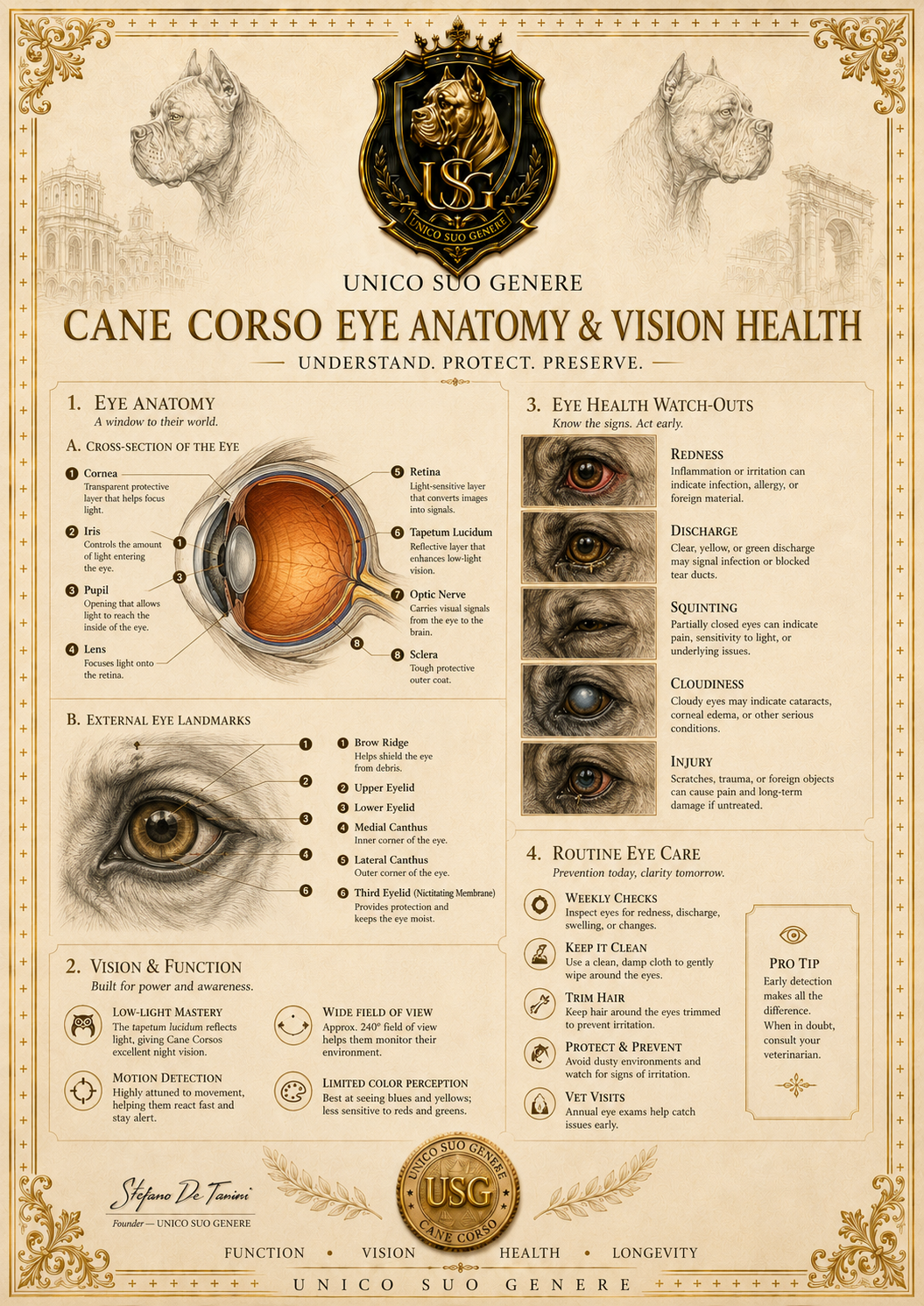
Eye Anatomy & Vision Health
USG visual orientation for eye anatomy, vision, pressure, retina, and owner observation.
It shows main eye structures, vision, retina, pressure, and observation zones. It is useful for recognizing redness, tearing, cloudiness, squinting, or behavior changes.
If symptoms or concerns appear, consult a veterinarian.
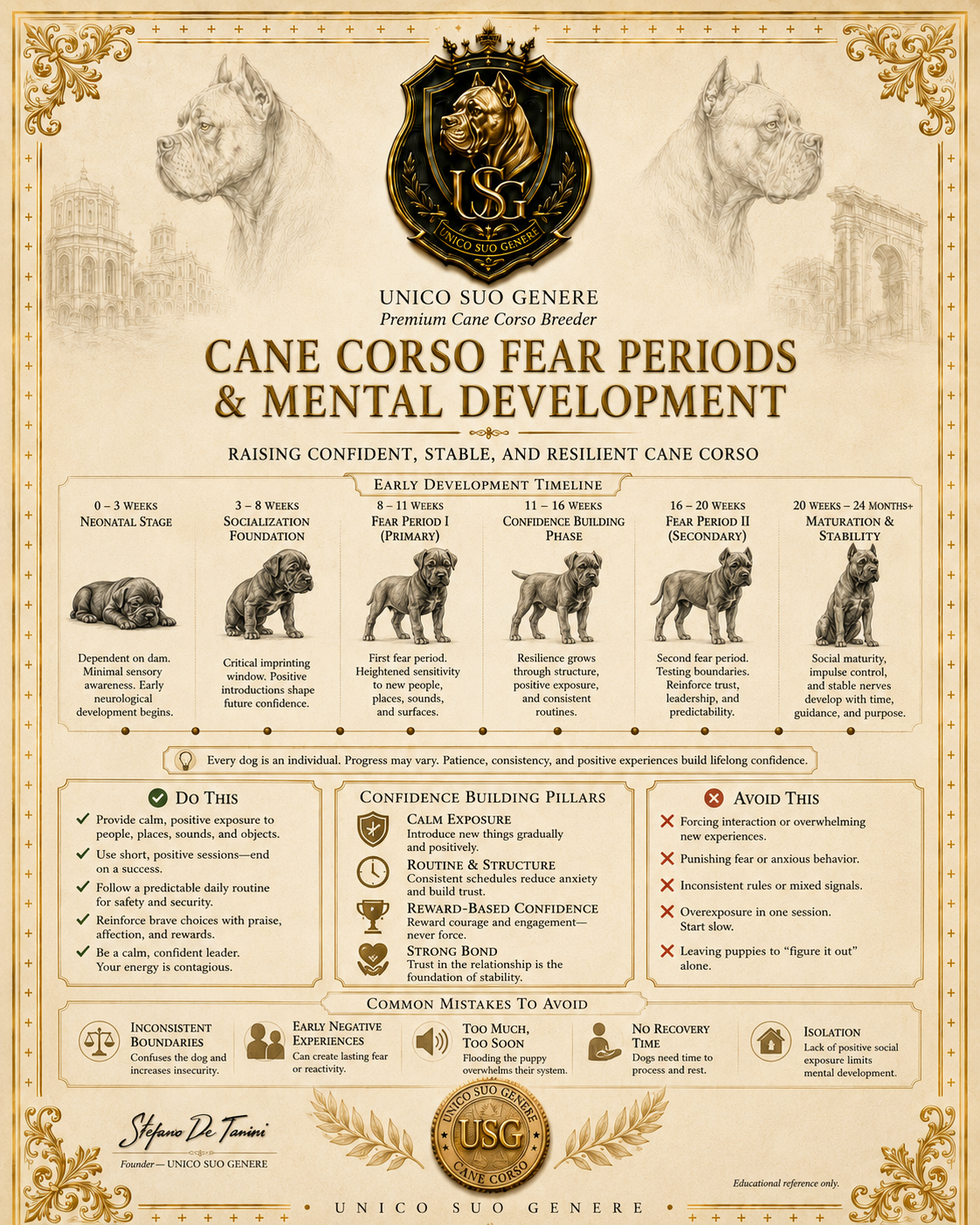
Fear Periods & Mental Development
USG visual orientation for fear periods, mental development, and careful social confidence building.
It explains fear periods and mental development stages when a puppy may react more sensitively. It supports calm socialization without forcing or traumatic experiences.
Practical owner orientation; adapt care to the individual Cane Corso.
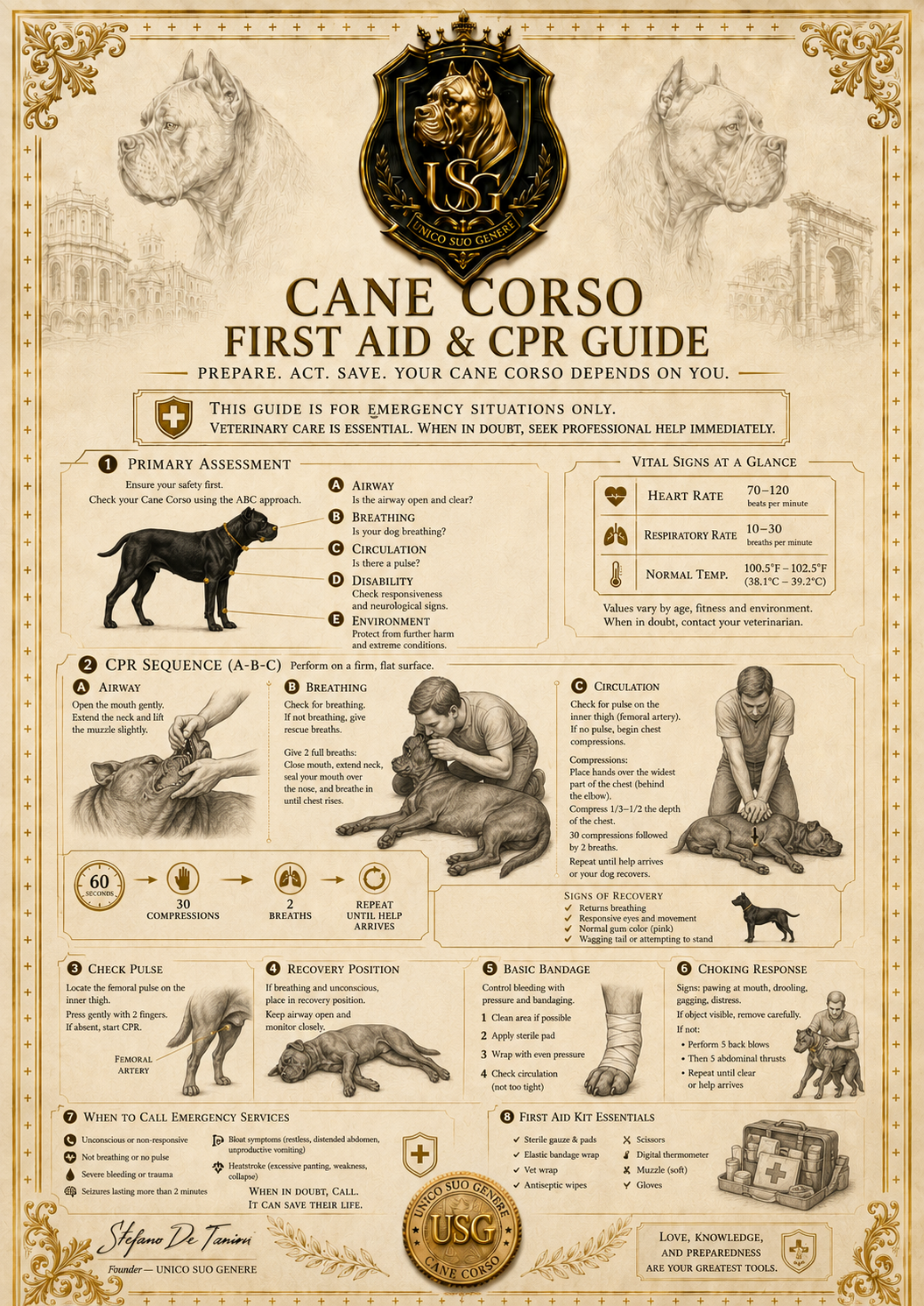
First Aid & Care Guide
USG visual orientation for basic first-aid orientation and emergency owner awareness.
It summarizes basic first-aid orientation and actions during an incident. It emphasizes calm handling, safety, quick assessment, and veterinary help for serious signs.
For emergency signs, seek veterinary help immediately.
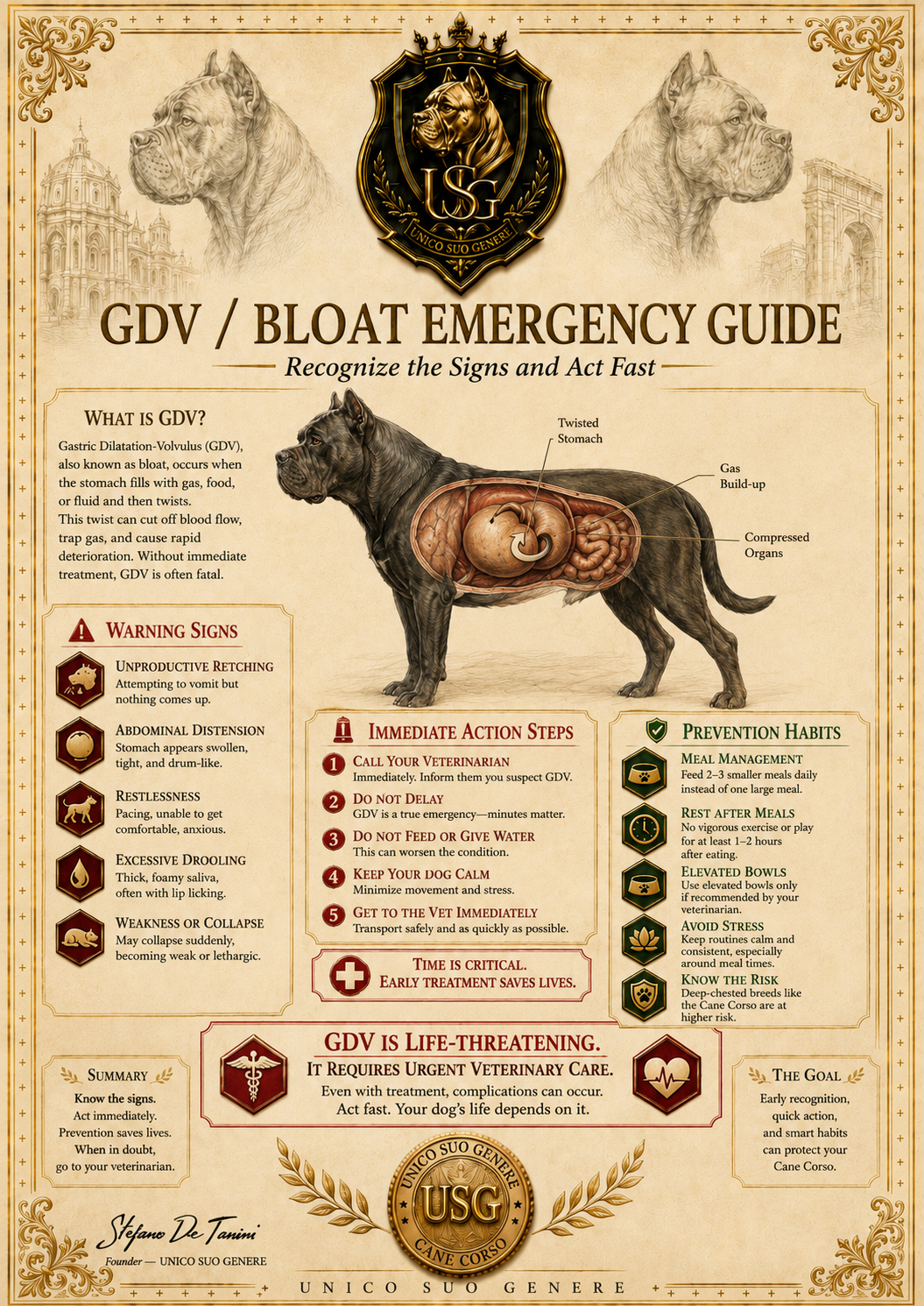
GDV / Bloat Emergency Guide
USG visual orientation for bloat, gastric torsion risk, and urgent veterinary-response awareness.
It focuses on GDV/bloat as an emergency risk. Possible signs include abdominal swelling, restlessness, drooling, unproductive vomiting, weakness, or collapse.
For emergency signs, seek veterinary help immediately.
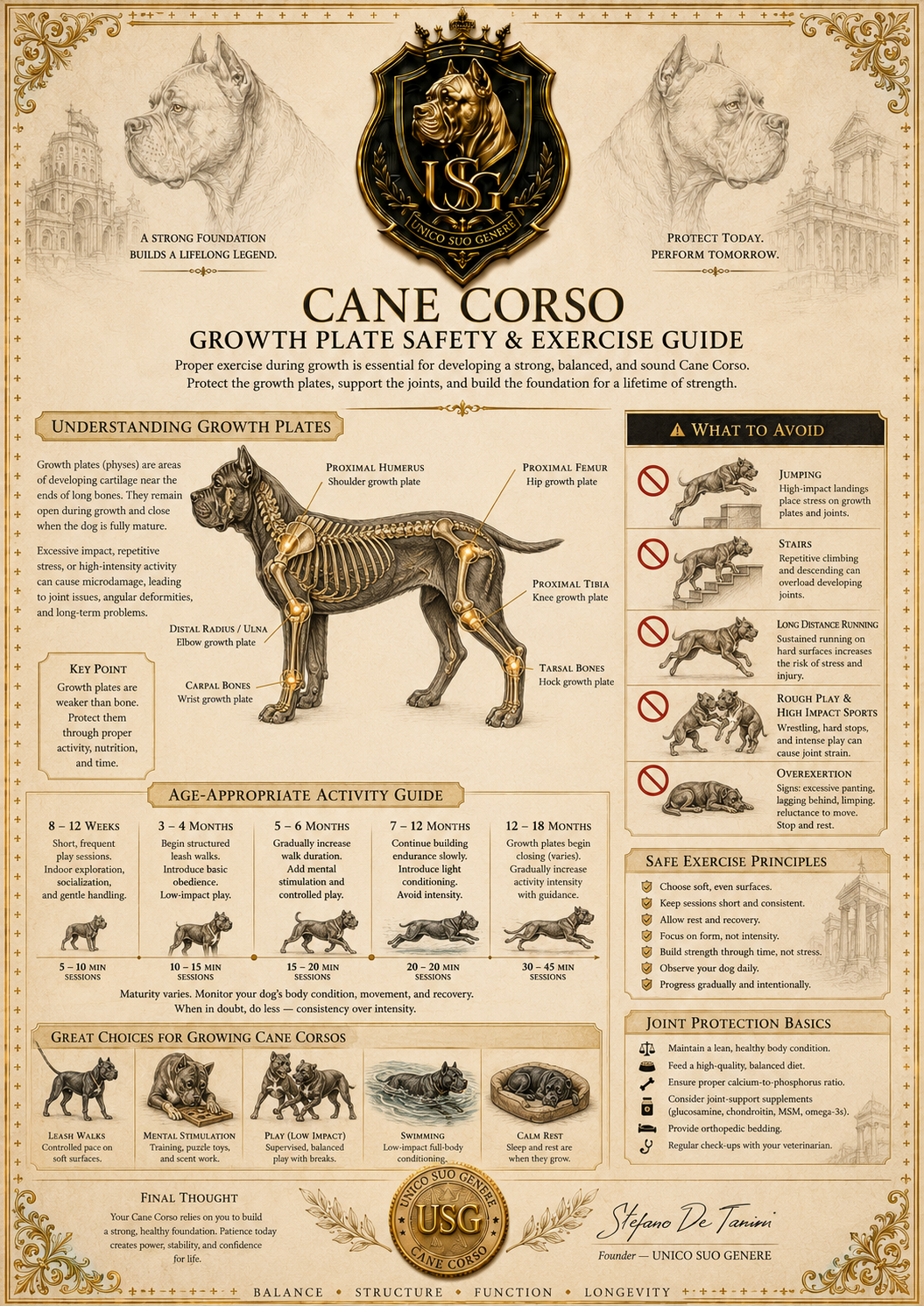
Growth Plate Safety
USG visual orientation for growth plates, exercise limits, and safe development during puppy growth.
It shows growth plates and why excessive load in puppies can be risky. It guides controlled movement, sensible feeding, and avoiding heavy jumping at a young age.
Pregnancy, delivery, and puppy care should be monitored with a veterinarian or experienced specialist.
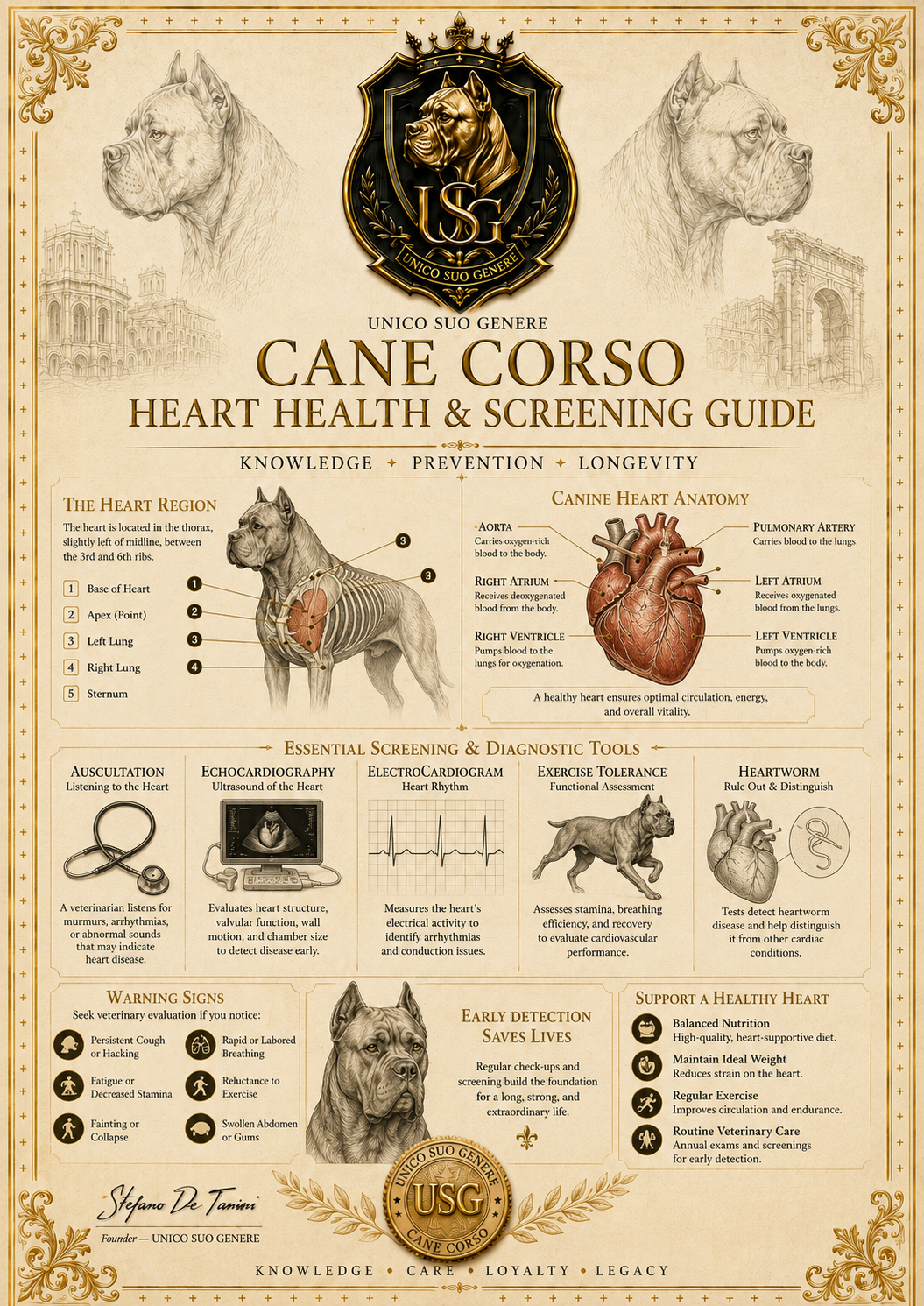
Heart Health & Screening
USG visual orientation for heart health, screening, warning signs, and responsible monitoring.
This sheet focuses on heart health, screening, and warning signs. It is useful for observing fatigue, coughing, fainting, breathing difficulty, or poor stamina.
If symptoms or concerns appear, consult a veterinarian.
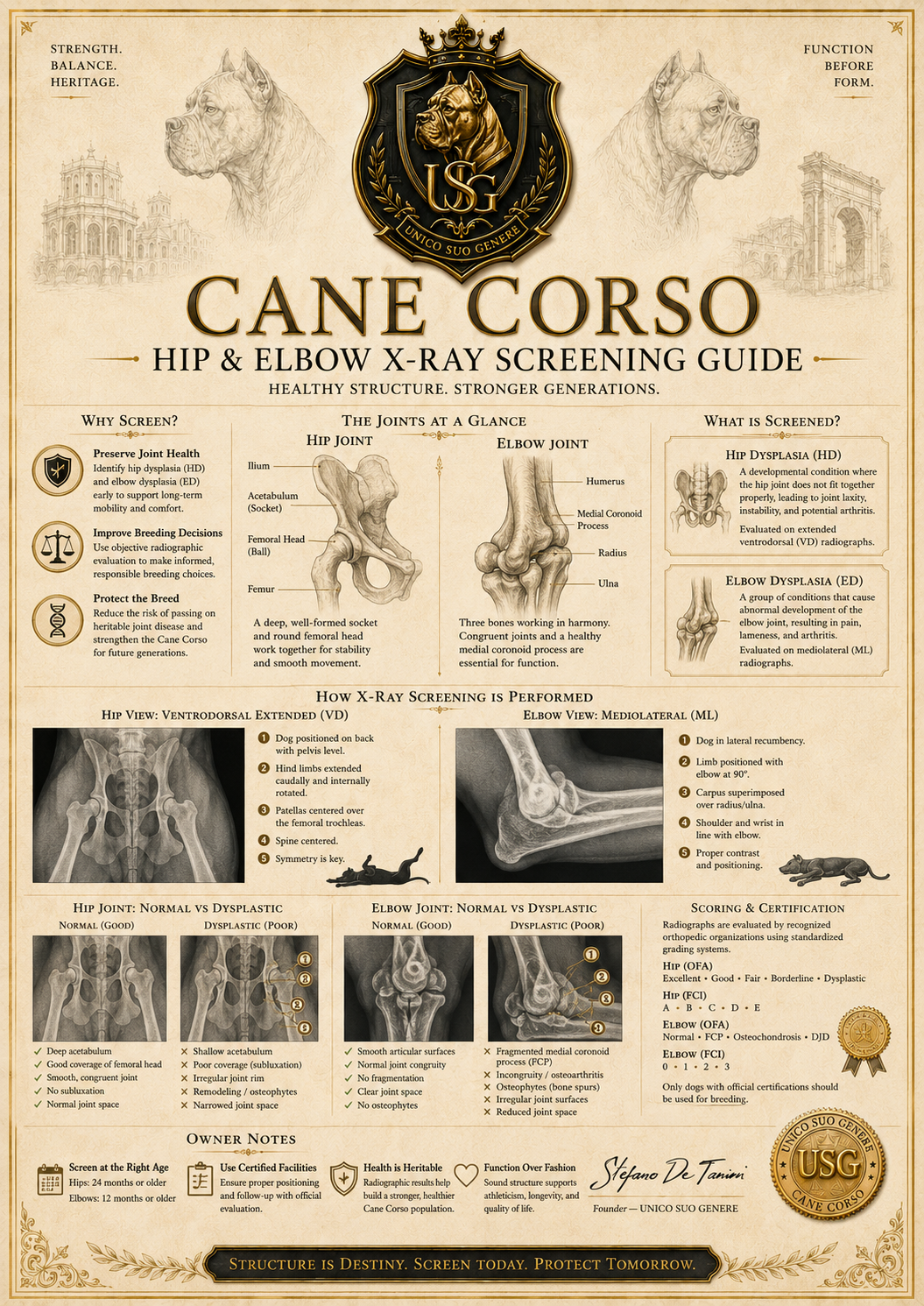
Hip & Elbow X-Ray Screening
USG visual orientation for hip and elbow screening, X-ray orientation, and joint-health awareness.
It shows the idea of hip and elbow X-ray screening. It explains why external appearance alone is not enough to evaluate joints.
If symptoms or concerns appear, consult a veterinarian.
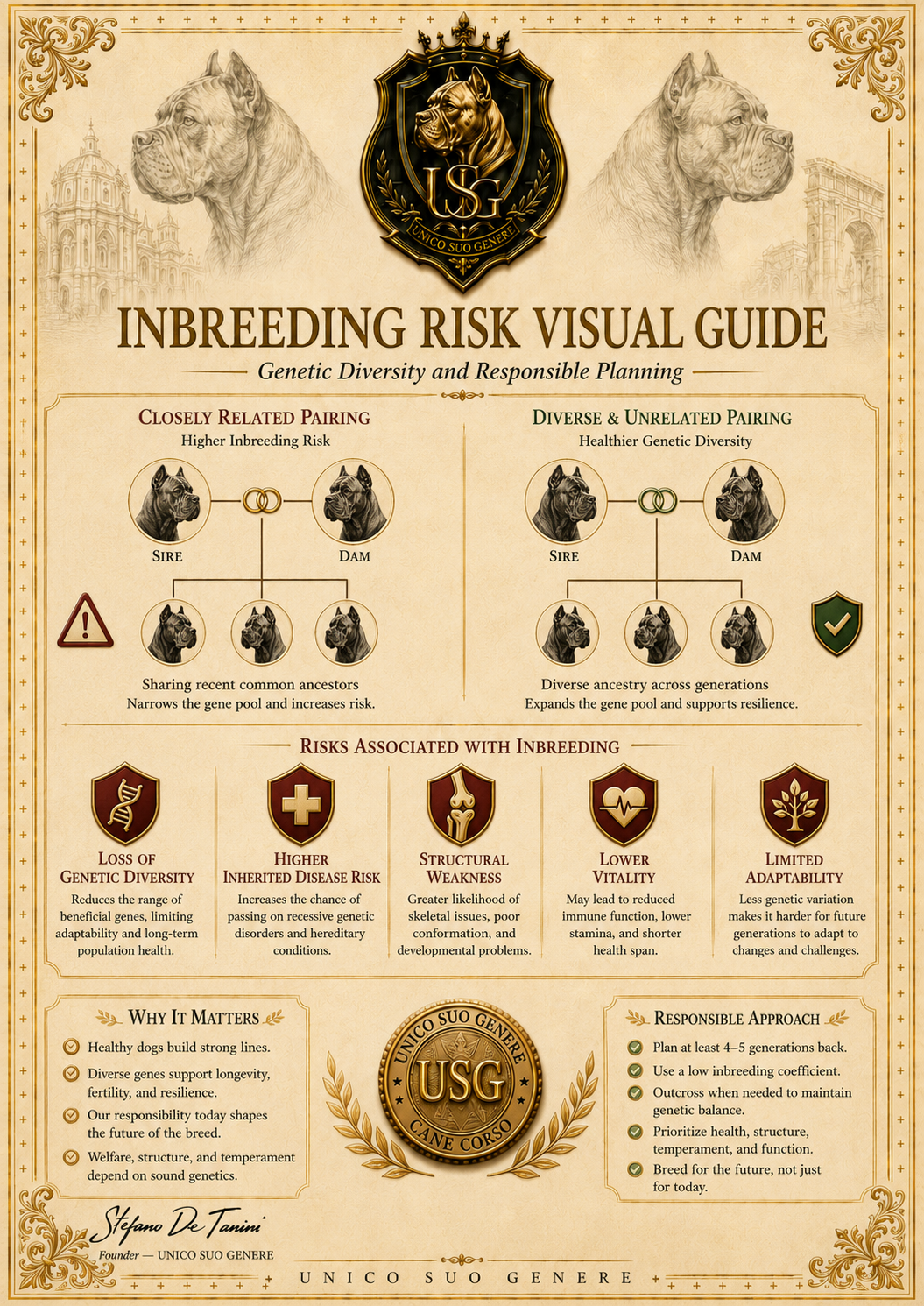
Inbreeding Risk Visual Guide
USG visual orientation for genetic diversity, inbreeding risk, and responsible breeding awareness.
It explains inbreeding risk, genetic diversity, and why close relatedness may increase health and reproductive problems. It supports responsible planning rather than automatic judgment by name or line alone.
USG visual review is not a pedigree, official certificate, or automatic decision.
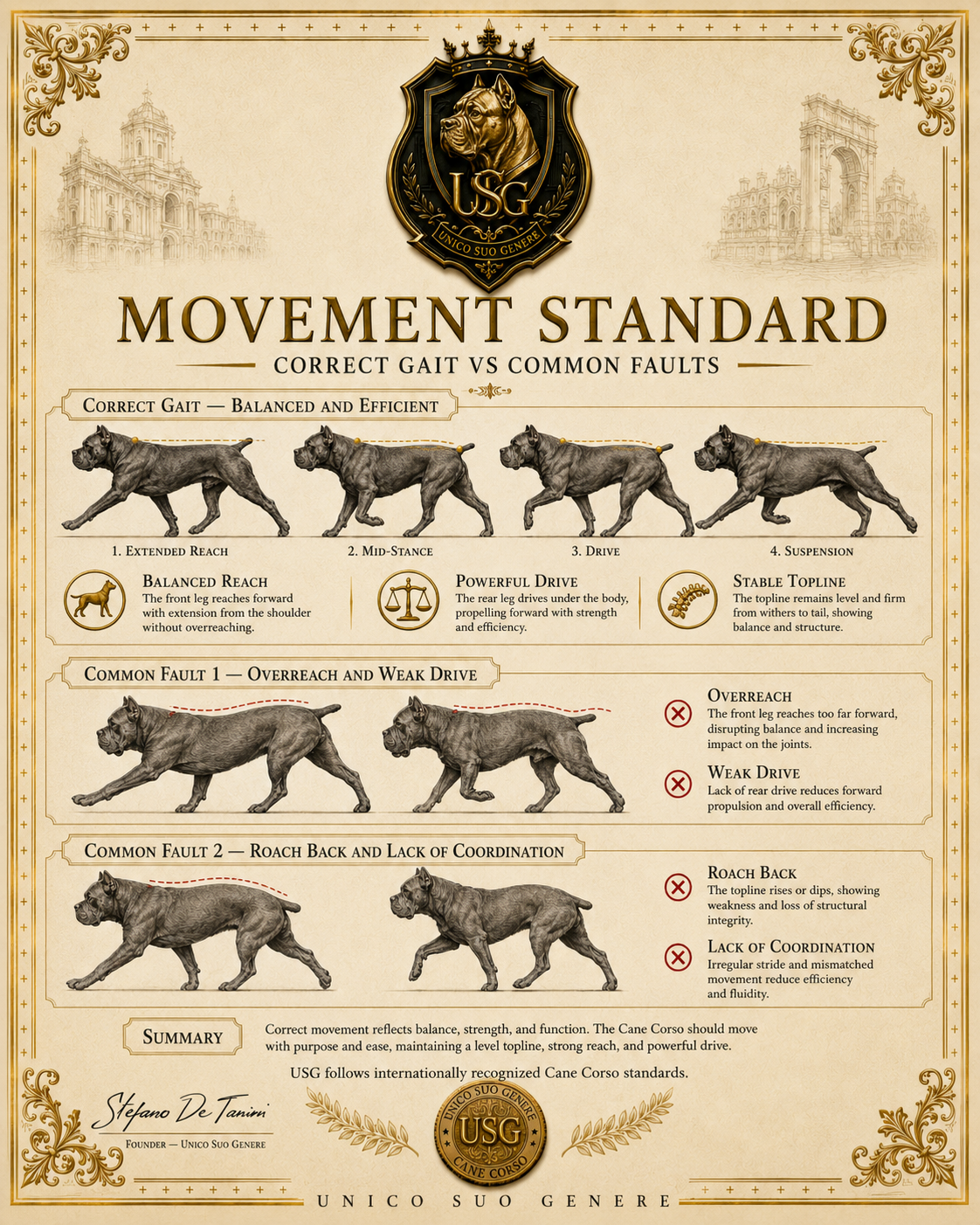
Movement Standard — Owner Orientation
USG visual orientation for movement, gait, correct and common-fault patterns, and responsible visual reading.
It shows movement from an owner’s point of view: gait, balance, drive, and stability. It helps notice unevenness, stiffness, or lack of harmony in motion.
Orientation for understanding type and structure, not a final evaluation.
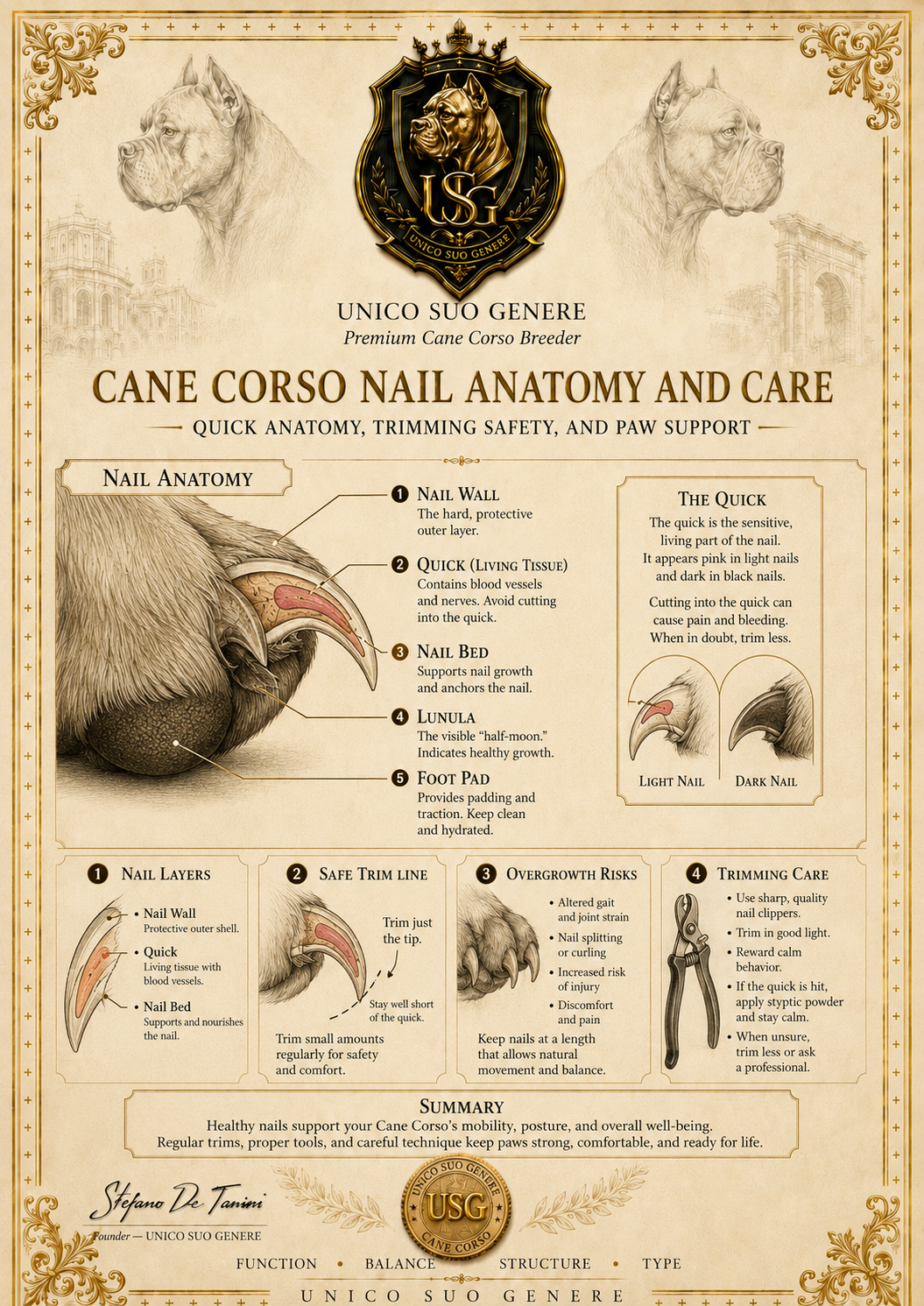
Nail Anatomy & Care
USG visual orientation for nail structure, safe trimming orientation, and paw-care awareness.
It explains nail anatomy, the quick, and safe care. It helps show why overly long nails can affect stance, gait, and comfort.
Practical owner orientation; adapt care to the individual Cane Corso.
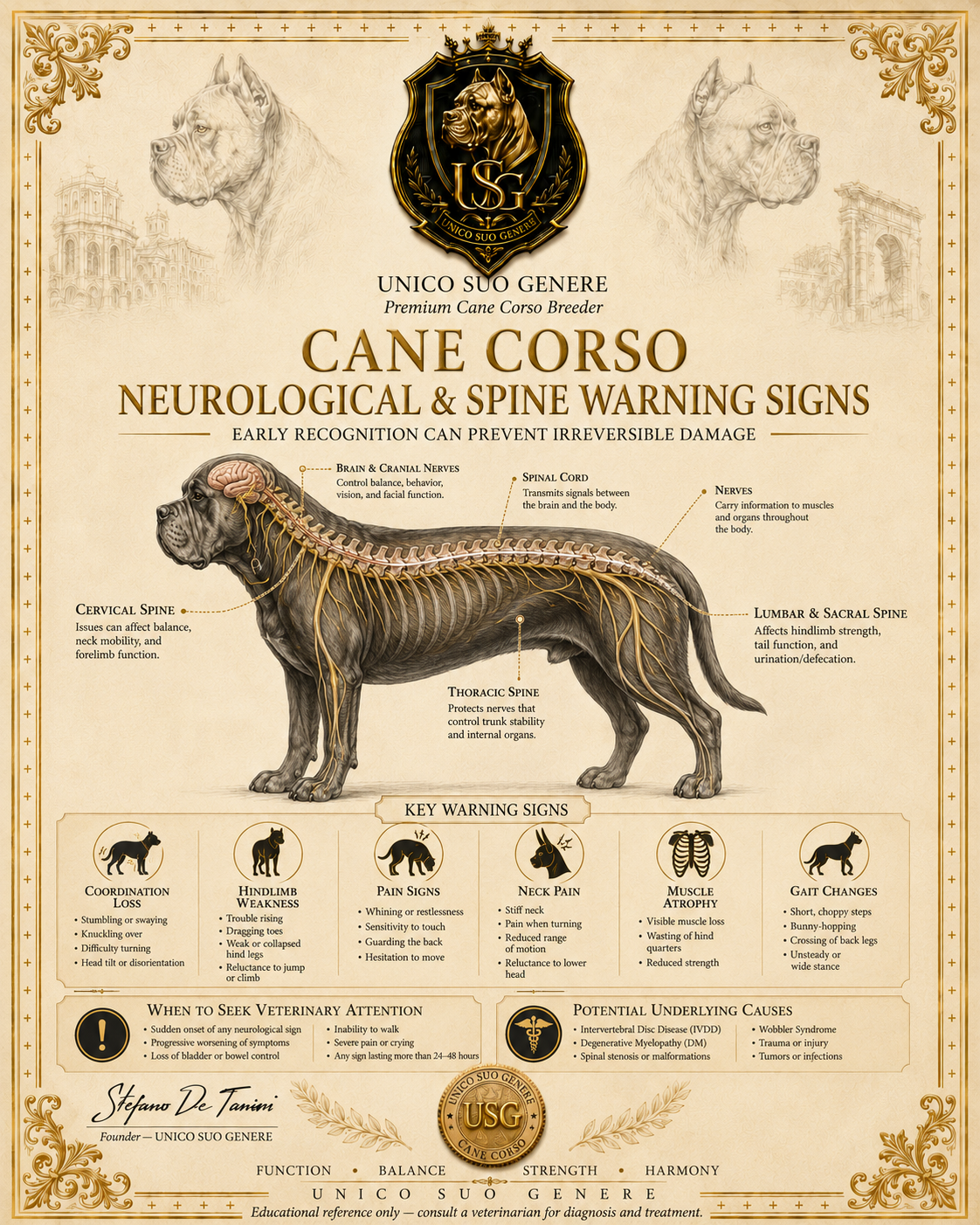
Neurological & Spine Warning Signs
USG visual orientation for spine, nerves, movement changes, and neurological warning points.
It shows the link between spine, nervous system, and warning signs. It guides observation of weakness, wobbling, dragging paws, pain, or sudden coordination changes.
If symptoms or concerns appear, consult a veterinarian.
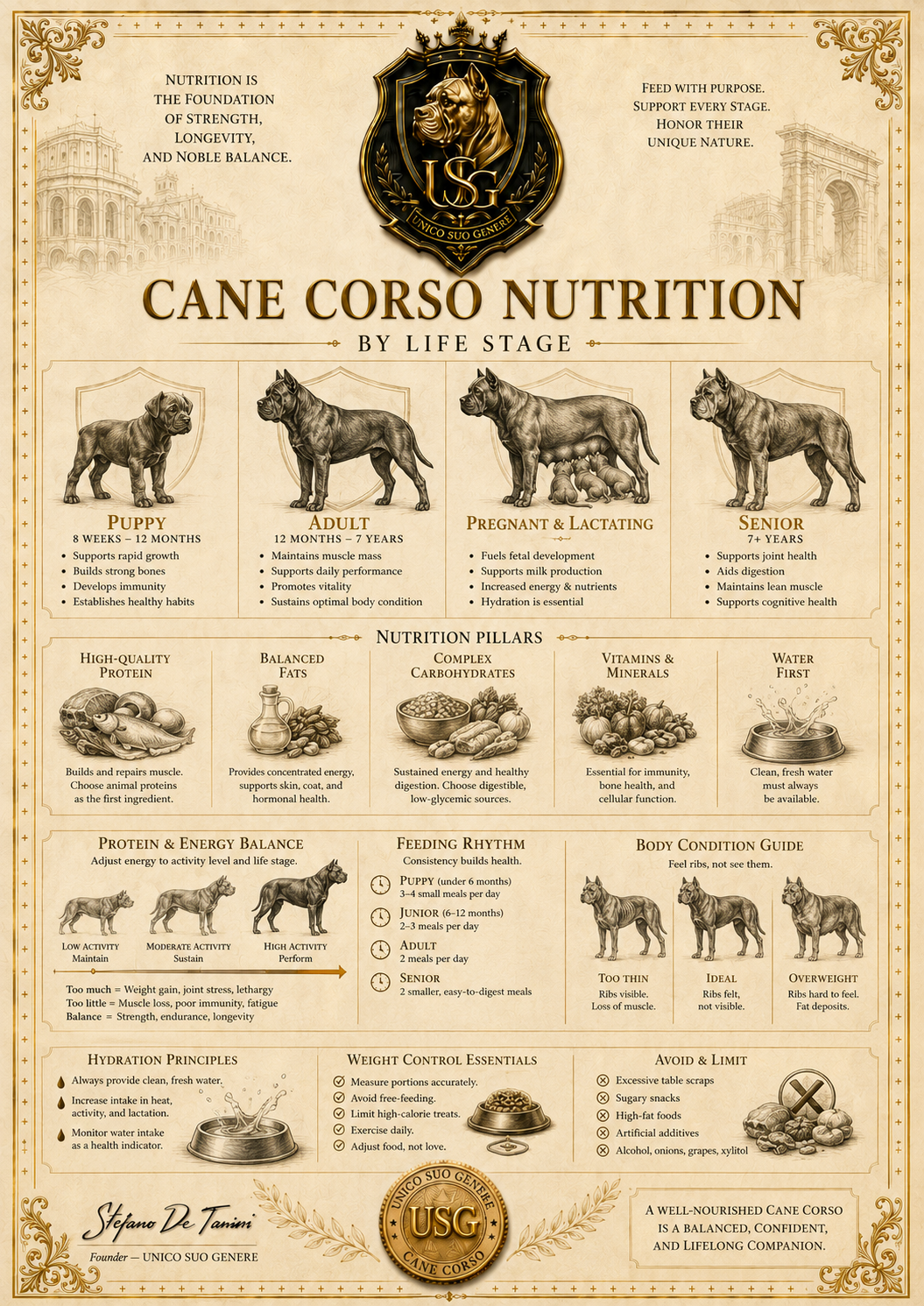
Nutrition by Life Stage
USG visual orientation for nutrition from puppy to adult and senior life stages.
It summarizes nutrition by life stage: puppy, growing dog, adult, and senior. It guides balance between growth, weight, activity, and healthy condition.
Practical owner orientation; adapt care to the individual Cane Corso.
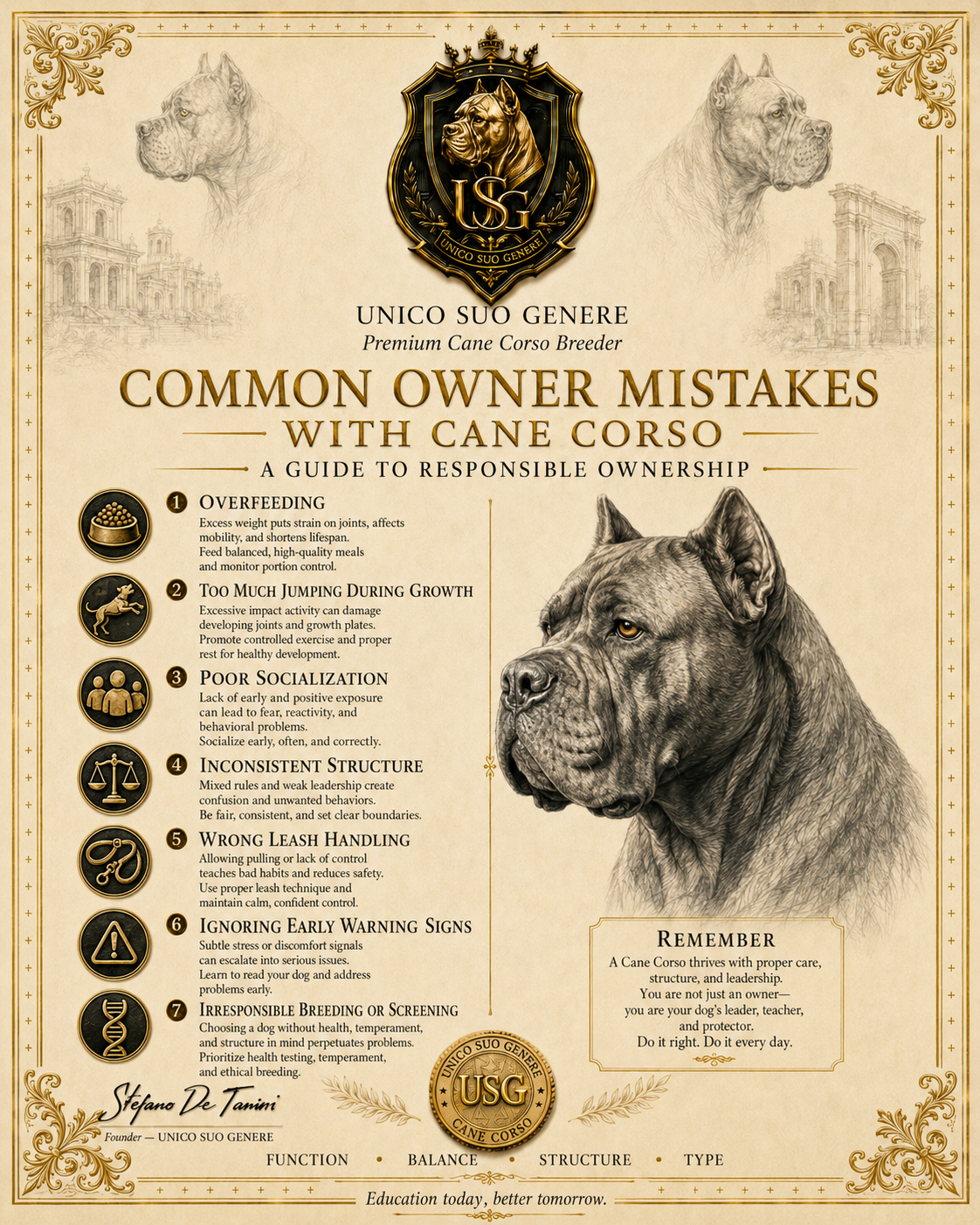
Common Owner Mistakes
USG visual orientation for frequent owner mistakes and responsible Cane Corso management.
It shows common ownership mistakes: excessive exercise, poor socialization, unsuitable feeding, lack of control, or late response to problems. It supports more responsible daily care.
Practical owner orientation; adapt care to the individual Cane Corso.
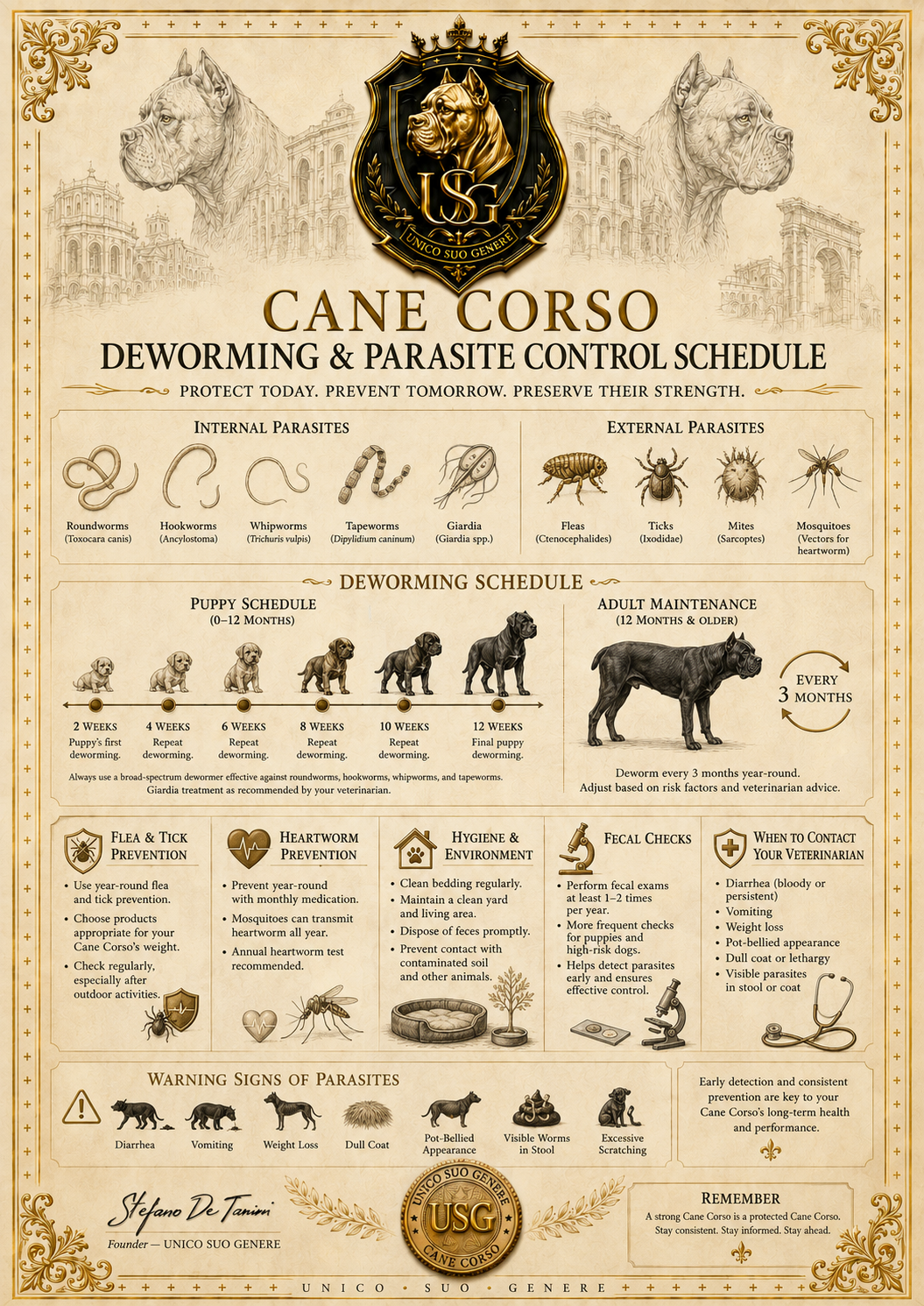
Deworming & Parasite Control Schedule
USG visual orientation for parasite prevention, deworming rhythm, and owner planning.
It summarizes deworming and parasite control by age and risk. It helps explain that prevention should be planned according to environment, season, and veterinary advice.
Prevention, testing, and treatment should follow local veterinary guidance.
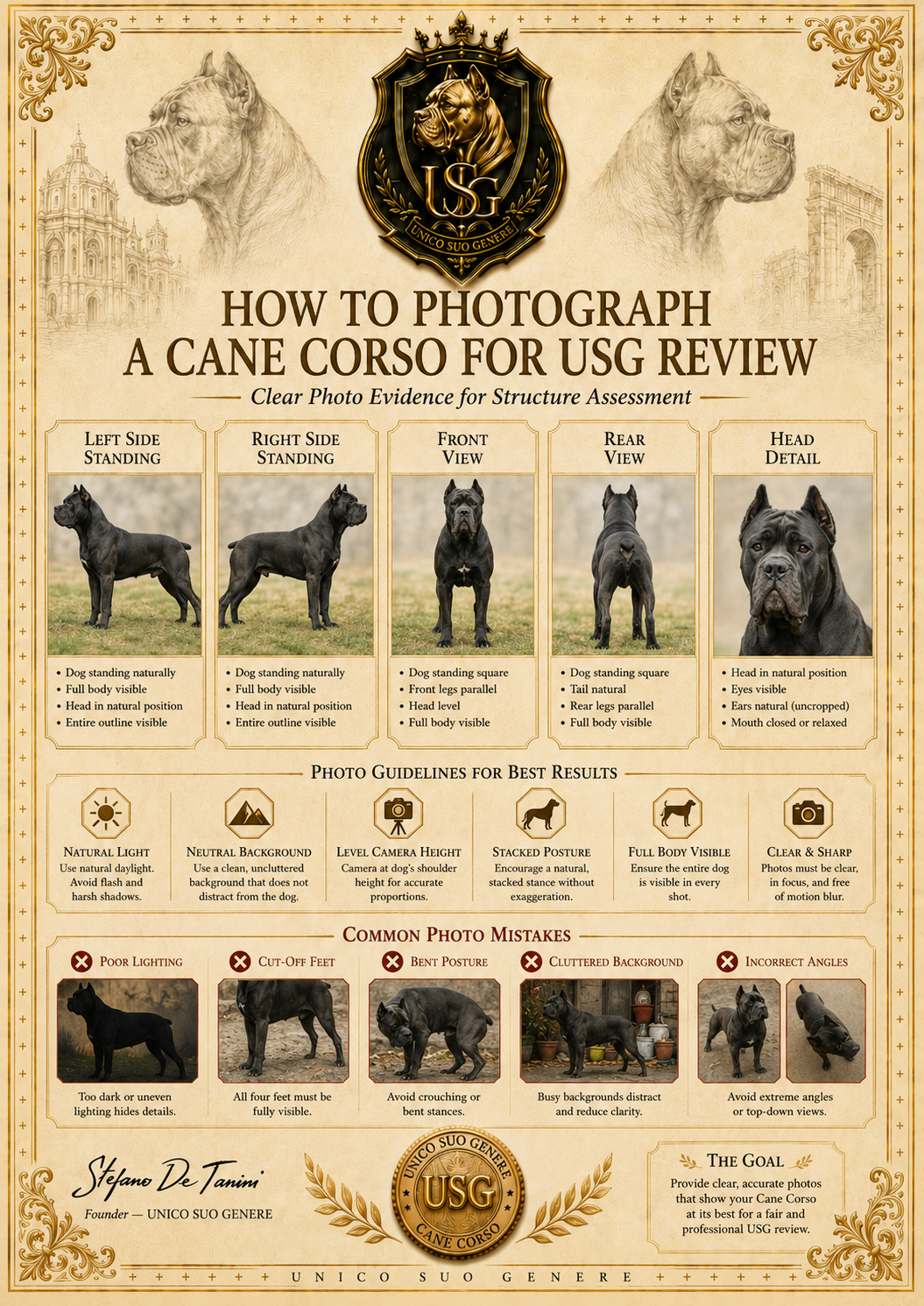
How to Photograph for USG Review
USG visual orientation for photo angles, lighting, stance, and owner preparation for USG review.
It shows how to photograph a Cane Corso for USG review: stance, profile, front/rear view, lighting, and visibility. The goal is clearer visual information, not an automatic decision.
USG visual review is not a pedigree, official certificate, or automatic decision.
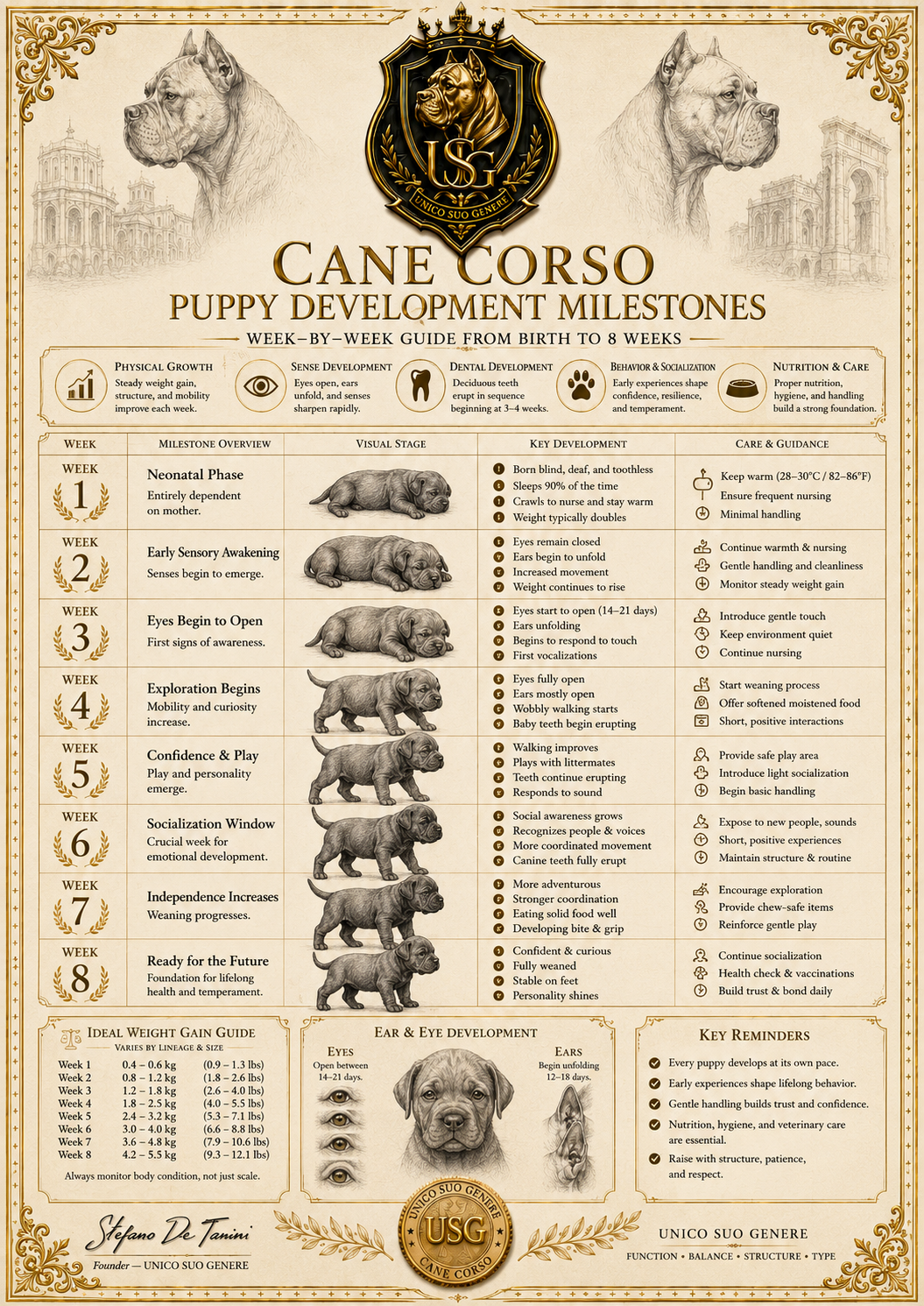
Puppy Development Milestones
USG visual orientation for early puppy stages, neurological development, and growth milestones.
It shows key puppy milestones: senses, movement, socialization, feeding, and behavior. It helps monitor whether development follows an expected sequence.
Pregnancy, delivery, and puppy care should be monitored with a veterinarian or experienced specialist.

Safe Puppy Growth & Feeding
USG visual orientation for safe growth, controlled nutrition, joint protection, and puppy development.
This sheet connects growth, feeding, weight, and safe exercise. It helps avoid overly rapid growth, excess weight, and joint overload.
Pregnancy, delivery, and puppy care should be monitored with a veterinarian or experienced specialist.
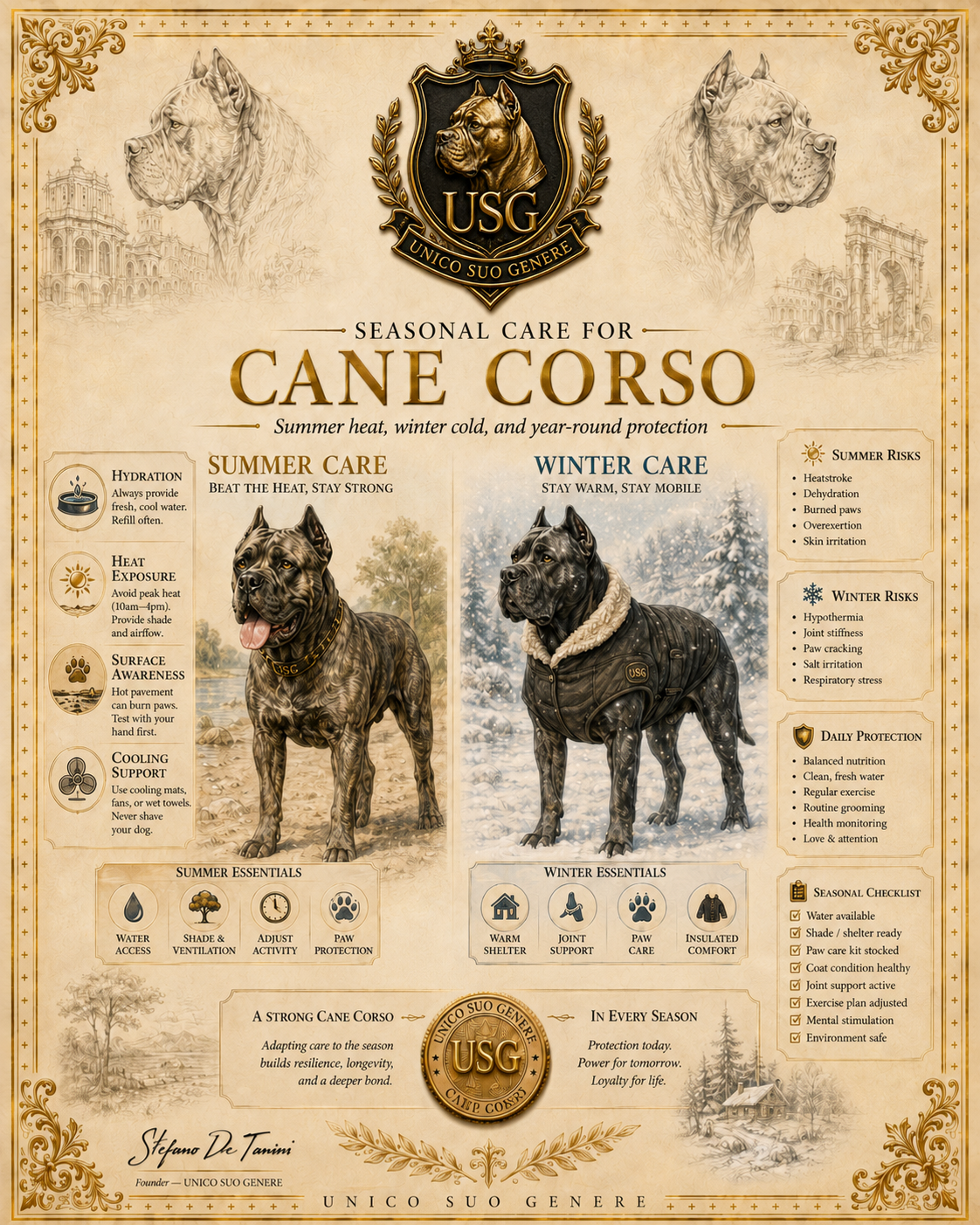
Seasonal Care
USG visual orientation for summer, winter, climate exposure, and practical seasonal care.
It summarizes care by season: heat, cold, parasites, paws, skin, water, and activity. It helps owners adapt daily care to weather and risk.
Practical owner orientation; adapt care to the individual Cane Corso.
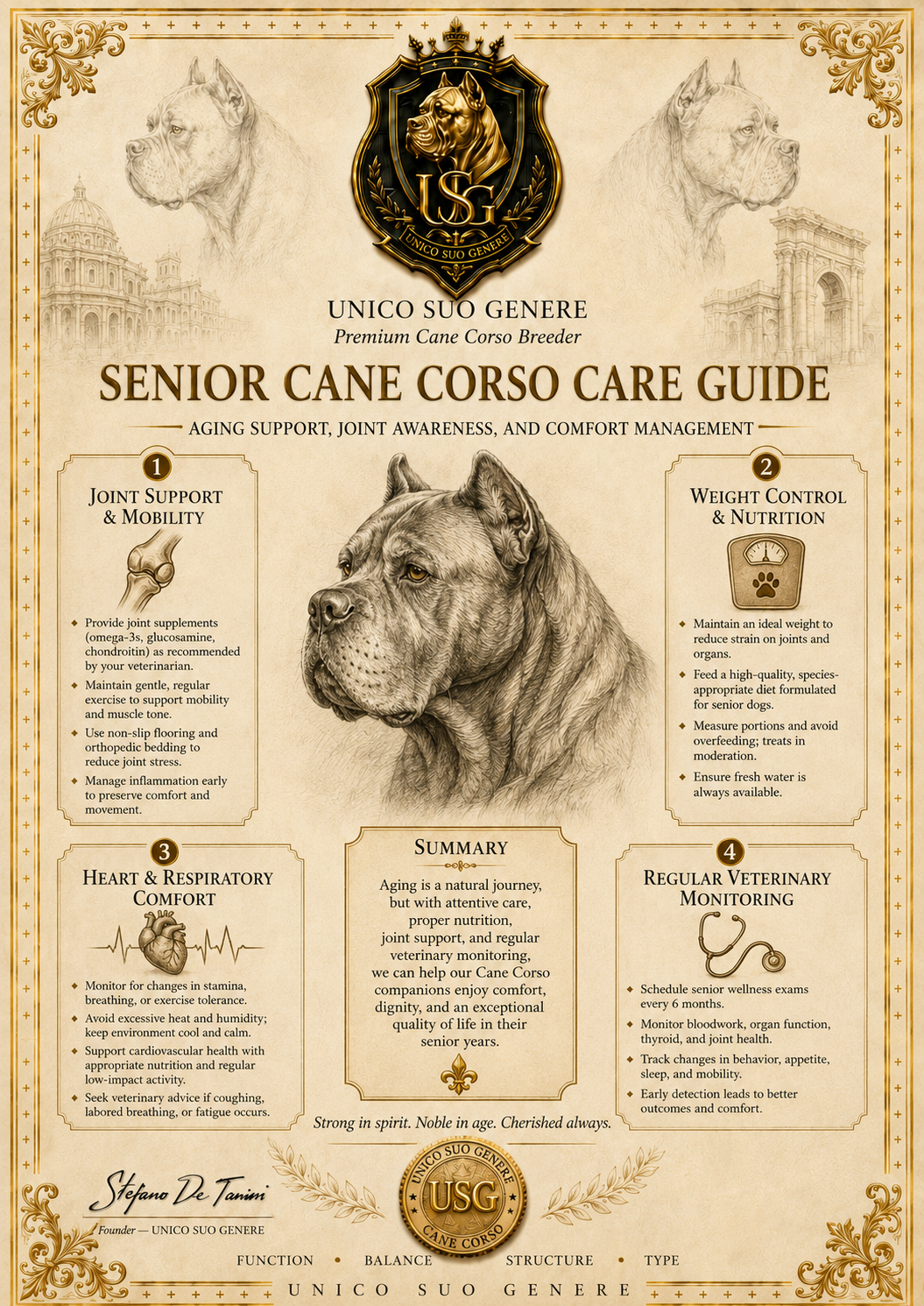
Senior Cane Corso Care
USG visual orientation for senior care, mobility, organ health, and quality-of-life awareness.
It shows senior Cane Corso care: joints, weight, heart, teeth, movement, and comfort. It encourages closer monitoring and adapting exercise and feeding.
Practical owner orientation; adapt care to the individual Cane Corso.
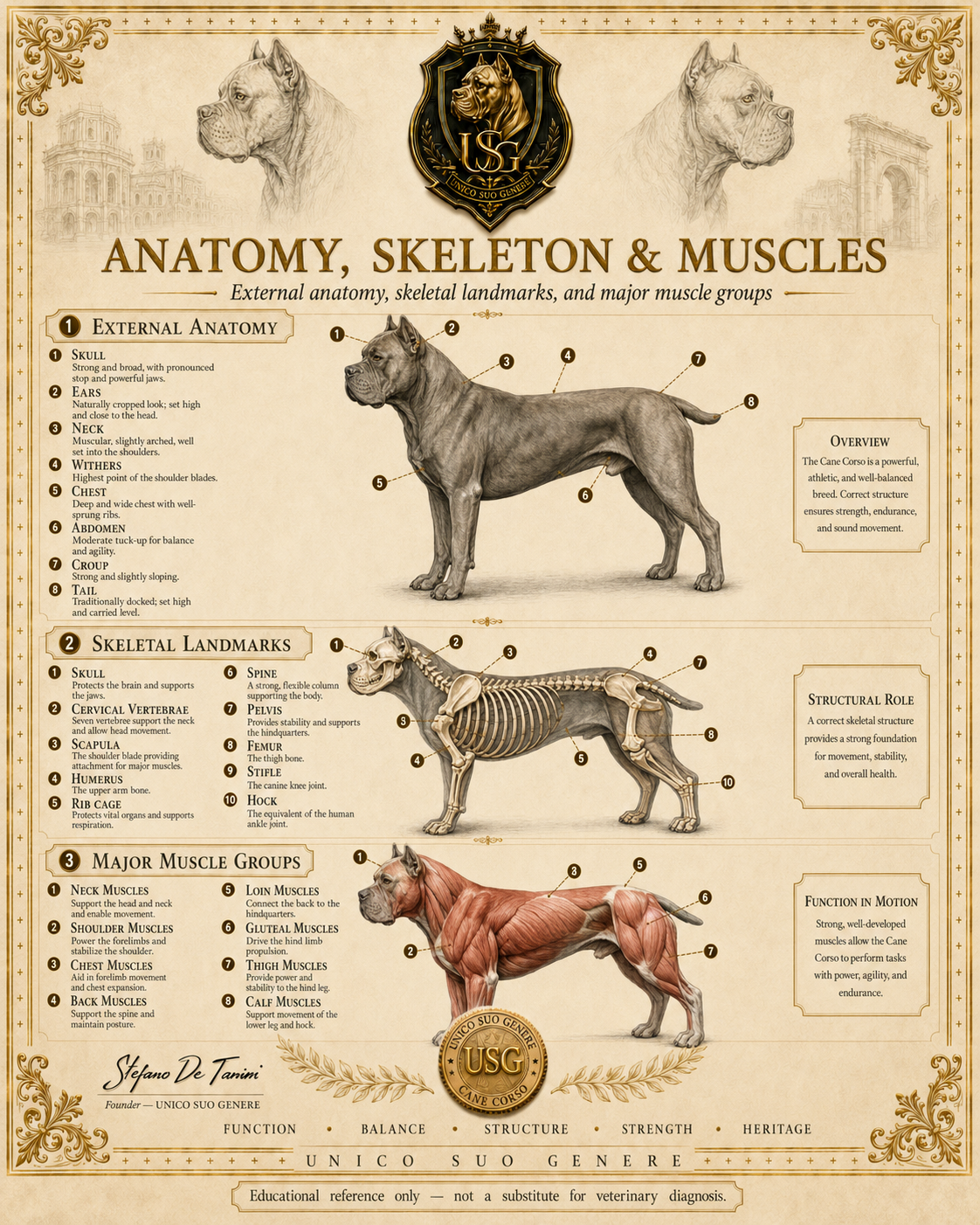
Anatomy, Skeleton & Muscles
USG visual orientation for body anatomy, skeleton, muscles, and major structural points.
It combines anatomy, skeleton, and muscles to show how the body carries strength and movement. It is useful for first understanding of functional structure.
Anatomy orientation; pain, injury, or concern requires a qualified professional.
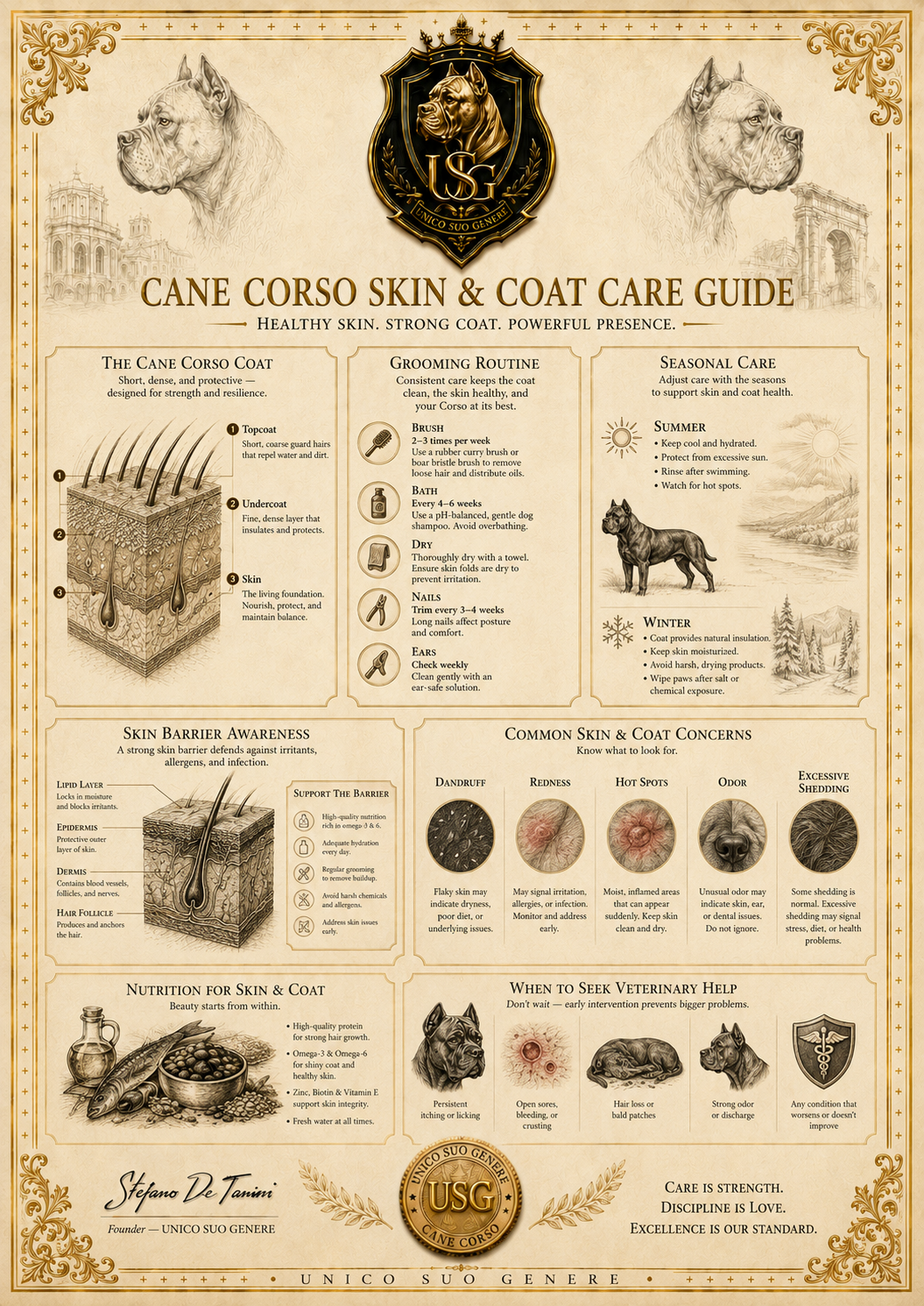
Skin & Coat Care
USG visual orientation for skin, coat, grooming, irritation signs, and owner care.
It shows skin and coat as indicators of general condition. It guides observation of itching, redness, dandruff, hair loss, sores, or coat-quality changes.
If symptoms or concerns appear, consult a veterinarian.
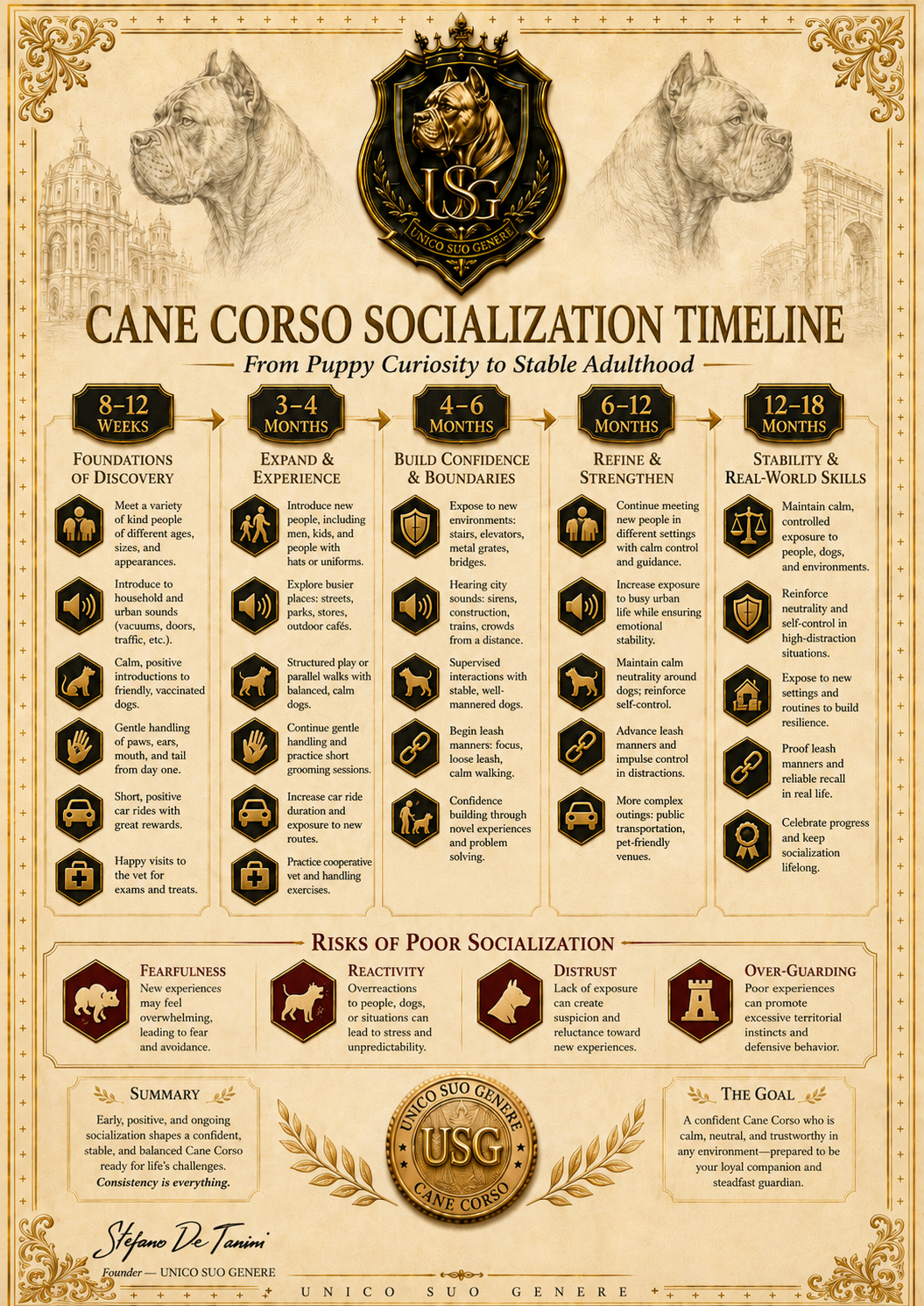
Socialization Timeline
USG visual orientation for puppy curiosity, safe exposure, and social confidence development.
This sheet organizes socialization by age stages: people, environment, sounds, other animals, and calm situations. It helps build confidence without overload.
Practical owner orientation; adapt care to the individual Cane Corso.
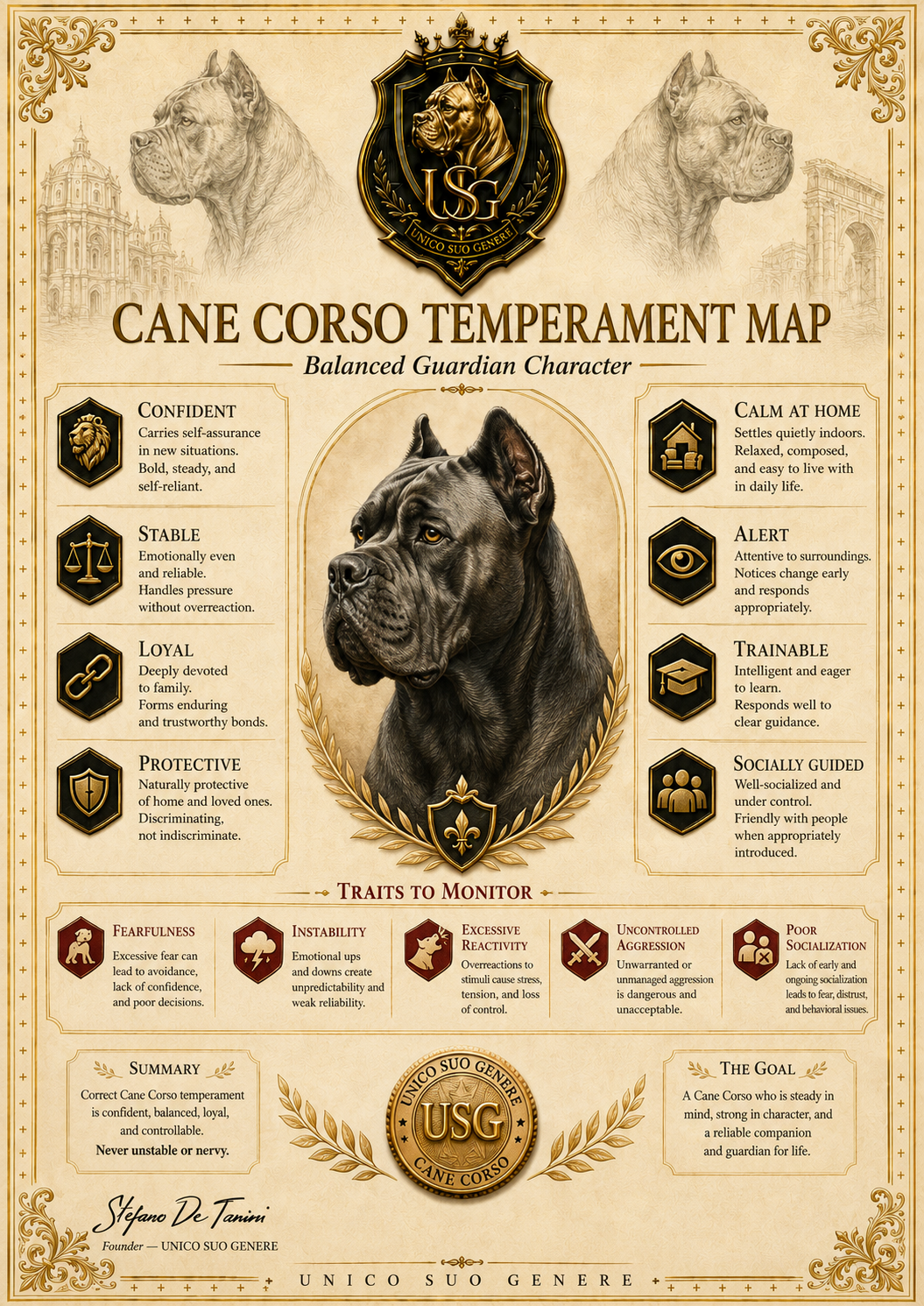
Temperament Map
USG visual orientation for balanced guardian character, confidence, control, and temperament reading.
It shows temperament, behavior, and reactions in different situations. It supports balance between confidence, control, social behavior, and stable owner handling.
Practical owner orientation; adapt care to the individual Cane Corso.
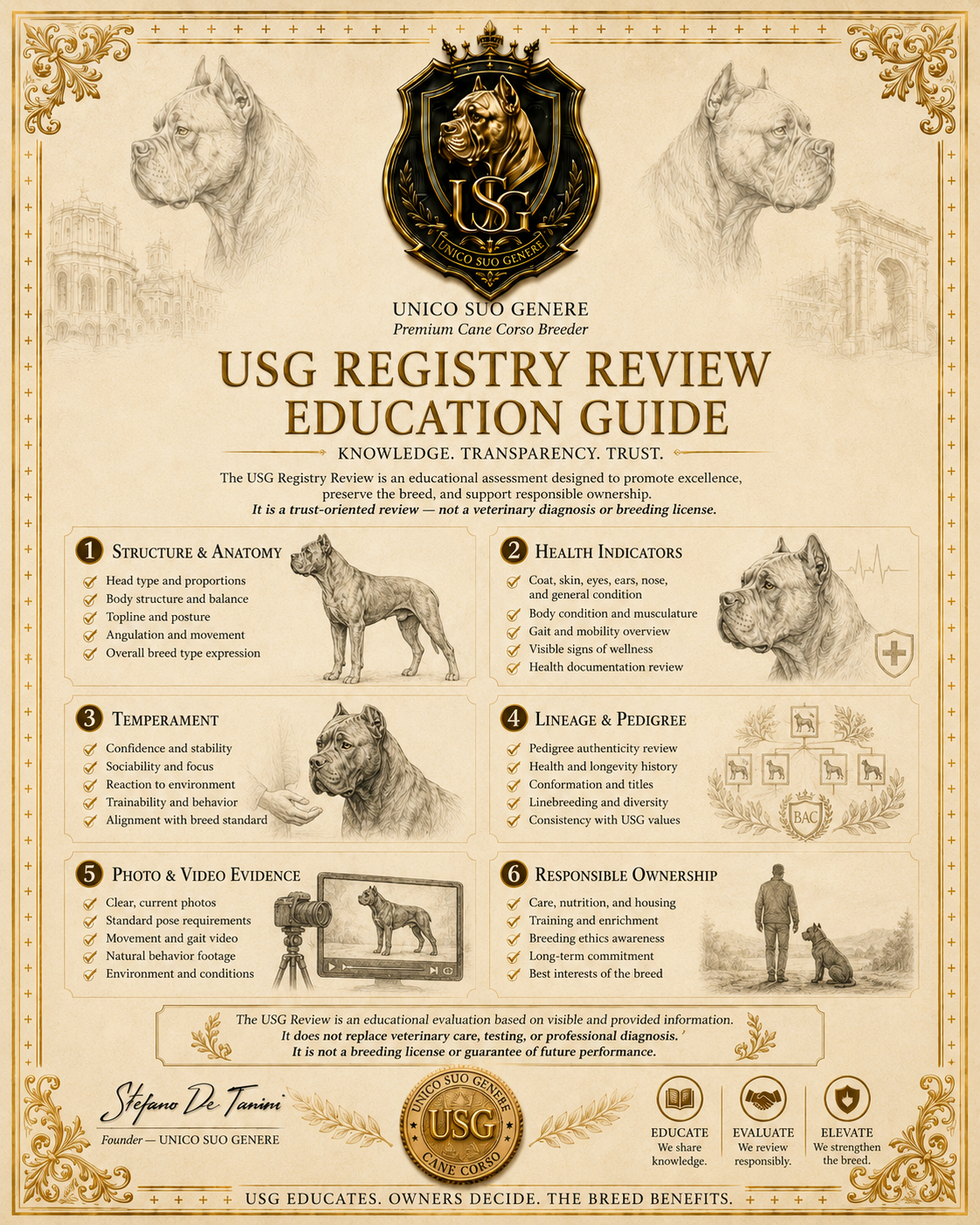
USG Registry Review Education Guide
USG visual orientation for registry review orientation, photo evidence, and human-admin context.
It explains how USG uses visual material for orientation in profiles, registry, and human review. It helps clarify that photos support context, but are not pedigree, certification, or automatic evaluation.
USG visual review is not a pedigree, official certificate, or automatic decision.

Vaccination & Deworming Schedule
USG visual orientation for vaccination timing, deworming rhythm, and owner planning.
It shows vaccination and deworming as a general orientation schedule. It explains that timing depends on age, region, risk, and veterinary recommendation.
Practical owner orientation; adapt care to the individual Cane Corso.
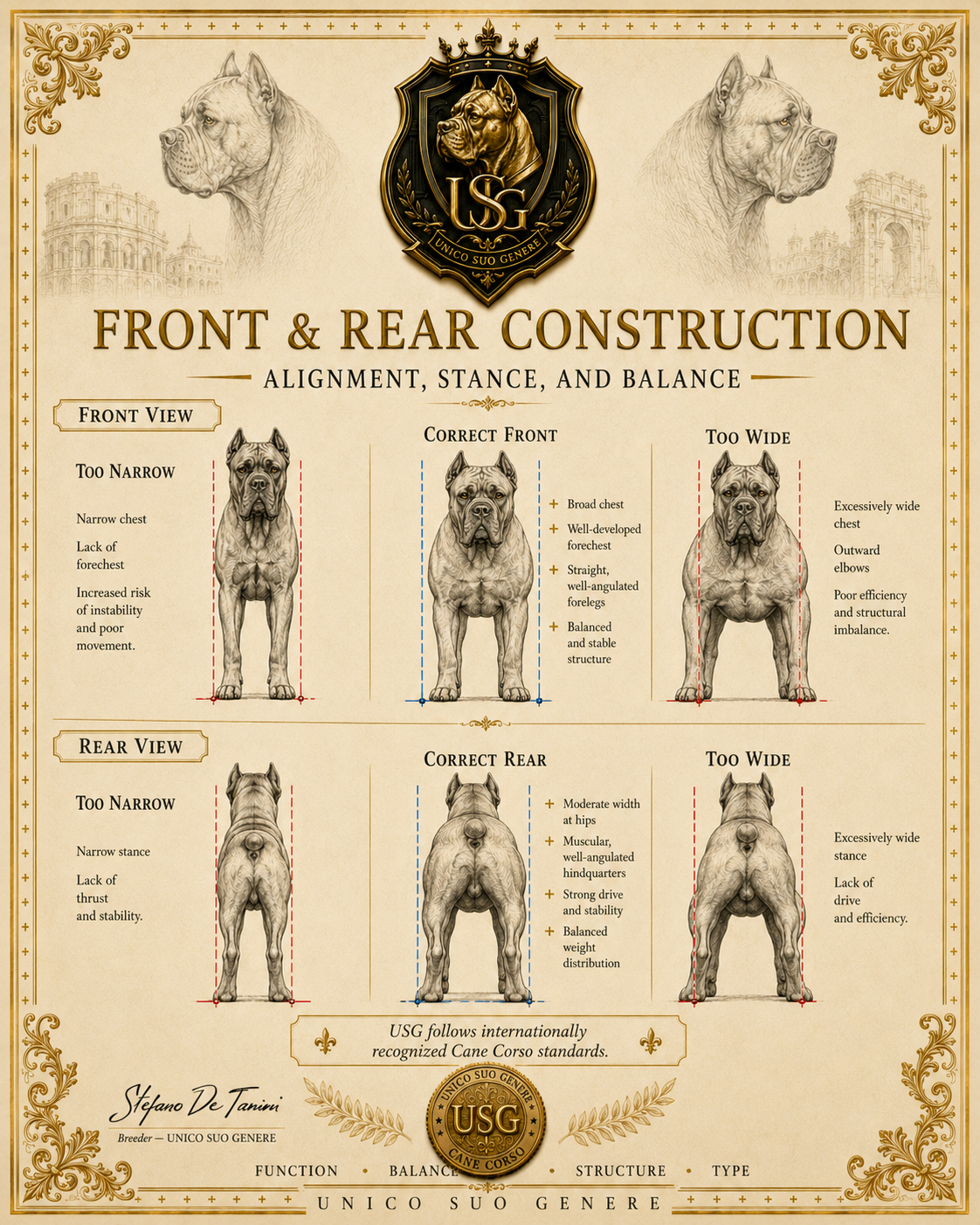
Front & Rear Construction
USG visual orientation for front and rear alignment, stance, and structural balance.
It shows front and rear construction, angles, limbs, and balance. It helps explain how stance and limb placement affect movement and stability.
Orientation for understanding type and structure, not a final evaluation.
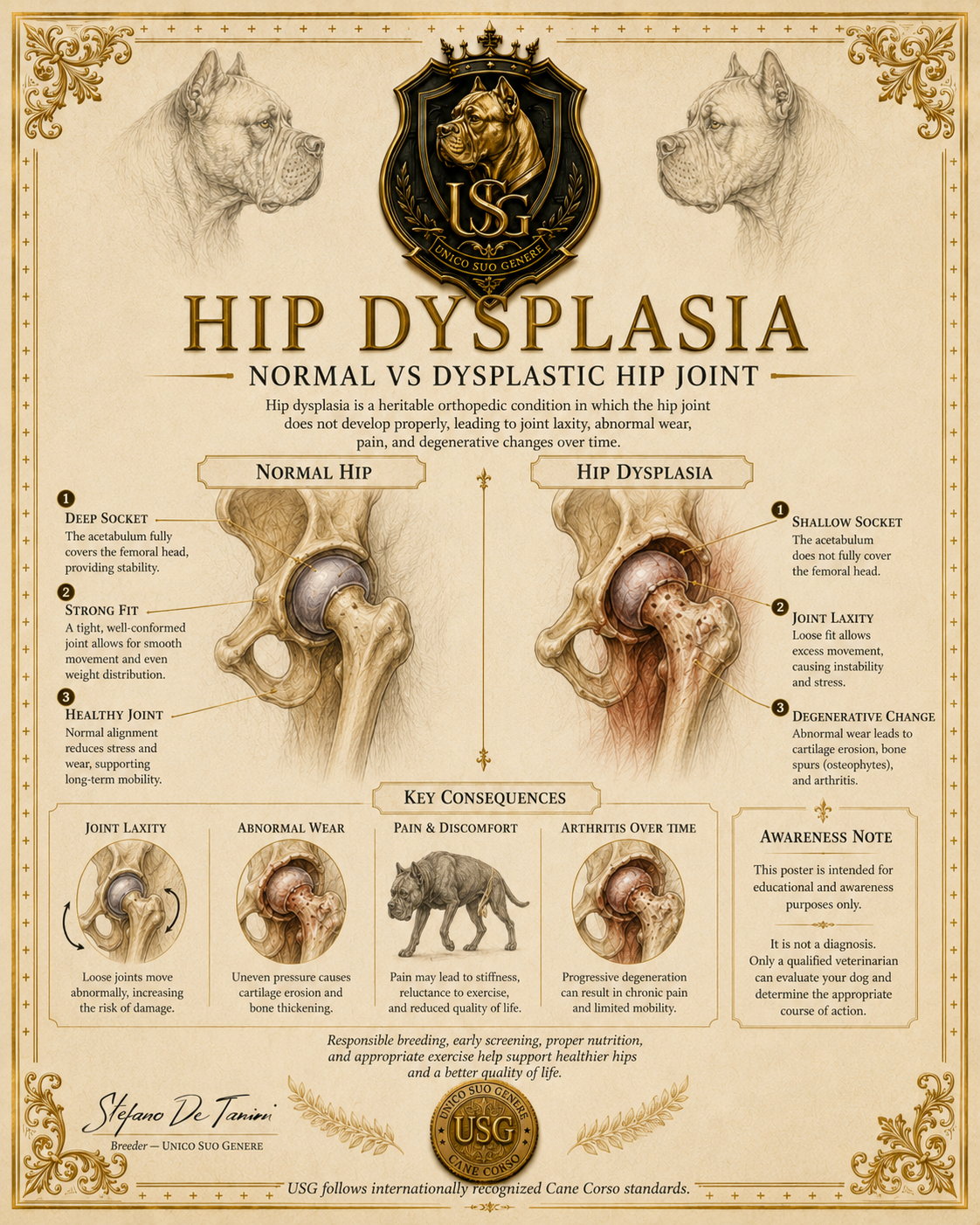
Hip Dysplasia Visual Variant
USG visual orientation for hip joint orientation and dysplasia awareness in an alternate visual format.
This is an additional visual variant for hip dysplasia, showing the joint and possible changes in position or socket depth. It supports clearer discussion with a veterinarian when there is concern.
If symptoms or concerns appear, consult a veterinarian.
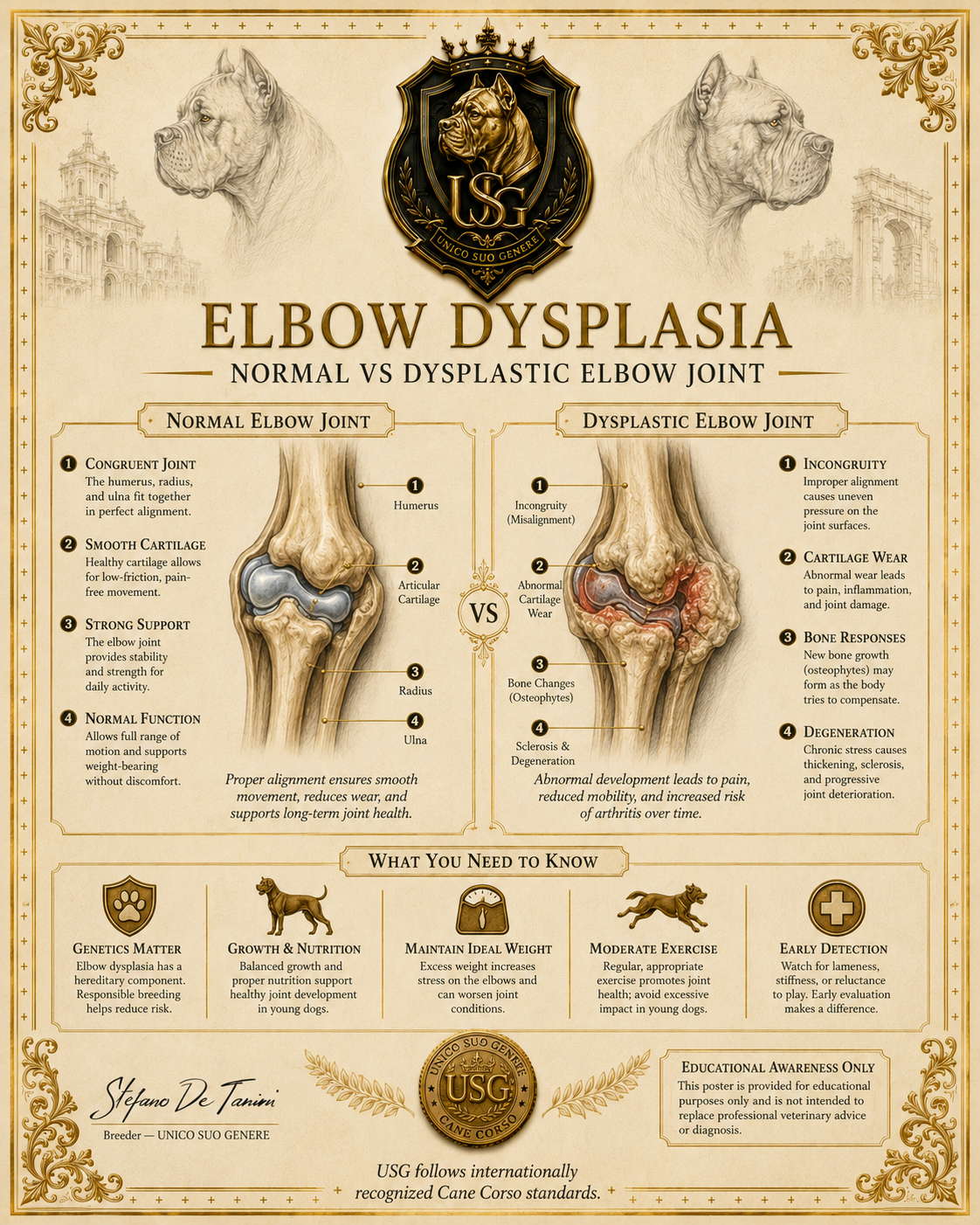
Elbow Dysplasia Visual Variant
USG visual orientation for elbow joint orientation and dysplasia awareness in an alternate visual format.
An additional elbow dysplasia sheet focused on the joint, load, and possible pain during movement. It is useful for recognizing the topic before professional evaluation.
If symptoms or concerns appear, consult a veterinarian.
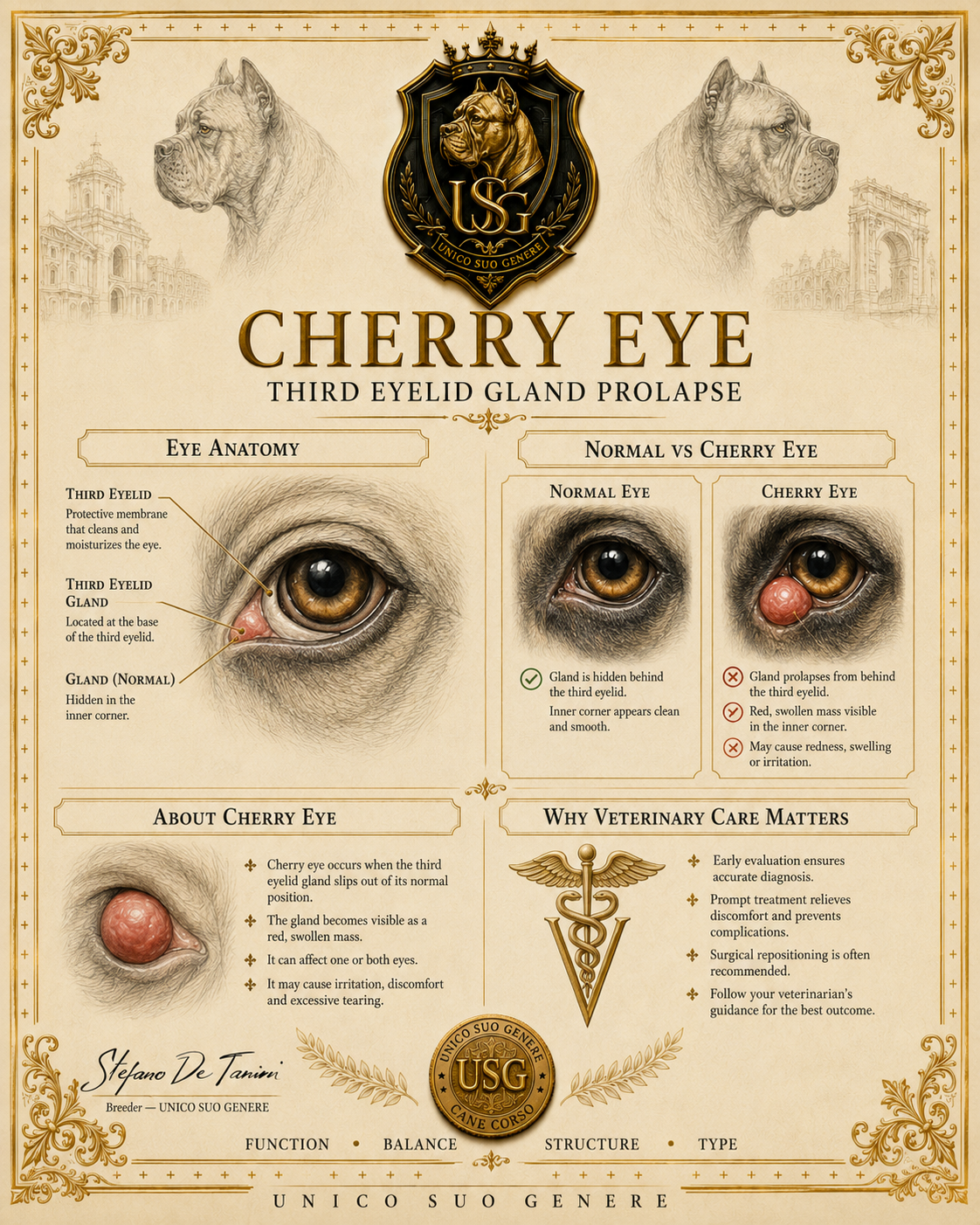
Cherry Eye Visual Variant
USG visual orientation for third eyelid gland awareness in an alternate visual format.
An additional cherry-eye visual that helps identify the red swelling in the inner corner of the eye. It encourages early consultation when irritation or tearing appears.
If symptoms or concerns appear, consult a veterinarian.
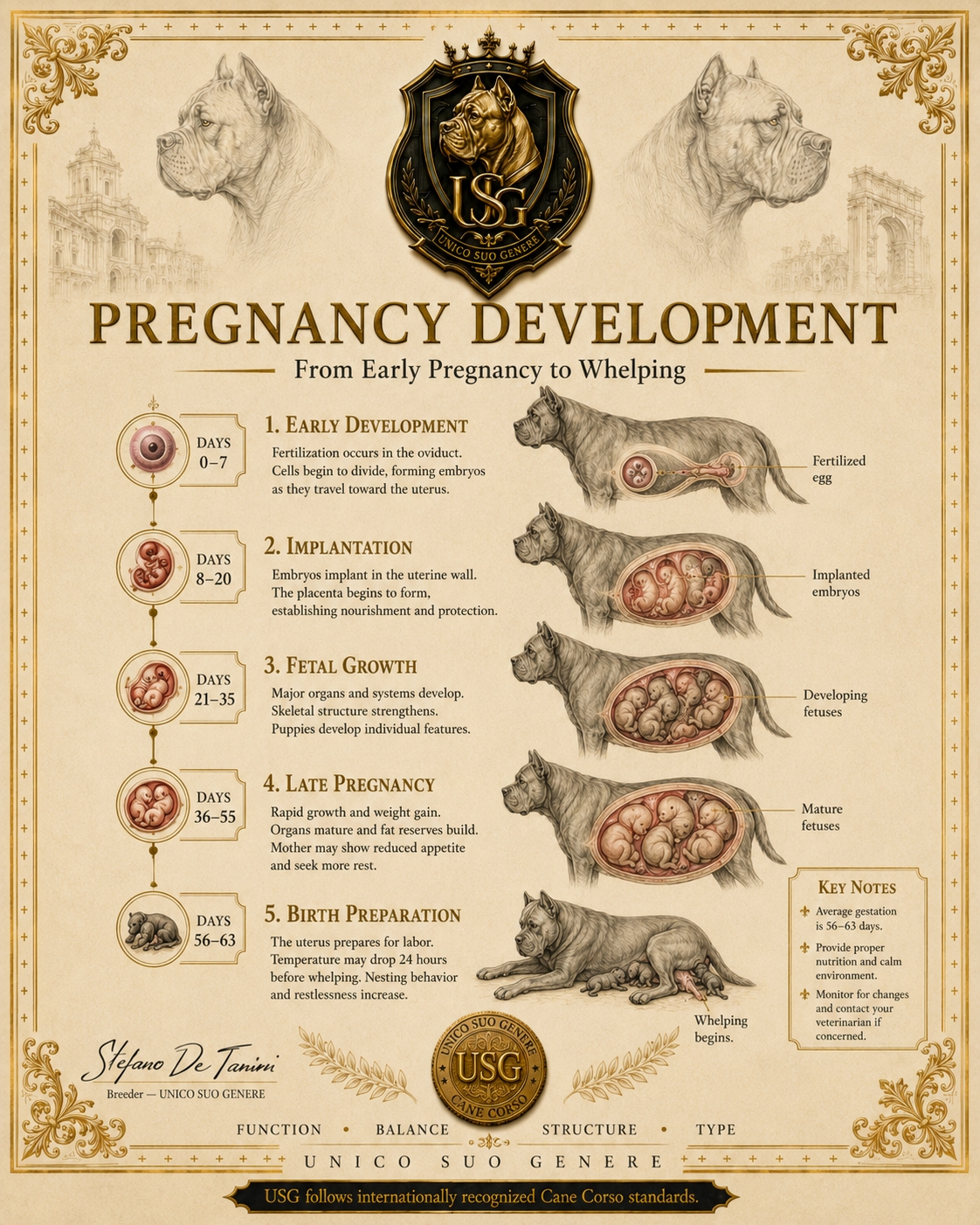
Pregnancy Development Visual Variant
USG visual orientation for pregnancy stages and fetal development in an alternate visual format.
An additional pregnancy-development sheet organizing stages, growth, and birth preparation. It helps owners know what to observe week by week.
Pregnancy, delivery, and puppy care should be monitored with a veterinarian or experienced specialist.
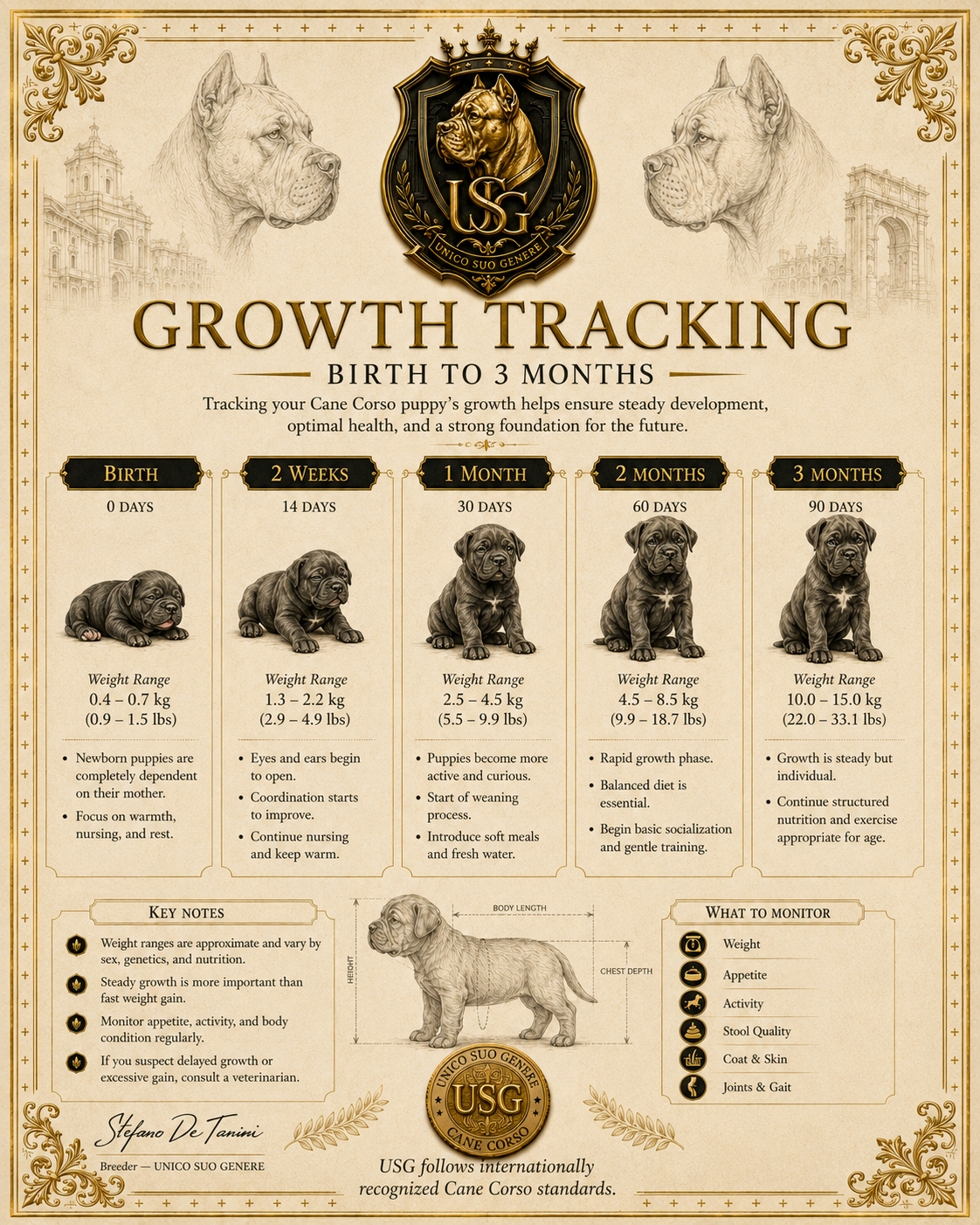
Growth Tracking — Birth to 13 Months
USG visual orientation for growth tracking, puppy stages, and early development milestones.
It shows growth tracking from birth to around 13 months. It points to height, weight, development, and the importance of following the trend rather than one isolated number.
Pregnancy, delivery, and puppy care should be monitored with a veterinarian or experienced specialist.
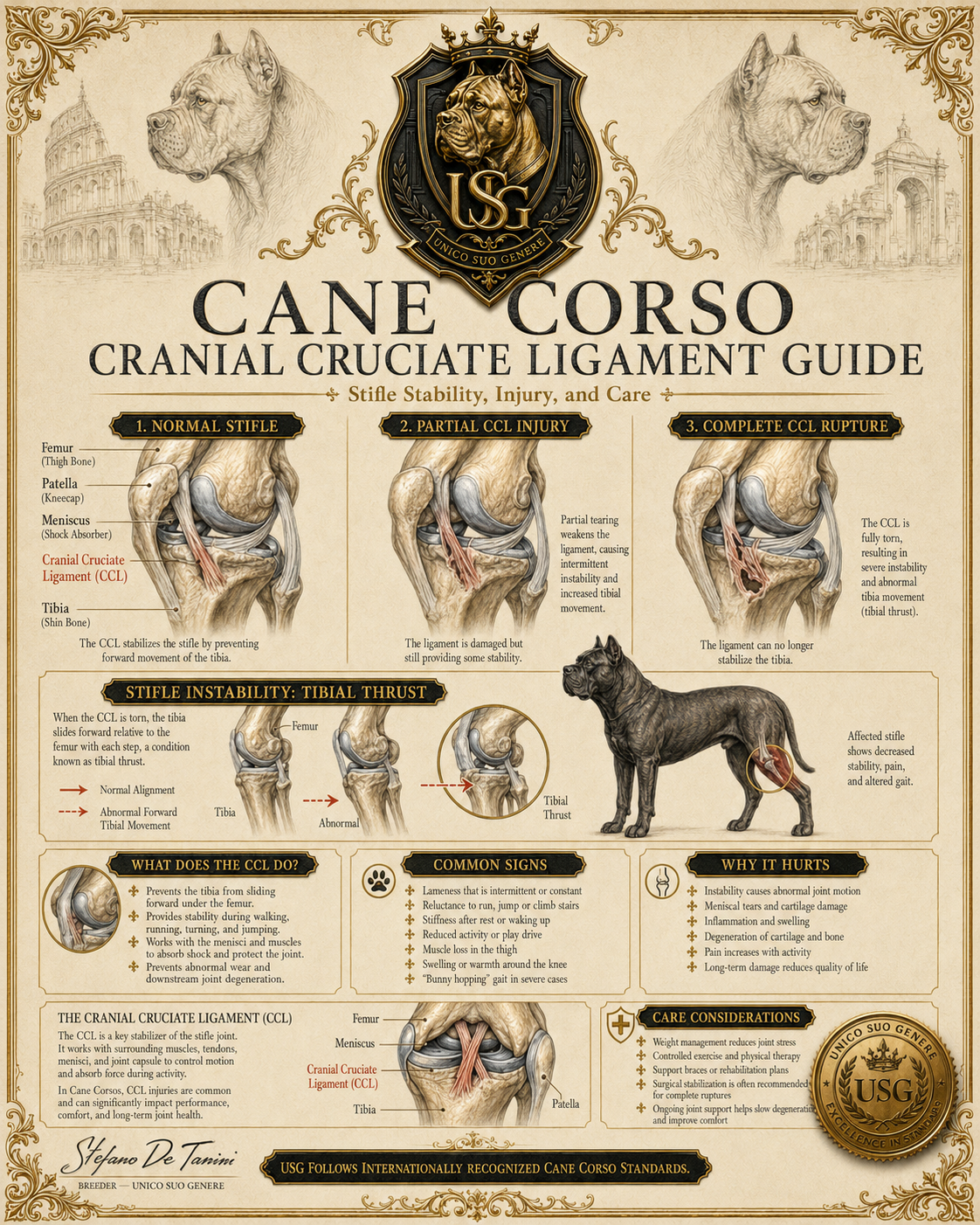
Cranial Cruciate Ligament Visual Variant
USG visual orientation for cruciate ligament injury awareness in an alternate visual format.
An additional cruciate-ligament variant highlighting knee instability and its effect on gait. It is useful when sudden lameness or refusal to bear weight appears.
If symptoms or concerns appear, consult a veterinarian.
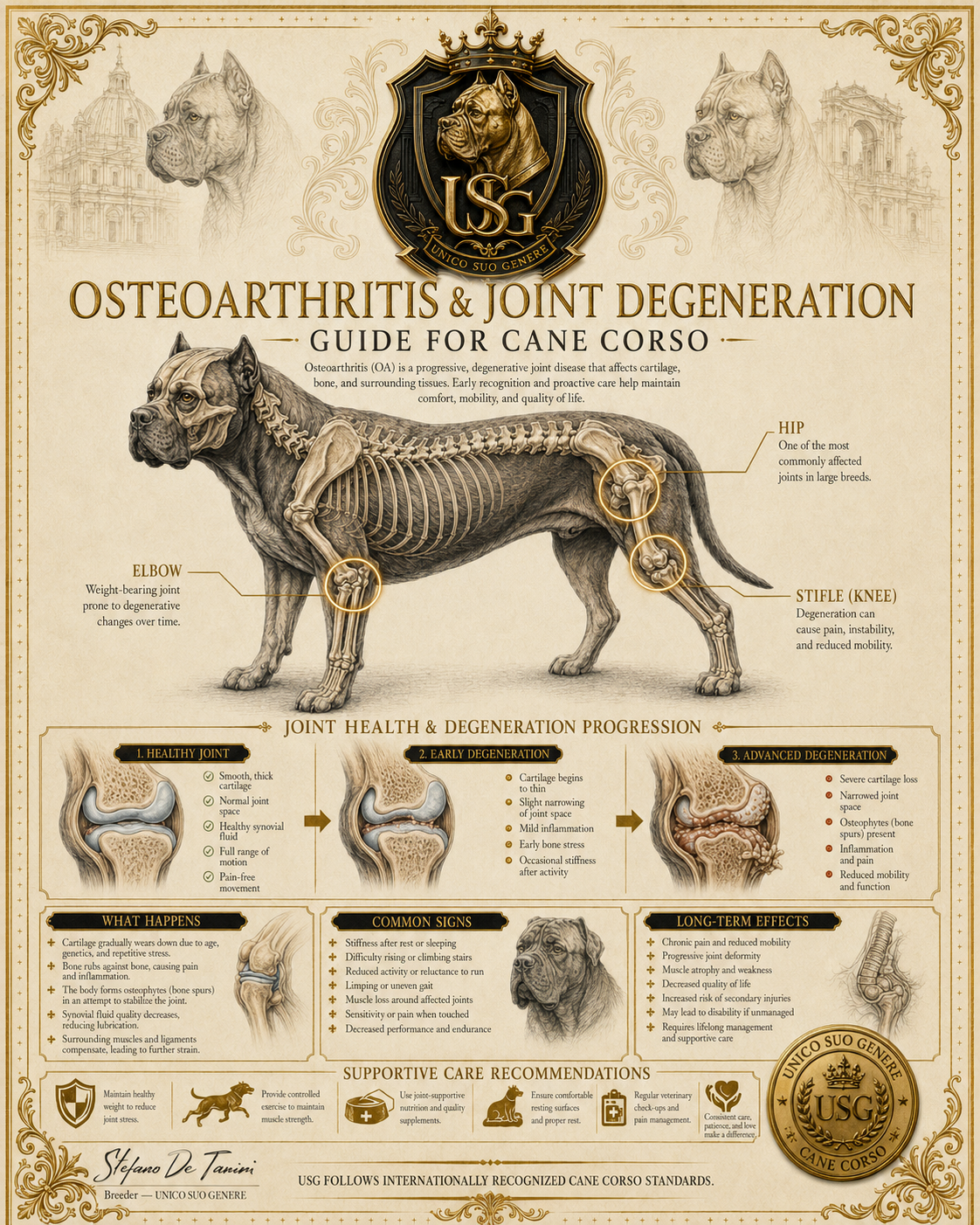
Osteoarthritis Visual Variant
USG visual orientation for joint degeneration and mobility awareness in an alternate visual format.
An additional osteoarthritis sheet showing joint wear, pain, and reduced mobility. It guides observation of daily movement and comfort.
If symptoms or concerns appear, consult a veterinarian.
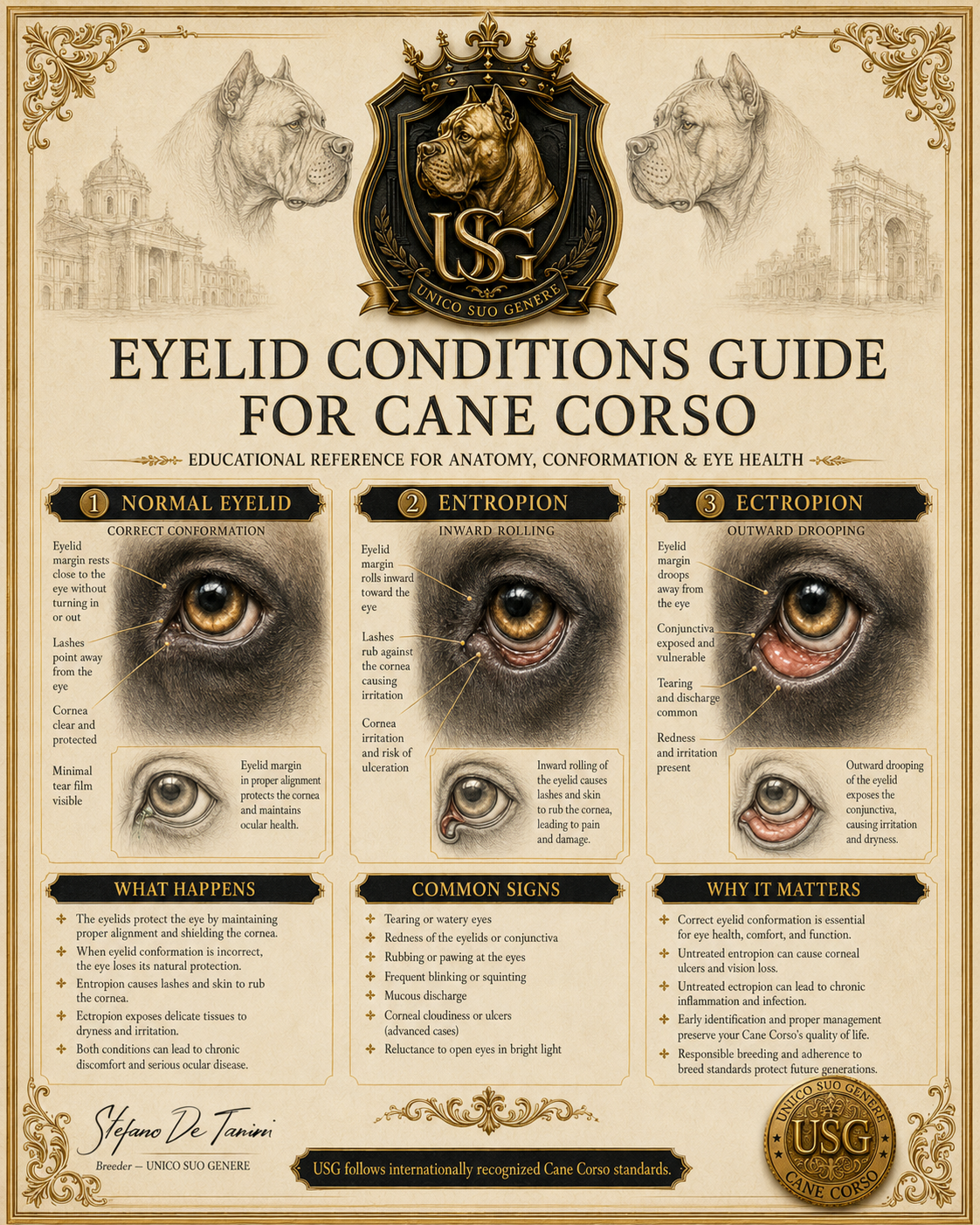
Eyelid Conditions Visual Variant
USG visual orientation for eyelid orientation and eye-comfort awareness in an alternate visual format.
An additional eyelid sheet showing how incorrect eyelid position may irritate the eye. It is useful when tearing, redness, squinting, or visible discomfort appears.
If symptoms or concerns appear, consult a veterinarian.
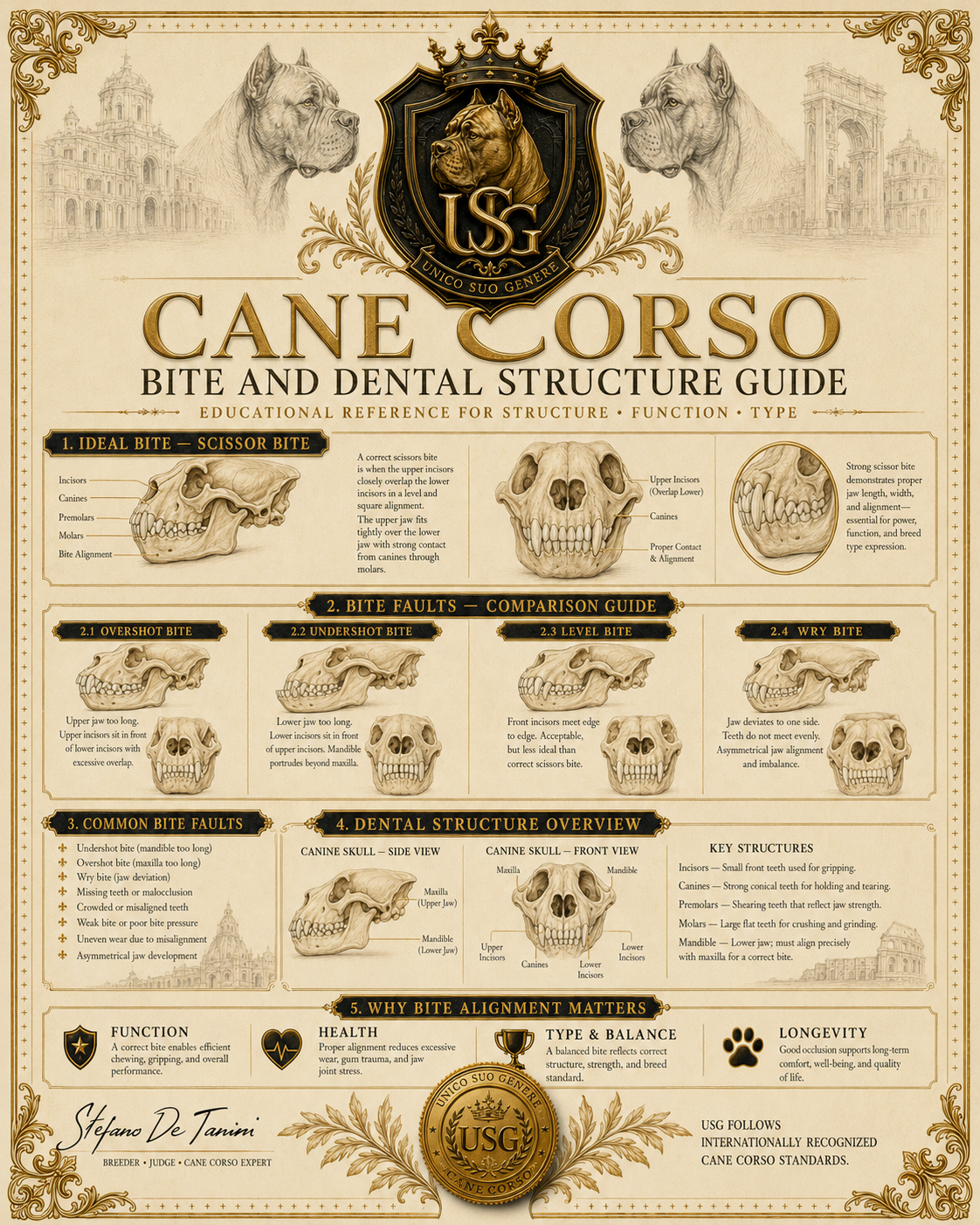
Bite & Dental Structure Guide
USG visual orientation for bite, dental structure, jaw alignment, and owner orientation.
It shows bite, dental structure, and jaw alignment. It helps distinguish visual bite orientation from actual dental or expert evaluation.
If symptoms or concerns appear, consult a veterinarian.
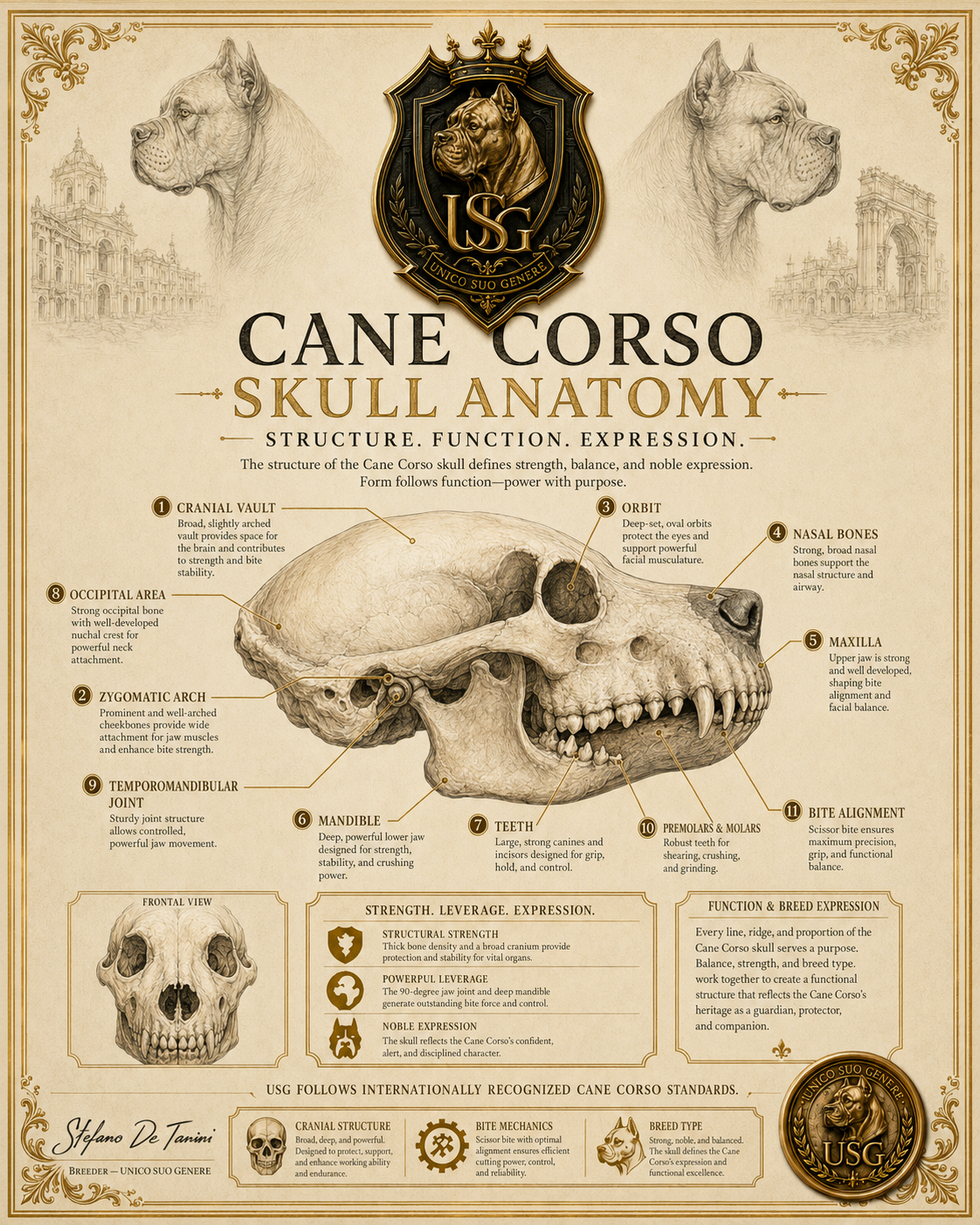
Skull Anatomy Visual Variant
USG visual orientation for skull landmarks, bite area, and head-structure awareness in an alternate format.
An additional skull-anatomy sheet showing skull, jaw, muzzle, and key bony landmarks. It supports understanding the head as structure, not only appearance.
Anatomy orientation; pain, injury, or concern requires a qualified professional.
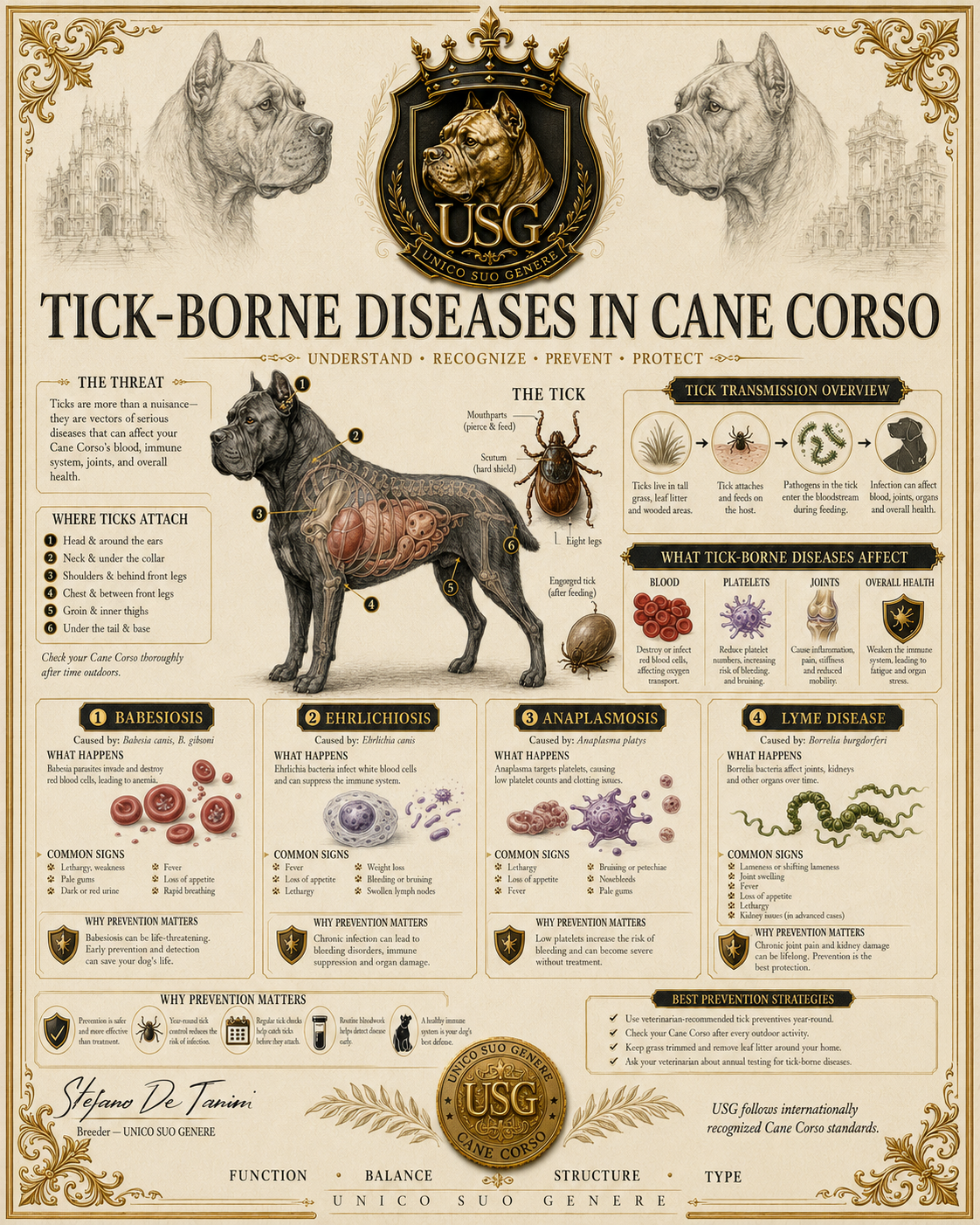
Tick-Borne Disease Visual Variant
USG visual orientation for tick-borne disease orientation in an alternate visual format.
An additional tick-borne disease variant focused on risk, prevention, and early signs. It helps owners respond earlier to lethargy or sudden change.
Prevention, testing, and treatment should follow local veterinary guidance.
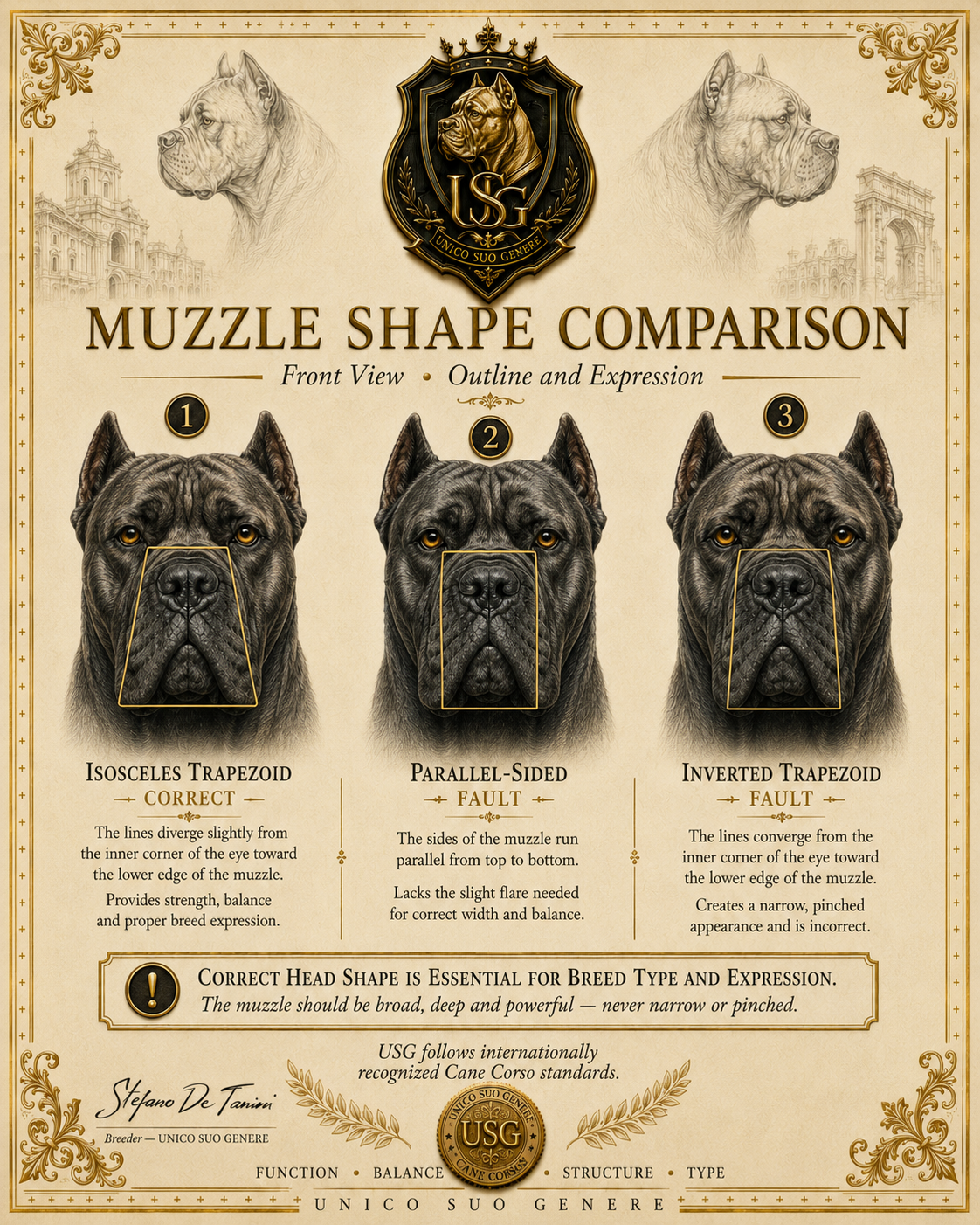
Muzzle Shape Visual Variant
USG visual orientation for muzzle shape and expression in an alternate visual format.
An additional muzzle and expression comparison showing visual differences in length, width, and balance. It is useful for breed-type orientation without categorical judgment.
Orientation for understanding type and structure, not a final evaluation.
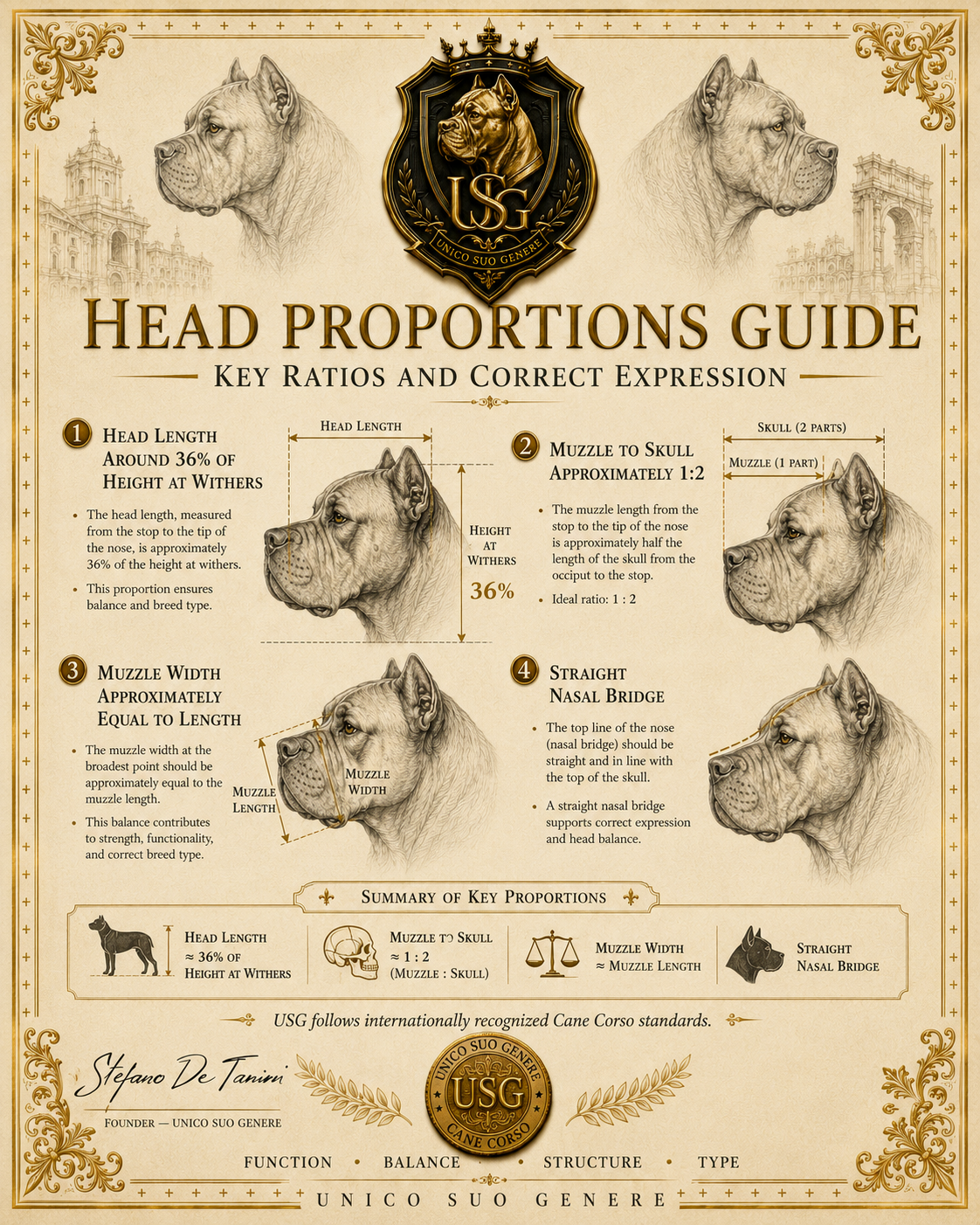
Head Proportions Visual Variant
USG visual orientation for head ratios and expression in an alternate visual format.
An additional head-proportions sheet showing the relation between skull, muzzle, stop, and overall expression. It helps look for balance rather than extremes.
Orientation for understanding type and structure, not a final evaluation.
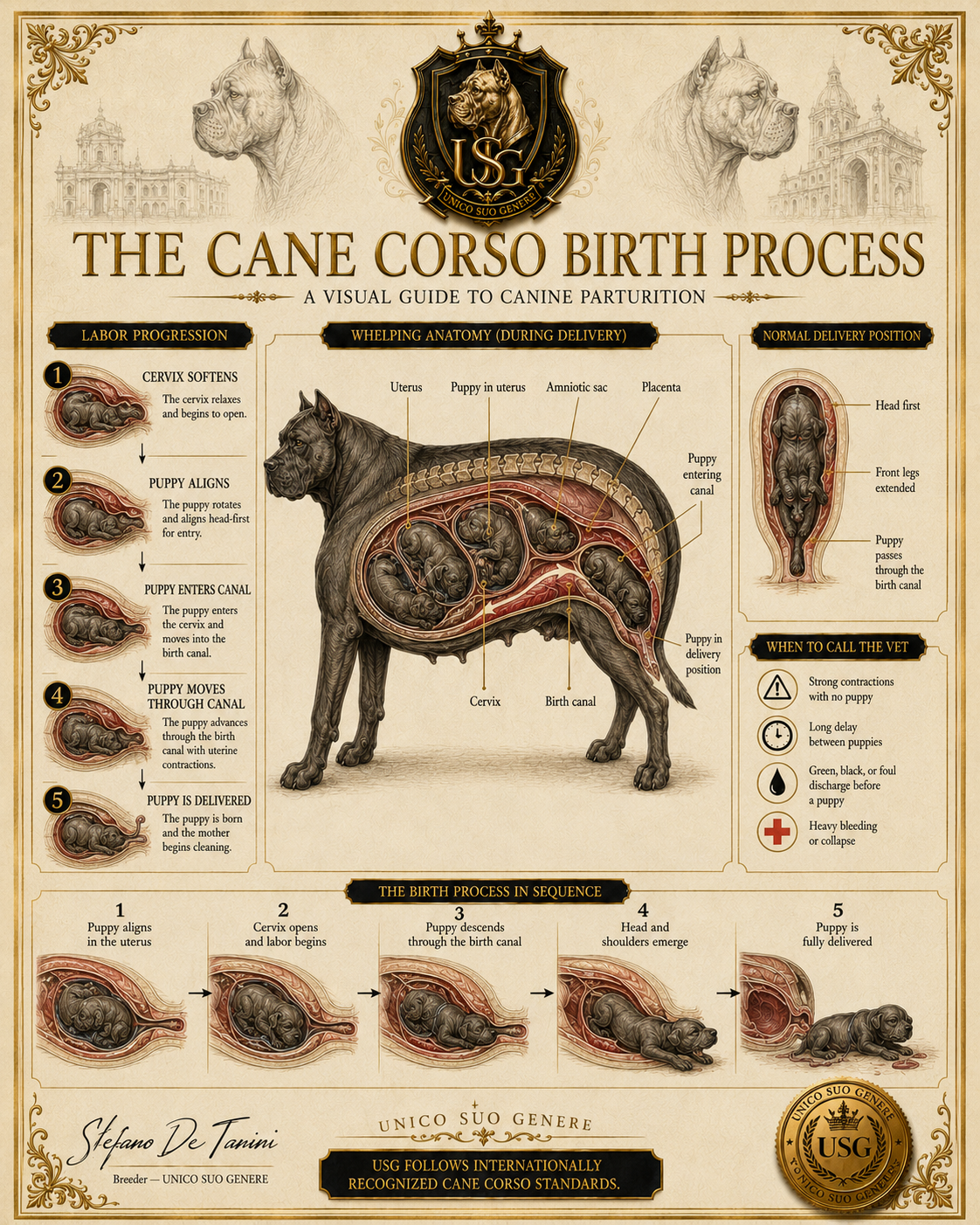
Birth Process Visual Variant
USG visual orientation for birth sequence and delivery orientation in an alternate visual format.
An additional delivery-process sheet showing the process and observation points. It highlights concern when there is no progress, strong pain, exhaustion, or worrying condition of the mother.
Pregnancy, delivery, and puppy care should be monitored with a veterinarian or experienced specialist.
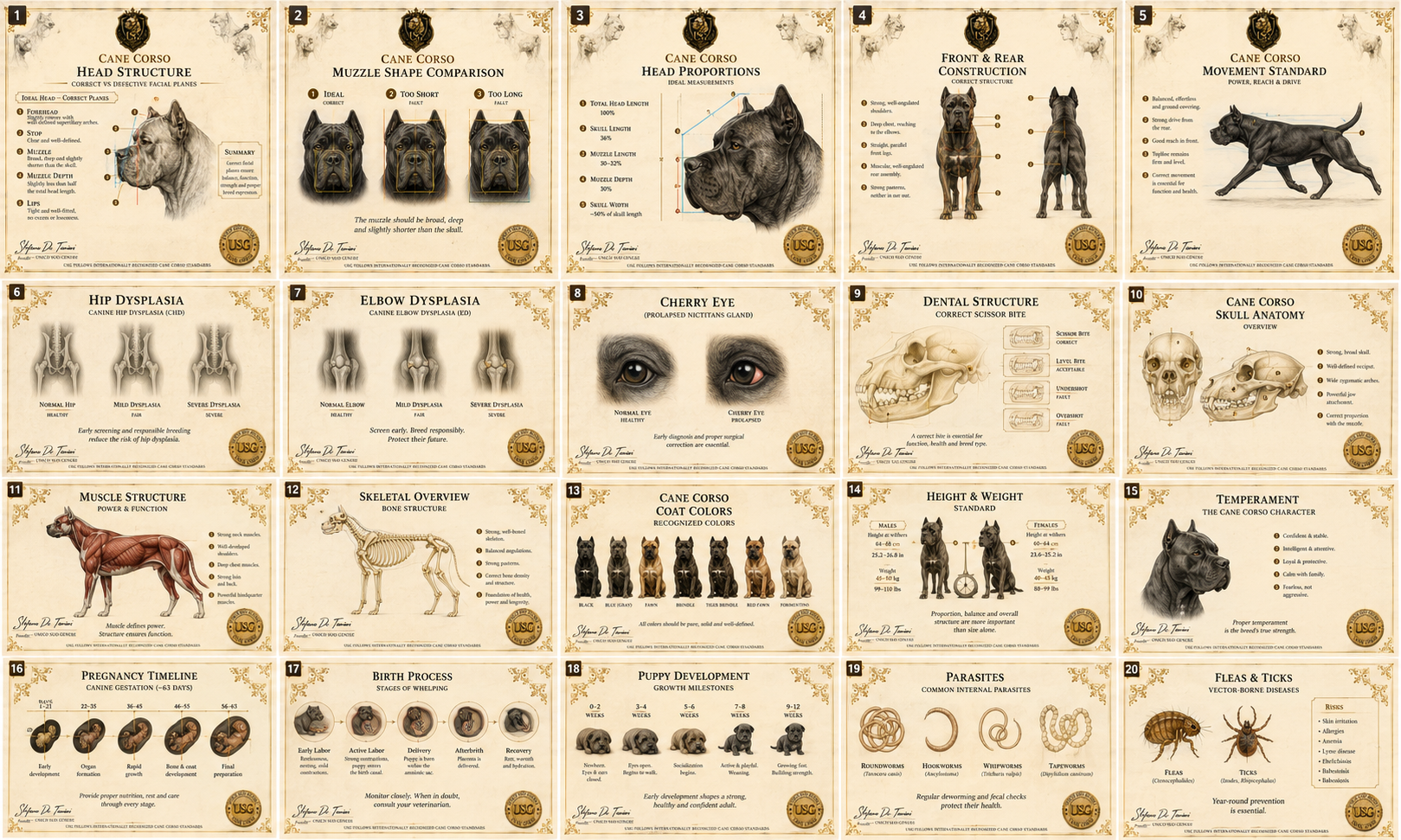
Compact Atlas Overview Sheet
USG visual orientation for a compact multi-topic orientation sheet for broad atlas navigation.
A compact overview sheet that gathers key atlas themes on one page. It is useful for quick orientation before opening the individual sections.
Overview material for orientation; details are covered in the individual cards.
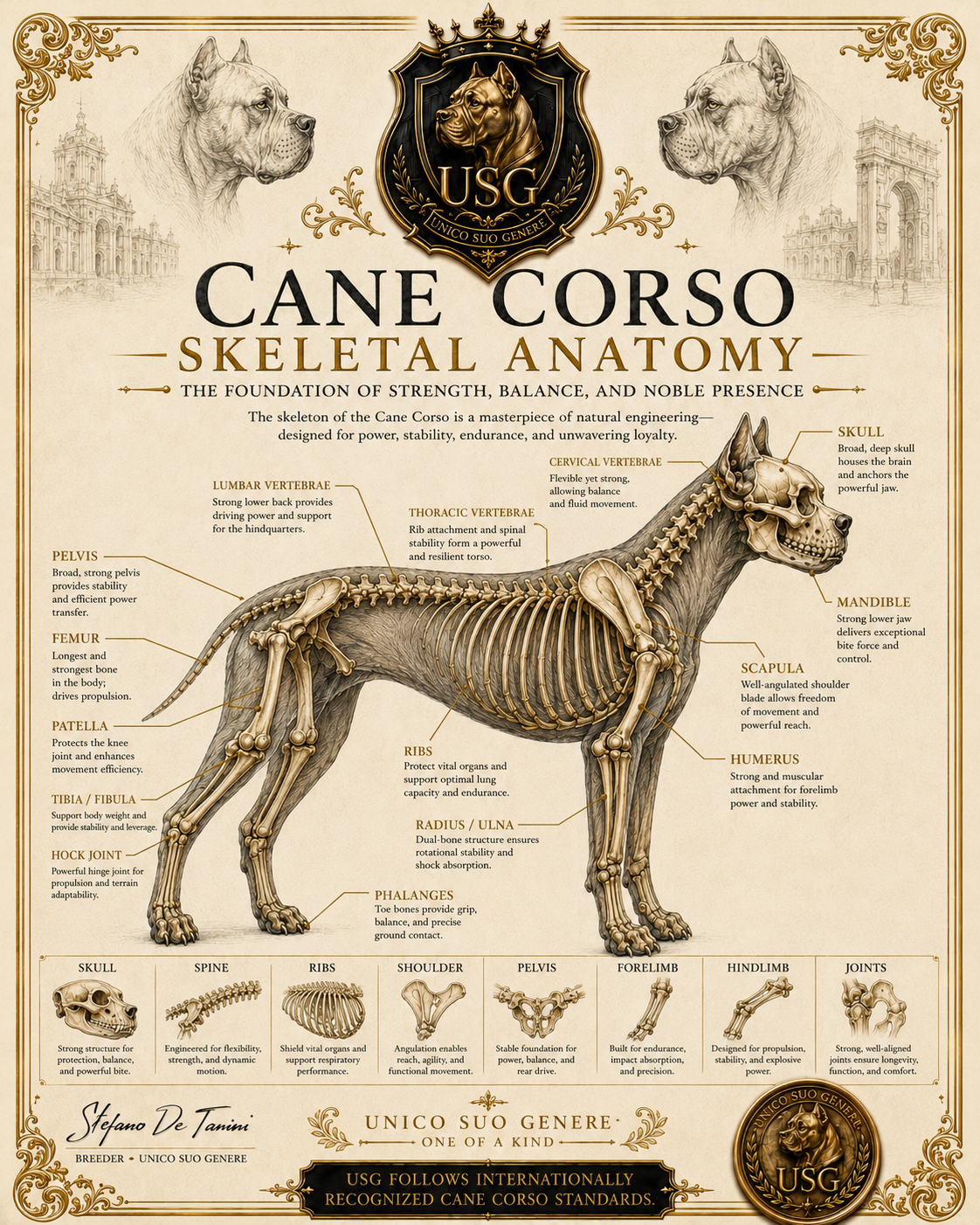
Skeletal Anatomy Visual Variant
USG visual orientation for skeletal anatomy and structural landmarks in an alternate visual format.
An additional skeletal sheet showing bones, joints, and load-bearing structures. It helps connect anatomical points with movement, growth, and possible problems.
Anatomy orientation; pain, injury, or concern requires a qualified professional.
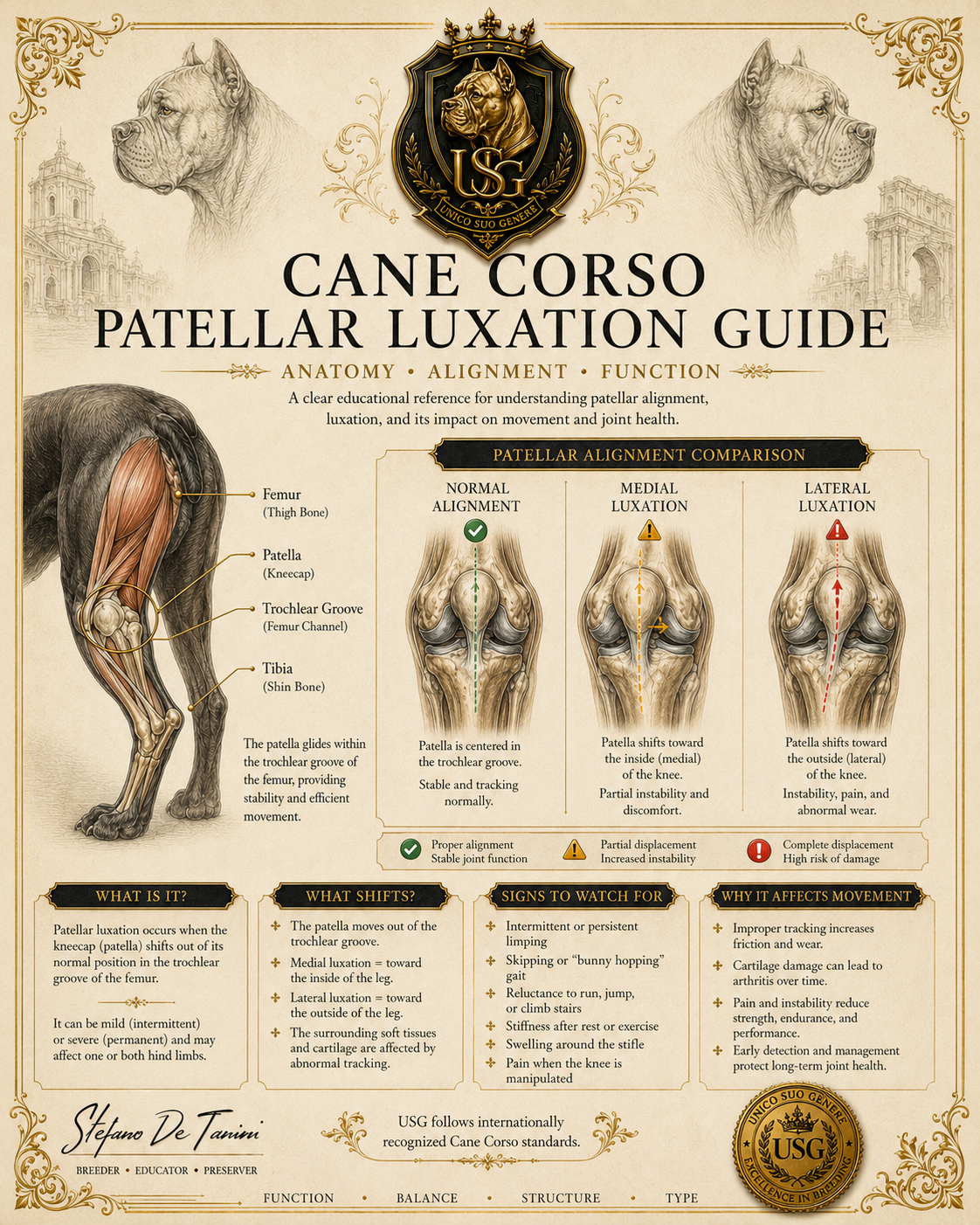
Patellar Luxation Visual Variant
USG visual orientation for kneecap displacement awareness in an alternate visual format.
An additional patellar-luxation sheet showing how displacement can affect gait. It is useful when skipping, sudden leg lifting, or instability appears.
If symptoms or concerns appear, consult a veterinarian.
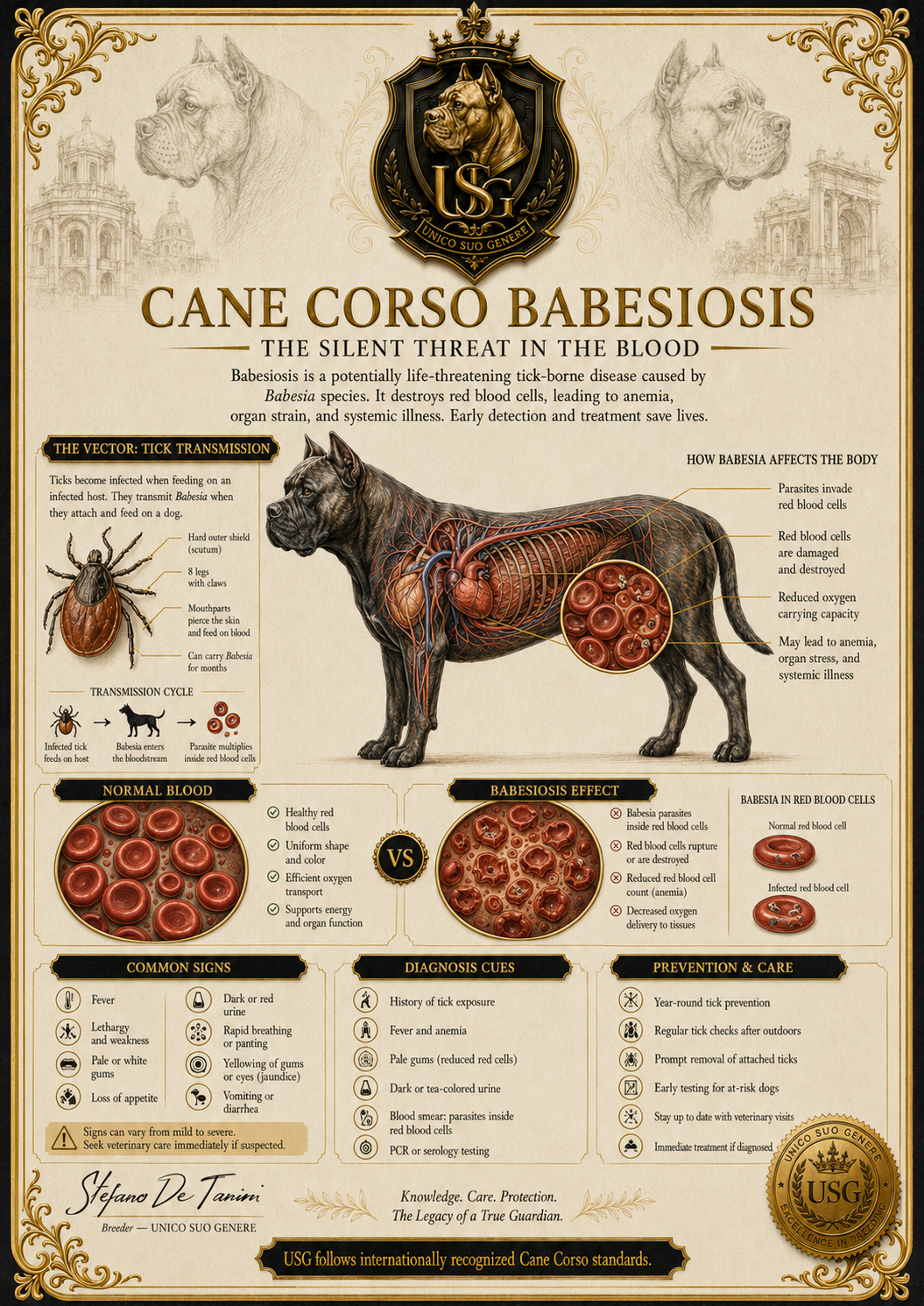
Babesiosis Owner Awareness
USG visual orientation for babesiosis, red blood cell impact, and owner warning-sign awareness.
An owner-awareness sheet for babesiosis, focused on ticks, blood cells, and early warning signs. It encourages quick response to lethargy, fever, pale gums, or dark urine.
Prevention, testing, and treatment should follow local veterinary guidance.