
USG organizes Cane Corso profiles, public orientation, knowledge, visual education, verification, community usefulness, and partner presence.
← Back to Knowledge
UNICO SUO GENERE
USG Visual Knowledge Atlas
A curated USG visual orientation system for Cane Corso. The atlas supports first understanding of structure, health awareness, development, care, and responsible USG visual review, while images and descriptions may contain inaccuracies, generalizations, or visual simplifications.
USG identity
What USG is — and what it is not
USG / UNICO SUO GENERE is an independent Cane Corso platform. It connects reviewed profiles, knowledge, visual education, verification, community orientation, and partner presence without replacing official breed authorities.
USG is not presented as a kennel, puppy marketplace, sales channel, or authority for producing Cane Corso puppies.
USG does not replace FCI, ENCI, AKC, UKC, judges, clubs, veterinary documents, pedigrees, or any official Cane Corso standard.
The Visual Atlas helps visitors understand structure, care, health awareness, and photo readiness; it is orientation, not proof, diagnosis, or certification.
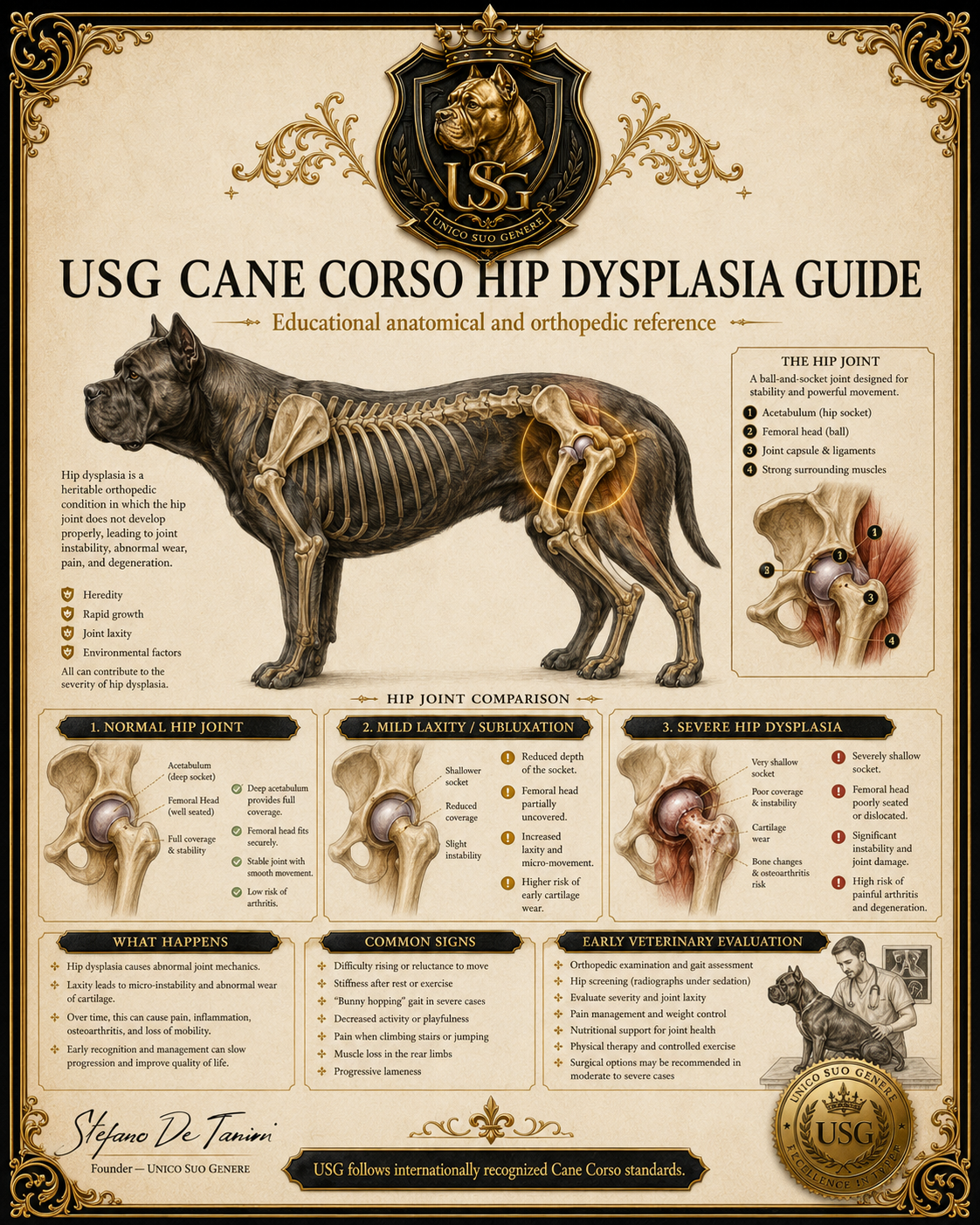
Hip Dysplasia Guide
USG visual orientation for normal and dysplastic hip development as owner awareness.
This sheet compares normal and problematic hip development. It highlights possible signs such as stiffness, lameness, difficulty rising, reluctance to jump, or gait changes.
If symptoms or concerns appear, consult a veterinarian.
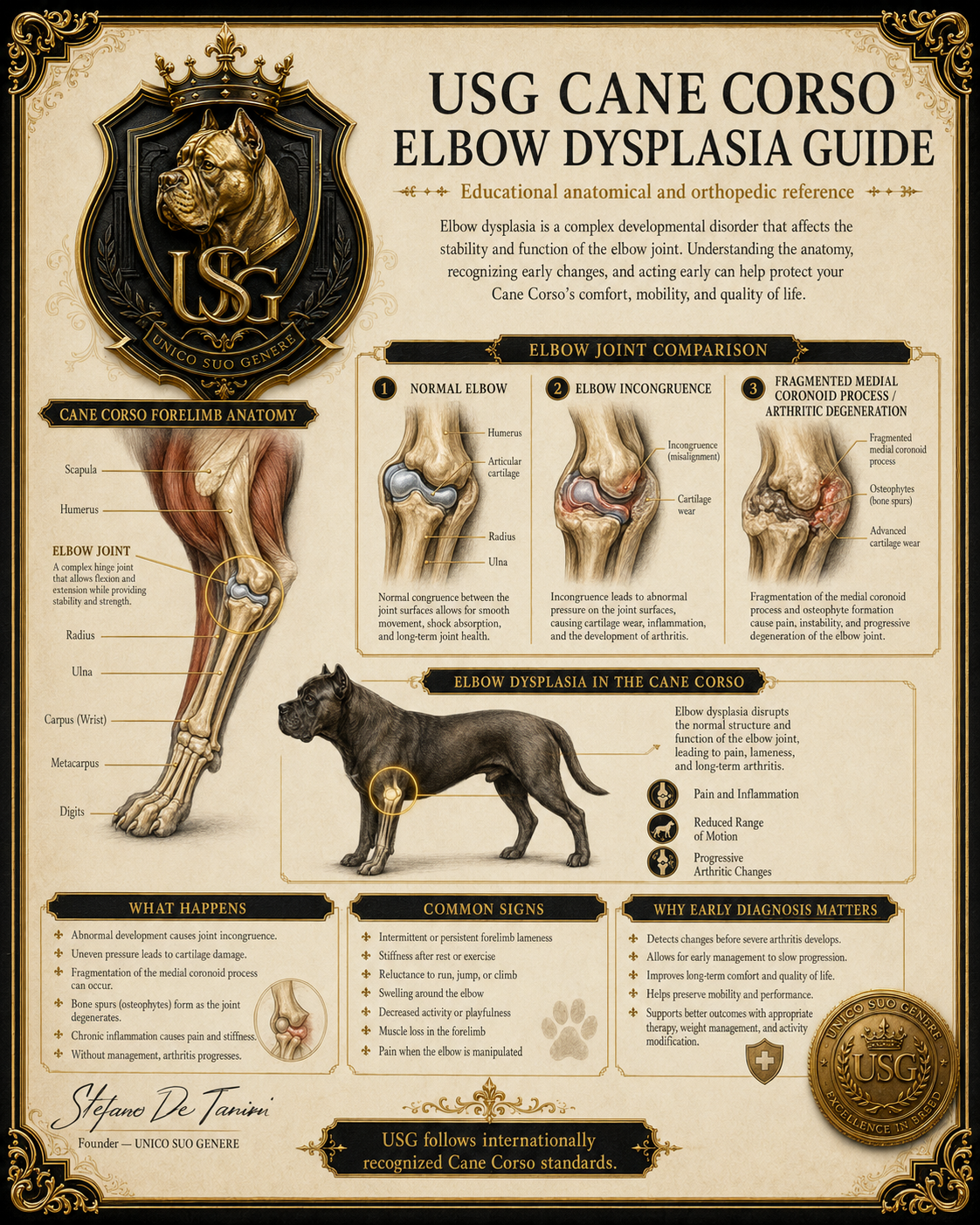
Elbow Dysplasia Guide
USG visual orientation for elbow joint development and dysplasia risk.
It shows the elbow joint and risks related to dysplasia or abnormal development. It helps owners watch for signs such as front-limb lameness, pain after exercise, or stiffness.
If symptoms or concerns appear, consult a veterinarian.
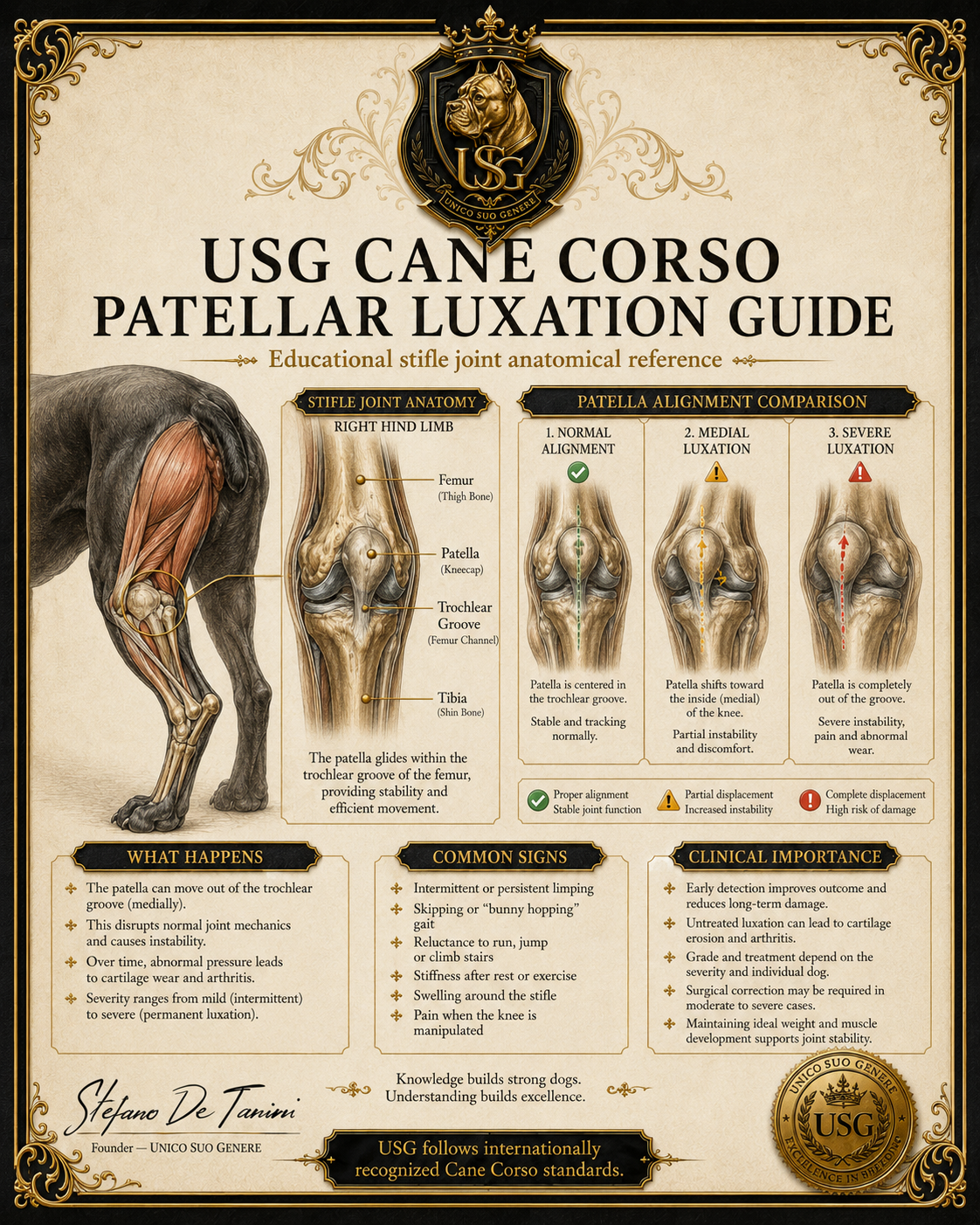
Patellar Luxation Guide
USG visual orientation for kneecap displacement, joint movement, and warning signs.
It explains kneecap displacement and how it can affect hind-limb movement. Possible signs include skipping gait, sudden lifting of a leg, or instability.
If symptoms or concerns appear, consult a veterinarian.
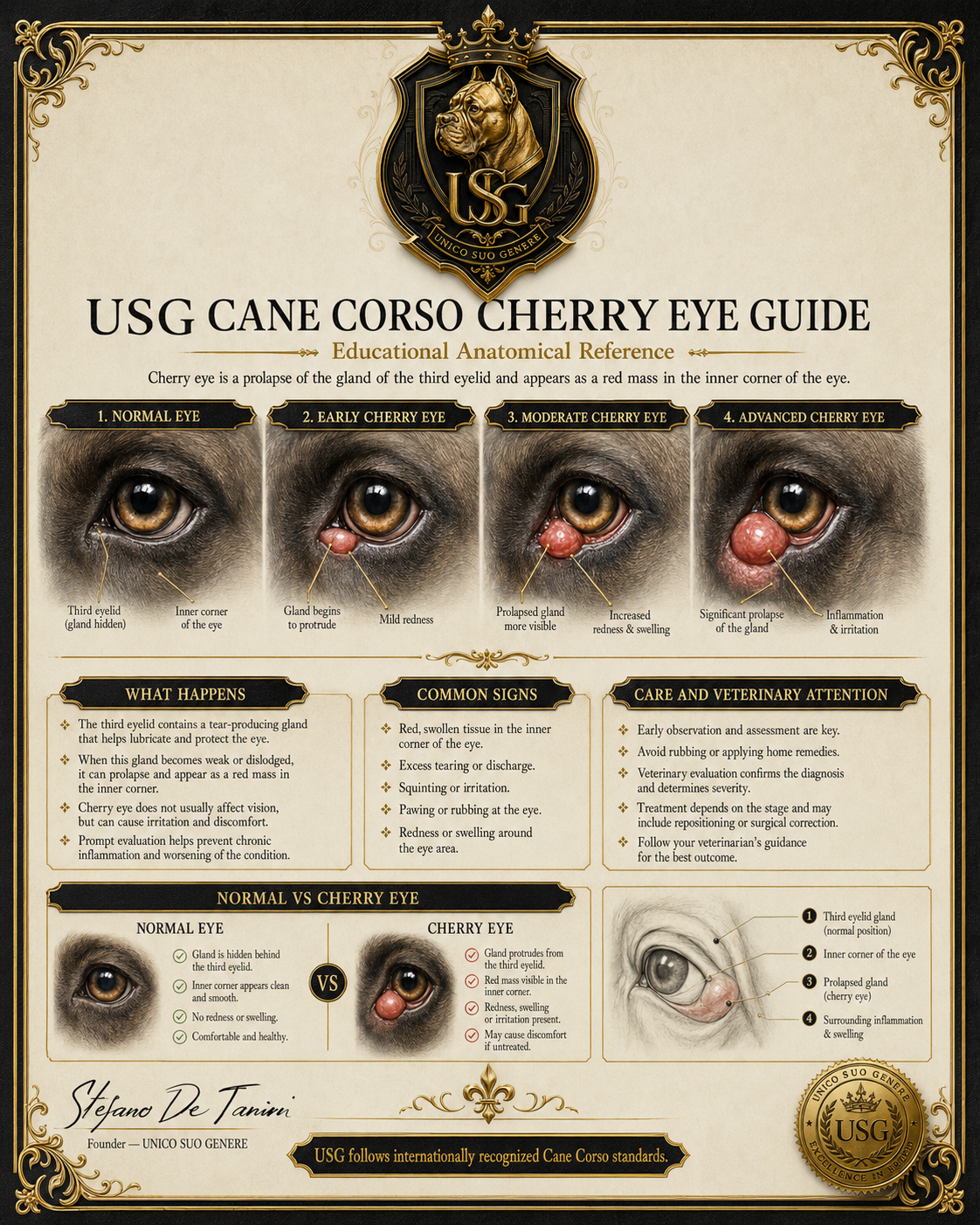
Cherry Eye Guide
USG visual orientation for third eyelid gland prolapse as owner awareness.
It shows third-eyelid gland prolapse, often visible as a red swelling in the inner corner of the eye. It guides owners to watch for irritation, tearing, and discomfort.
If symptoms or concerns appear, consult a veterinarian.
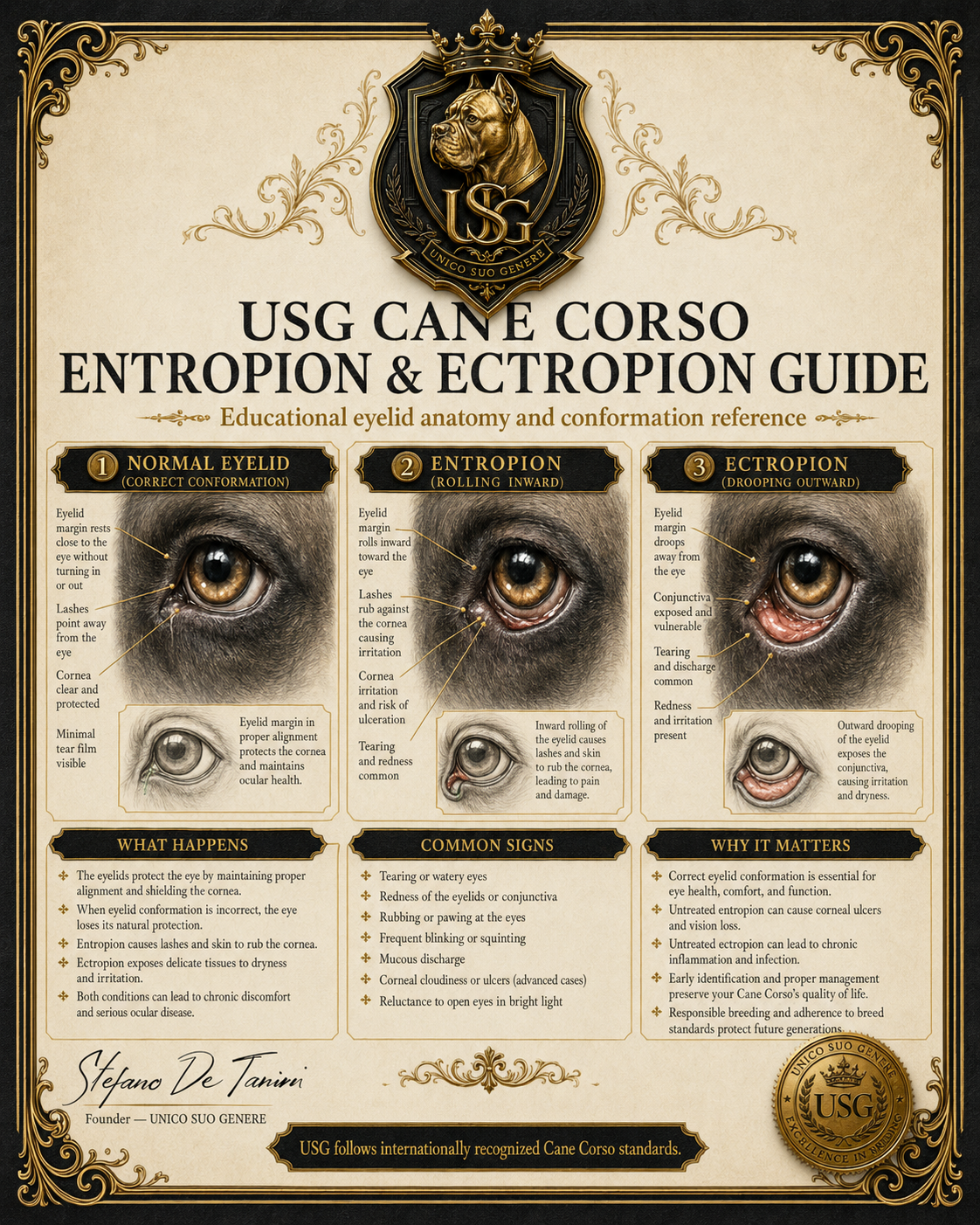
Eyelid Conditions Guide
USG visual orientation for entropion, ectropion, irritation patterns, and eye comfort awareness.
This sheet covers eyelid conditions such as entropion and ectropion, where eyelids turn inward or outward. Possible signs include redness, tearing, squinting, and irritation.
If symptoms or concerns appear, consult a veterinarian.
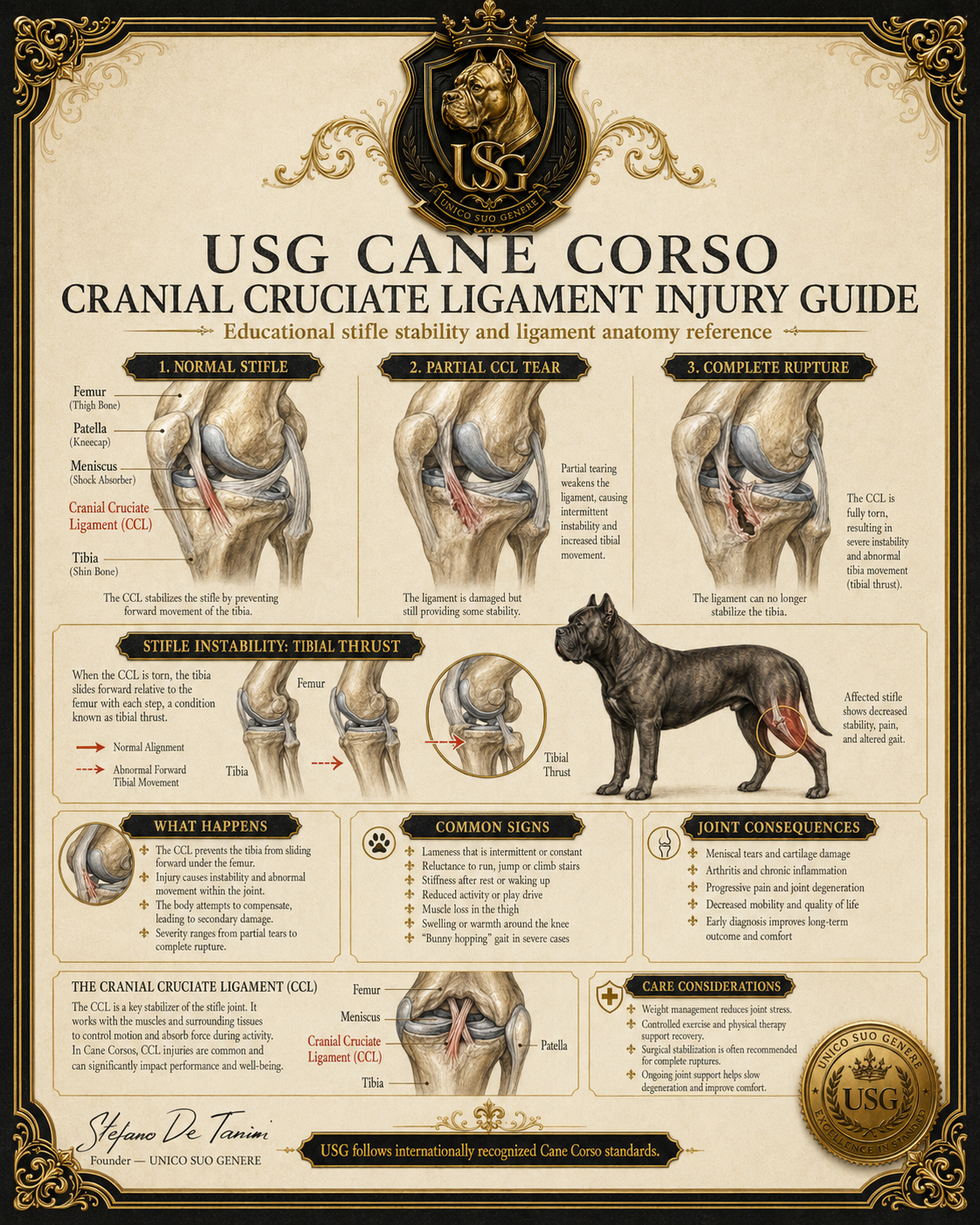
Cranial Cruciate Ligament Guide
USG visual orientation for knee instability, cruciate ligament injury, and mobility impact.
It shows the knee joint and the role of the cruciate ligament in stability. Possible warning signs include sudden lameness, reluctance to bear weight, and hind-limb instability.
If symptoms or concerns appear, consult a veterinarian.
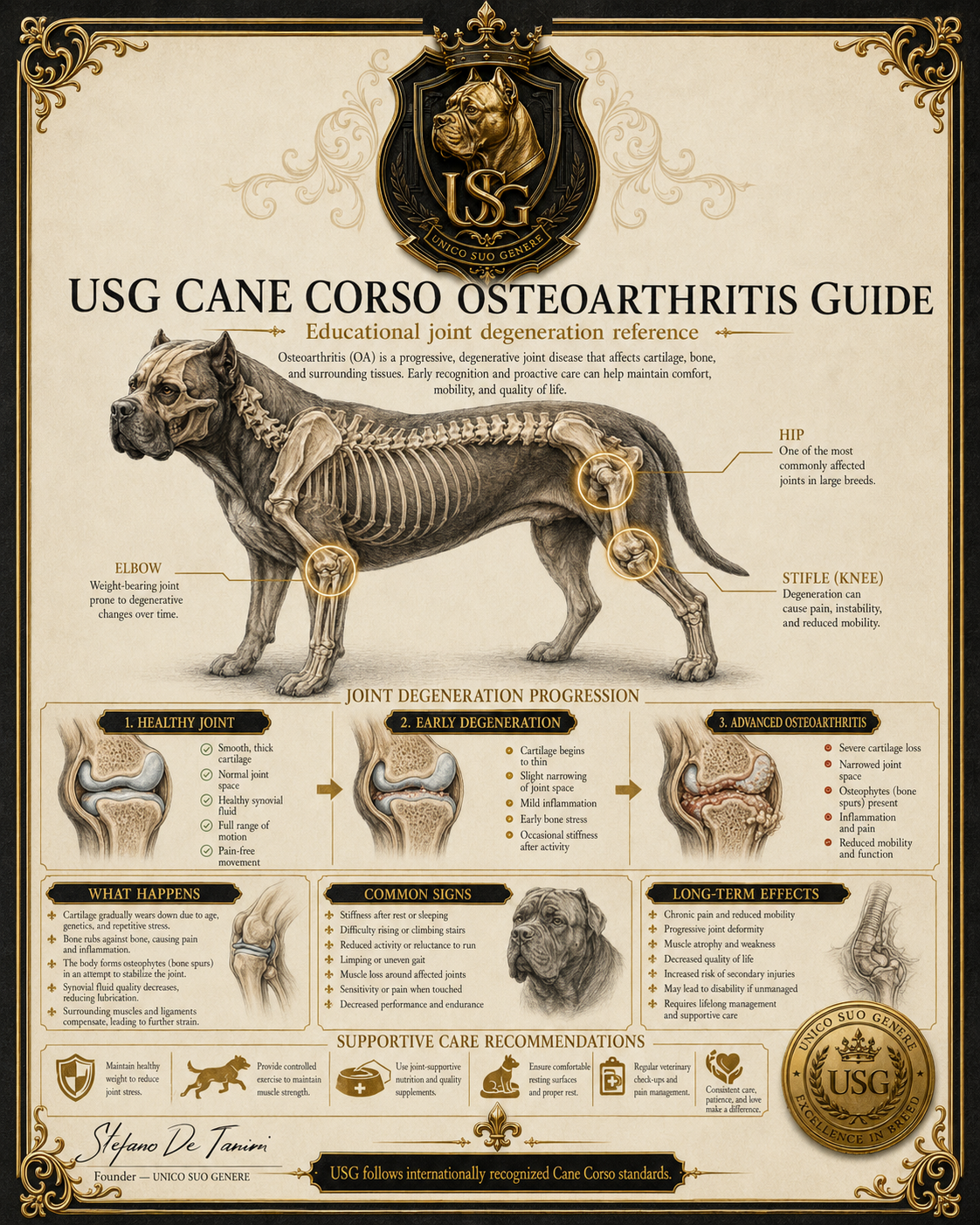
Osteoarthritis Guide
USG visual orientation for joint degeneration, cartilage wear, stiffness, and mobility awareness.
It explains joint and cartilage wear and how it may relate to pain and stiffness. It helps recognize changes such as slower rising, reduced play, and limited mobility.
If symptoms or concerns appear, consult a veterinarian.
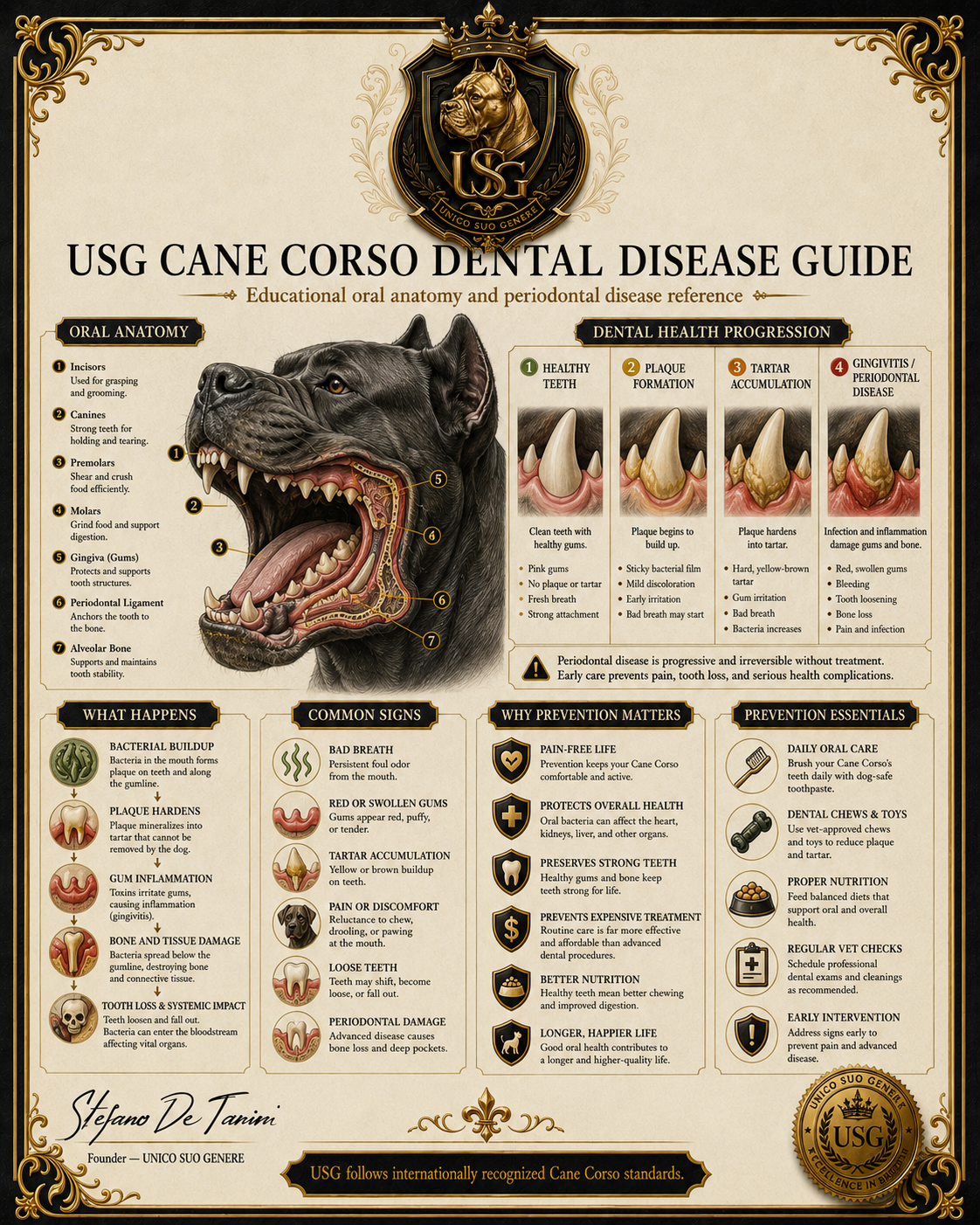
Dental Disease Guide
USG visual orientation for oral anatomy, plaque, tartar, gingivitis, and prevention awareness.
It shows oral anatomy, plaque, tartar, gum inflammation, and prevention. It points to signs such as bad breath, red gums, pain while eating, or buildup on teeth.
If symptoms or concerns appear, consult a veterinarian.
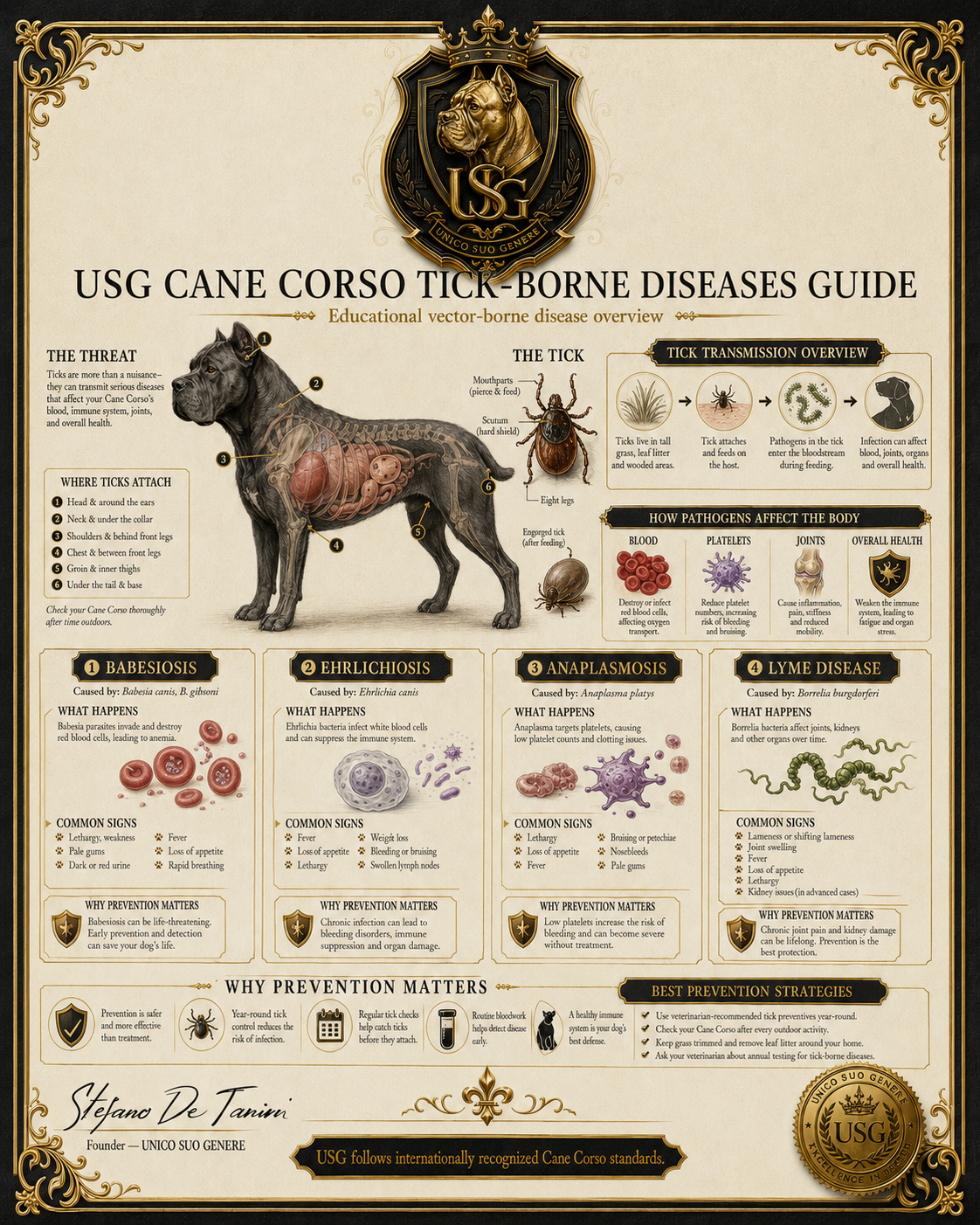
Tick-Borne Diseases Overview
USG visual orientation for ticks, blood, joints, and systemic health awareness.
It summarizes diseases that may be transmitted by ticks and why prevention matters. It guides owners to watch for lethargy, fever, anemia, pain, or sudden changes in condition.
Prevention, testing, and treatment should follow local veterinary guidance.
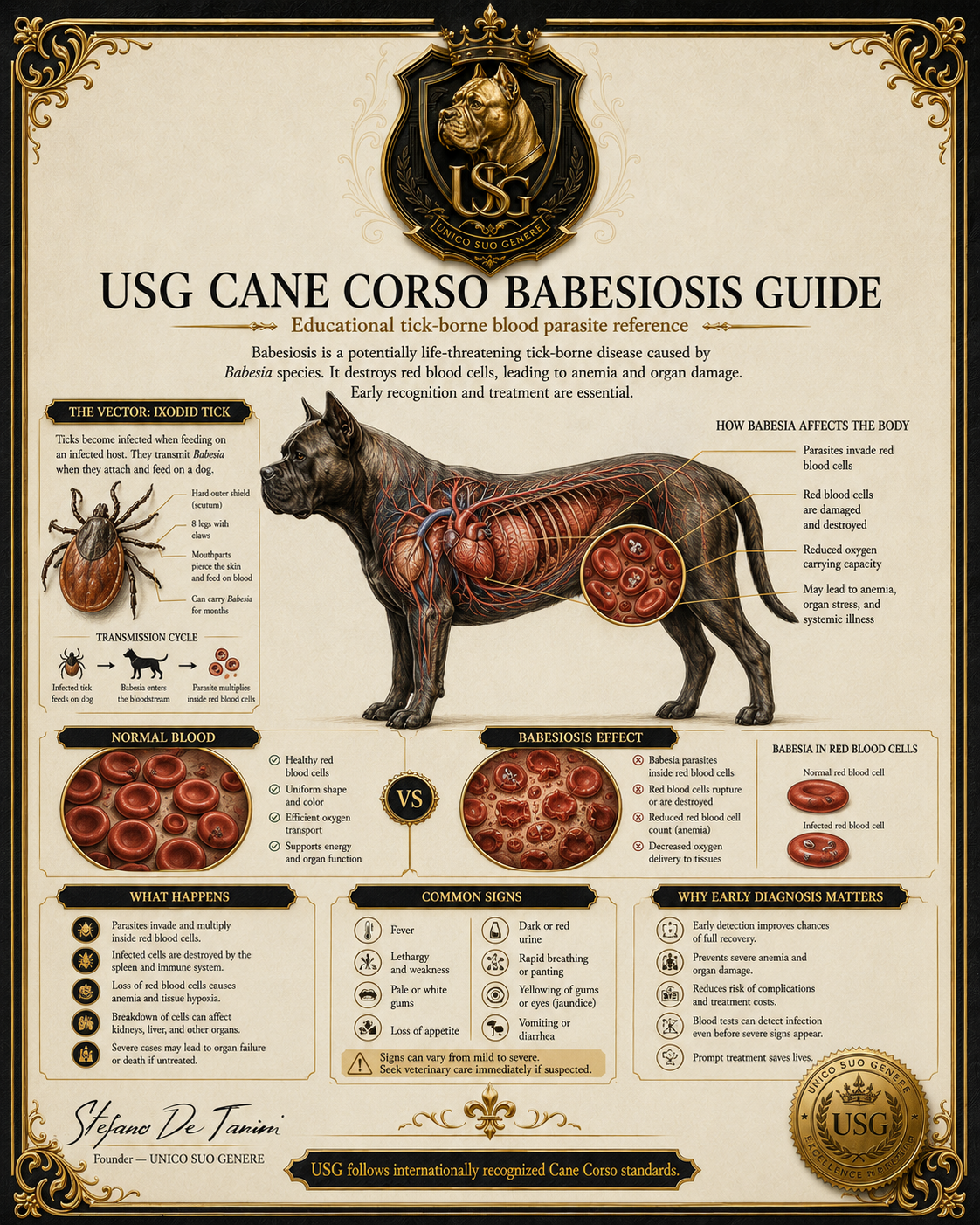
Babesiosis Guide
USG visual orientation for tick-borne blood parasite awareness and red blood cell impact.
This sheet presents babesiosis as a tick-related disease affecting blood cells. Possible signs include lethargy, fever, pale gums, dark urine, or sudden weakness.
Prevention, testing, and treatment should follow local veterinary guidance.
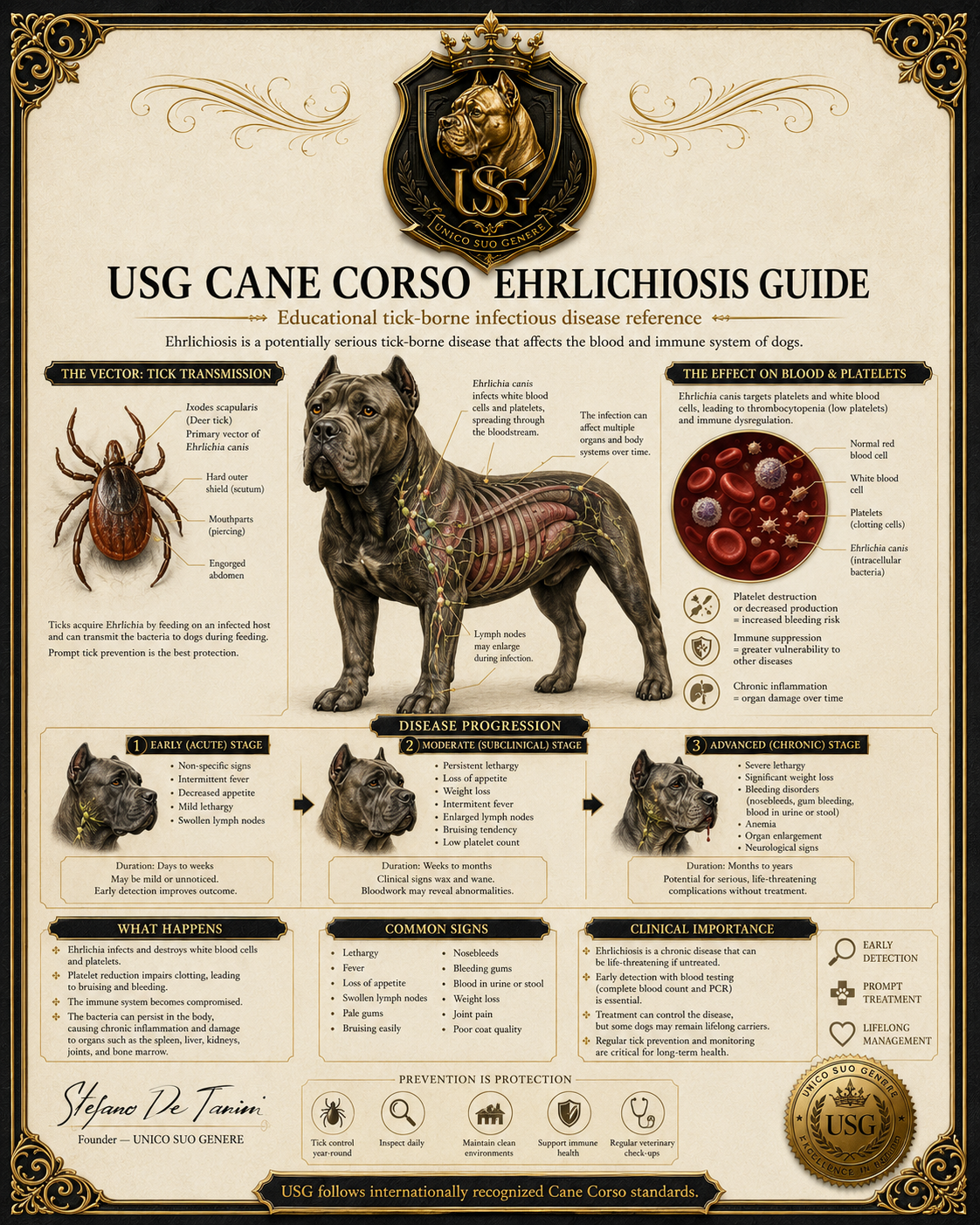
Ehrlichiosis Guide
USG visual orientation for tick-borne infection affecting blood cells, platelets, and immunity.
It shows ehrlichiosis as a tick-borne disease that can affect blood and immune response. It points to signs such as fever, lethargy, bleeding, weight loss, or swollen lymph nodes.
Prevention, testing, and treatment should follow local veterinary guidance.
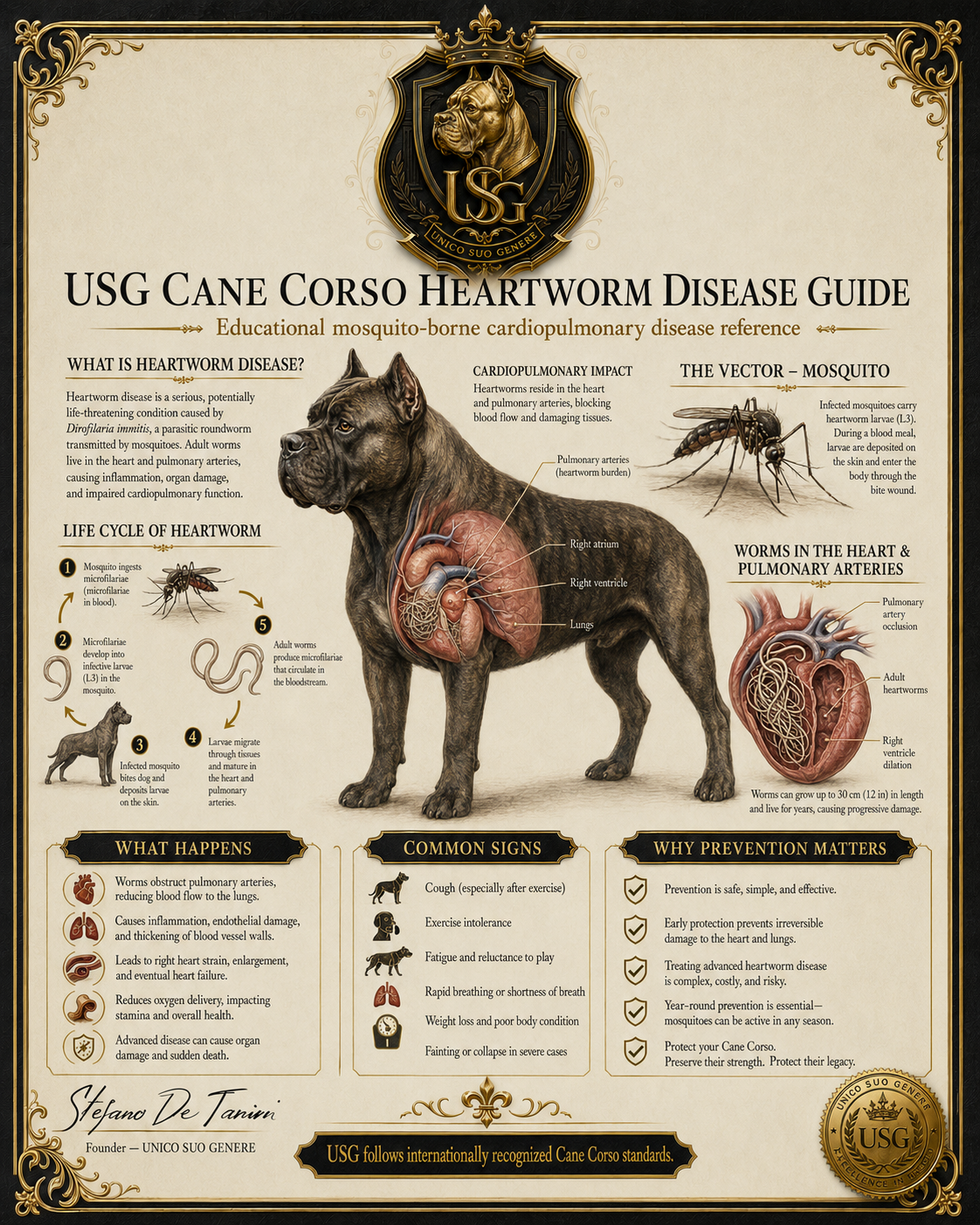
Heartworm Disease Guide
USG visual orientation for mosquito-borne cardiopulmonary disease and prevention awareness.
It explains heartworm disease and its connection to the heart, lungs, and mosquitoes as vectors. Possible signs include coughing, fatigue, breathing difficulty, and reduced stamina.
Prevention, testing, and treatment should follow local veterinary guidance.
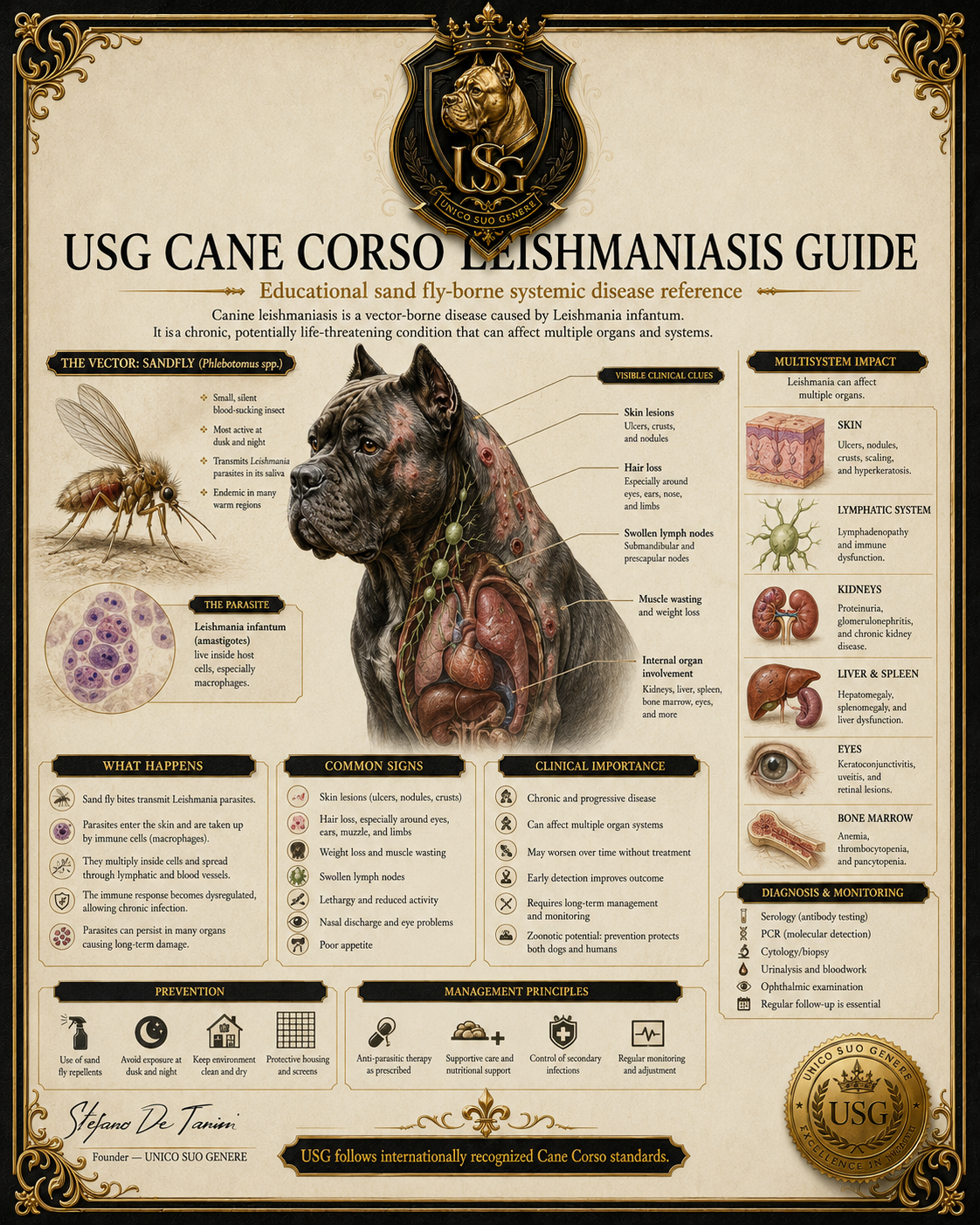
Leishmaniasis Guide
USG visual orientation for sand fly-borne systemic disease affecting skin, organs, and immune health.
This sheet presents leishmaniasis and its connection to sand flies and regional risk. It points to signs such as skin changes, weight loss, sores, nail overgrowth, or general weakness.
Prevention, testing, and treatment should follow local veterinary guidance.
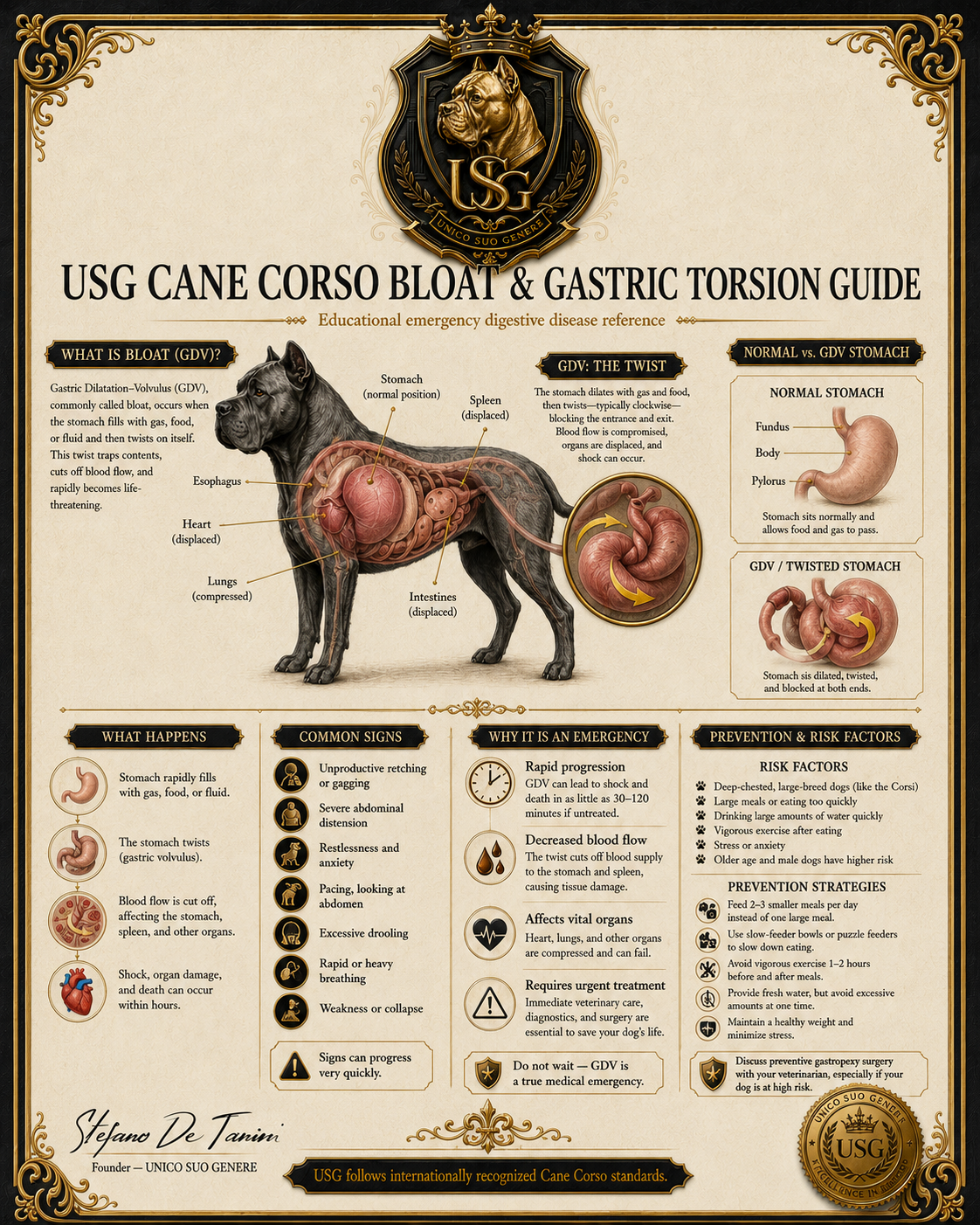
Bloat & Gastric Torsion Guide
USG visual orientation for GDV risk, bloat awareness, and emergency owner orientation.
This sheet explains bloat and the risk of gastric torsion. Warning signs may include abdominal swelling, unproductive retching, restlessness, pain, weakness, or collapse.
For emergency signs, seek veterinary help immediately.
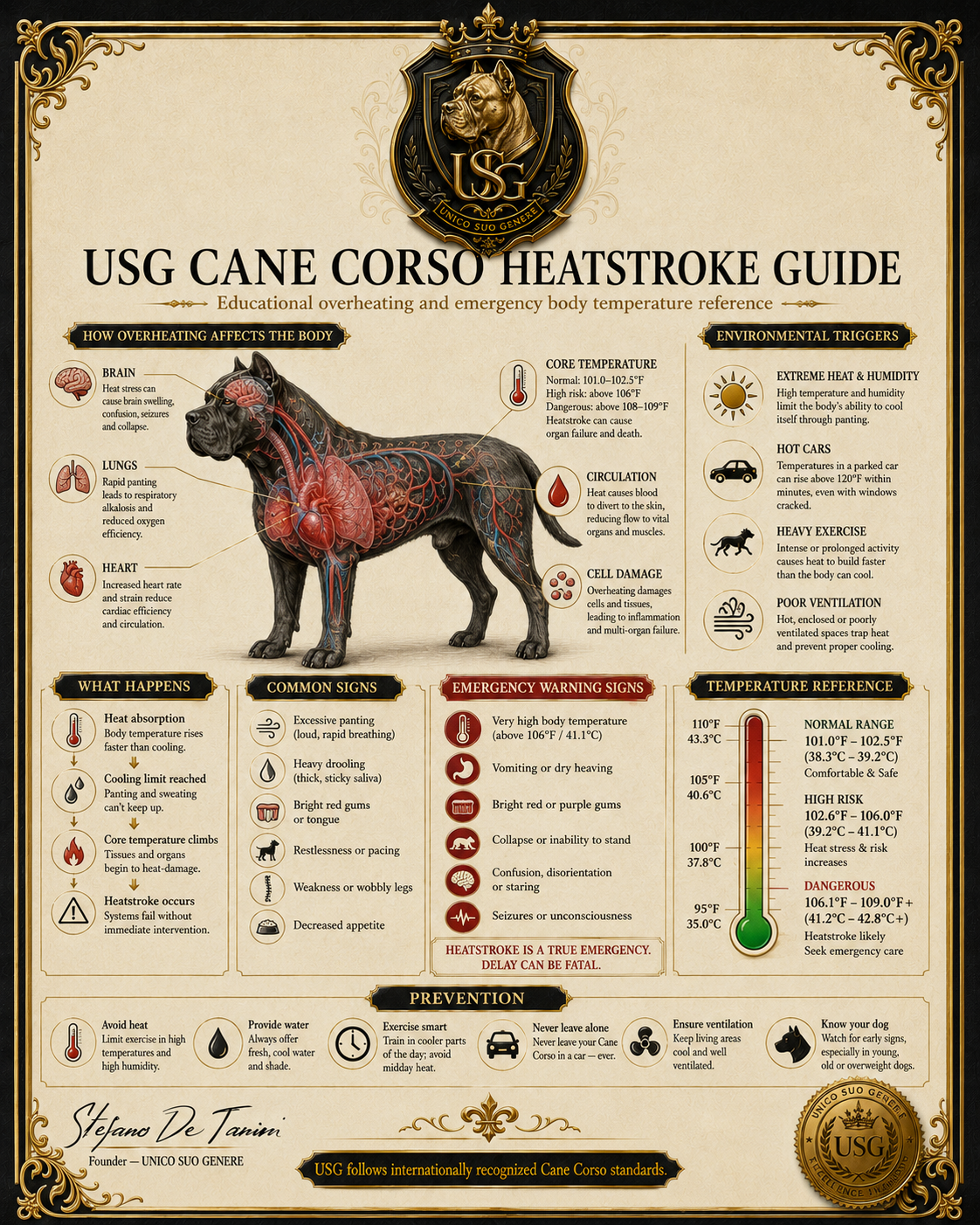
Heatstroke Prevention Guide
USG visual orientation for overheating, emergency signs, temperature risks, and prevention.
It shows overheating and heatstroke risks. Possible signs include heavy panting, weakness, red gums, vomiting, disorientation, or collapse.
For emergency signs, seek veterinary help immediately.
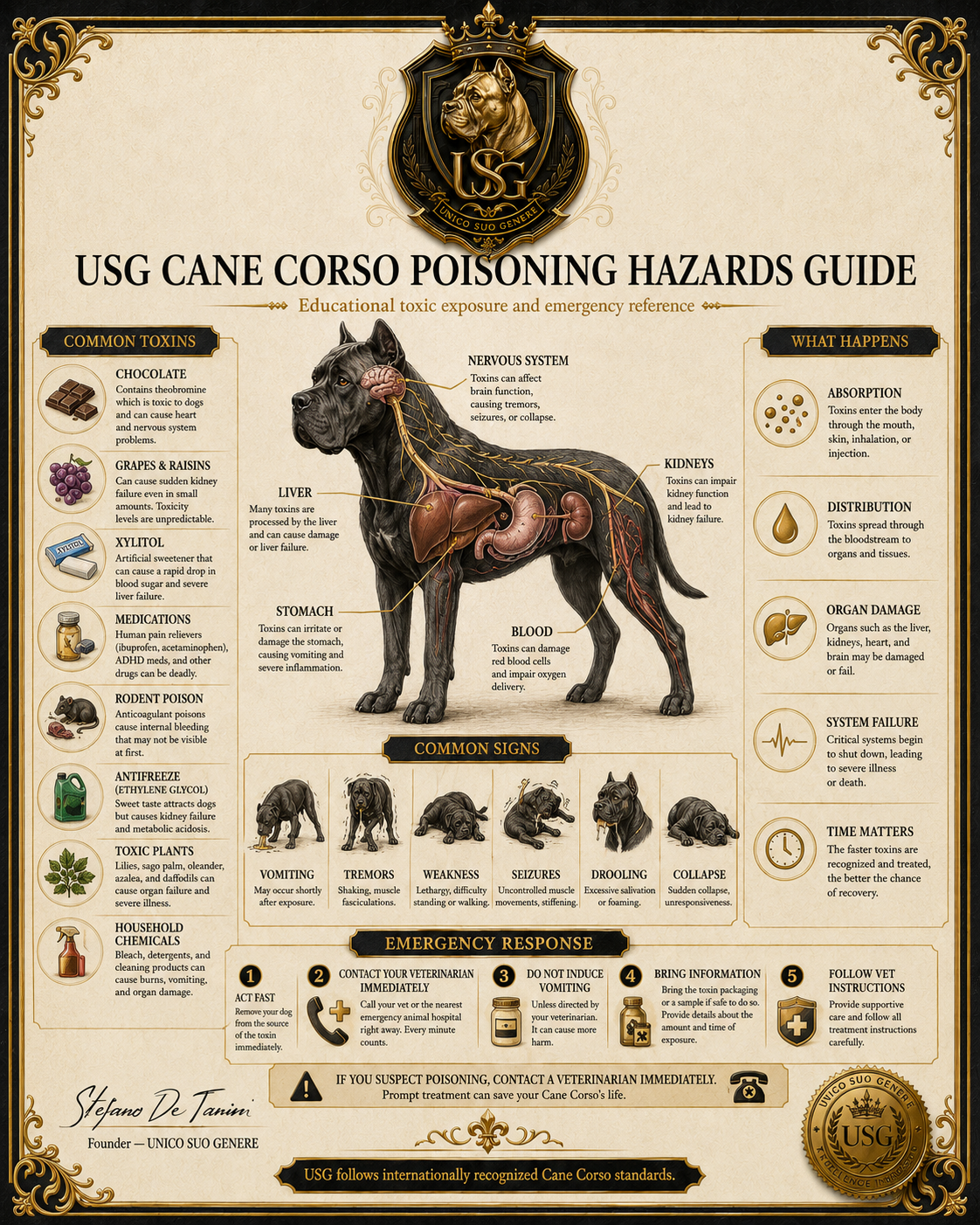
Poisoning Hazards Guide
USG visual orientation for toxic exposure and emergency awareness for common hazards.
It summarizes common poisoning hazards: foods, plants, chemicals, or medications. It points to signs such as vomiting, tremors, weakness, seizures, diarrhea, or sudden behavior change.
For emergency signs, seek veterinary help immediately.
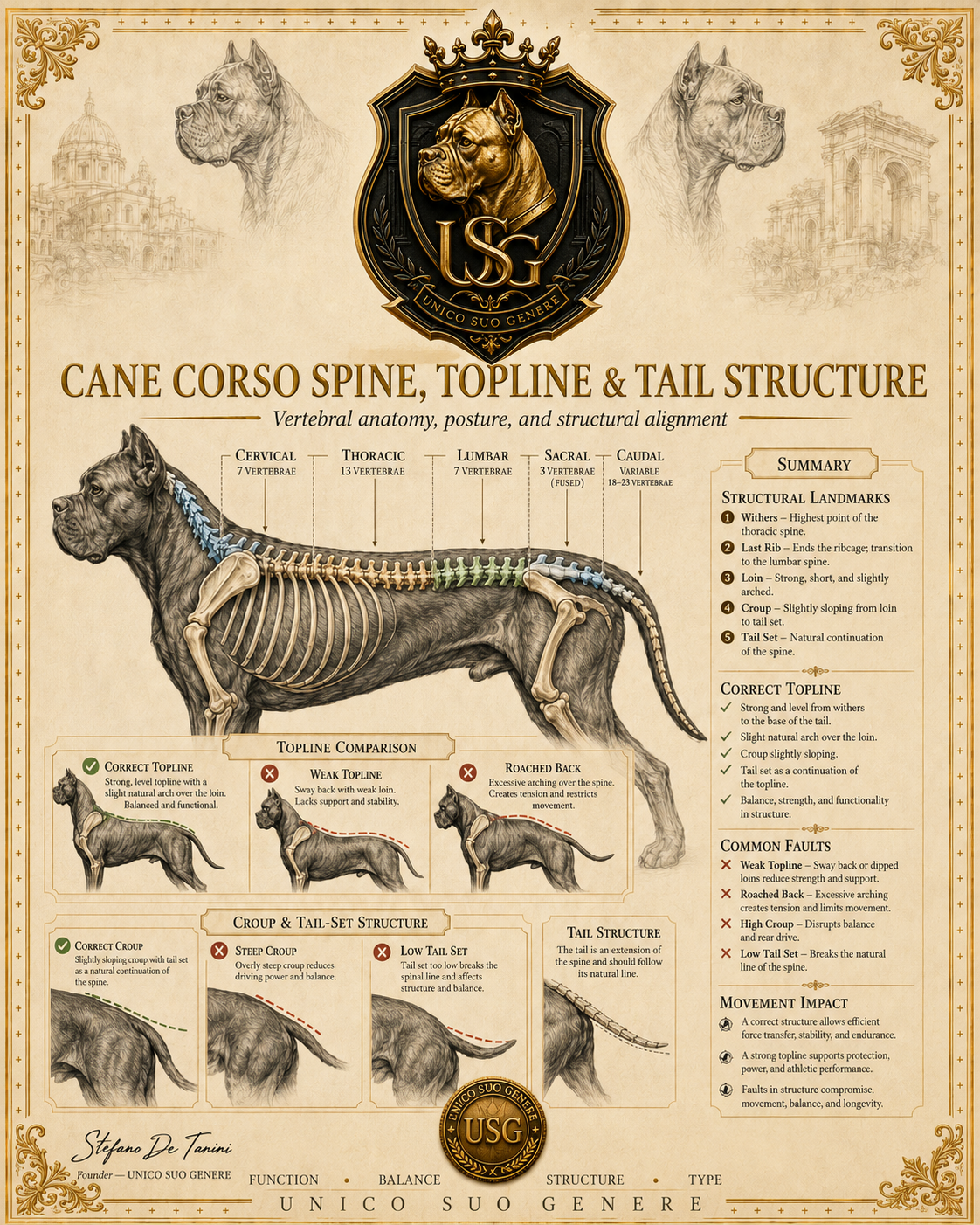
Spine, Topline & Tail Orientation
USG visual orientation for spine line, topline, tail set, and structural warning points.
This sheet covers the spine line, topline, and tail set. It helps identify structural features that affect outline, balance, and movement.
If symptoms or concerns appear, consult a veterinarian.
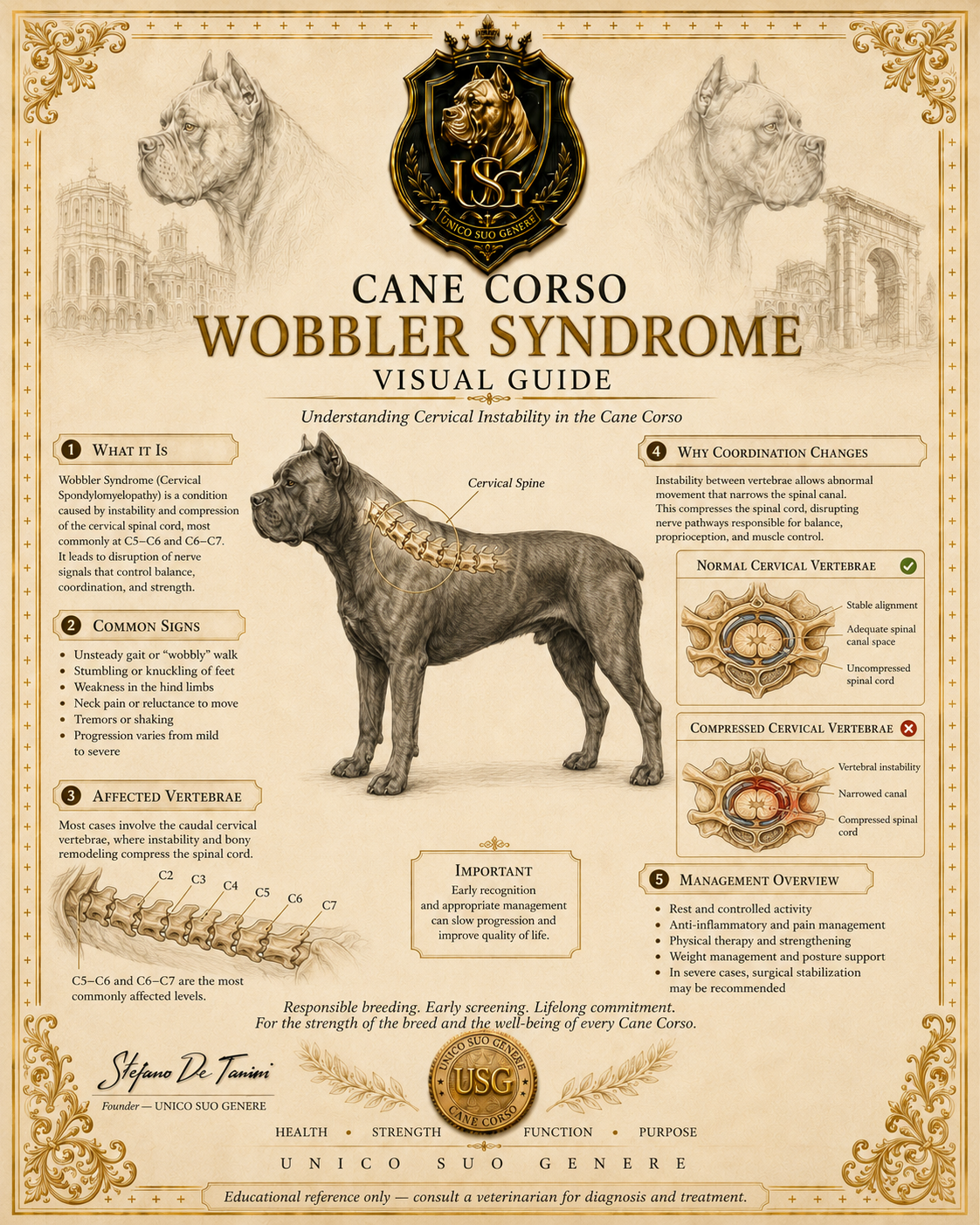
Wobbler Syndrome Awareness
USG visual orientation for cervical spine instability and neurological warning-sign awareness.
It shows the connection between the cervical spine and neurological signs. Possible signs include unsteady gait, weakness, poor coordination, neck pain, or difficulty moving.
If symptoms or concerns appear, consult a veterinarian.
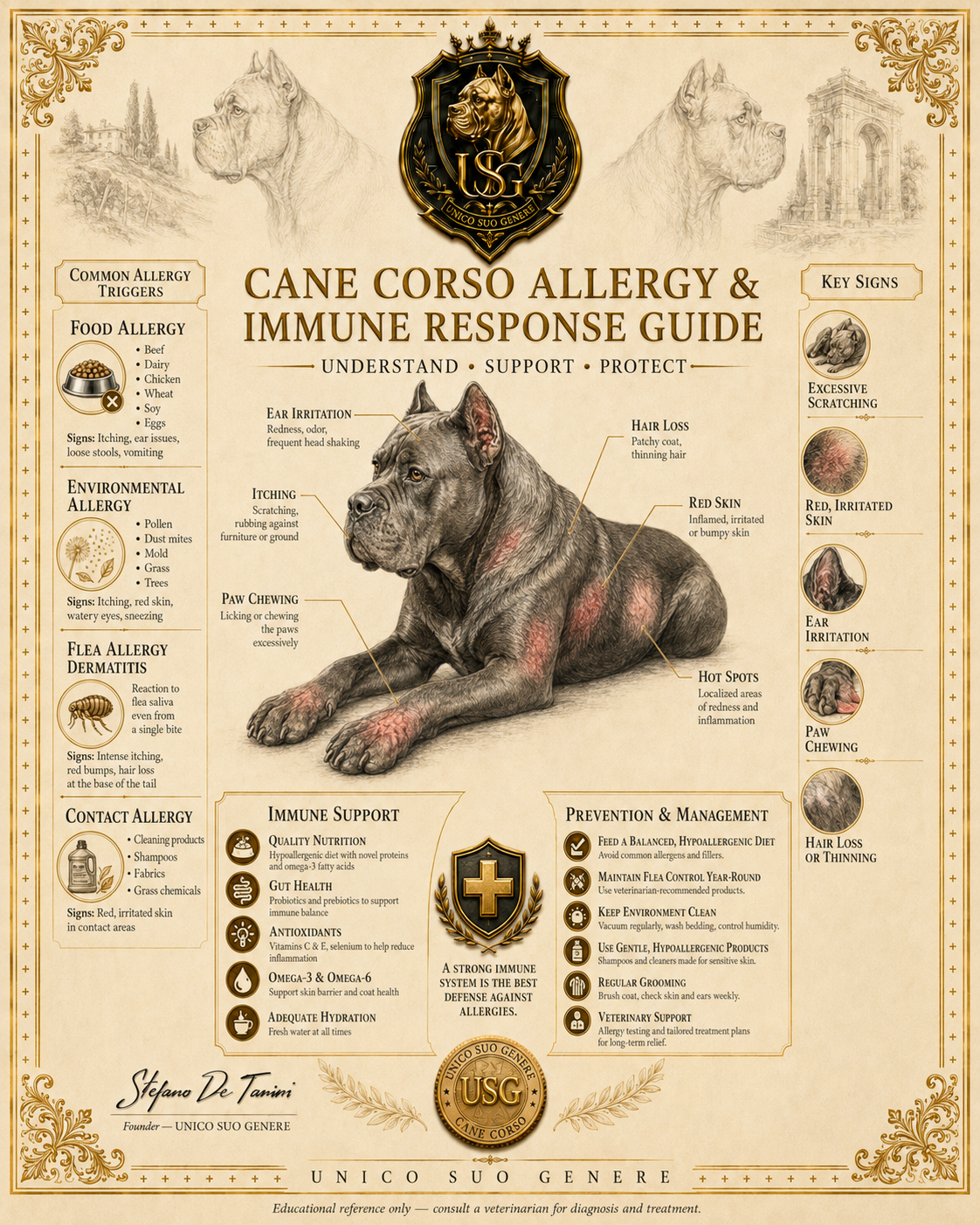
Allergy & Immune Response
USG visual orientation for allergy signs, immune response, skin reaction, and owner observation.
It explains allergic reactions and immune response that may appear in skin, ears, paws, or digestion. It points to itching, redness, rashes, licking, or recurring inflammation.
If symptoms or concerns appear, consult a veterinarian.
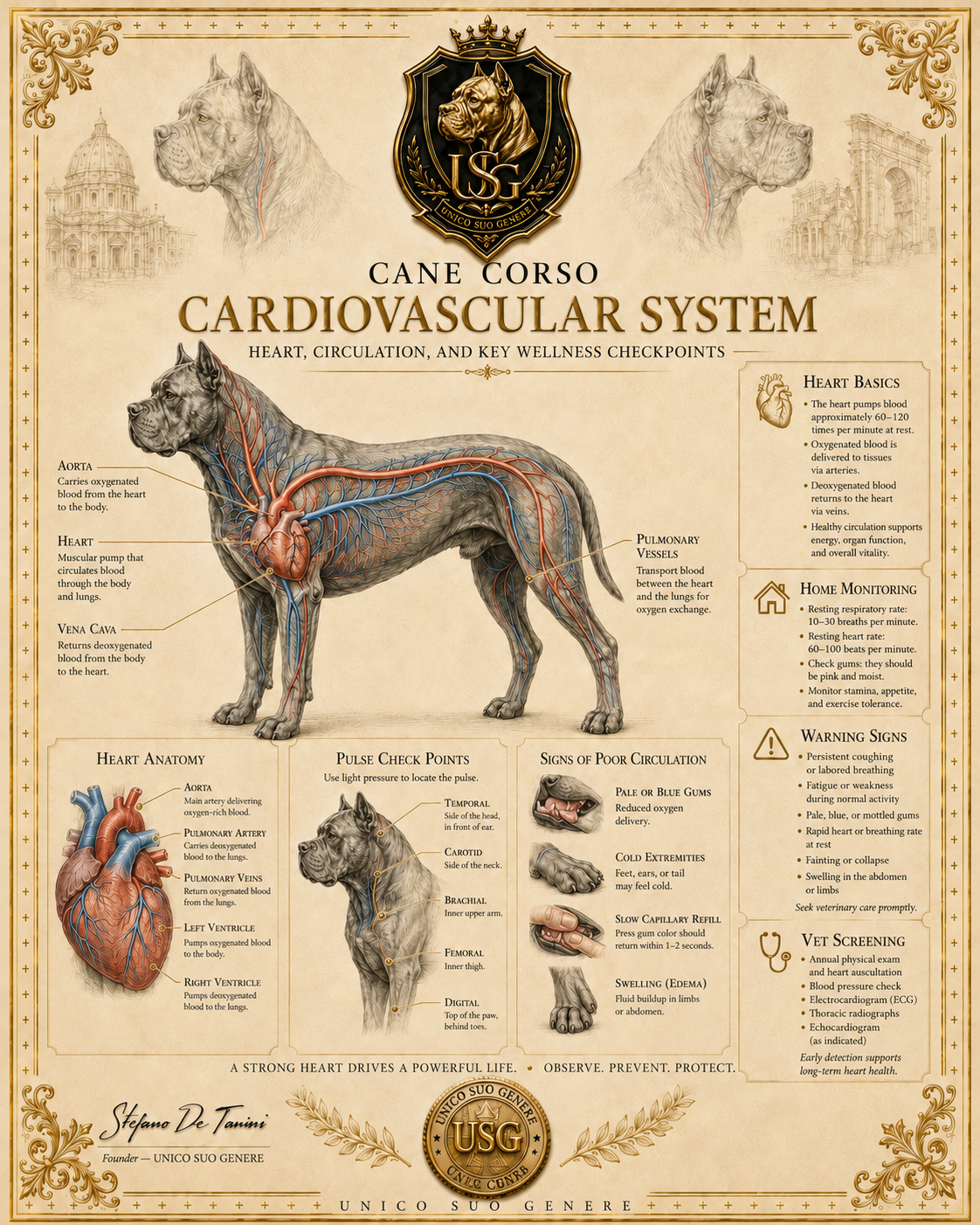
Cardiovascular System
USG visual orientation for heart, vessels, circulation, and cardiovascular owner awareness.
It shows the heart, blood vessels, and the role of circulation. It guides observation of fatigue, coughing, exercise intolerance, fainting, or breathing difficulty.
If symptoms or concerns appear, consult a veterinarian.
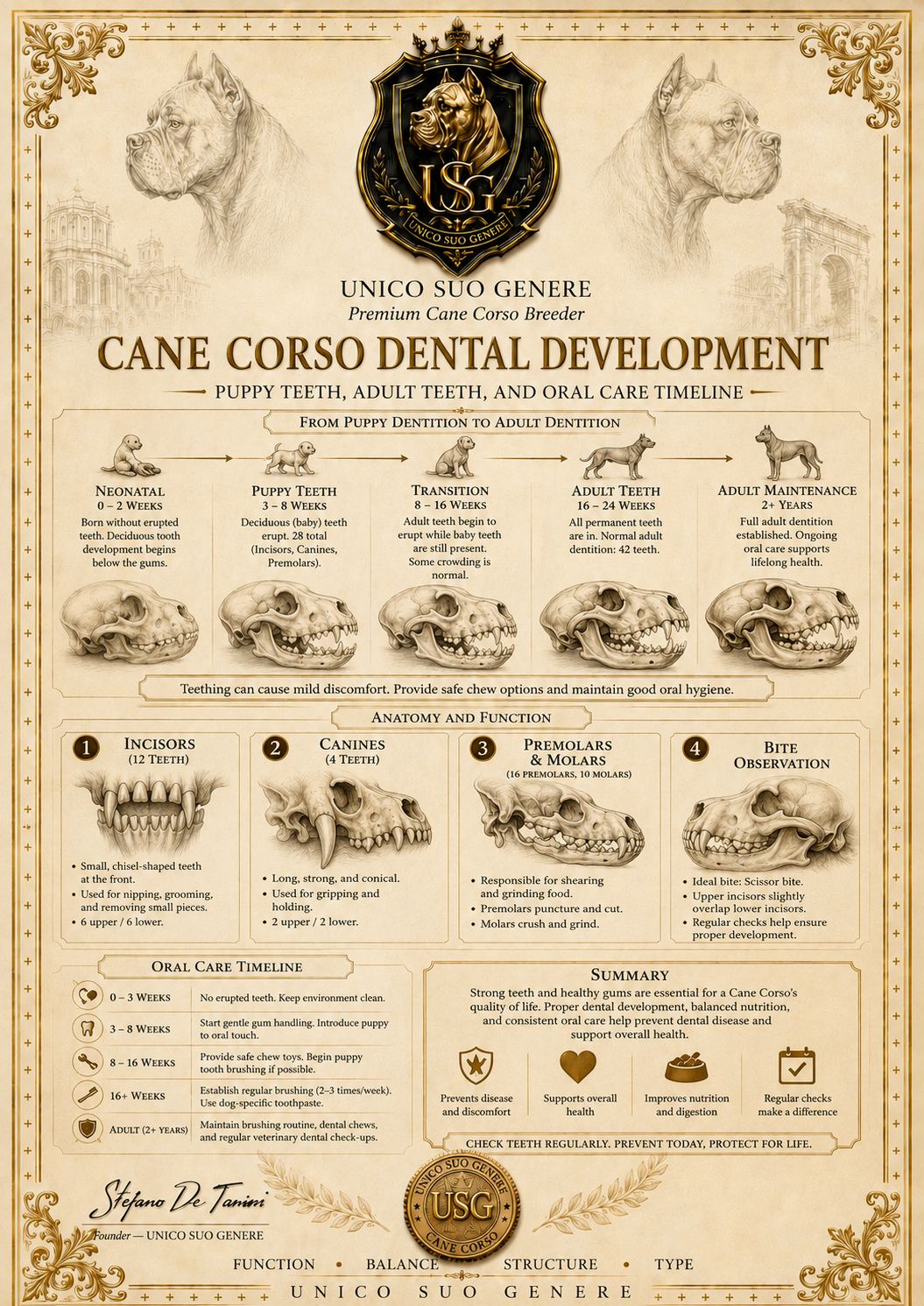
Dental Development
USG visual orientation for puppy teeth, adult dentition, bite development, and dental awareness.
It shows development of puppy and adult teeth, bite, and growth changes. It helps monitor tooth change, alignment, and signs of problems while eating or chewing.
If symptoms or concerns appear, consult a veterinarian.
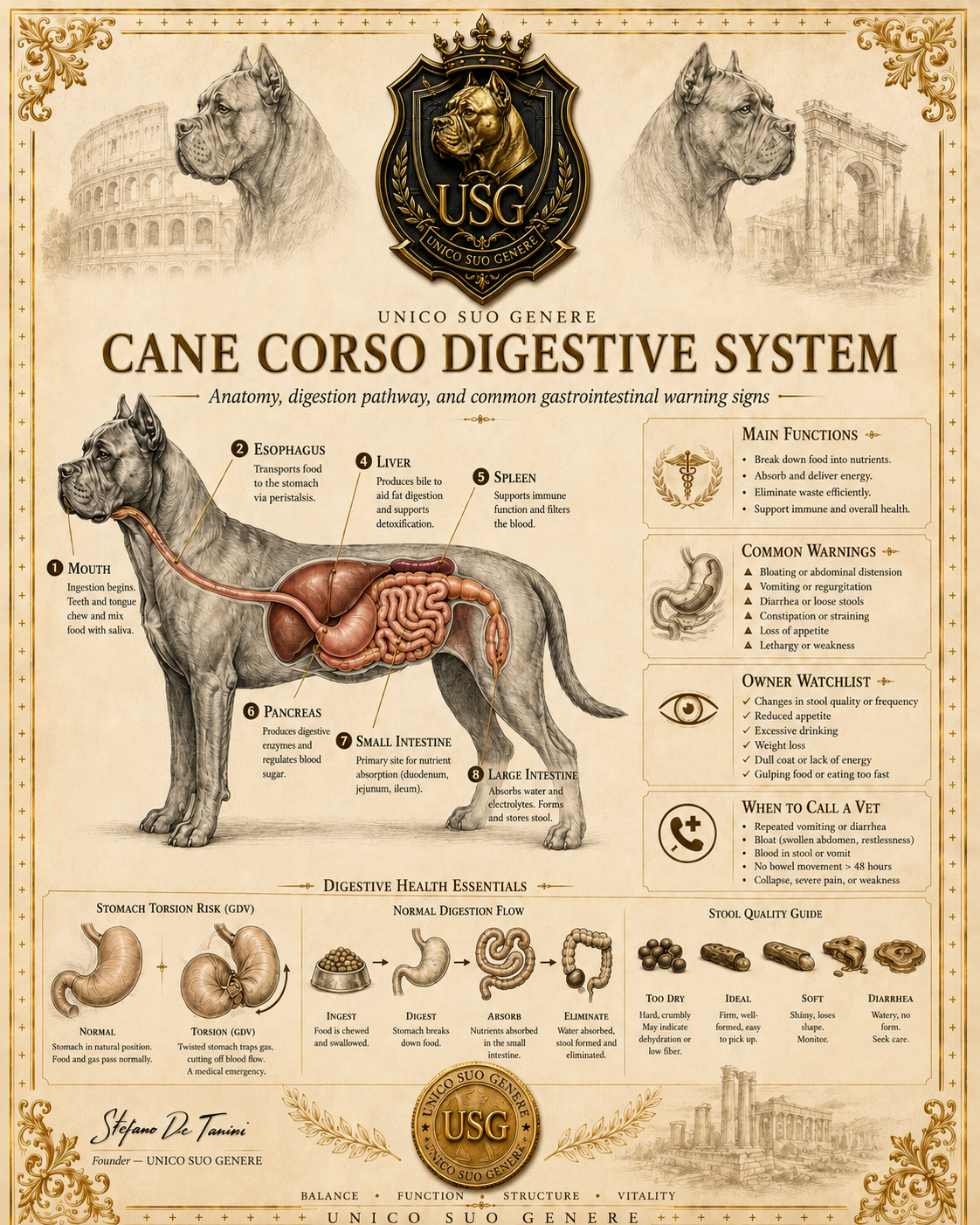
Digestive System
USG visual orientation for digestive organs, feeding awareness, and digestive warning signs.
This sheet covers digestive organs and their link to feeding, absorption, and warning signs. It guides observation of vomiting, diarrhea, bloating, pain, or appetite changes.
If symptoms or concerns appear, consult a veterinarian.
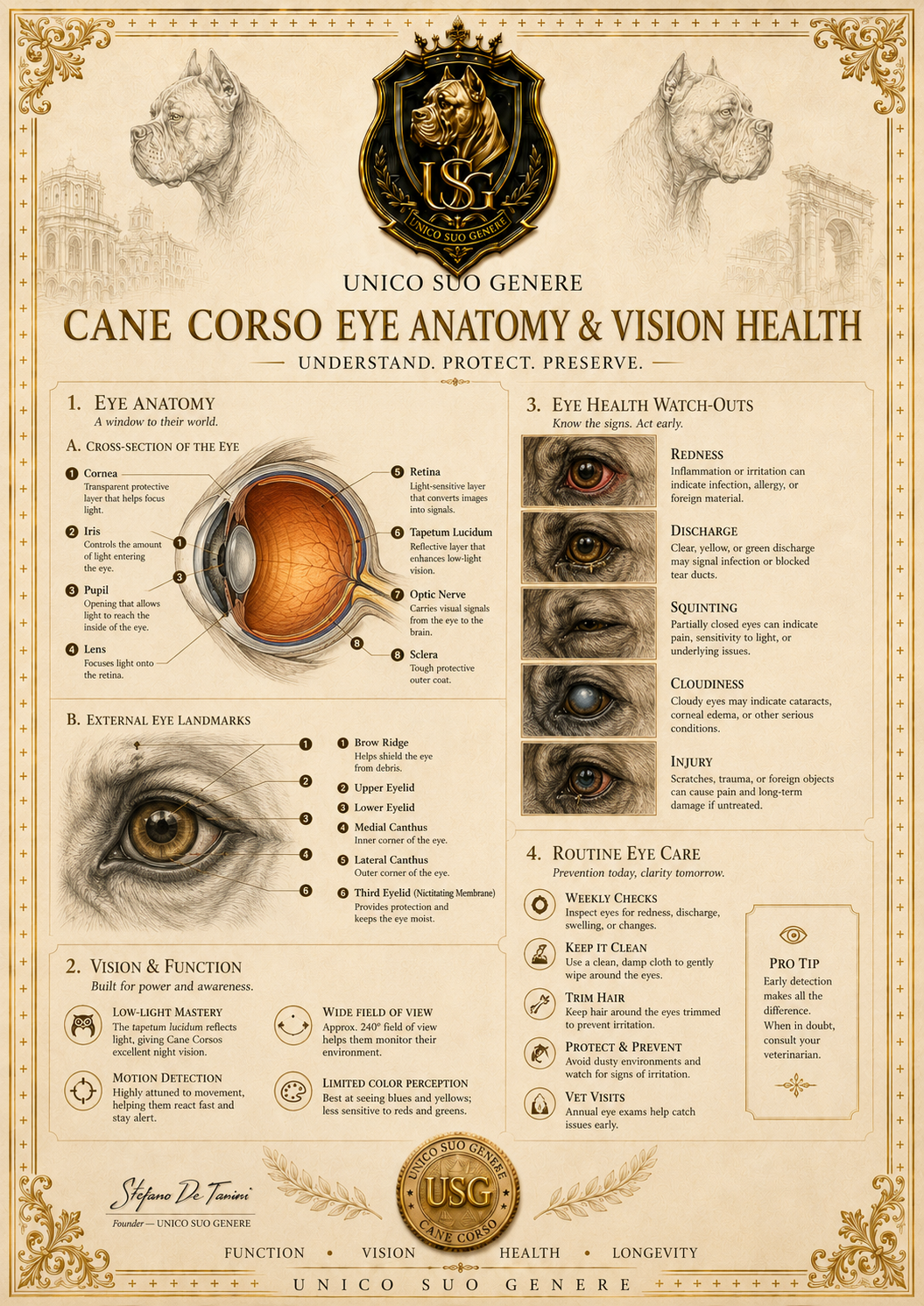
Eye Anatomy & Vision Health
USG visual orientation for eye anatomy, vision, pressure, retina, and owner observation.
It shows main eye structures, vision, retina, pressure, and observation zones. It is useful for recognizing redness, tearing, cloudiness, squinting, or behavior changes.
If symptoms or concerns appear, consult a veterinarian.
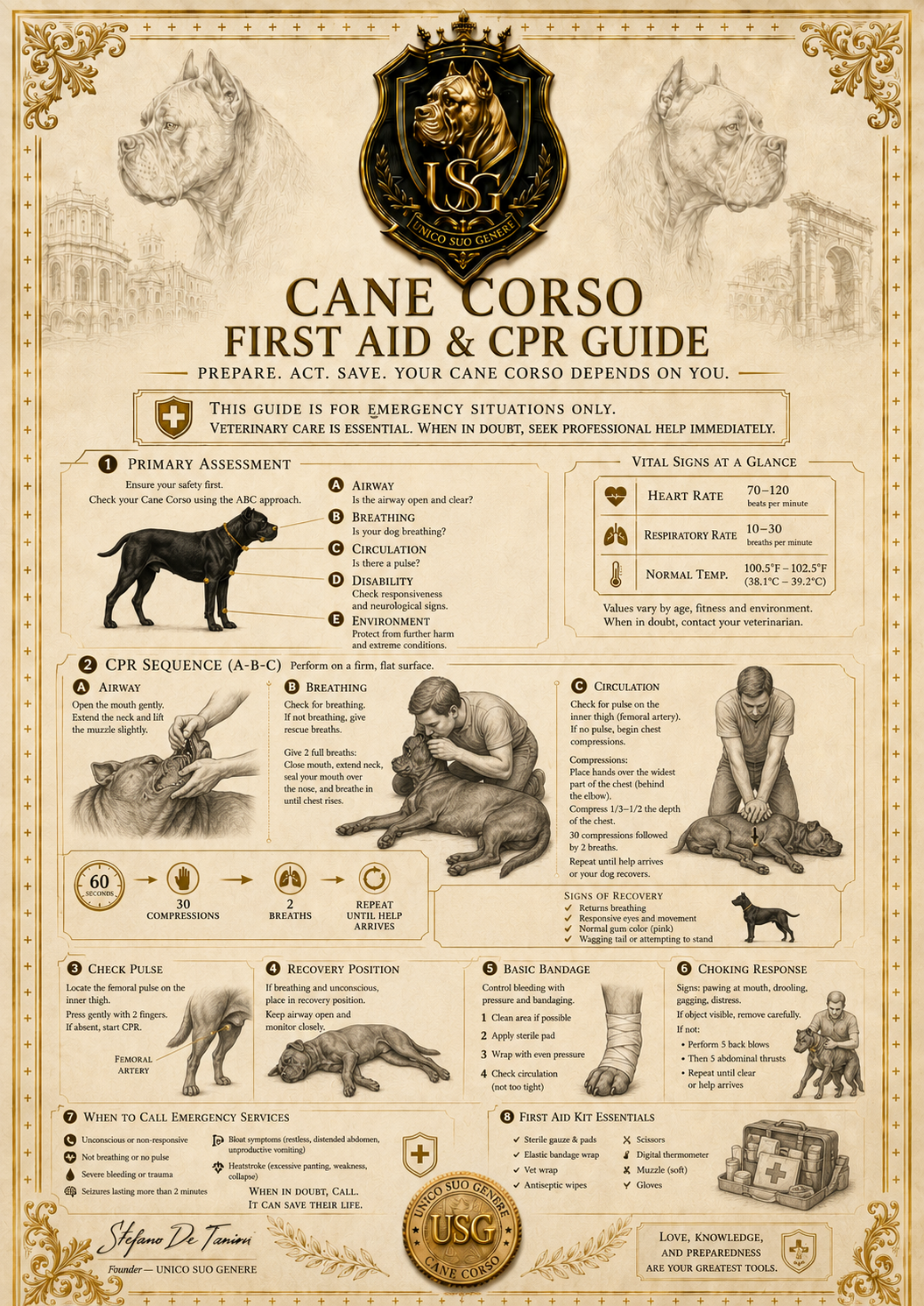
First Aid & Care Guide
USG visual orientation for basic first-aid orientation and emergency owner awareness.
It summarizes basic first-aid orientation and actions during an incident. It emphasizes calm handling, safety, quick assessment, and veterinary help for serious signs.
For emergency signs, seek veterinary help immediately.
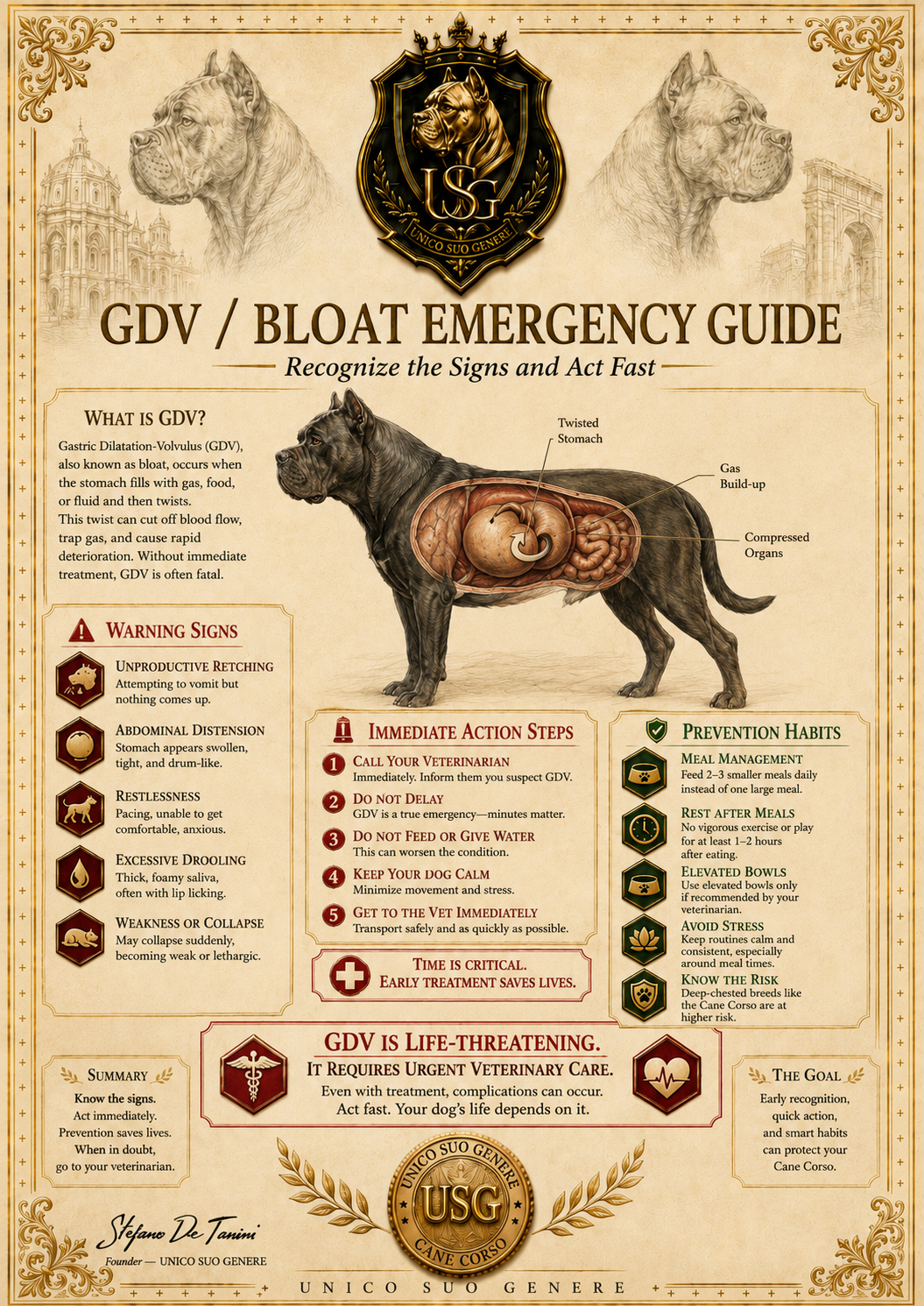
GDV / Bloat Emergency Guide
USG visual orientation for bloat, gastric torsion risk, and urgent veterinary-response awareness.
It focuses on GDV/bloat as an emergency risk. Possible signs include abdominal swelling, restlessness, drooling, unproductive vomiting, weakness, or collapse.
For emergency signs, seek veterinary help immediately.
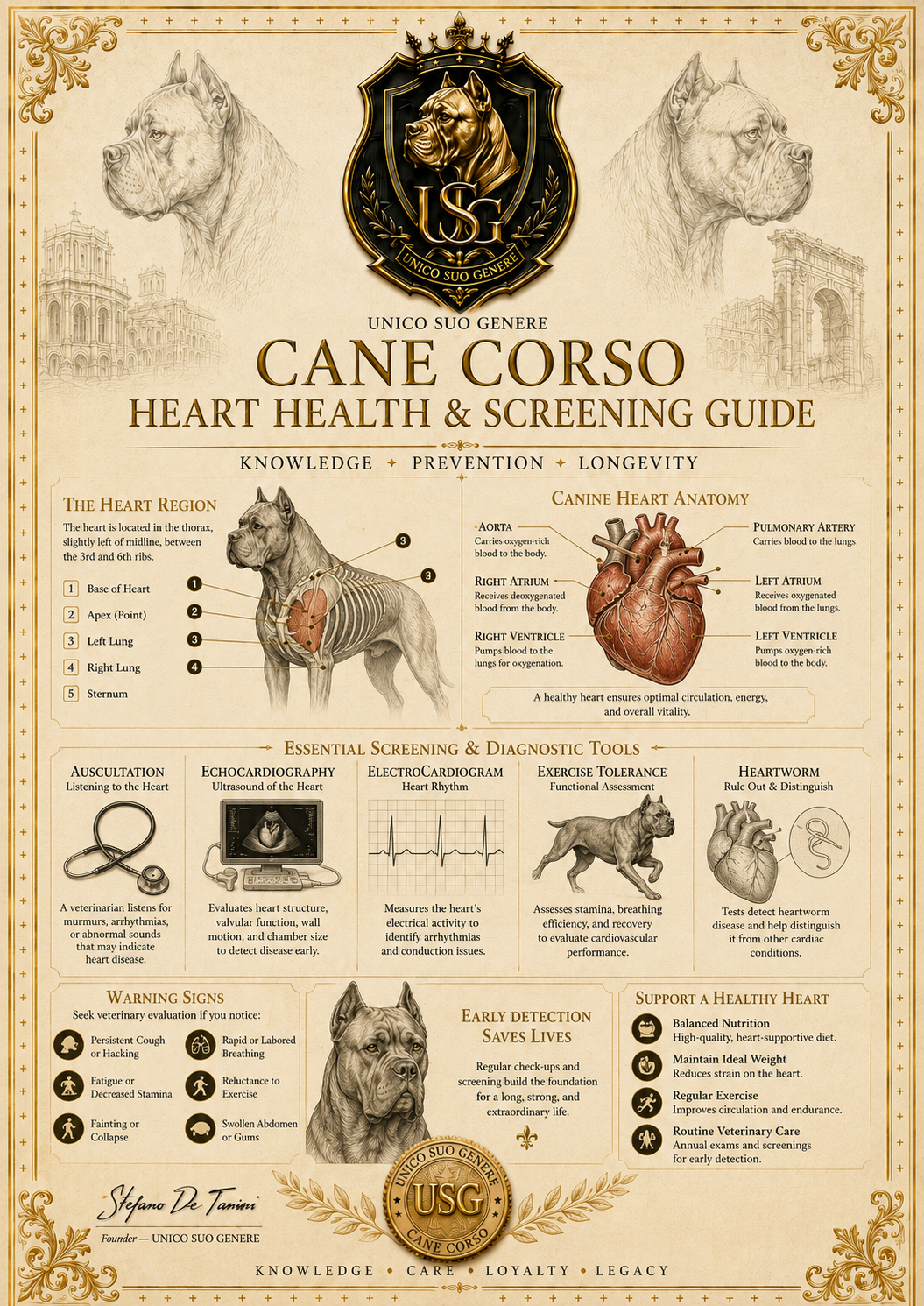
Heart Health & Screening
USG visual orientation for heart health, screening, warning signs, and responsible monitoring.
This sheet focuses on heart health, screening, and warning signs. It is useful for observing fatigue, coughing, fainting, breathing difficulty, or poor stamina.
If symptoms or concerns appear, consult a veterinarian.
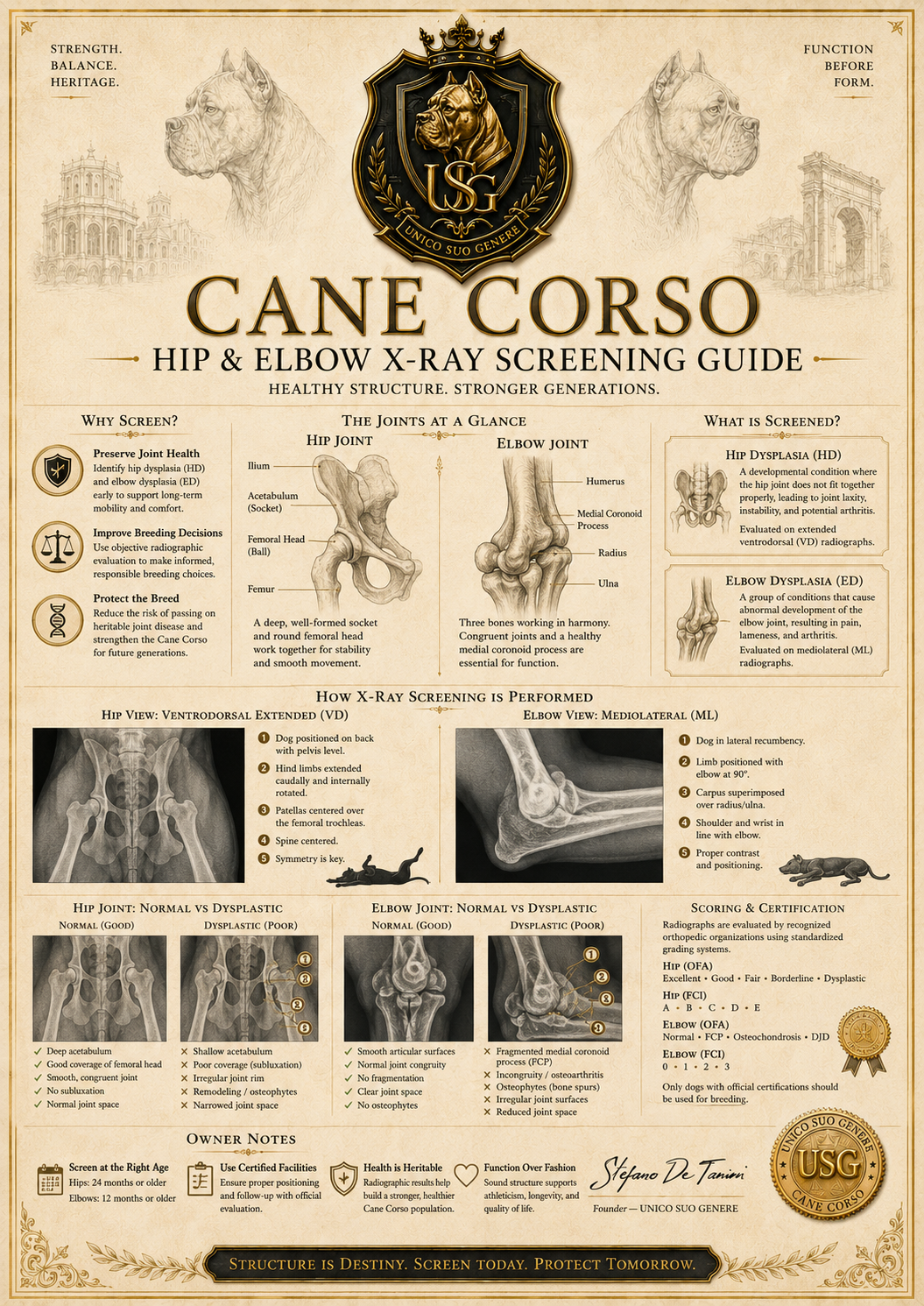
Hip & Elbow X-Ray Screening
USG visual orientation for hip and elbow screening, X-ray orientation, and joint-health awareness.
It shows the idea of hip and elbow X-ray screening. It explains why external appearance alone is not enough to evaluate joints.
If symptoms or concerns appear, consult a veterinarian.
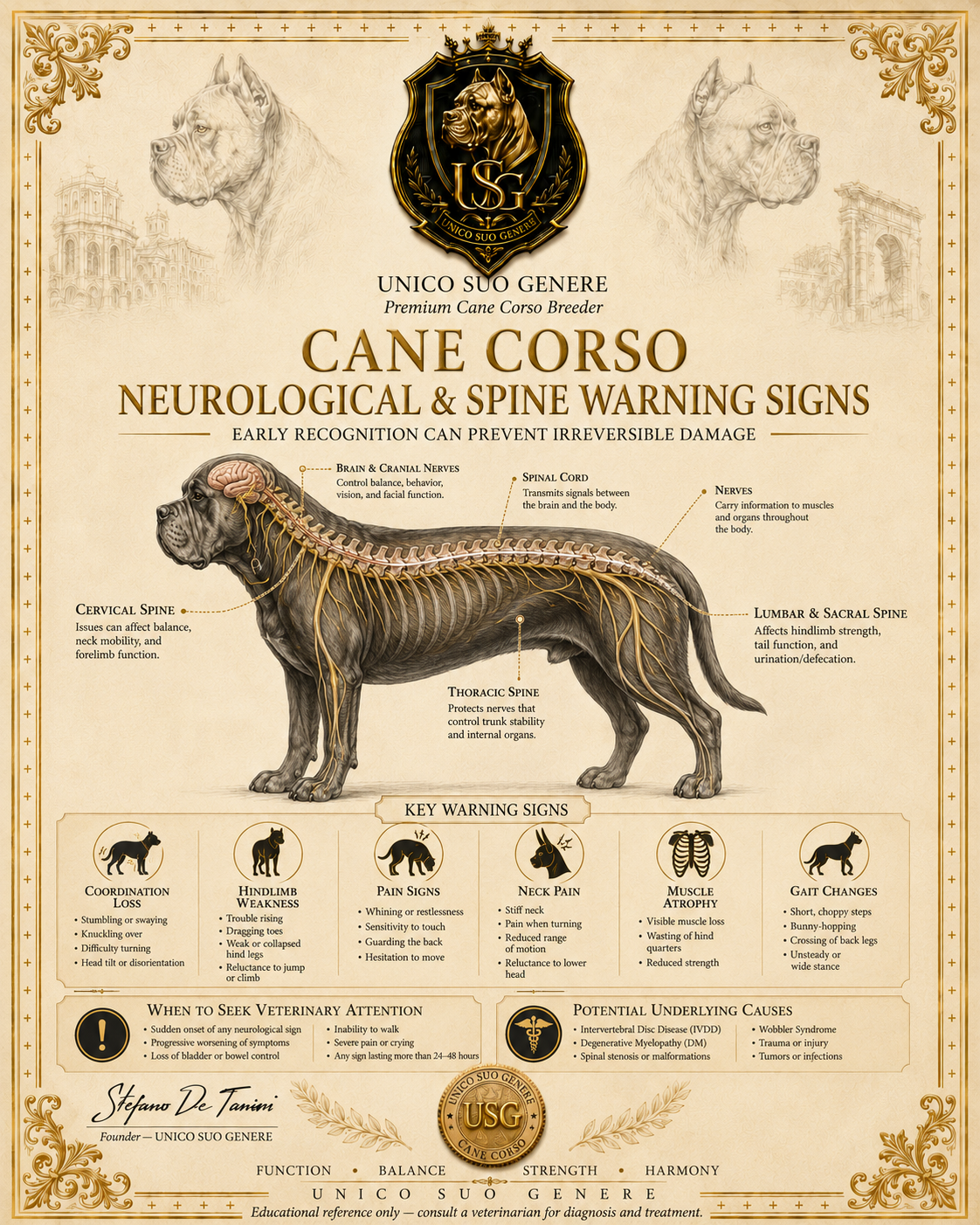
Neurological & Spine Warning Signs
USG visual orientation for spine, nerves, movement changes, and neurological warning points.
It shows the link between spine, nervous system, and warning signs. It guides observation of weakness, wobbling, dragging paws, pain, or sudden coordination changes.
If symptoms or concerns appear, consult a veterinarian.
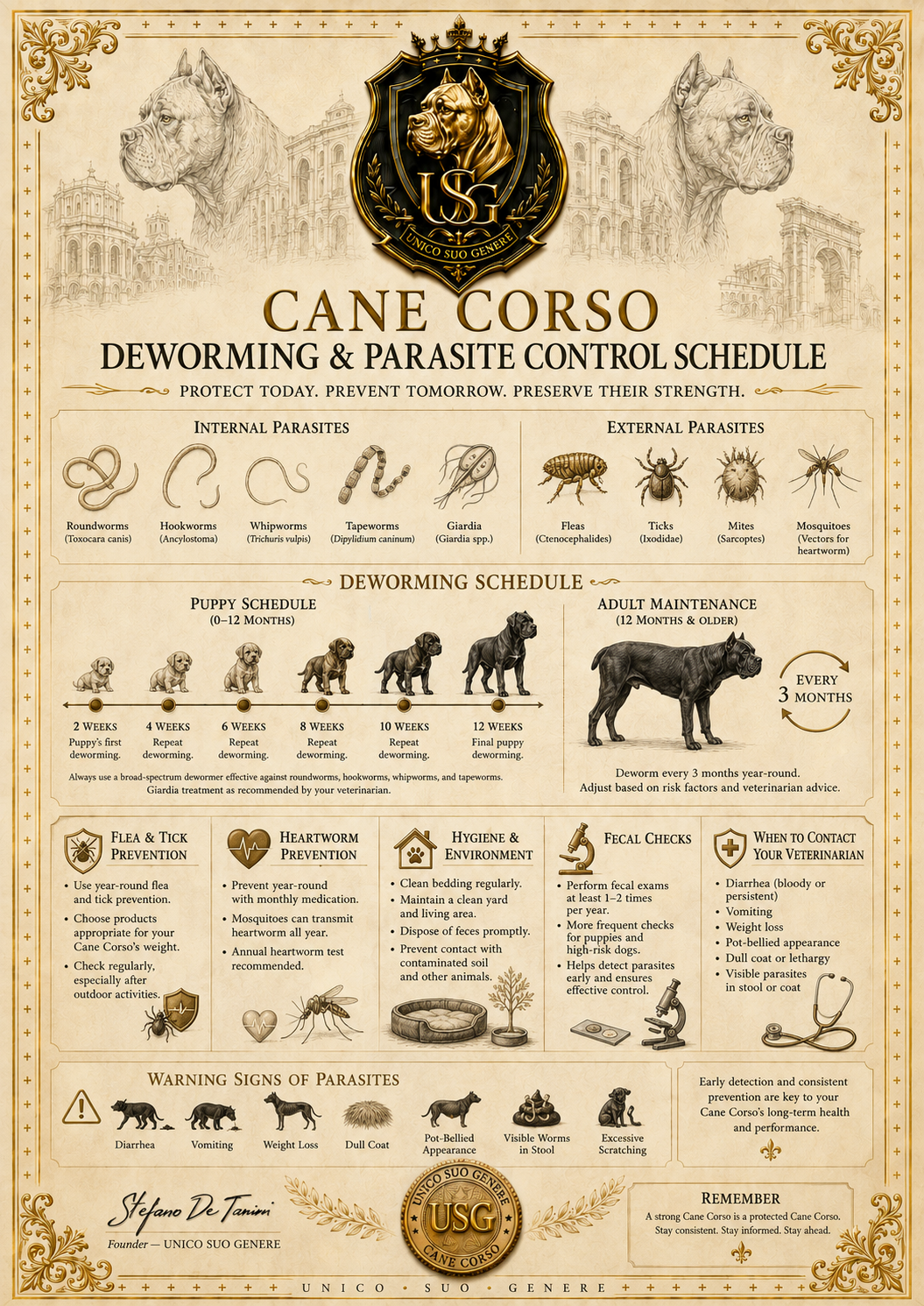
Deworming & Parasite Control Schedule
USG visual orientation for parasite prevention, deworming rhythm, and owner planning.
It summarizes deworming and parasite control by age and risk. It helps explain that prevention should be planned according to environment, season, and veterinary advice.
Prevention, testing, and treatment should follow local veterinary guidance.
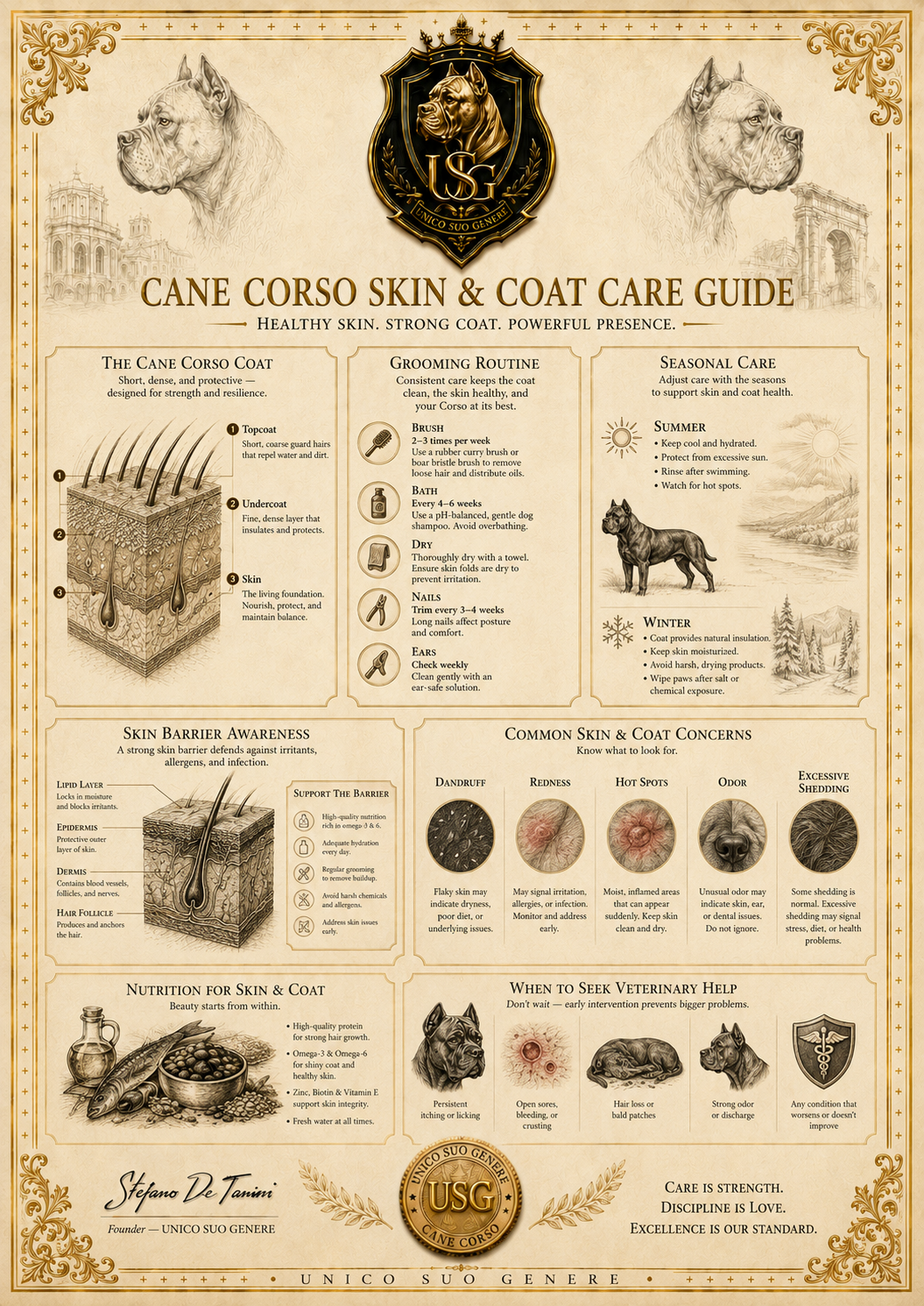
Skin & Coat Care
USG visual orientation for skin, coat, grooming, irritation signs, and owner care.
It shows skin and coat as indicators of general condition. It guides observation of itching, redness, dandruff, hair loss, sores, or coat-quality changes.
If symptoms or concerns appear, consult a veterinarian.
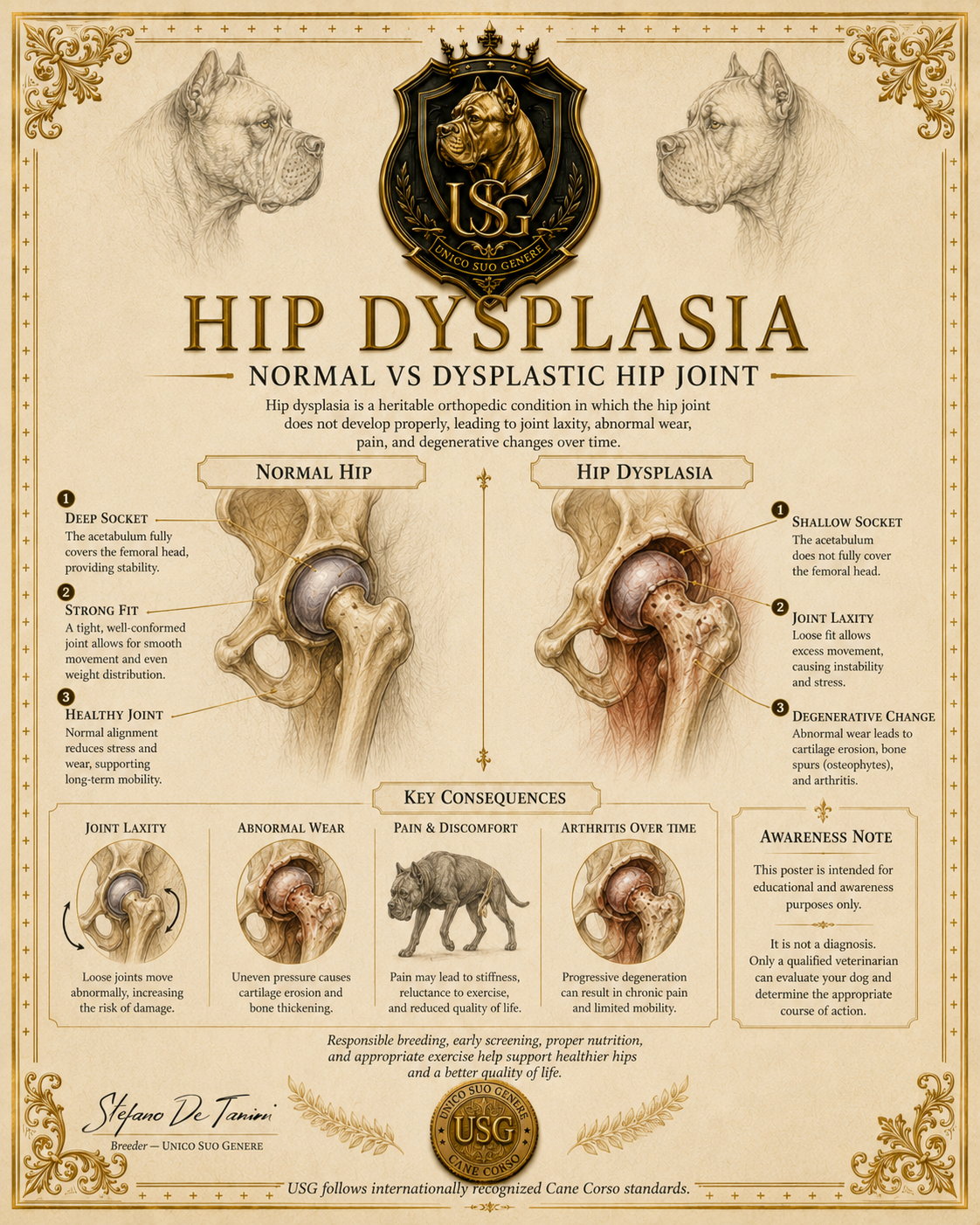
Hip Dysplasia Visual Variant
USG visual orientation for hip joint orientation and dysplasia awareness in an alternate visual format.
This is an additional visual variant for hip dysplasia, showing the joint and possible changes in position or socket depth. It supports clearer discussion with a veterinarian when there is concern.
If symptoms or concerns appear, consult a veterinarian.
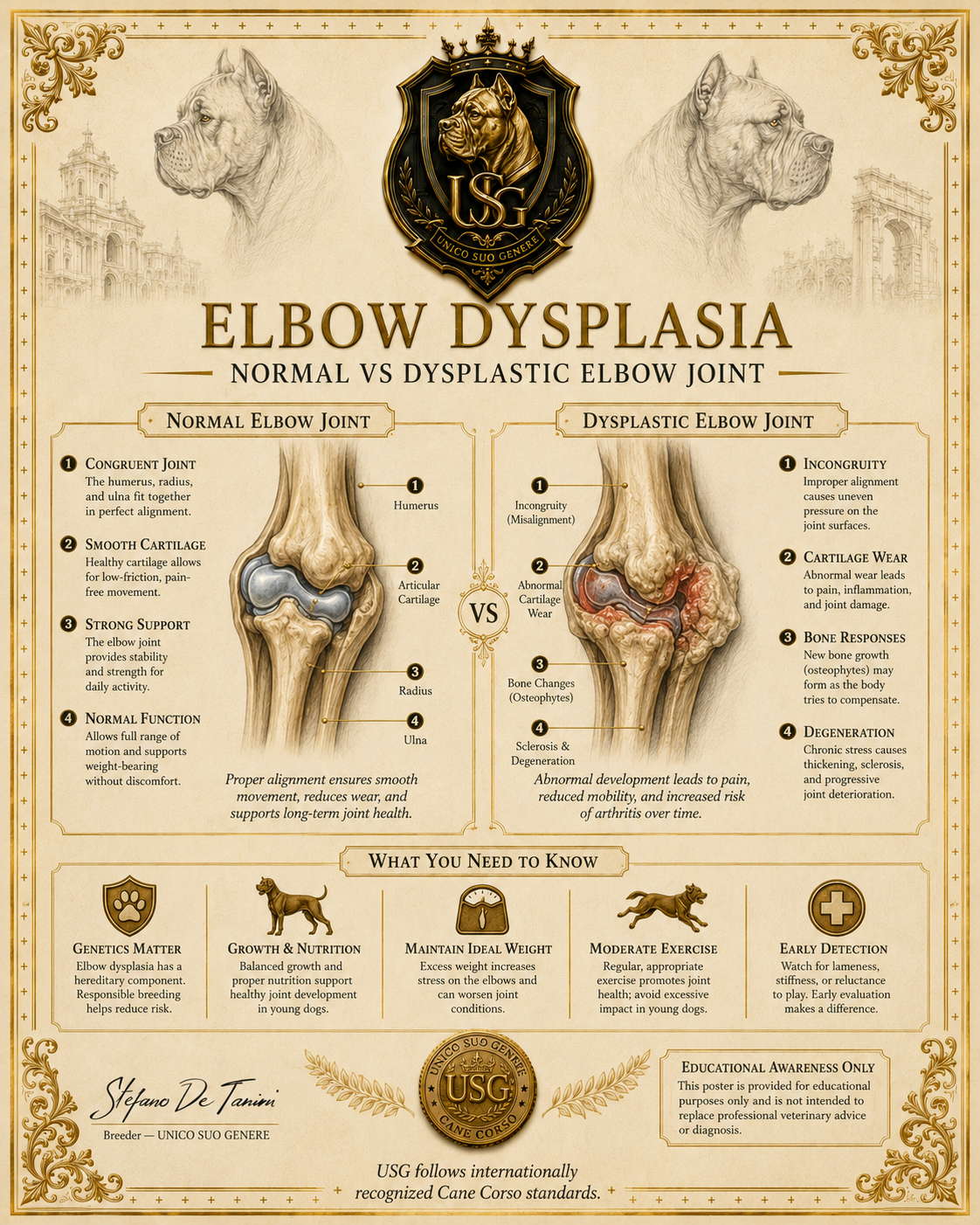
Elbow Dysplasia Visual Variant
USG visual orientation for elbow joint orientation and dysplasia awareness in an alternate visual format.
An additional elbow dysplasia sheet focused on the joint, load, and possible pain during movement. It is useful for recognizing the topic before professional evaluation.
If symptoms or concerns appear, consult a veterinarian.
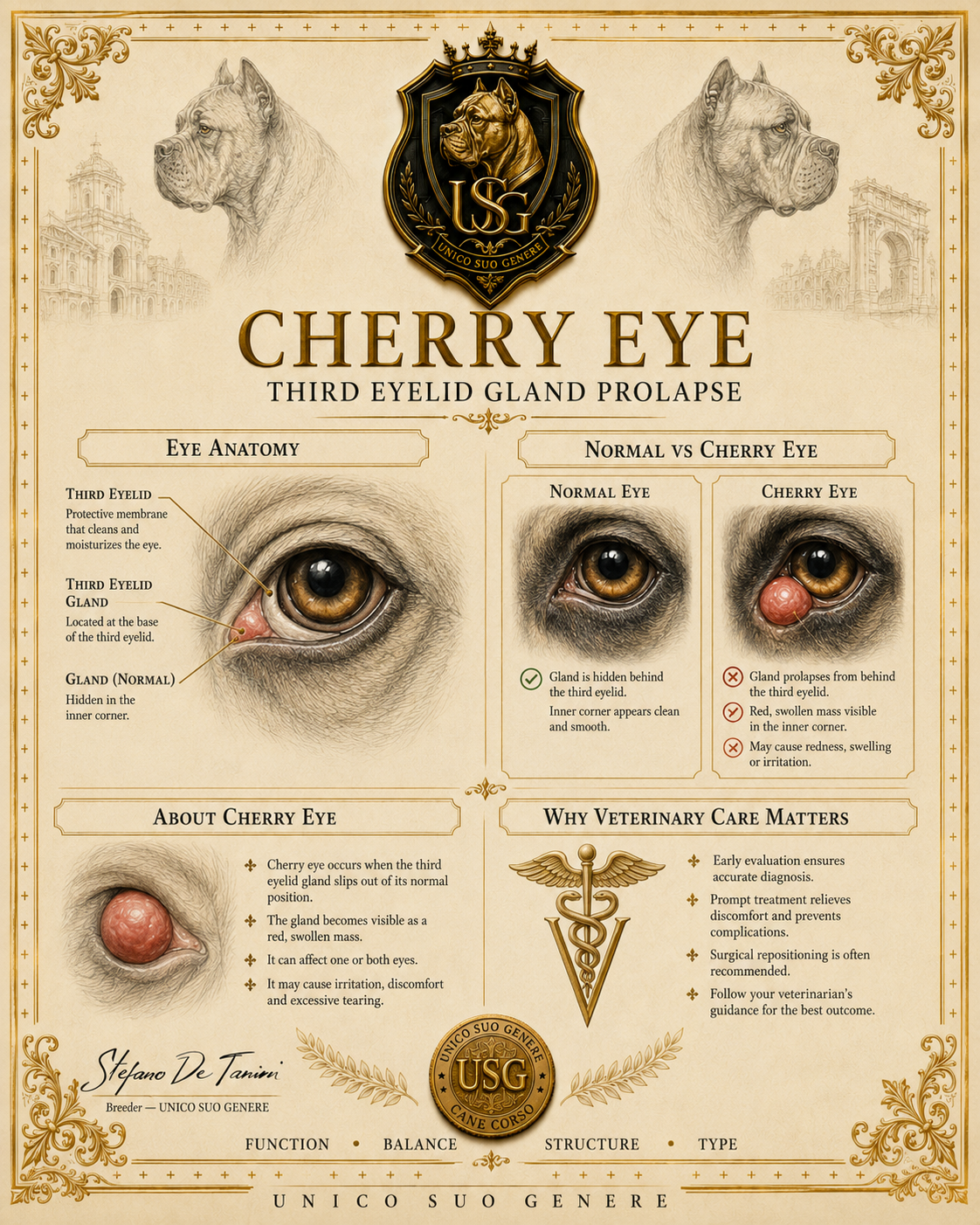
Cherry Eye Visual Variant
USG visual orientation for third eyelid gland awareness in an alternate visual format.
An additional cherry-eye visual that helps identify the red swelling in the inner corner of the eye. It encourages early consultation when irritation or tearing appears.
If symptoms or concerns appear, consult a veterinarian.
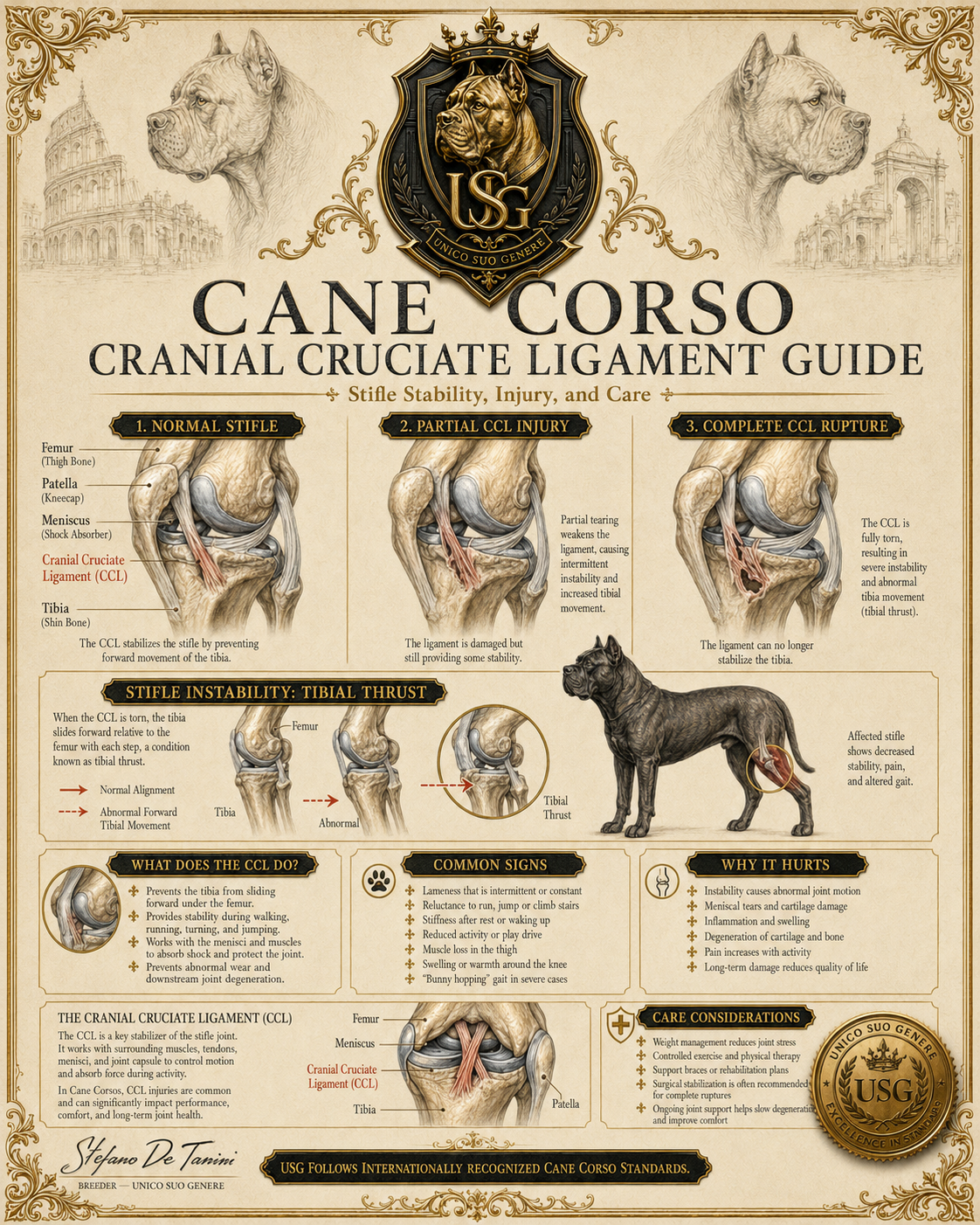
Cranial Cruciate Ligament Visual Variant
USG visual orientation for cruciate ligament injury awareness in an alternate visual format.
An additional cruciate-ligament variant highlighting knee instability and its effect on gait. It is useful when sudden lameness or refusal to bear weight appears.
If symptoms or concerns appear, consult a veterinarian.
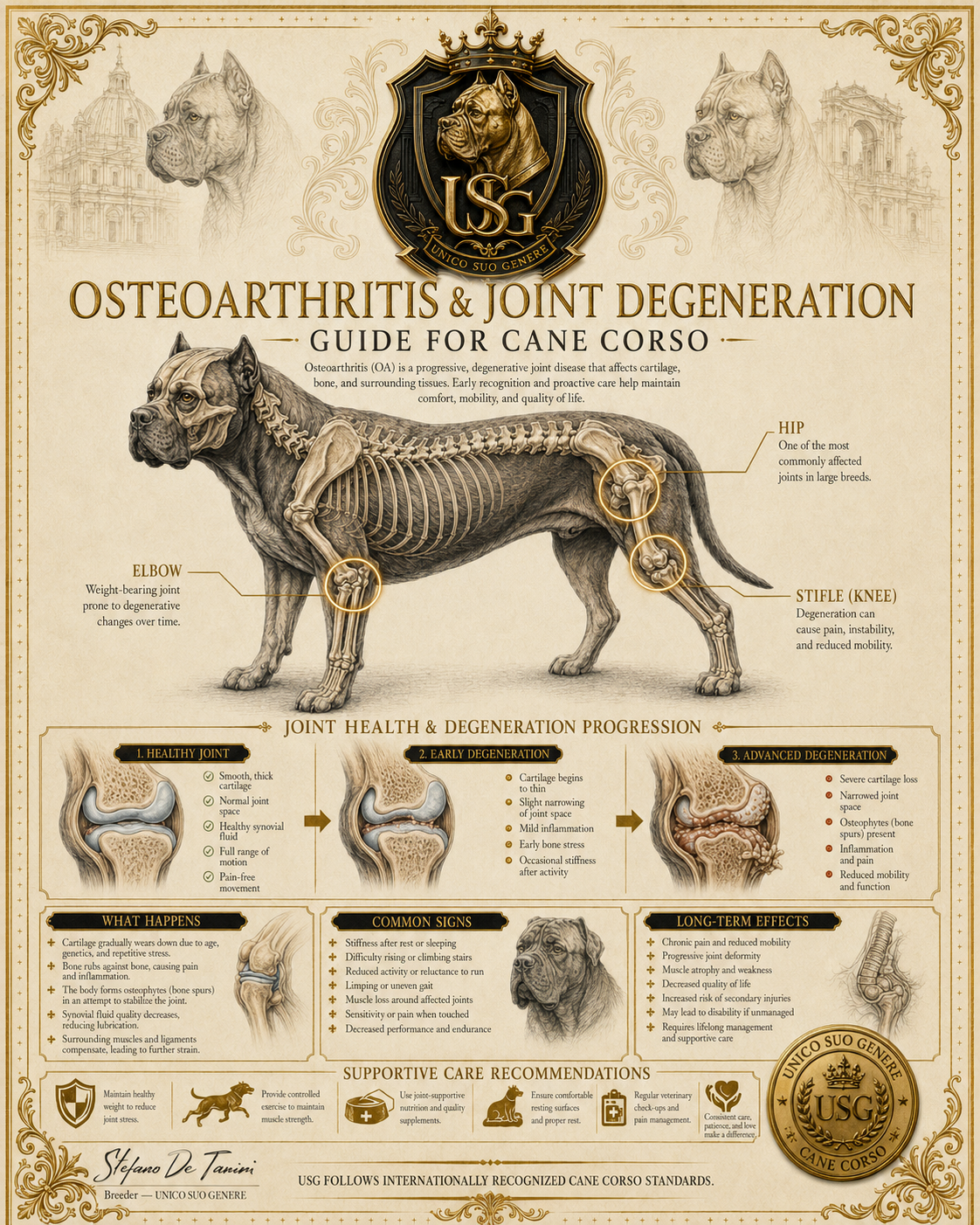
Osteoarthritis Visual Variant
USG visual orientation for joint degeneration and mobility awareness in an alternate visual format.
An additional osteoarthritis sheet showing joint wear, pain, and reduced mobility. It guides observation of daily movement and comfort.
If symptoms or concerns appear, consult a veterinarian.
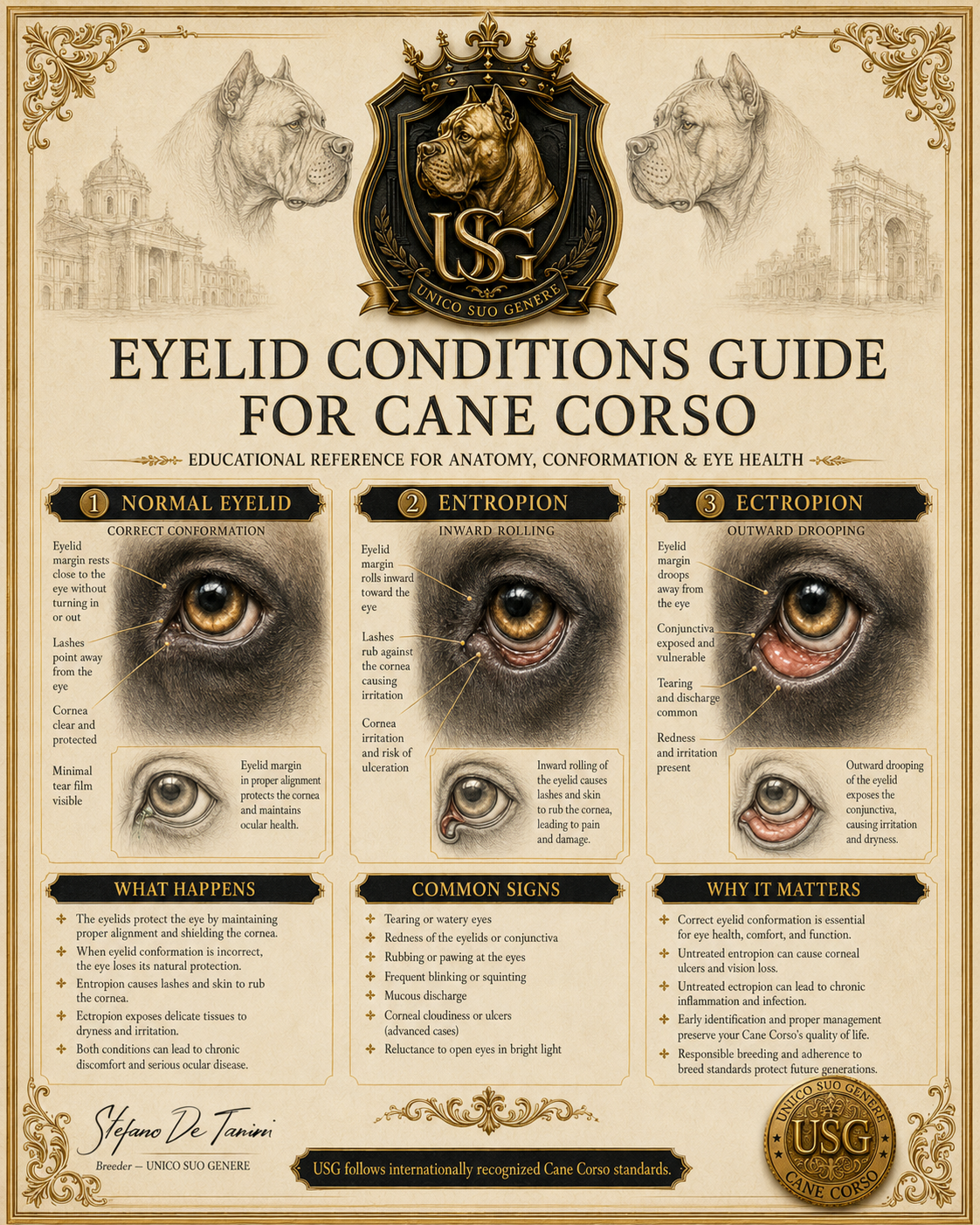
Eyelid Conditions Visual Variant
USG visual orientation for eyelid orientation and eye-comfort awareness in an alternate visual format.
An additional eyelid sheet showing how incorrect eyelid position may irritate the eye. It is useful when tearing, redness, squinting, or visible discomfort appears.
If symptoms or concerns appear, consult a veterinarian.
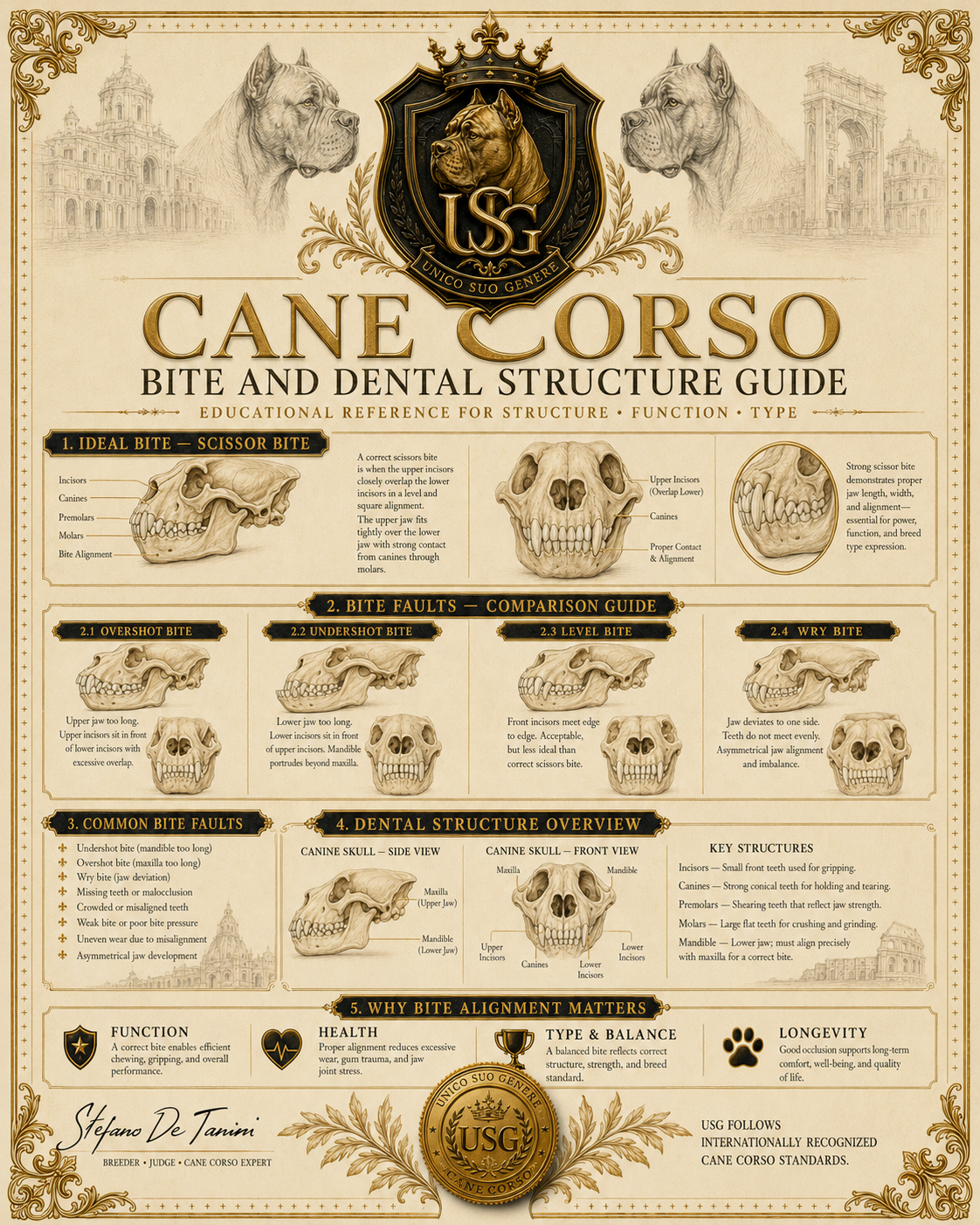
Bite & Dental Structure Guide
USG visual orientation for bite, dental structure, jaw alignment, and owner orientation.
It shows bite, dental structure, and jaw alignment. It helps distinguish visual bite orientation from actual dental or expert evaluation.
If symptoms or concerns appear, consult a veterinarian.
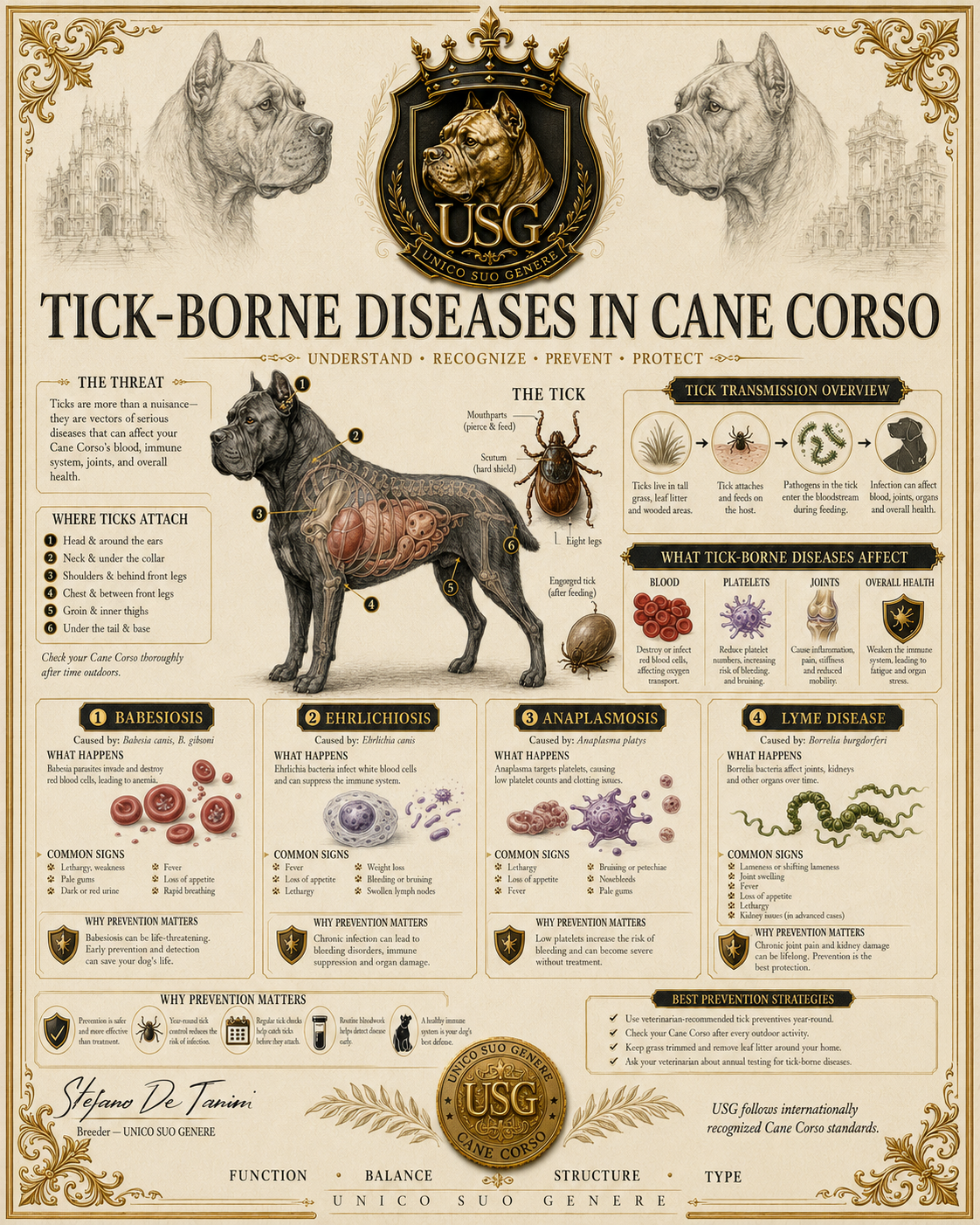
Tick-Borne Disease Visual Variant
USG visual orientation for tick-borne disease orientation in an alternate visual format.
An additional tick-borne disease variant focused on risk, prevention, and early signs. It helps owners respond earlier to lethargy or sudden change.
Prevention, testing, and treatment should follow local veterinary guidance.
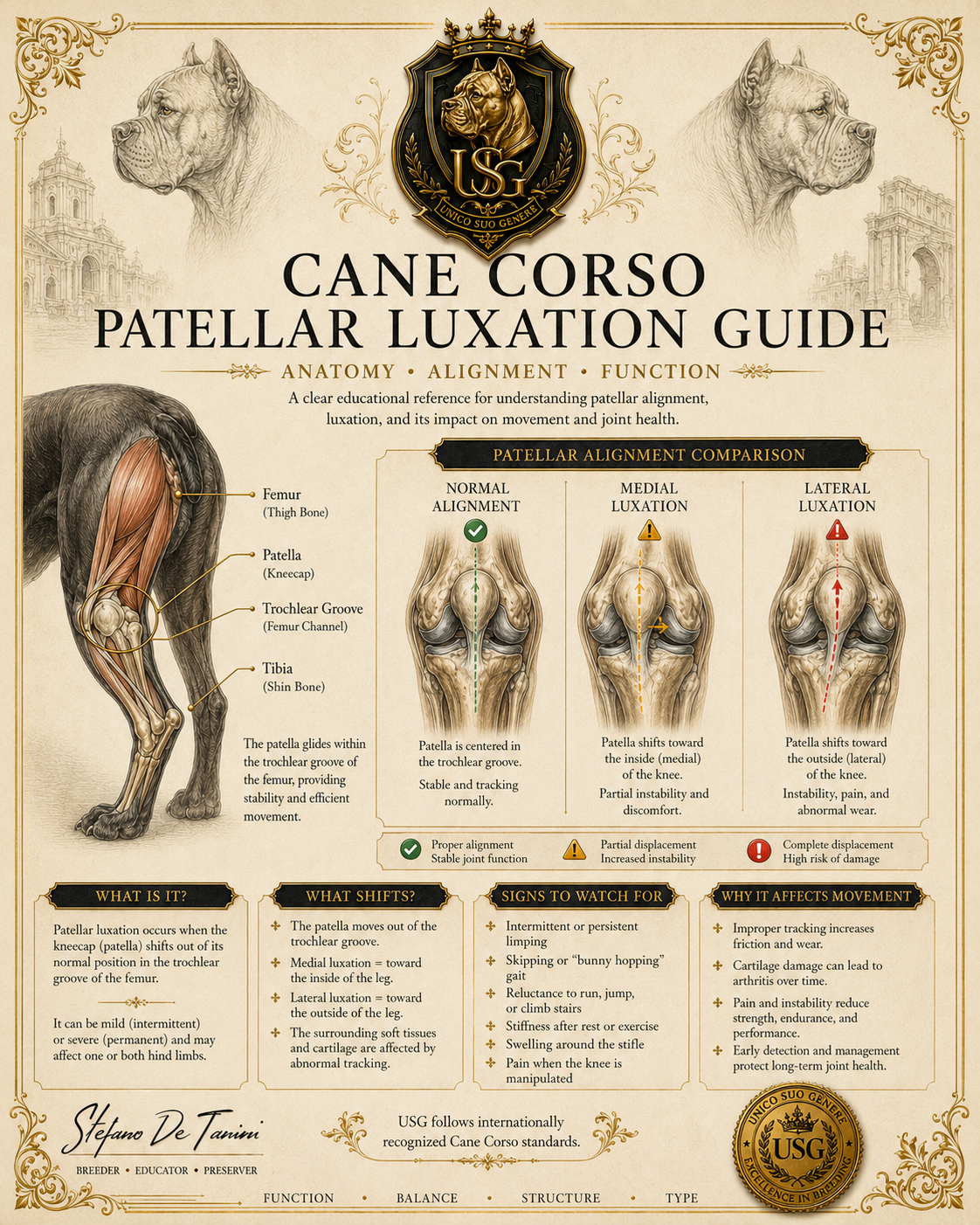
Patellar Luxation Visual Variant
USG visual orientation for kneecap displacement awareness in an alternate visual format.
An additional patellar-luxation sheet showing how displacement can affect gait. It is useful when skipping, sudden leg lifting, or instability appears.
If symptoms or concerns appear, consult a veterinarian.
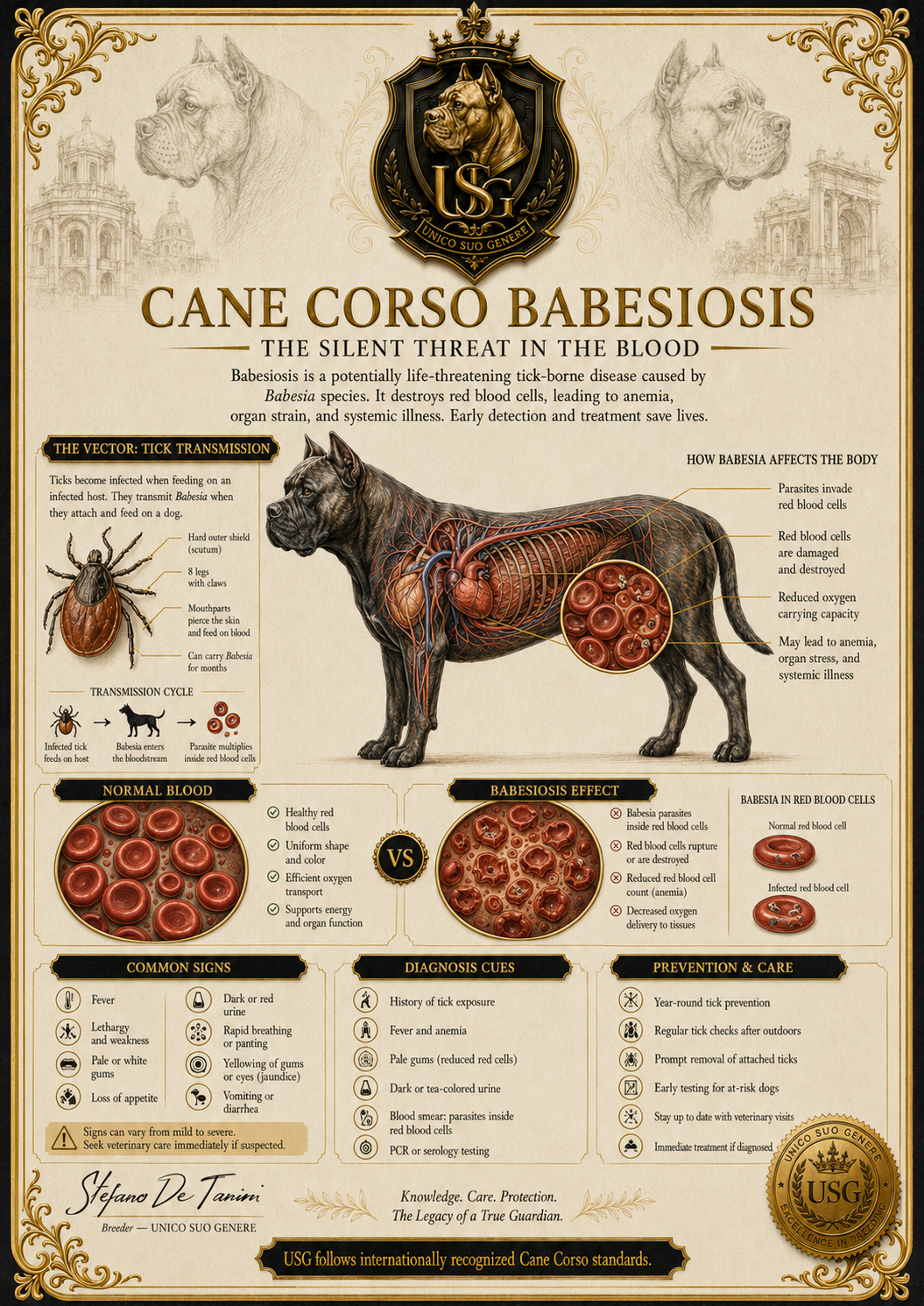
Babesiosis Owner Awareness
USG visual orientation for babesiosis, red blood cell impact, and owner warning-sign awareness.
An owner-awareness sheet for babesiosis, focused on ticks, blood cells, and early warning signs. It encourages quick response to lethargy, fever, pale gums, or dark urine.
Prevention, testing, and treatment should follow local veterinary guidance.