
USG organizes Cane Corso profiles, public orientation, knowledge, visual education, verification, community usefulness, and partner presence.
← Back to Knowledge
UNICO SUO GENERE
USG Visual Knowledge Atlas
A curated USG visual orientation system for Cane Corso. The atlas supports first understanding of structure, health awareness, development, care, and responsible USG visual review, while images and descriptions may contain inaccuracies, generalizations, or visual simplifications.
USG identity
What USG is — and what it is not
USG / UNICO SUO GENERE is an independent Cane Corso platform. It connects reviewed profiles, knowledge, visual education, verification, community orientation, and partner presence without replacing official breed authorities.
USG is not presented as a kennel, puppy marketplace, sales channel, or authority for producing Cane Corso puppies.
USG does not replace FCI, ENCI, AKC, UKC, judges, clubs, veterinary documents, pedigrees, or any official Cane Corso standard.
The Visual Atlas helps visitors understand structure, care, health awareness, and photo readiness; it is orientation, not proof, diagnosis, or certification.
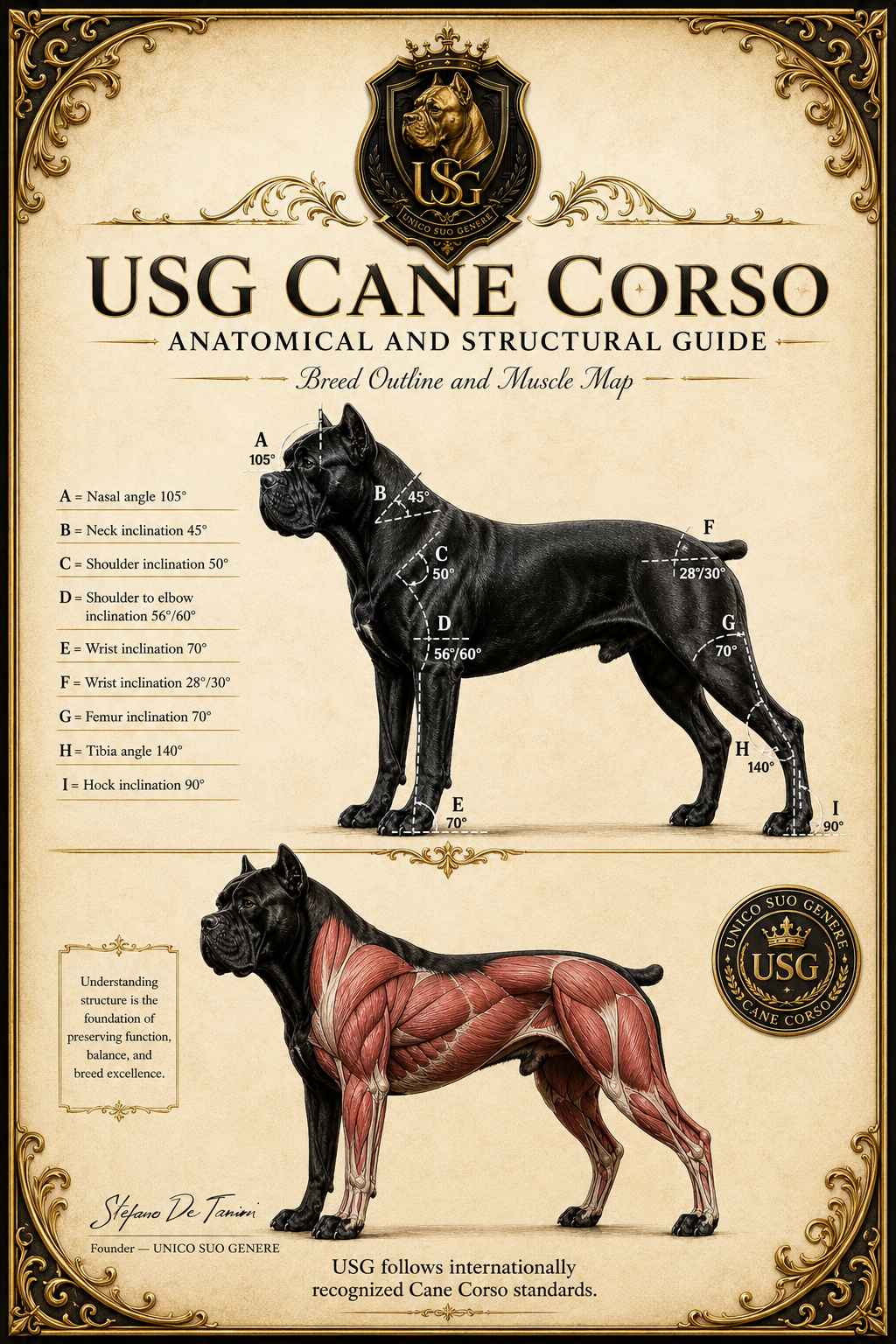
Anatomical Guide
USG visual orientation for internal and external anatomy as educational orientation.
It summarizes external and internal anatomical orientation points: organs, muscles, joints, and body regions. It helps owners name what they observe more clearly.
Anatomy orientation; pain, injury, or concern requires a qualified professional.
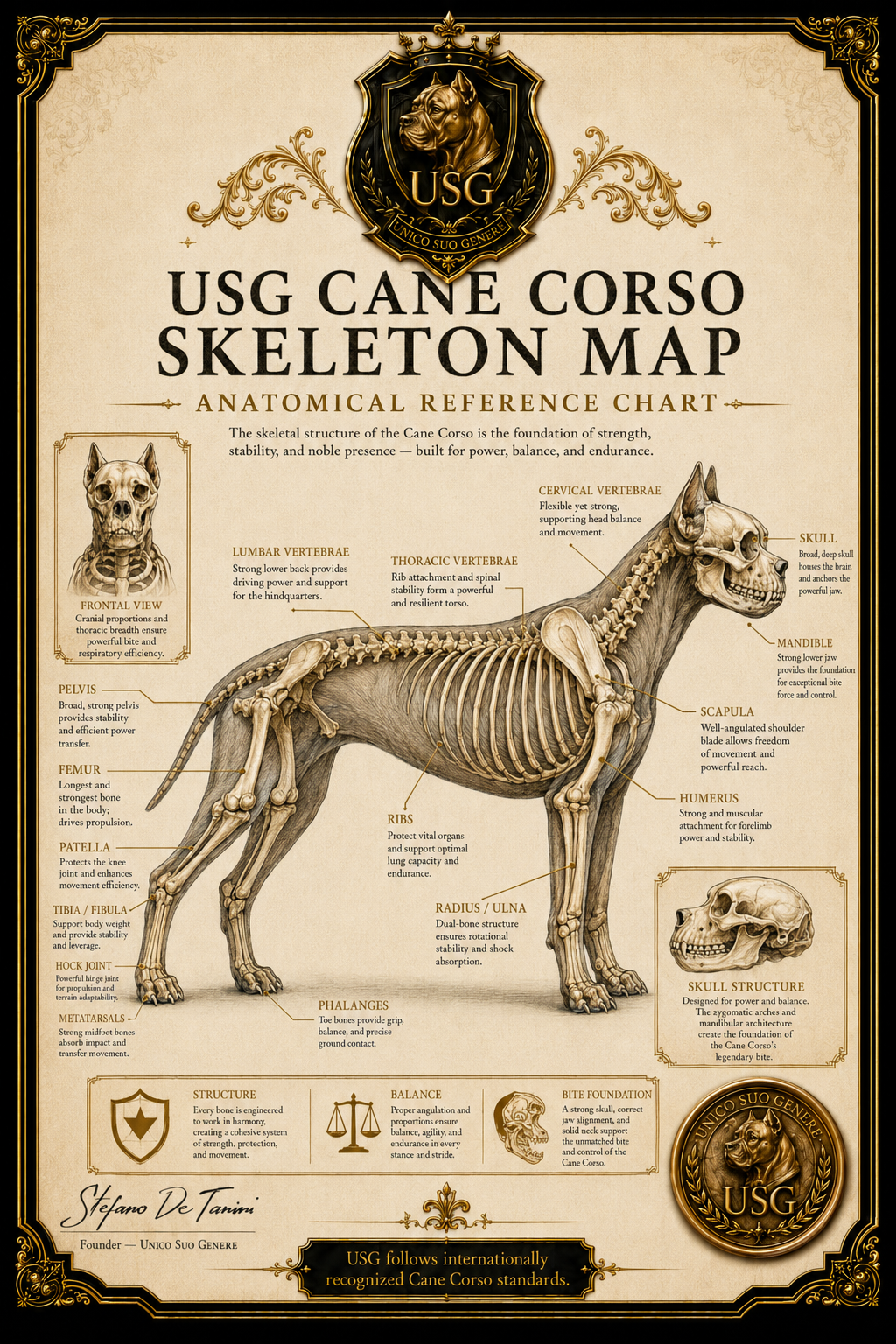
Skeleton Chart
USG visual orientation for major bones, joints, and structural landmarks.
It shows the main bones, joints, and load-bearing skeletal landmarks. It is useful when discussing movement, growth, injuries, or structural observations.
Anatomy orientation; pain, injury, or concern requires a qualified professional.
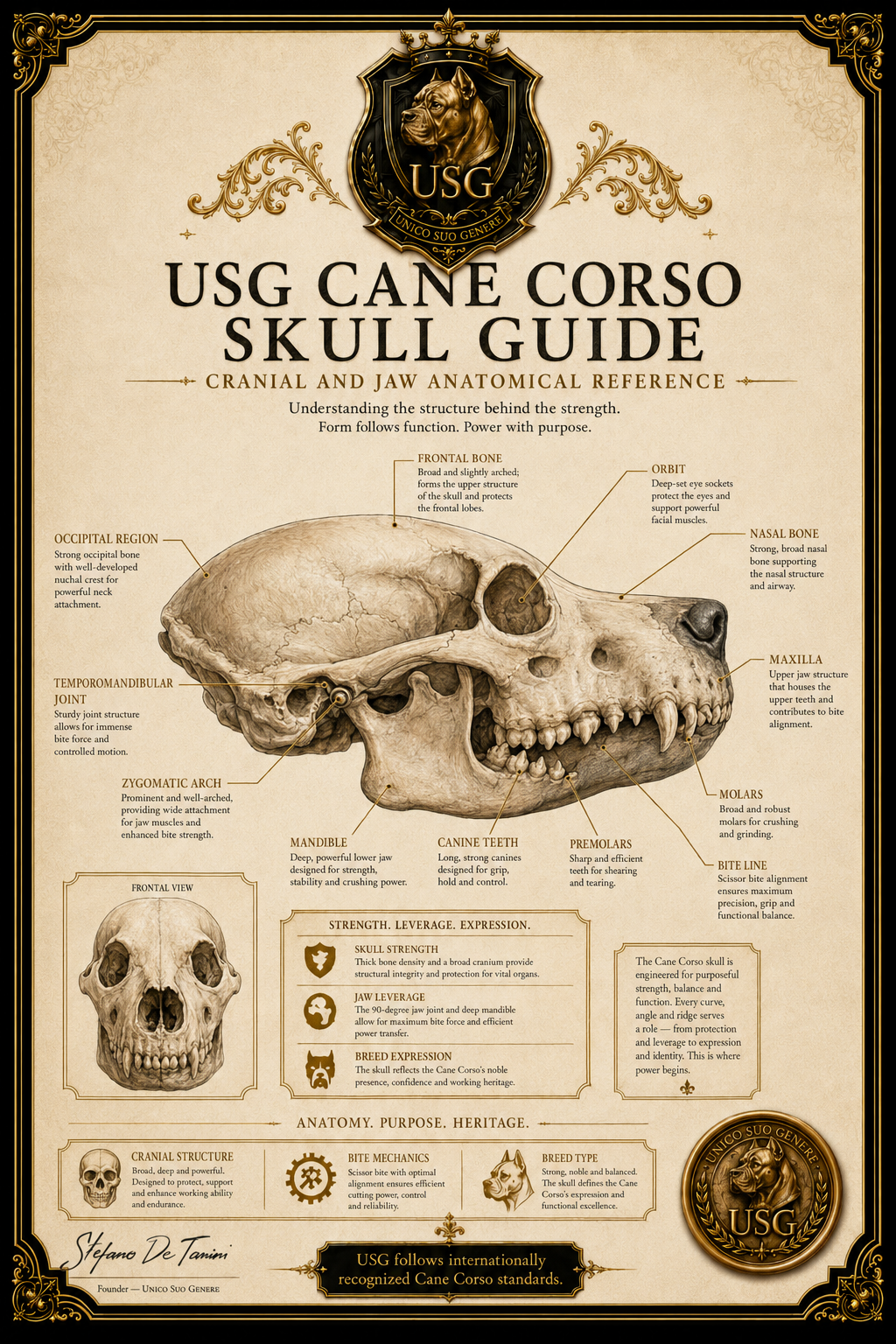
Skull Anatomy Guide
USG visual orientation for skull, jaw, muzzle, and cranial structure.
It focuses on the skull, jaw, muzzle, and main head structures. It helps explain how the bony foundation affects expression, bite, and function.
Anatomy orientation; pain, injury, or concern requires a qualified professional.
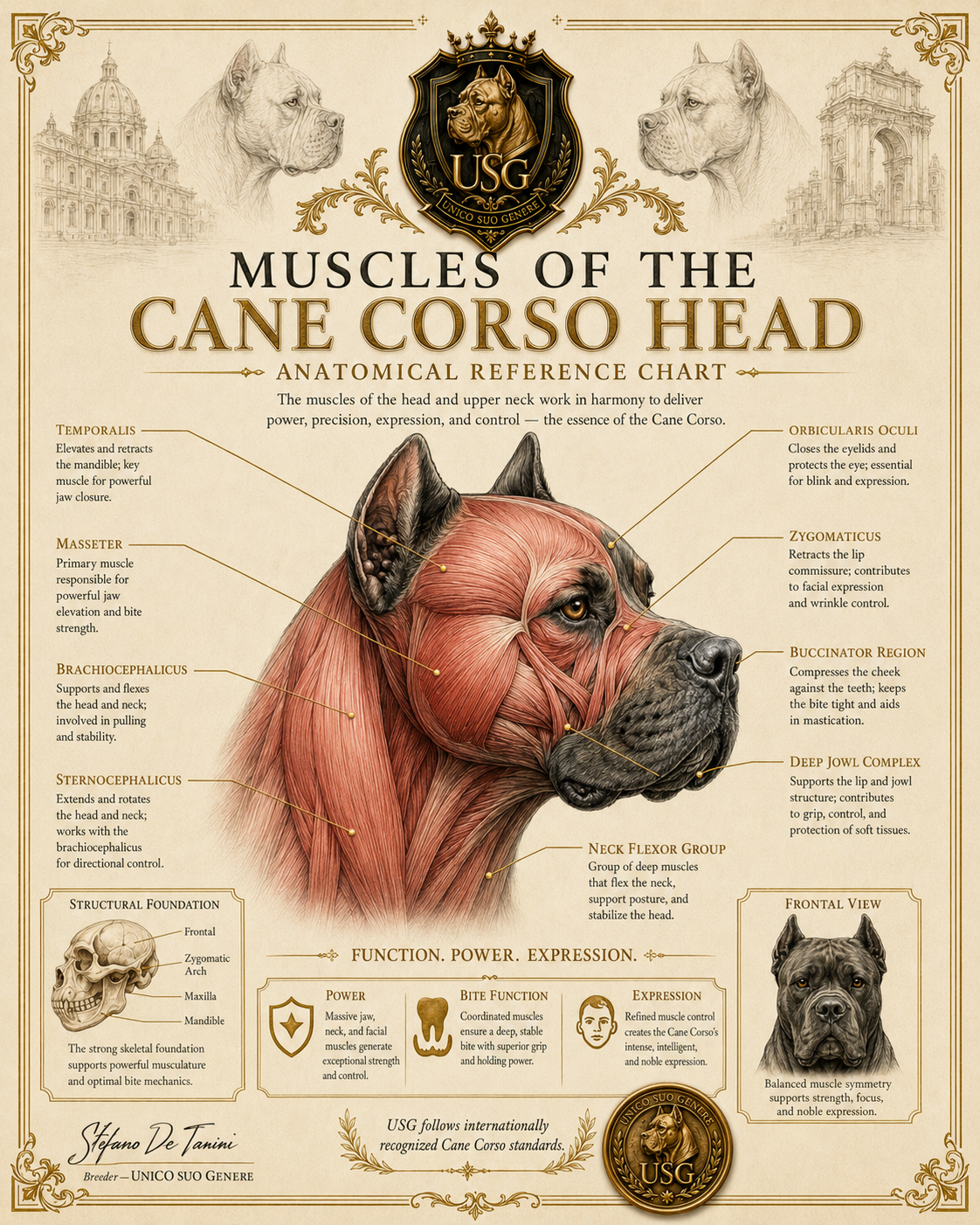
Head Muscles & Bite Anatomy
USG visual orientation for head muscles, bite function, and functional head anatomy.
It shows the muscles of the head and their connection to bite, jaw, and functional expression. It helps explain that the head is not only shape, but a working anatomical system.
Anatomy orientation; pain, injury, or concern requires a qualified professional.
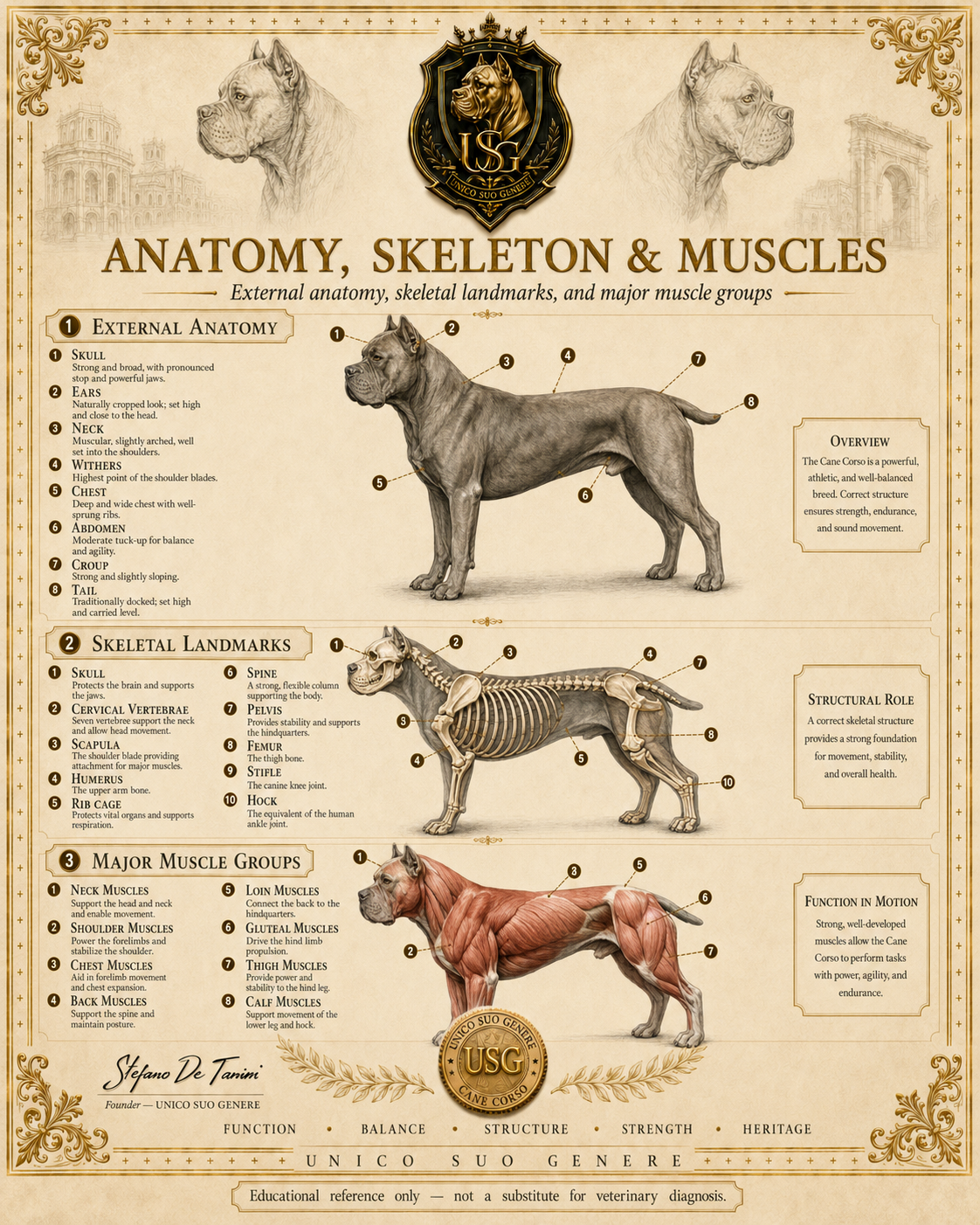
Anatomy, Skeleton & Muscles
USG visual orientation for body anatomy, skeleton, muscles, and major structural points.
It combines anatomy, skeleton, and muscles to show how the body carries strength and movement. It is useful for first understanding of functional structure.
Anatomy orientation; pain, injury, or concern requires a qualified professional.
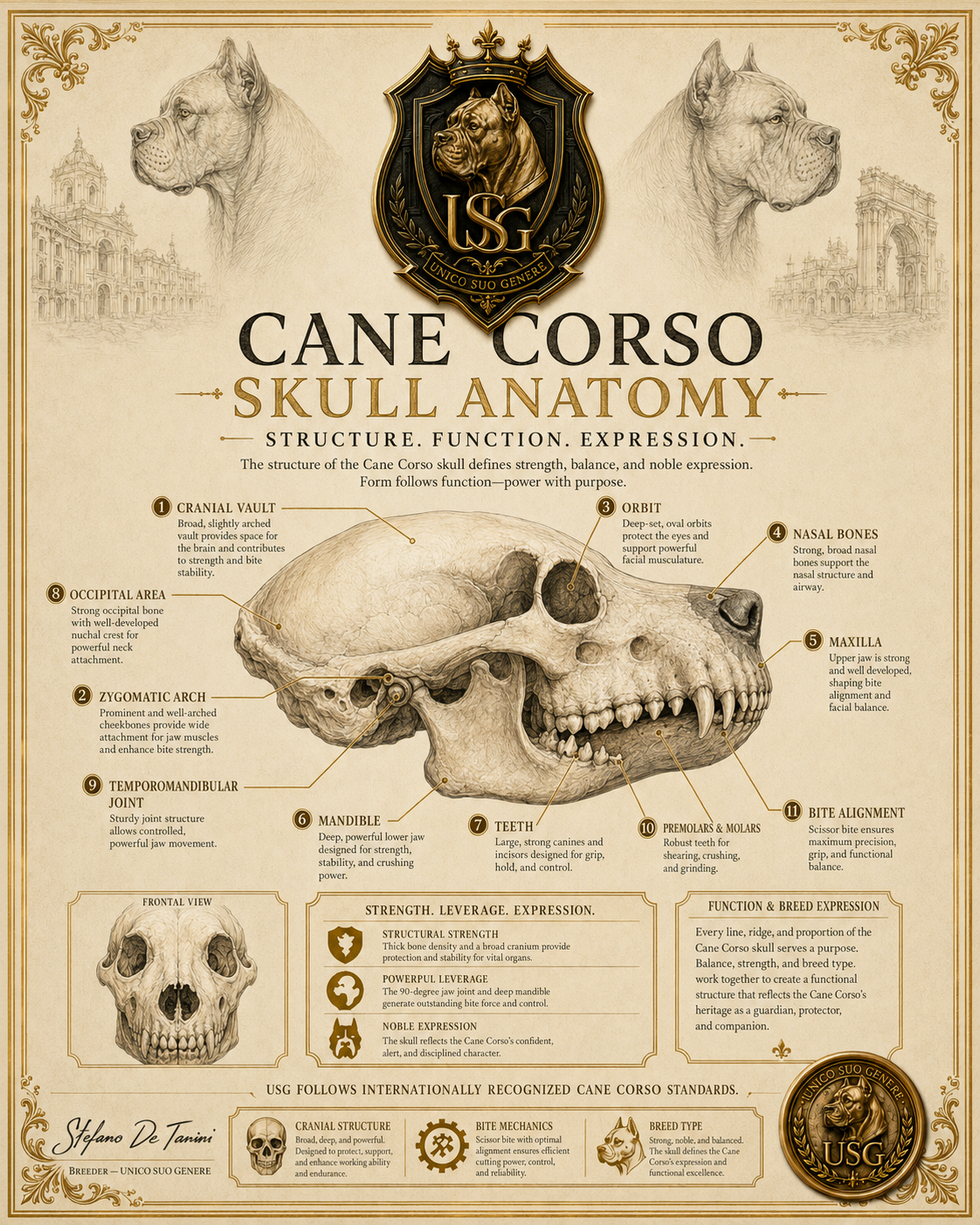
Skull Anatomy Visual Variant
USG visual orientation for skull landmarks, bite area, and head-structure awareness in an alternate format.
An additional skull-anatomy sheet showing skull, jaw, muzzle, and key bony landmarks. It supports understanding the head as structure, not only appearance.
Anatomy orientation; pain, injury, or concern requires a qualified professional.
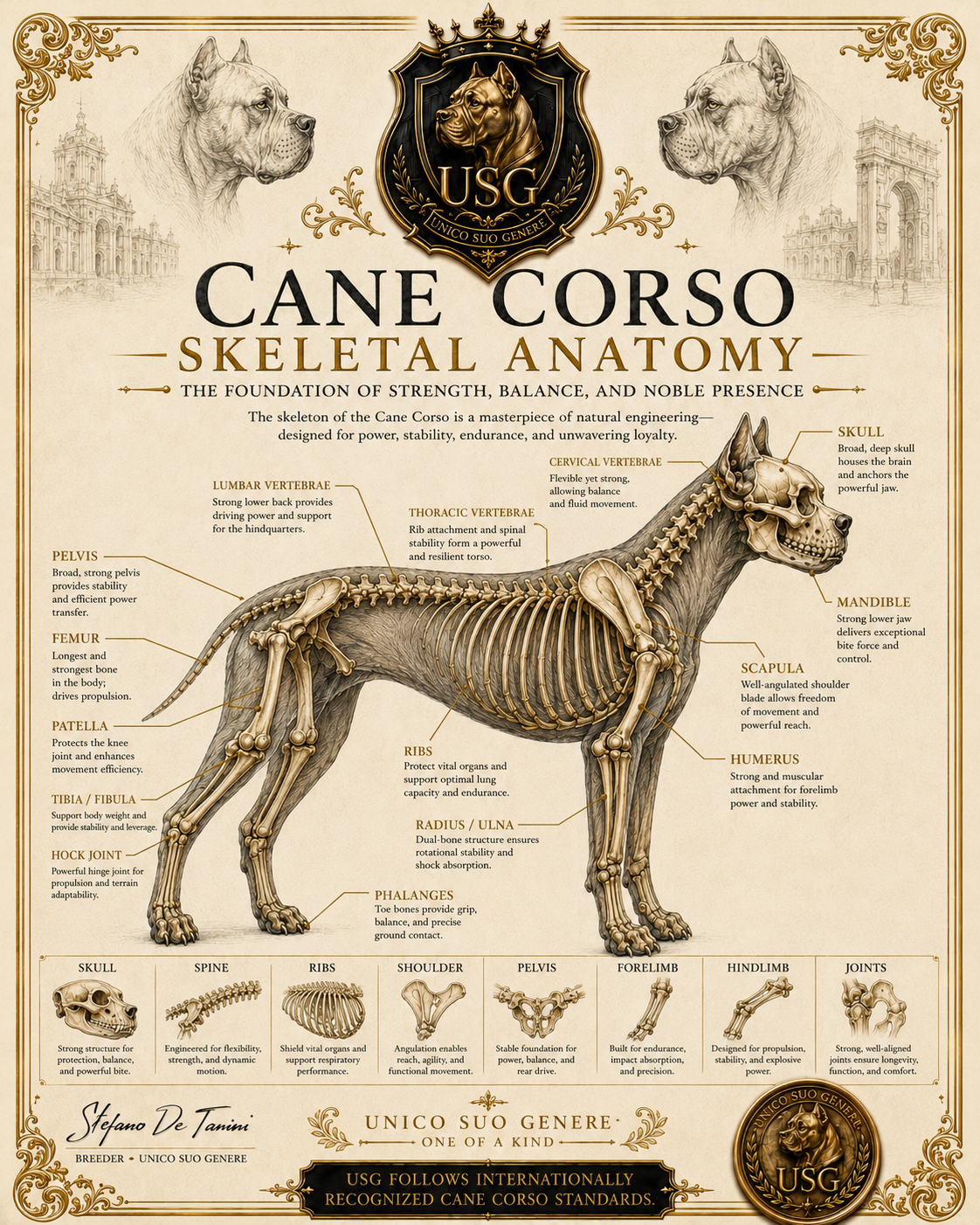
Skeletal Anatomy Visual Variant
USG visual orientation for skeletal anatomy and structural landmarks in an alternate visual format.
An additional skeletal sheet showing bones, joints, and load-bearing structures. It helps connect anatomical points with movement, growth, and possible problems.
Anatomy orientation; pain, injury, or concern requires a qualified professional.