
USG organizes Cane Corso profiles, public orientation, knowledge, visual education, verification, community usefulness, and partner presence.
← Back to Knowledge
UNICO SUO GENERE
USG Visual Knowledge Atlas
A curated USG visual orientation system for Cane Corso. The atlas supports first understanding of structure, health awareness, development, care, and responsible USG visual review, while images and descriptions may contain inaccuracies, generalizations, or visual simplifications.
USG identity
What USG is — and what it is not
USG / UNICO SUO GENERE is an independent Cane Corso platform. It connects reviewed profiles, knowledge, visual education, verification, community orientation, and partner presence without replacing official breed authorities.
USG is not presented as a kennel, puppy marketplace, sales channel, or authority for producing Cane Corso puppies.
USG does not replace FCI, ENCI, AKC, UKC, judges, clubs, veterinary documents, pedigrees, or any official Cane Corso standard.
The Visual Atlas helps visitors understand structure, care, health awareness, and photo readiness; it is orientation, not proof, diagnosis, or certification.
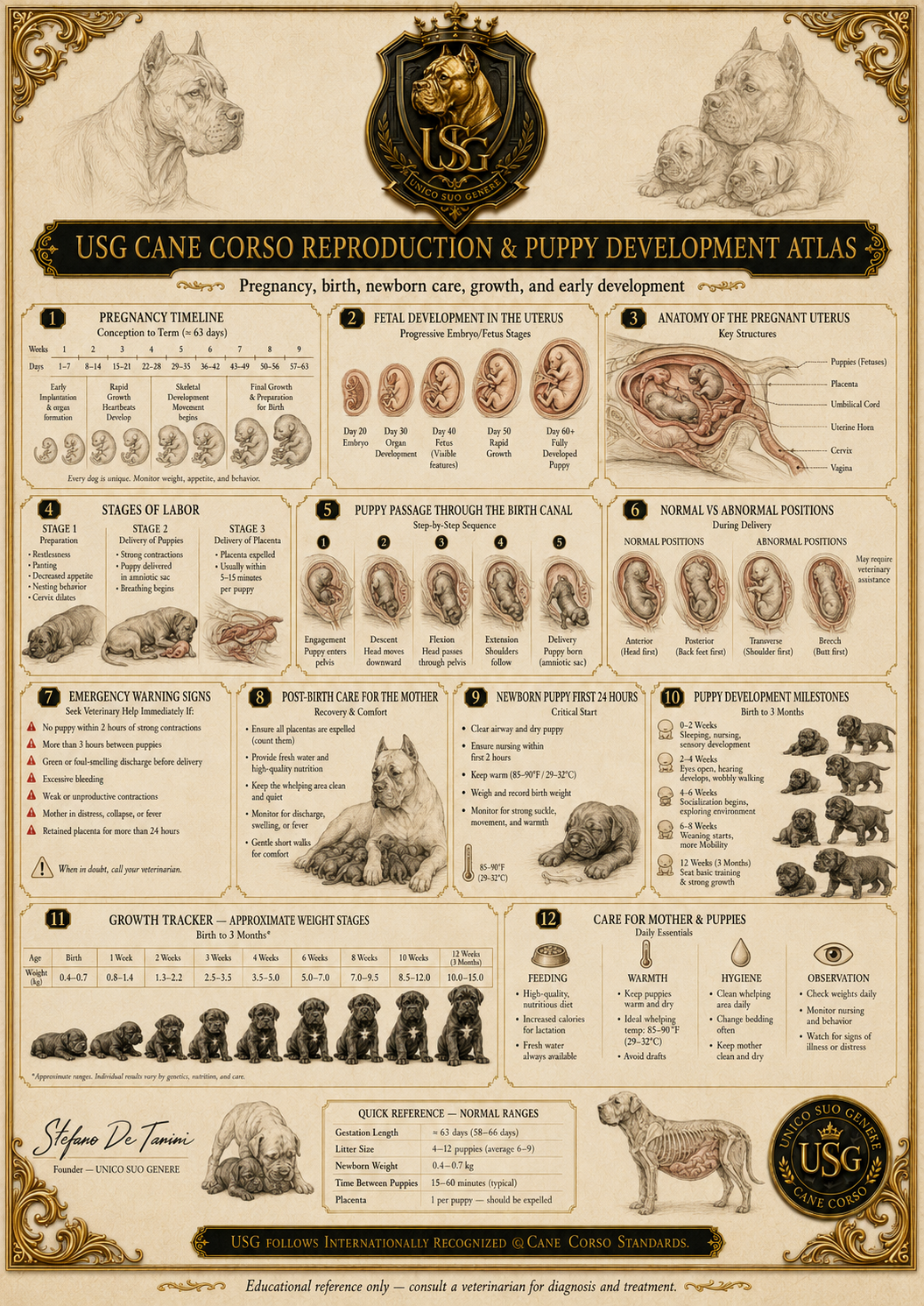
USG Reproduction & Puppy Development Atlas
USG visual orientation for pregnancy, birth, newborn care, growth, and early puppy development.
This sheet summarizes pregnancy, delivery, newborn care, and early puppy development. It guides owners toward the stages that need careful observation.
Pregnancy, delivery, and puppy care should be monitored with a veterinarian or experienced specialist.
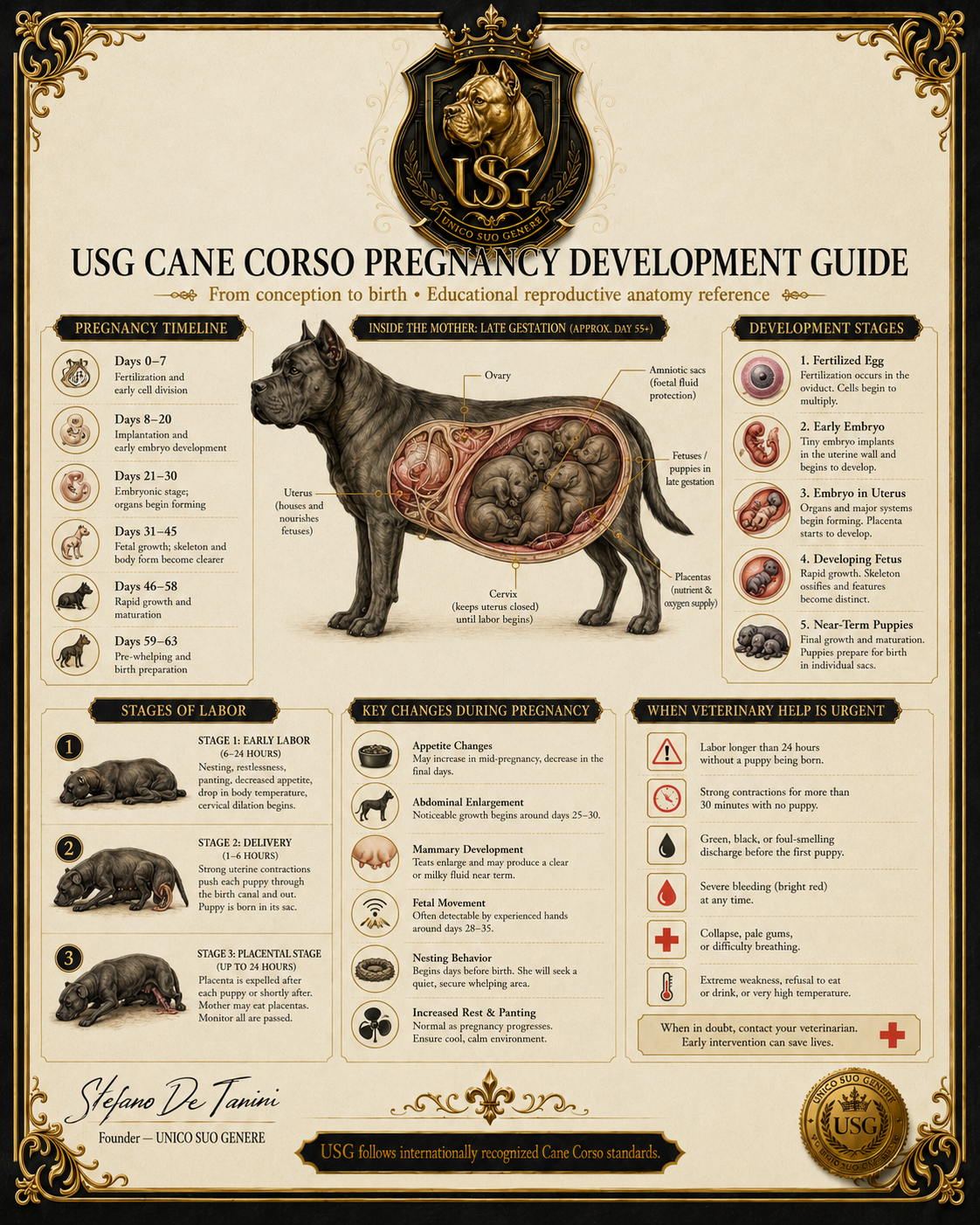
Pregnancy Development Guide
USG visual orientation for fetal development, gestation, and birth preparation.
It shows pregnancy development by stages and changes in the mother and fetuses. It helps track feeding, behavior, birth preparation, and moments when veterinary monitoring is needed.
Pregnancy, delivery, and puppy care should be monitored with a veterinarian or experienced specialist.
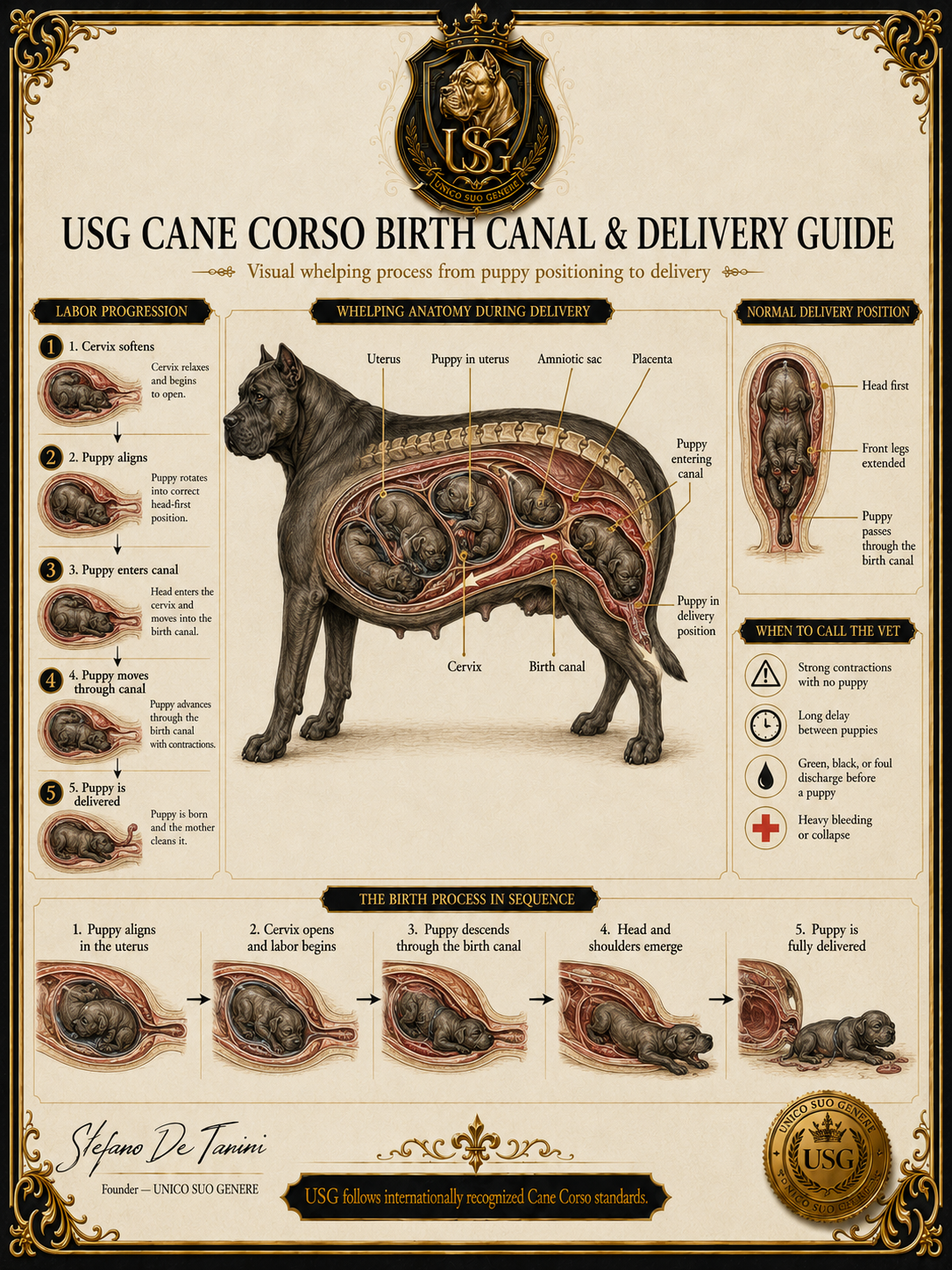
Birth Canal & Delivery Guide
USG visual orientation for the whelping sequence from puppy positioning to delivery.
It explains the delivery process, birth canal, and main stages of labor. It guides observation of contractions, progress, time between puppies, and possible complication signs.
Pregnancy, delivery, and puppy care should be monitored with a veterinarian or experienced specialist.
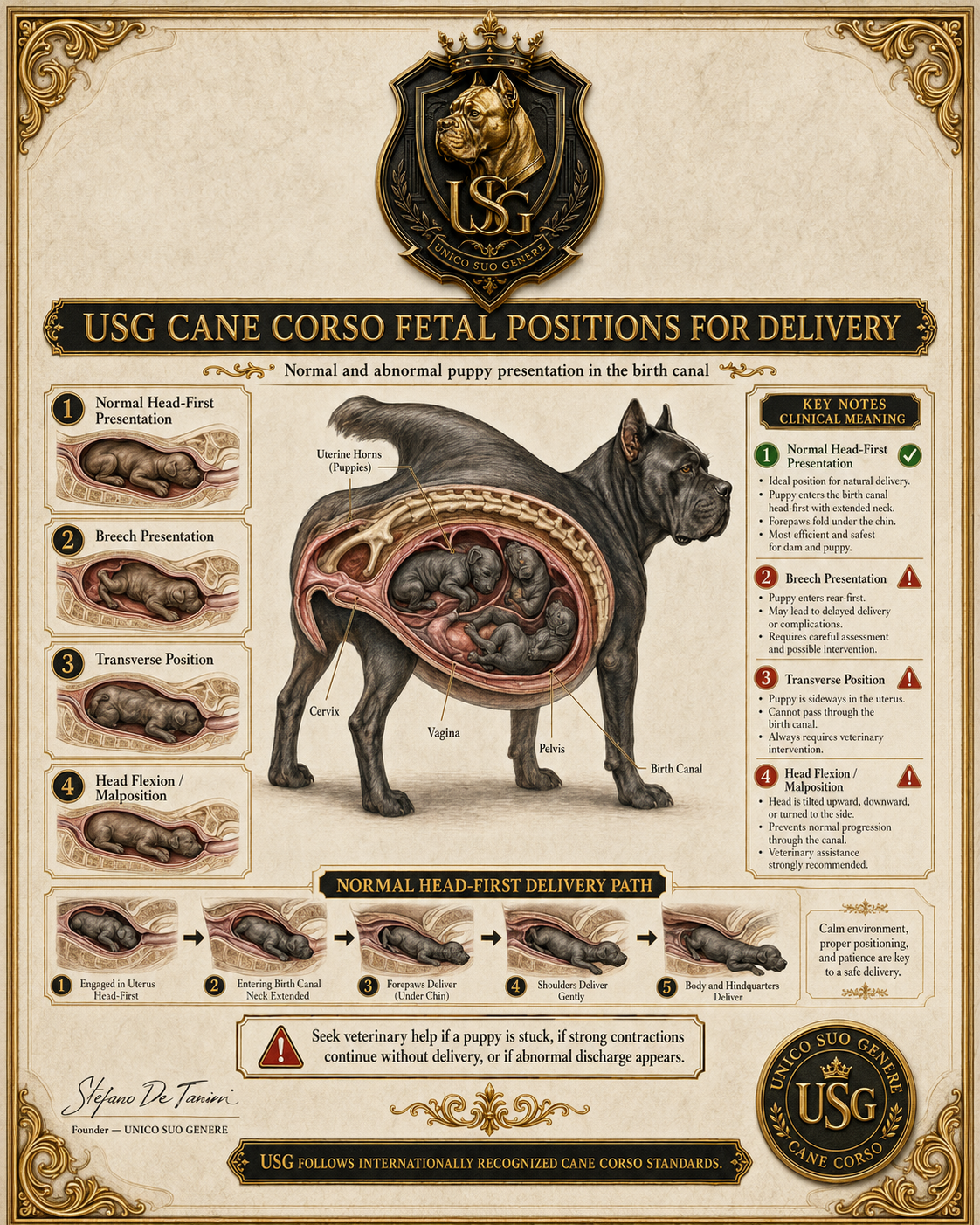
Fetal Positions Chart
USG visual orientation for normal and risky puppy presentations during delivery.
It shows different fetal positions and why position can affect delivery. It helps explain when lack of progress or unusual positioning may become risky.
Pregnancy, delivery, and puppy care should be monitored with a veterinarian or experienced specialist.
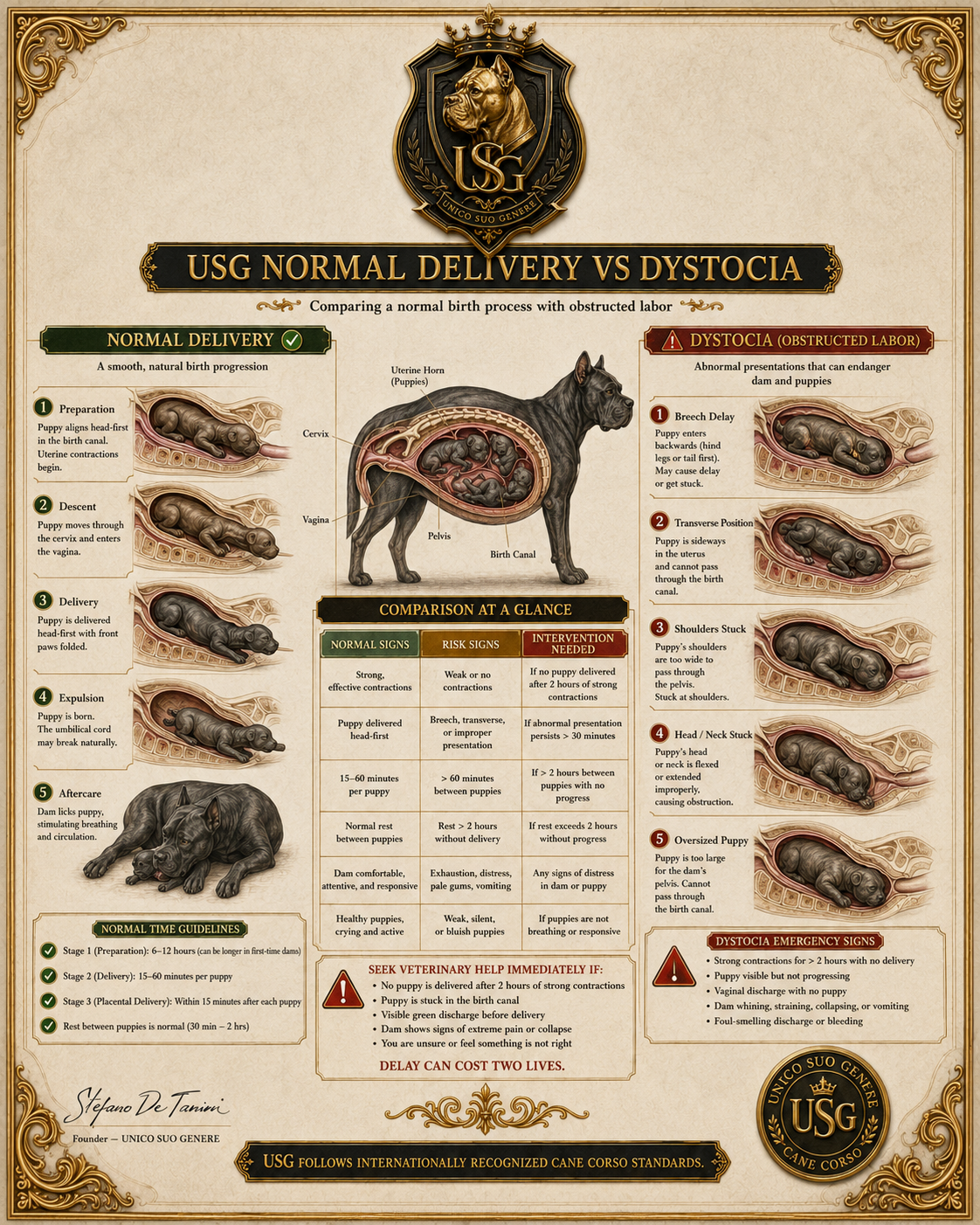
Normal Delivery vs Dystocia
USG visual orientation for normal delivery, obstructed labor, and warning signs.
It compares normal delivery with dystocia, meaning difficult or problematic labor. It highlights strong pain, long delay, exhaustion, lack of progress, or worrying behavior.
Pregnancy, delivery, and puppy care should be monitored with a veterinarian or experienced specialist.
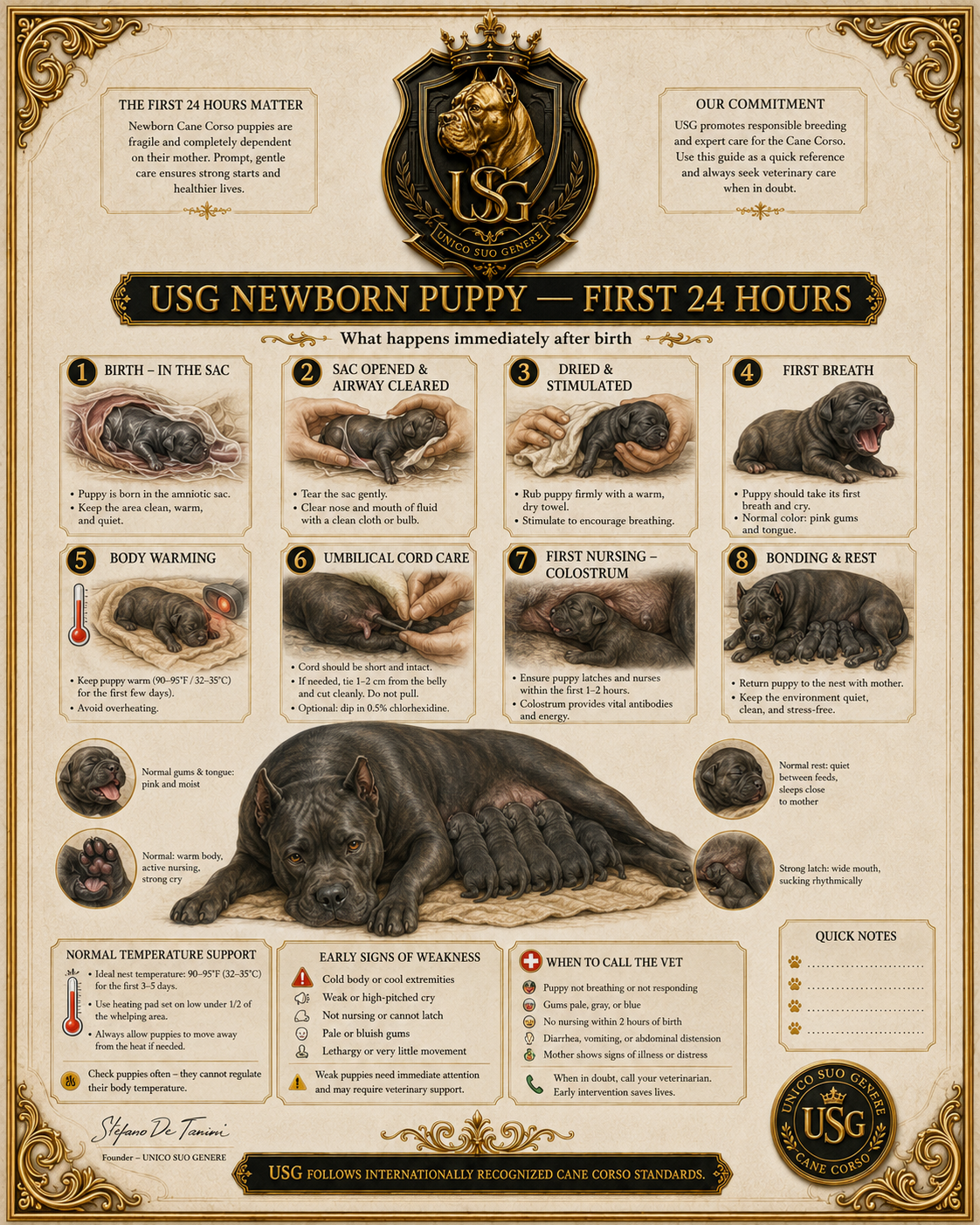
Newborn First 24 Hours
USG visual orientation for warmth, nursing, breathing, and early newborn warning signs.
It summarizes the first 24 hours for newborn puppies: warmth, breathing, nursing, weight, and monitoring. It explains why the early hours are critical for puppy vitality.
Pregnancy, delivery, and puppy care should be monitored with a veterinarian or experienced specialist.
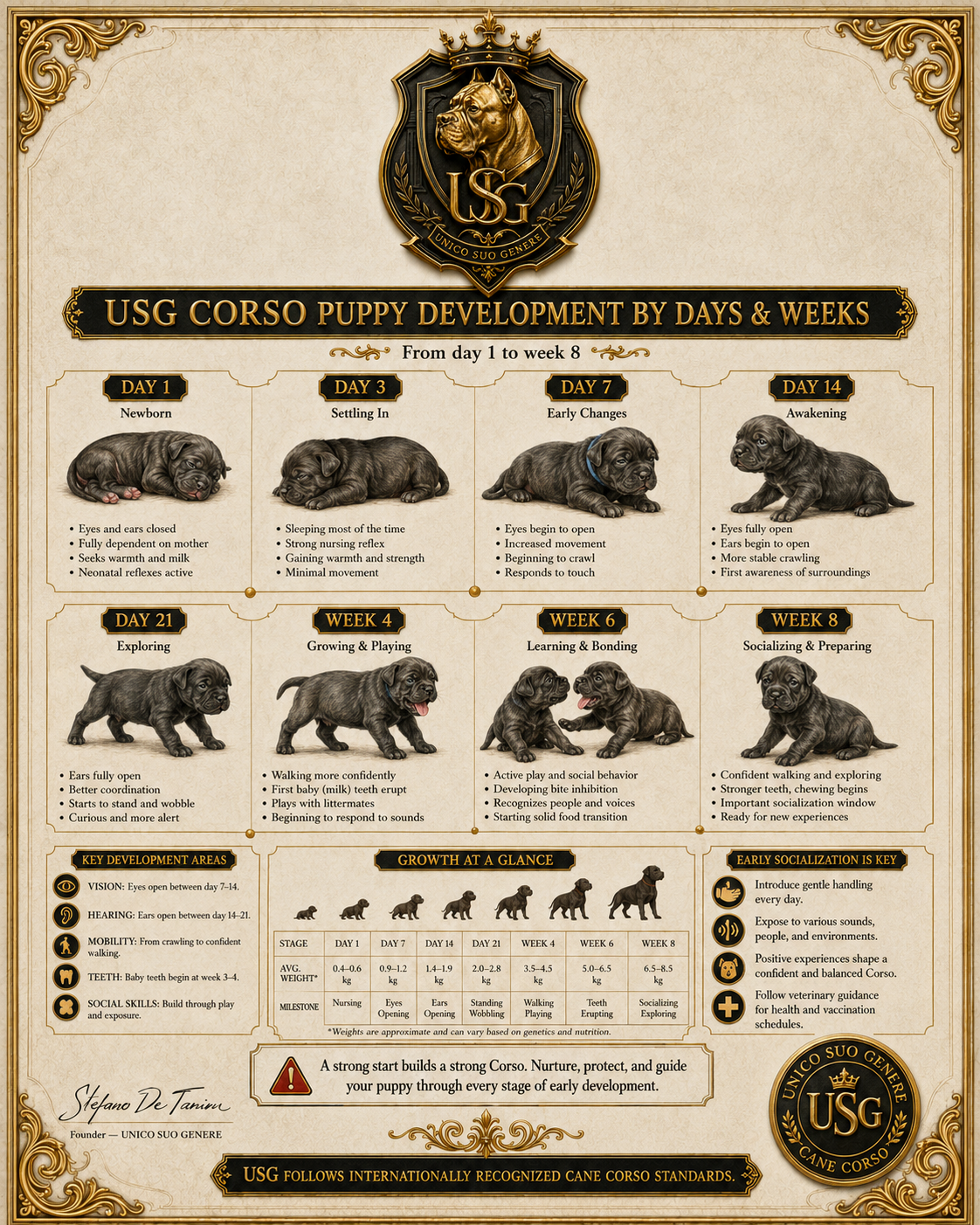
Puppy Development by Days & Weeks
USG visual orientation for early puppy milestones from newborn stage to the first weeks.
It shows puppy development by days and weeks, from newborn stage to eye opening, movement, socialization, and growth. It helps owners follow whether development is progressing logically.
Pregnancy, delivery, and puppy care should be monitored with a veterinarian or experienced specialist.
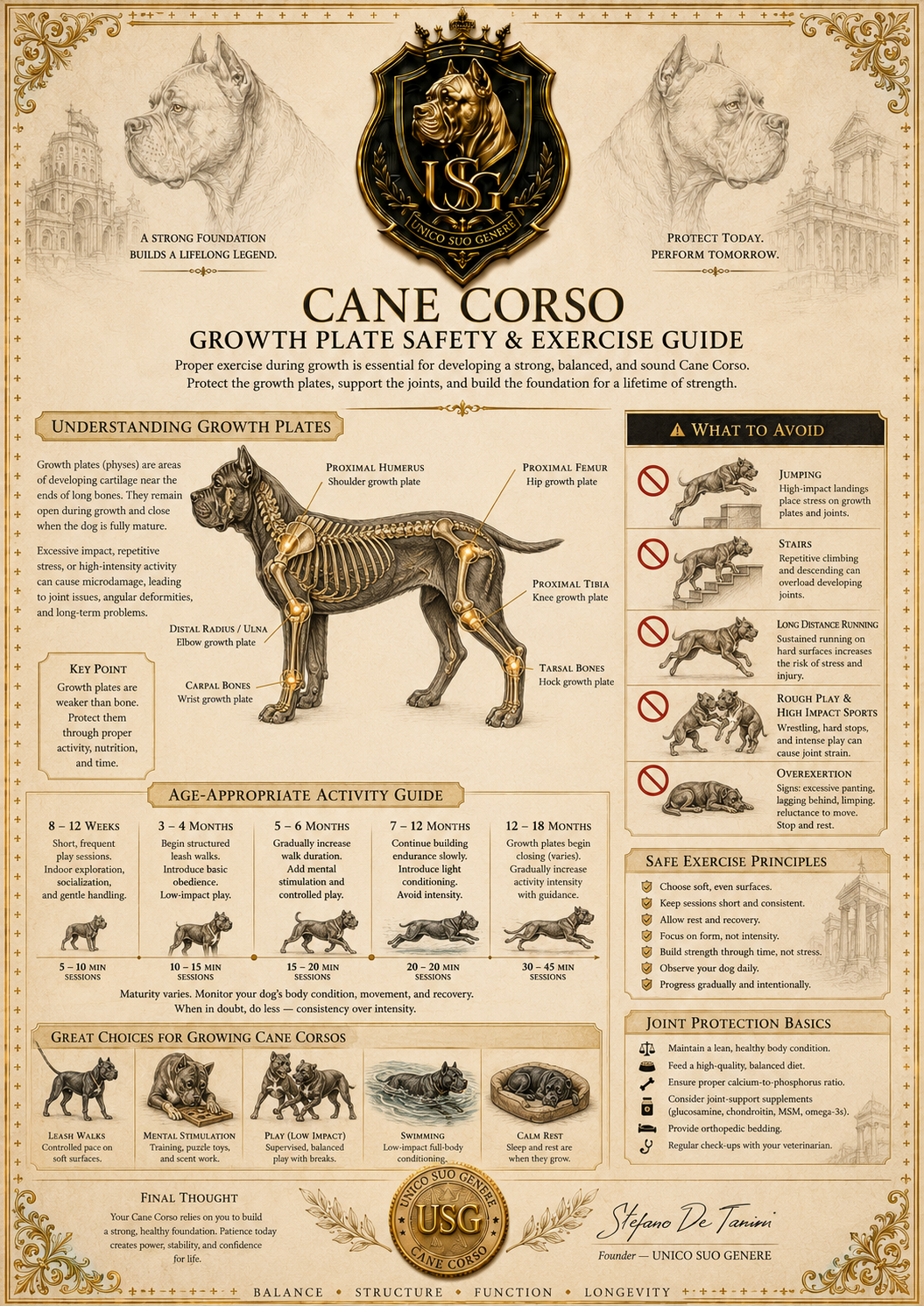
Growth Plate Safety
USG visual orientation for growth plates, exercise limits, and safe development during puppy growth.
It shows growth plates and why excessive load in puppies can be risky. It guides controlled movement, sensible feeding, and avoiding heavy jumping at a young age.
Pregnancy, delivery, and puppy care should be monitored with a veterinarian or experienced specialist.
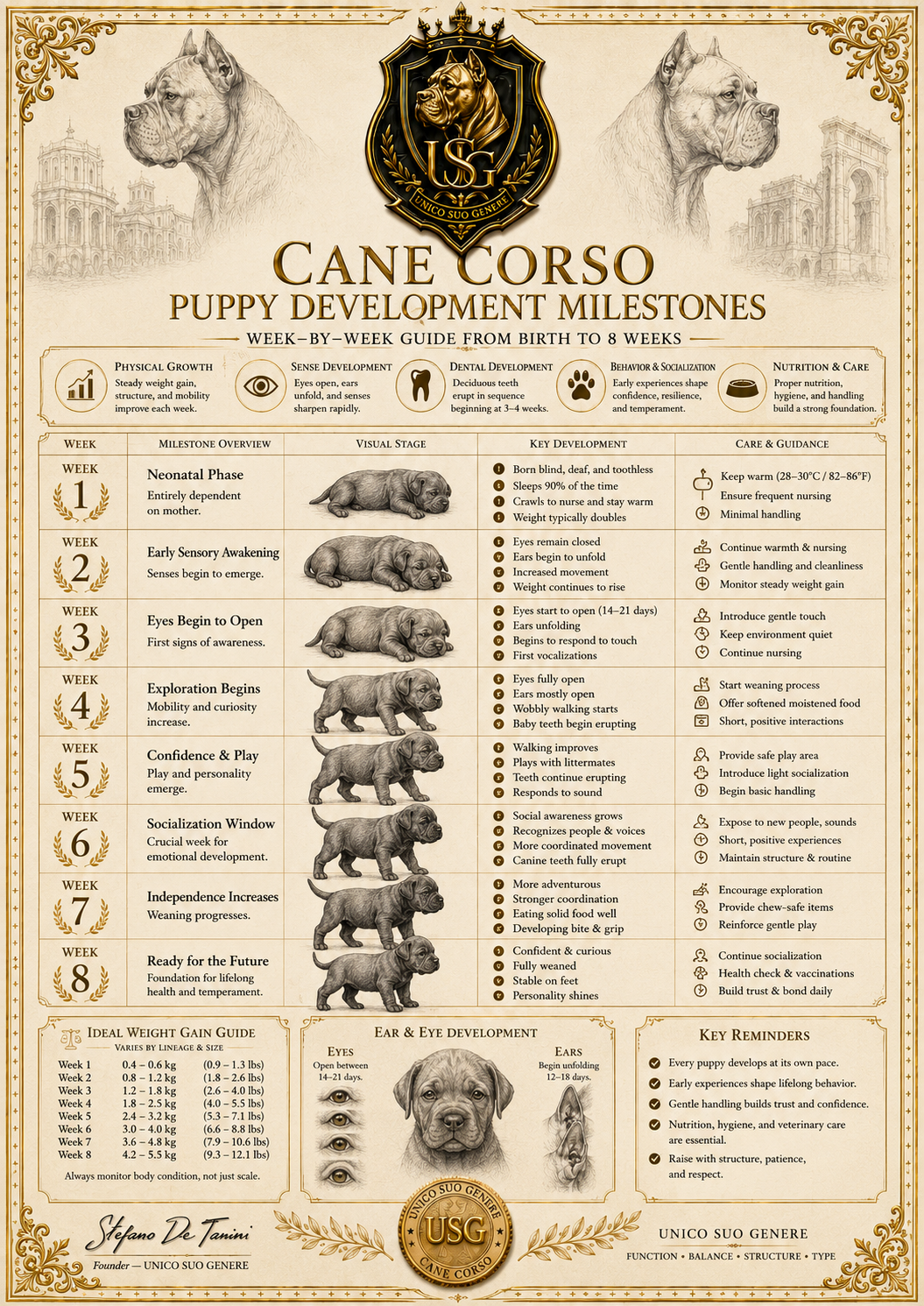
Puppy Development Milestones
USG visual orientation for early puppy stages, neurological development, and growth milestones.
It shows key puppy milestones: senses, movement, socialization, feeding, and behavior. It helps monitor whether development follows an expected sequence.
Pregnancy, delivery, and puppy care should be monitored with a veterinarian or experienced specialist.
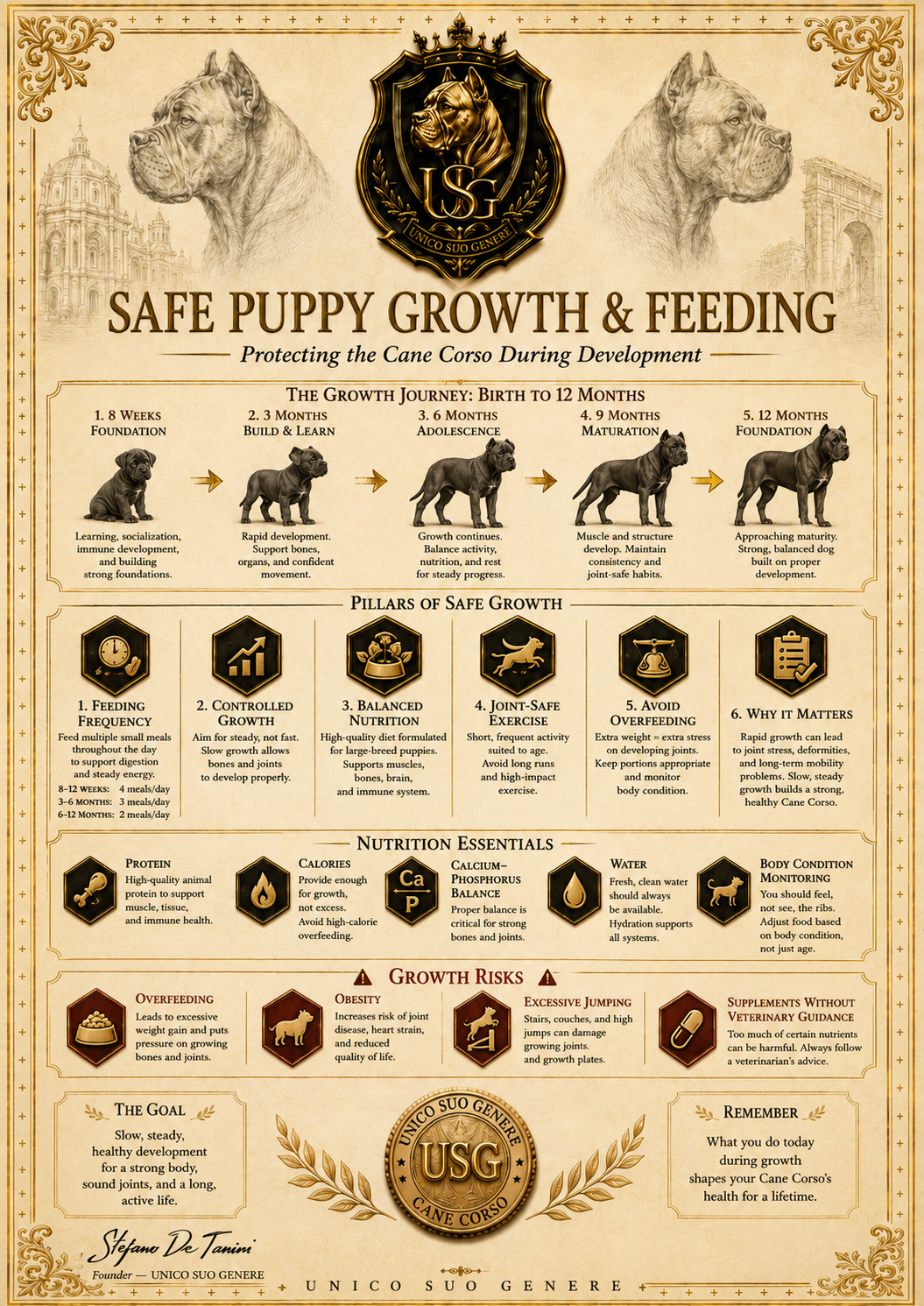
Safe Puppy Growth & Feeding
USG visual orientation for safe growth, controlled nutrition, joint protection, and puppy development.
This sheet connects growth, feeding, weight, and safe exercise. It helps avoid overly rapid growth, excess weight, and joint overload.
Pregnancy, delivery, and puppy care should be monitored with a veterinarian or experienced specialist.
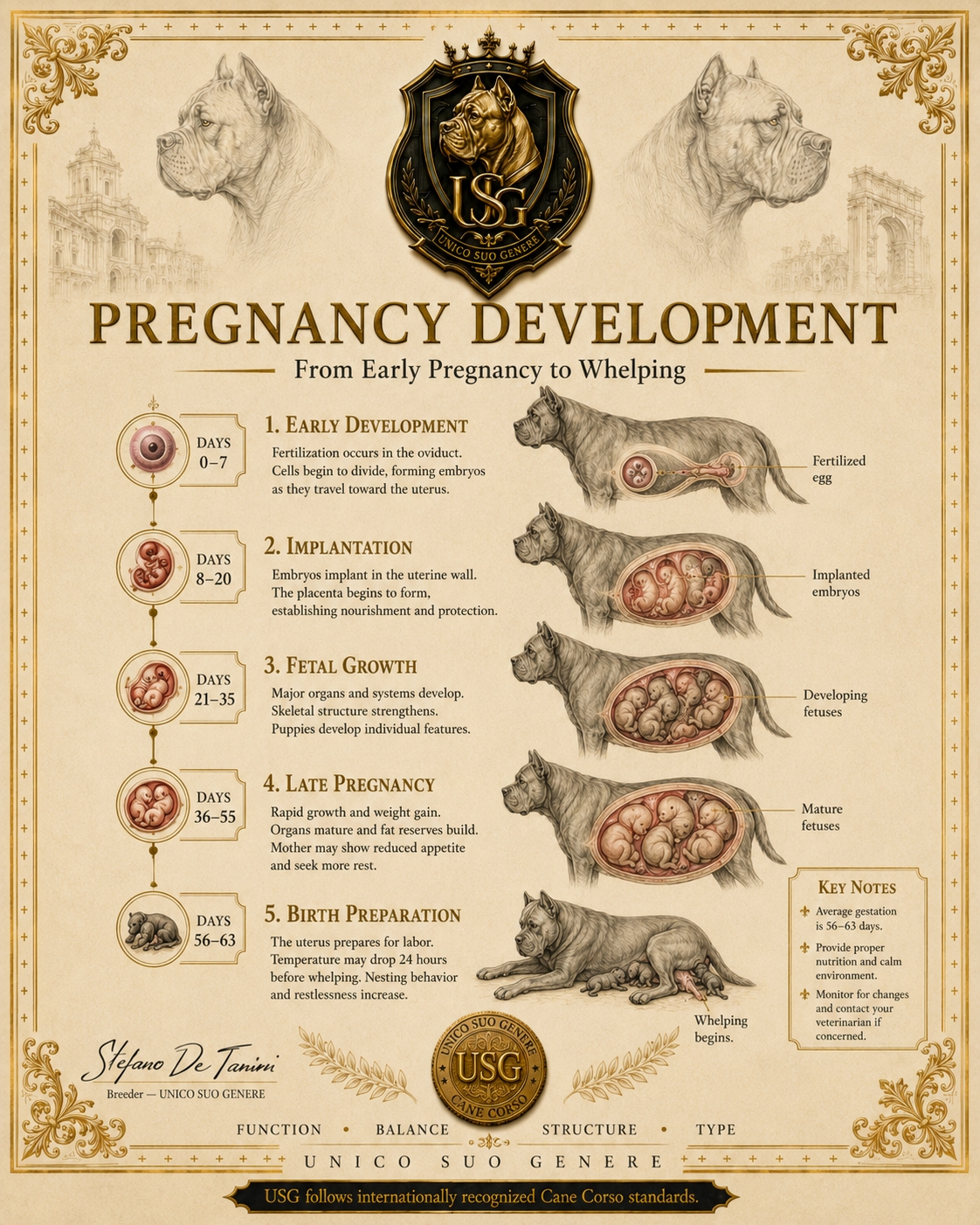
Pregnancy Development Visual Variant
USG visual orientation for pregnancy stages and fetal development in an alternate visual format.
An additional pregnancy-development sheet organizing stages, growth, and birth preparation. It helps owners know what to observe week by week.
Pregnancy, delivery, and puppy care should be monitored with a veterinarian or experienced specialist.
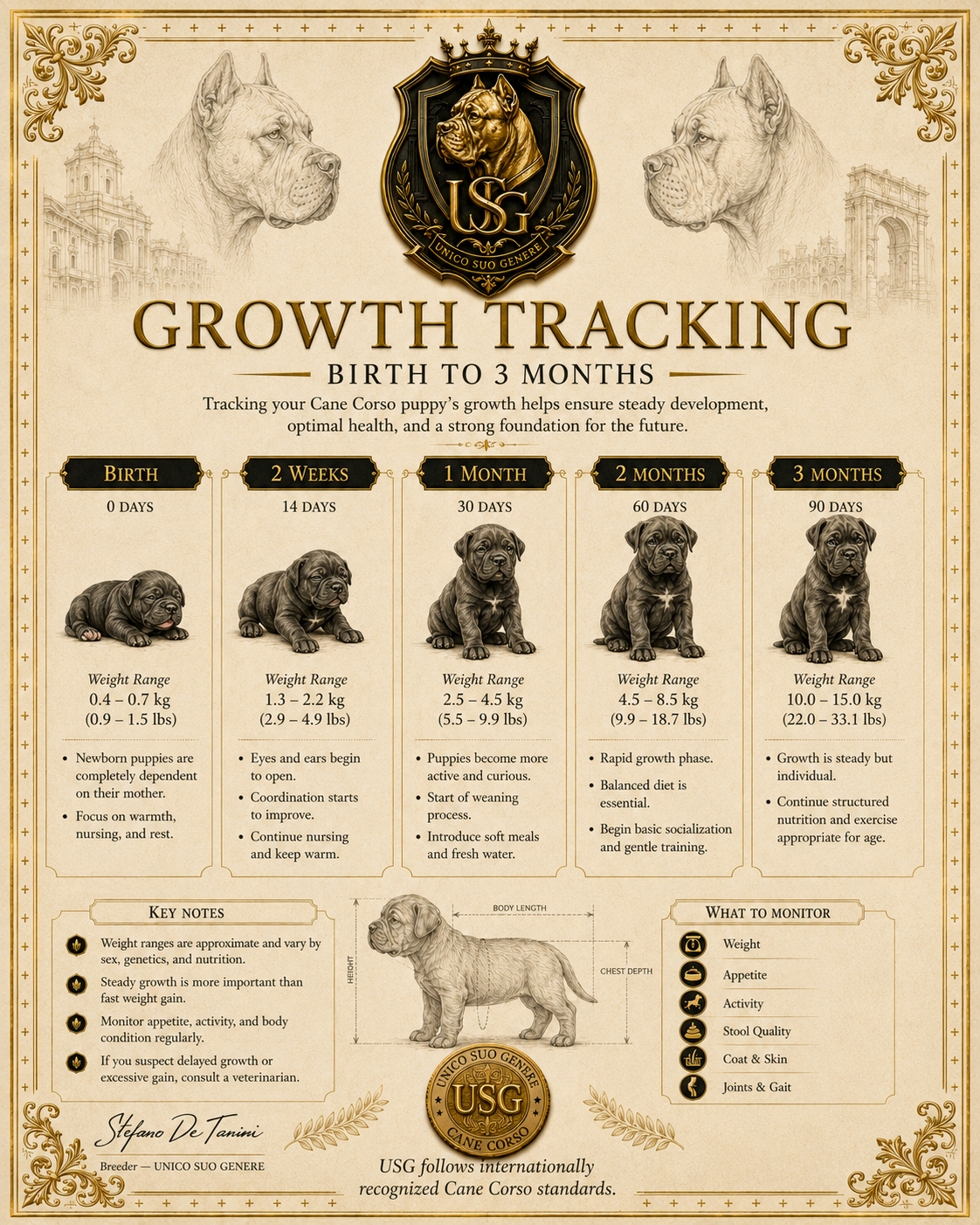
Growth Tracking — Birth to 13 Months
USG visual orientation for growth tracking, puppy stages, and early development milestones.
It shows growth tracking from birth to around 13 months. It points to height, weight, development, and the importance of following the trend rather than one isolated number.
Pregnancy, delivery, and puppy care should be monitored with a veterinarian or experienced specialist.
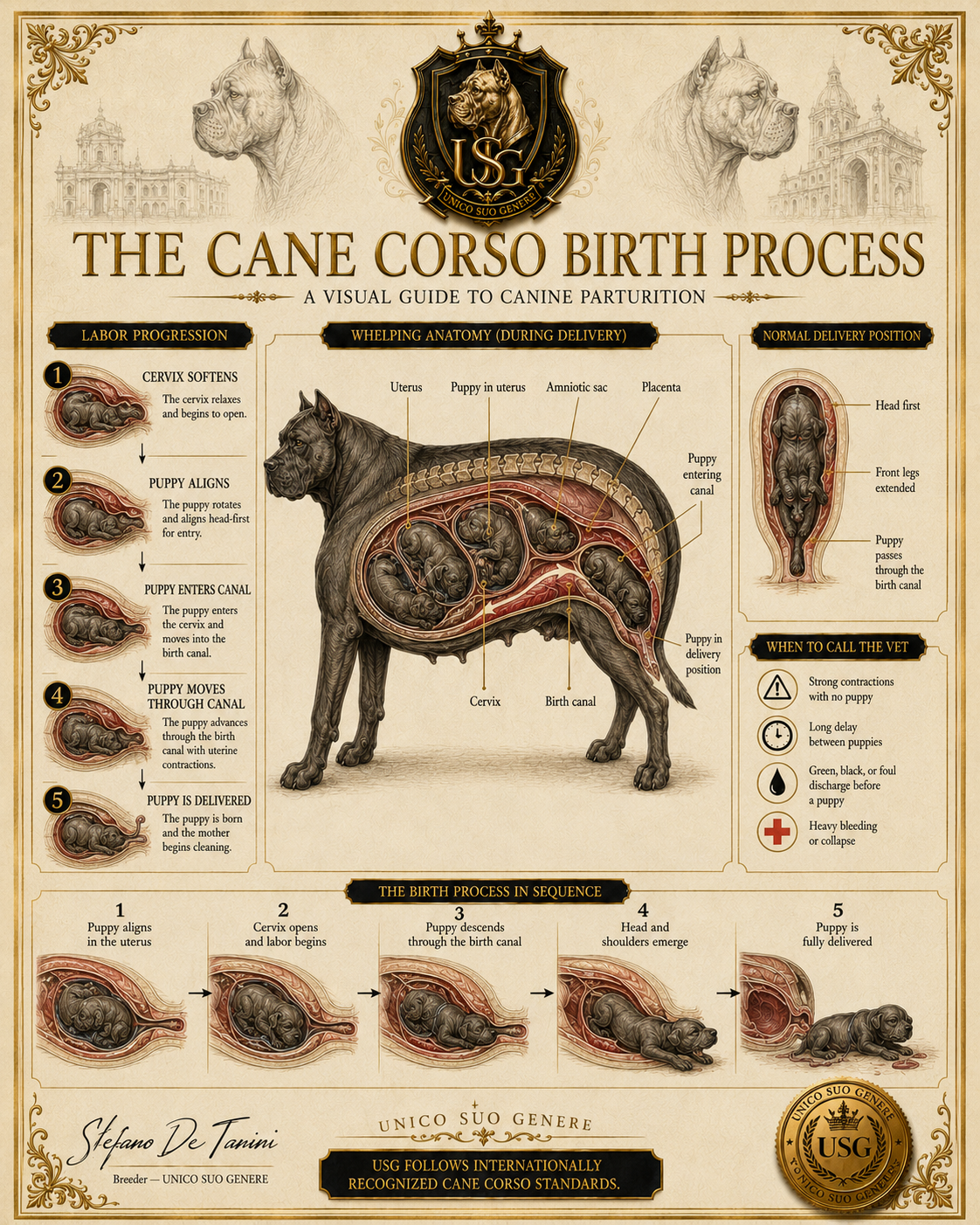
Birth Process Visual Variant
USG visual orientation for birth sequence and delivery orientation in an alternate visual format.
An additional delivery-process sheet showing the process and observation points. It highlights concern when there is no progress, strong pain, exhaustion, or worrying condition of the mother.
Pregnancy, delivery, and puppy care should be monitored with a veterinarian or experienced specialist.